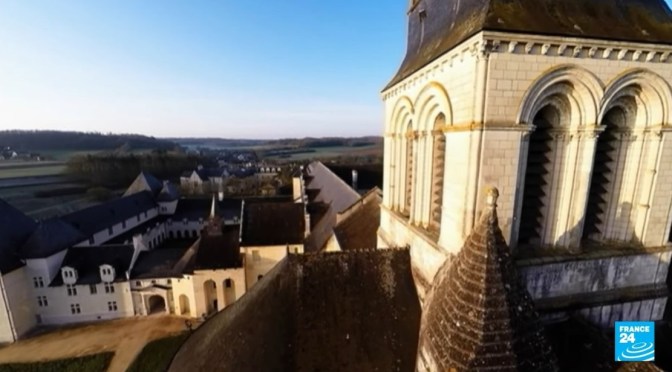
FRANCE 24 (March 21, 2023) – Once important seats of Christian worship, and now treasures of the country’s heritage, French abbeys often have surprising histories. That’s the case of Fontevraud abbey, in the former duchy of Anjou. Run by a woman during its heyday, the abbey was turned into a prison after the French Revolution.
In Alsace, the abbey of Mont Sainte-Odile is famous for its supposedly miraculous spring water. Finally, on the outskirts of Montpellier, Valmagne abbey used to be a wine cellar. Visitors can still observe the gigantic barrels that were once used to store thousands of litres of wine.
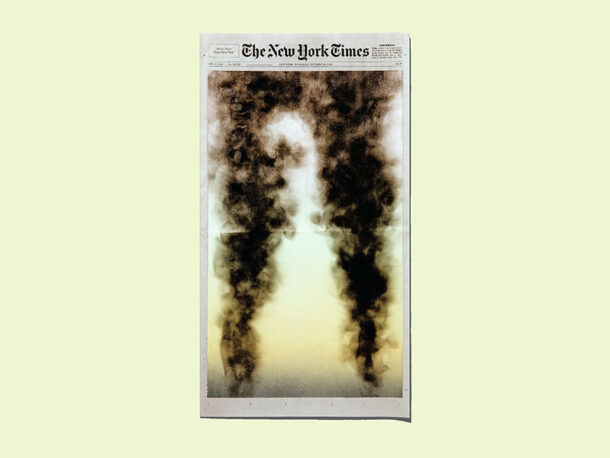
How the climate catastrophists learned to stop worrying and love the calm
The first signs that the mood was brightening among the corps of reporters called to cover one of the gravest threats humanity has ever faced appeared in the summer of 2021. “Climate change is not a pass/fail course,” Sarah Kaplan wrote in the Washington Post on August 9.
When I was a kid, in the touch-tone era in the Midwest, I often dialed, for no real reason, the “time lady”—an actress named Jane Barbe, it turns out—who would announce, with prim authority “at the tone,” the correct time to the second. I was, in those days, a bit obsessed with time.
A popular, growing class of drugs for obesity and diabetes could, in an ideal world, help us see that metabolism and appetite are biological facts, not moral choices.
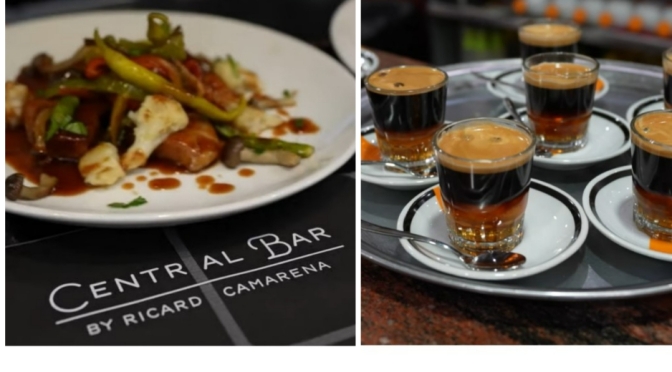
Spain Revealed (March 19, 2023) – The cuisine from the Region of Valencia enjoys great prestige at both a national and international level. Its traditional recipes are prepared using natural ingredients such as oil, vegetables, spices, fruit, fresh meat or fish and has come to be known as “the Mediterranean Diet”.
Video timeline: 00:00 Intro 00:40 Nuevo Oslo 05:34 Bar Central 08:31 Ostras Pedrín 12:03 Tasca Angel 14:56 Bocatín del Carmen 16:05 Casa Montaña 20:35 Bar Ricardo 23:27 Horchatería el Collado 25:53 Café Madrid 27:59 Bon Aire
The incredible variety of rice dishes and desserts is outstanding. All this without forgetting the great variety of fruit which the Region of Valencia produces in abundance. Its traditional soft drinks have also become well-known, such as tiger nut milk (“horchata de chufa”). Its long wine-growing tradition has given rise to a delicious range of wines with their Denominations of Origin, which when added to the local soups comprise some of the most exquisite recipes of Valencian cooking.
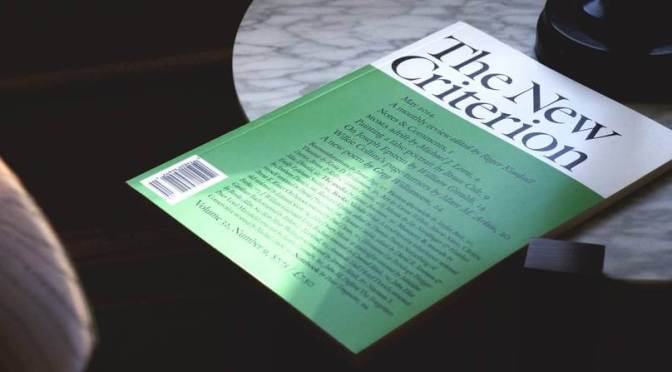
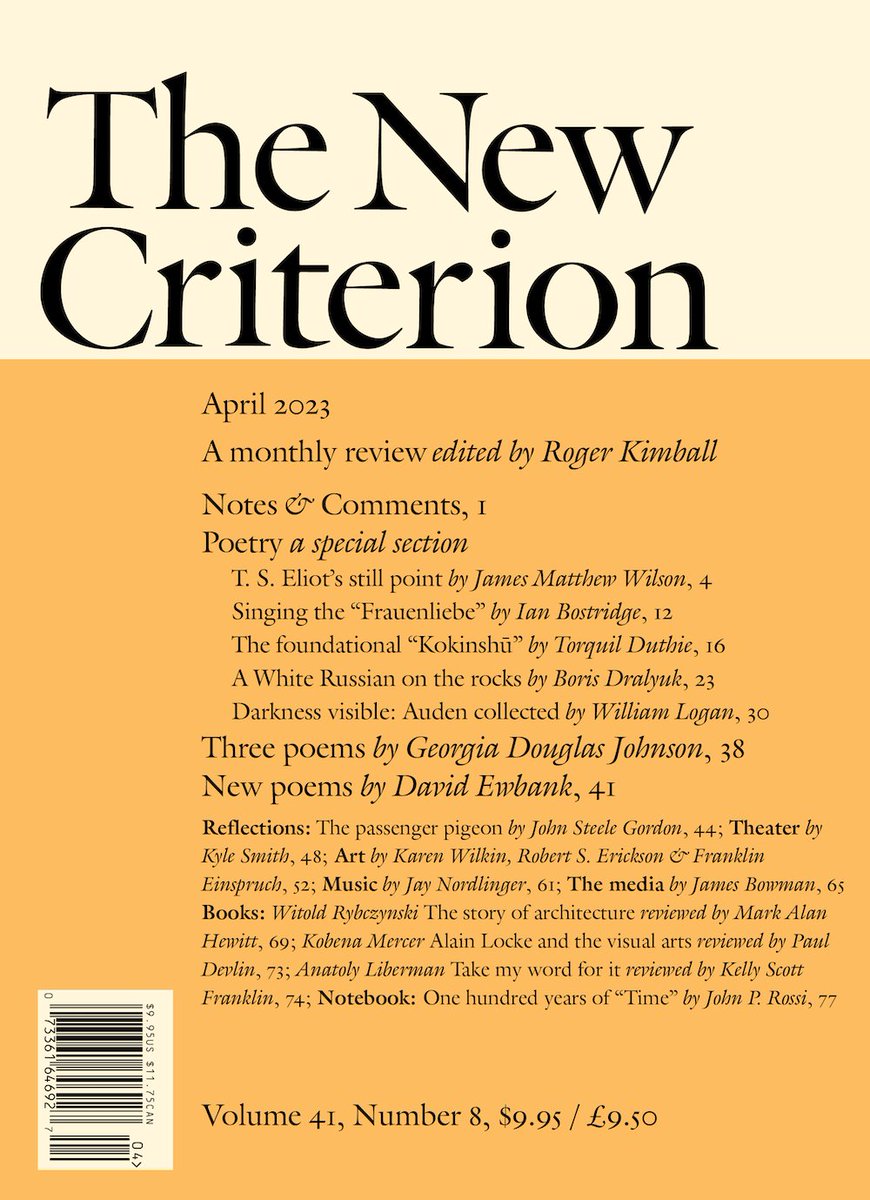
Poetry a special section T. S. Eliot’s still point by James Matthew Wilson Singing the “Frauenliebe” by Ian Bostridge The foundational “Kokinshu” by Torquil Duthie A White Russian on the rocks by Boris Dralyuk
Darkness visible: Auden collected by William Logan
This issue whisks off to the lovely Loire Valley to discover two historic royal castles – Loches and Chinon as well as – the real Sleeping Beauty castle and gorgeous Villandry which has fairy tale pretty gardens – garden envy guaranteed. Read the extraordinary story of a postman who built a palace from pebbles with his bare hands in a tiny village in the Drôme, southeastern France. Not only that – he did it at night after he finished work – by candle light!
Follow the history of the Plantagenet English Kings through Anjou and Normandy. Fall in love with exquisite Vaucluse in Provence where nature has a party in the spring. And sigh over chocolate box lid pretty Le Perche in Normandy.
Come with us to the Roman city of Arles, Aigues Mortes – where the sea is pure pink and flamingos roam, and to sunny, festive Sète with its incredible lagoons. Discover delicious Lyon, the gastronomic capital of France, and its surroundings. Explore Brittany and Les Charentes – Charente and Charente-Maritime. Fairy tale pretty Alsace is unmissable – we look at the most picturesque villages and the historic wine route. Plus the magic of sun-kissed Provence captured in photos, will have you dreaming.
FRANCE 24 (March 17, 2023) – Morocco is often hailed for its stability, its position as a regional leader in women’s rights and for having a rich cultural history. But it’s still a largely male-dominated society. So what does that mean for women in the arts?
Eve Jackson meets three female creatives in and around Morocco’s frenetic commercial hub Casablanca, who are making space for themselves in their craft by using their art to protect and celebrate their heritage, while at the same time creating constructive conversations about subjects sometimes considered sensitive in the kingdom.
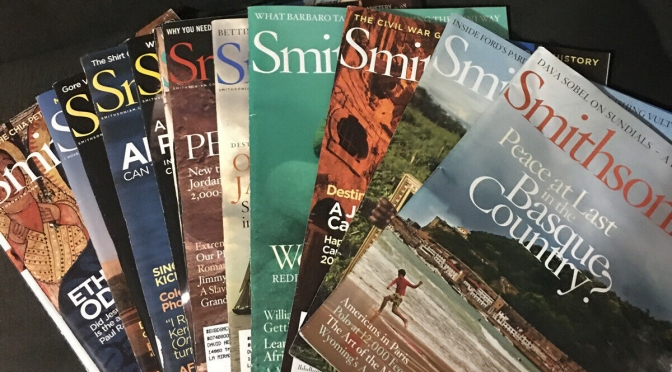
Scientists endlessly study lakes and rivers, historians document them, artists paint them, and travelers continue to explore them. In a series of articles, Smithsonian magazine highlights all that draws our eyes to our nation’s fresh and coastal waters.
In his closing speech at China’s annual parliamentary meeting on Monday, Xi Jinping, the country’s most powerful leader in generations, had an ominous message for his people and for those listening beyond its borders. “After a century of struggle, our national humiliation has been erased … the Chinese nation’s great revival is on an irreversible path,” he warned.
The UK was gripped this week by a saga that started off about controversial government plans to deter migrants crossing the Channel in small boats, and ended with Gary Lineker, host of the BBC TV football highlights show Match of the Day, being taken off the air. We reflect on a furore that revealed much about the contradictions of modern Britain.
From the buzzer to the finish line, the finest sports photographyreveals human achievement and emotion at the extremes.In a feature special this week, Simon Hattenstone talks to award-winning Guardian sports photographer Tom Jenkins about capturing the perfect picture – followed by 20 of the most iconic sports pictures ever taken and the stories behind them.
News, Views and Reviews For The Intellectually Curious

























:focal(2993x1995:2994x1996)/https://tf-cmsv2-smithsonianmag-media.s3.amazonaws.com/filer_public/cd/68/cd68dff3-6597-4029-98d7-de3c9ae14fd0/gettyimages-1320816707.jpg)
:focal(2016x1517:2017x1518)/https://tf-cmsv2-smithsonianmag-media.s3.amazonaws.com/filer_public/4b/19/4b198b21-f266-4761-9157-24ec47e53973/img_0656.jpg)
/https://tf-cmsv2-smithsonianmag-media.s3.amazonaws.com/filer/86/4f/864fcf0e-4b26-410a-aa50-713fdcaf6407/untitled-1-recovered.jpg)



 Boomers Daily