Peru is a country in South America that’s home to a section of Amazon rainforest and Machu Picchu, an ancient Incan city high in the Andes mountains. The region around Machu Picchu, including the Sacred Valley, Inca Trail and colonial city of Cusco, is rich in archaeological sites. On Peru’s arid Pacific coast is Lima, the capital, with a preserved colonial center and important collections of pre-Columbian art.
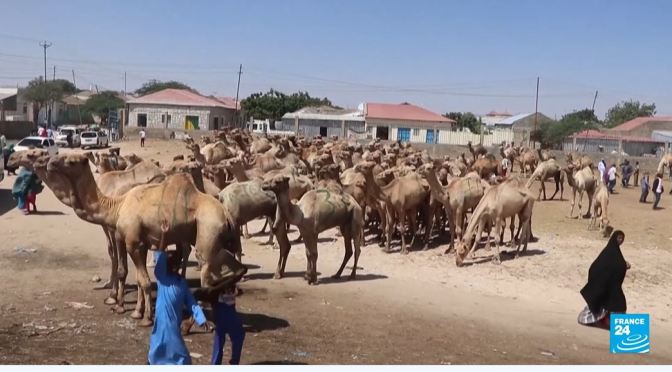
They are valued for their milk, valued for their meat and valued as well for their strength. #Camels are at the heart of traditional #Somali life as nomadic populations rely on them more than ever with the #climate crisis.
M+ is a museum of visual culture in the West Kowloon Cultural District of Hong Kong. It exhibits twentieth and twenty-first century visual culture encompassing visual art, design and architecture, and moving image. It opened on 12 November 2021.
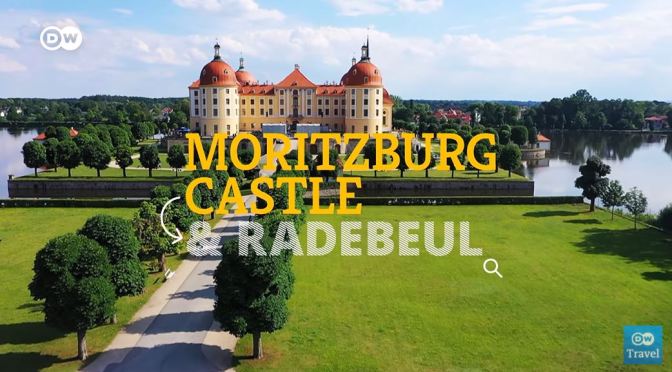
Tune in for our new series with reporter Hannah Hummel! In summertime she hit the German road in a special, electric car – the VW Beetle Cabrio! Hannah shows you some highlights of the eastern-German state of Saxony: Moritzburg Castle, a vineyard on the banks of the Elbe river, and the Karl May Museum in the town of Radebeul. The German author liked to imagine tales of the old Wild West, and is one of the most-read writers in the world. Take a romantic trip with Hannah through one of Germany‘s most idyllic regions.
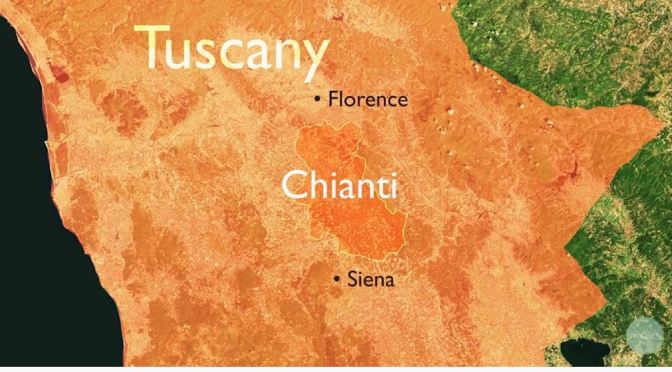
The first episode of Dream of Italy starts in the heart of Tuscany – Chianti – with a visit to Castello di Ama to learn how true Chianti Classico wine is produced and see the modern art that makes up the estate. The area is also famous for olive oil and we visit Pornanino to take part in the olive harvest. Nearby, host Kathy McCabe meets the very special cashmere goats that Nora Kravis raises at Chianti Cashmere Farm. Then it is off to Panzano for a wild boar hunt with the La Squadra Chiantigiana and a visit with philosophical butcher Dario Cecchini. At Busatti in Anghiari, we watch 100-year-old looms craft fine fabrics. The episode ends on the captivating coast of Tuscany in Maremma with a stunning ride with the butteri (cowboys).
In the fourth instalment of our series, US travelers Allison and Eric Bieller will be feasting their way through Cinque Terre, on the Italian Riviera. The 12-kilometer stretch of coastline in the Liguria region, along with its picturesque villages, is a UNESCO- World Heritage site. Eric and Allison check out all five of the villages – Monterosso al Mare, Vernazza, Corniglia, Manarola, and Riomaggiore, and sample delicious Italian specialities. Buon appetito!
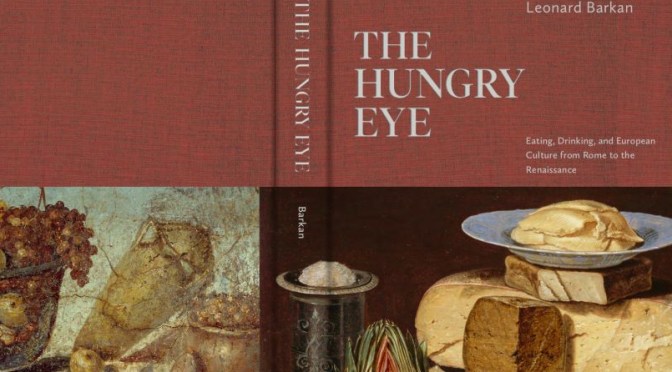
Eating and drinking can be aesthetic experiences as well as sensory ones. The Hungry Eye takes readers from antiquity to the Renaissance to explore the central role of food and drink in literature, art, philosophy, religion, and statecraft.
In this beautifully illustrated book, Leonard Barkan provides an illuminating meditation on how culture finds expression in what we eat and drink. Plato’s Symposium is a timeless philosophical text, one that also describes a drinking party. Salome performed her dance at a banquet where the head of John the Baptist was presented on a platter. Barkan looks at ancient mosaics, Dutch still life, and Venetian Last Suppers. He describes how ancient Rome was a paradise of culinary obsessives, and explains what it meant for the Israelites to dine on manna. He discusses the surprising relationship between Renaissance perspective and dinner parties, and sheds new light on the moment when the risen Christ appears to his disciples hungry for a piece of broiled fish. Readers will browse the pages of the Deipnosophistae—an ancient Greek work in sixteen volumes about a single meal, complete with menus—and gain epicurean insights into such figures as Rabelais and Shakespeare, Leonardo and Vermeer.
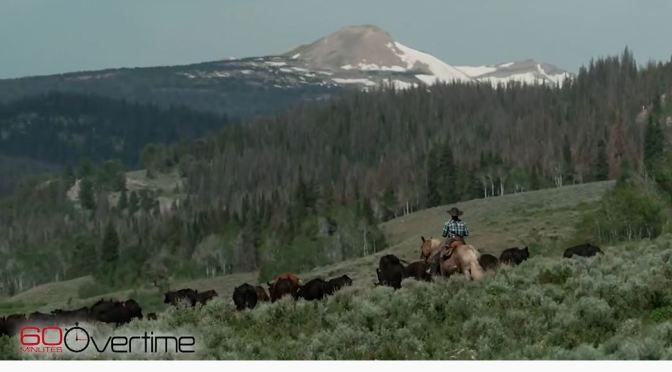
Hitch a ride with 60 Minutes correspondent Bill Whitaker along the Green River Drift, the longest running cattle drive in the U.S.
Upper Green River Valley, Wyoming
Predating most federal land management agencies, the Green River Drift cattle trail has been continuously used since the 1890s by the Upper Green River Cattle Association ranchers to get cattle from spring pasture on the desert to summer pasture in the forest. Chilly fall weather causes the cattle to “drift” back out of the forest to return to their home ranches. The trail, 58 miles long with 41 miles of spurs, crosses BLM, State of Wyoming, National Forest, and private properties.
Ethiopia is one of Africa’s most beautiful and fascinating countries, and a surprising travel destination. From spectacular mountain landscapes and national parks to vast lakes and mysterious deserts. From incredible wildlife to intriguing historic landmarks. From vibrant, fast growing cities to small villages and tribal regions, steeped in culture and traditions. In this documentary style video, I will show you 10 beautiful places I visited, on a one-month journey through Ethiopia in 2019. I remember the smiles and welcoming attitude of the people, the incredible food, remarkable monuments, the stunning natural and urban landscapes. In all fairness, this was one of my best travels yet.
News, Views and Reviews For The Intellectually Curious




 Boomers Daily