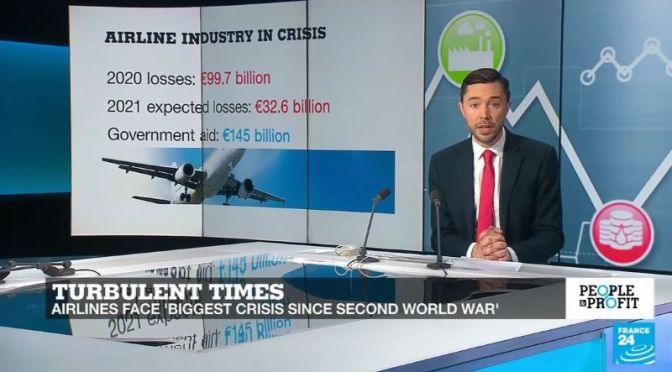
Travel bubbles are under development in some places in an effort to revive air travel, which has plummeted during the pandemic. WSJ explains how reopening the skies without quarantine requirements at both ends of a trip could help reboot the global economy.
Is cash still king? The coronavirus pandemic may cause a drastic decline in cash usage due to the risk of contamination. The unprecedented surge in the demand for contactless payment has also shown outstanding performances for major companies offering cashless payment methods, like Apple, Square and Paypal. Could covid-19 signal the end of cash in the United States and can the U.S. really function without physical currency?
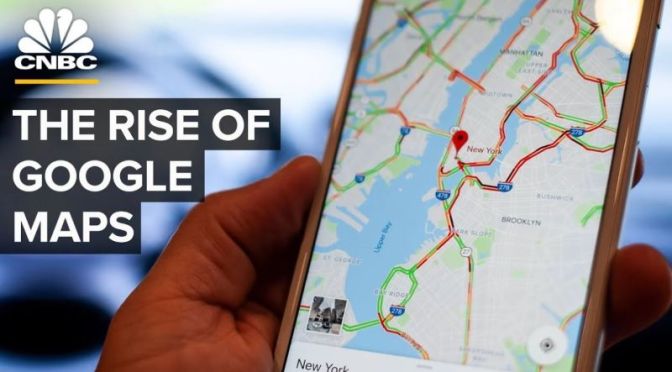
Google Maps has taken on competitors like MapQuest, Yahoo and Apple. But after a decade of investing, collecting data and billions of images through Street View, Google has over a billion monthly users. It updated tens of thousands of times a day and has mapped more than 220 countries and territories. Here’s a look at how Google came to dominate maps.
The coronavirus pandemic shuttered every single AMC theater for months. But the pandemic isn’t the only thing pushing the company onto financially shaky ground. Photo Illustration: Jacob Reynolds/WSJ
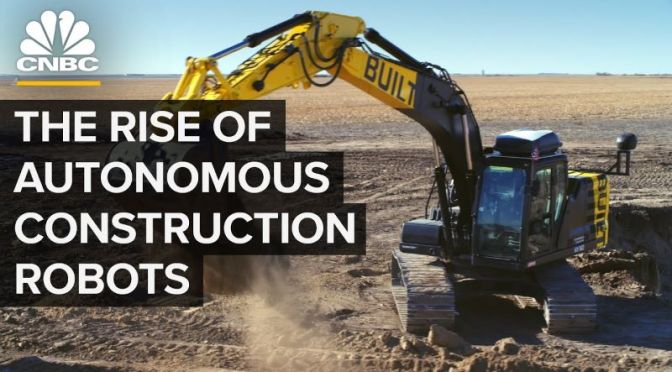
There’s a lot of buzz around self-driving cars, but autonomous-driving technology could revolutionize a different industry first — construction. That industry hasn’t changed much over the last several decades, according to some experts, making it an ideal candidate for automation.
“The way we build today is largely unchanged from the way we used to build 50 years ago,” said Gaurav Kikani, vice president of Built Robotics. “Within two years, I think we’re really going to turn the corner, and you’re going to see an explosion of robotics being used on construction sites.”
The industry is also faced with a labor shortage that the Covid-19 pandemic has further complicated. “Covid is making people step back and say, ‘hey, the way we’ve been doing things for a long time is just not sustainable,’” said Kevin Albert, founder and CEO of Canvas. “It is just a wake-up call for the industry.”
Canvas is one of several companies working on autonomous construction technology. Big players like Caterpillar and Komatsu, and start-ups like SafeAI and Built Robotics, see value in using autonomous machines to accelerate construction projects. The mining industry was one of the first to employ the use of self-driving tech.
Caterpillar began its first autonomy program more than 30 years ago. The company now has the largest fleet of autonomous haul trucks. Caterpillar says it’s hauled 2 billion metric tons in just over six years. Built Robotics is a San Francisco-based start-up founded by an ex-Google engineer that already has machinery out in the field. It’s automated several pieces of equipment, such as bulldozers and excavators.
“You can now collapse your construction timeline so you can knock out work overnight so that it’s ready for your human workers in the morning to speed them along,” Kikani said. SafeAI is another Silicon Valley start-up. It recently teamed up with Obayashi for a pilot program. It’s been retrofitting equipment like dump trucks, bulldozers and loaders. Robots are also helping inside.
San Francisco-based Canvas created an autonomous machine for finishing drywall and has worked on projects like the San Francisco International Airport and Chase Arena. Humans work alongside its robotic system. “Drywall is very hard work on the body,” Albert said. “And we’ve seen that 1 out of every 4 workers has to end their career early because of injuries. This will create longer careers for people and also enable people to join the trades that haven’t had access before.”
The construction industry is one of the largest sectors in the global economy, with about $10 trillion spent each year. That spending accounts for 13% of the world’s GDP, even though the sector’s annual productivity growth has only increased 1% over the past 20 years. According to McKinsey & Co., $1.6 trillion of additional value could be created through higher productivity, and autonomy would help the industry achieve that.
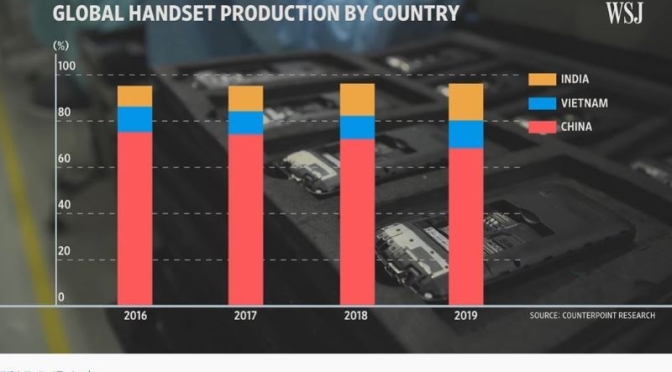
India is positioning itself as a smartphone-production hub amid a U.S.-China trade war that has disrupted global supply chains and left tech firms such as Apple and Samsung looking for alternatives to China to manufacture their products. Photo: Olivier Le Hellard for The Wall Street Journal
Amazon is the world’s biggest retailer, and its CEO Jeff Bezos the world’s richest man, for one very good reason. His company is better than anyone else, ever, at giving people what they want, quickly. Amazon acquired its undisputed status as heavyweight champion of the retail universe thanks largely to its lightning-fast delivery times.
The astonishing feat of ferrying hundreds of millions of items, from guitar strings to saucepans to car parts, directly to your door, inside 24 hours, is nothing short of a modern logistical miracle. So how does Amazon do it? A super-smart army of slave robots, for one. Ingenious, if occasionally unscrupulous, management practices are part of the answer too.
And the modern-day voodoo of deep-learning AI – all of which are made flesh in the most advanced stockrooms the world has ever seen. So join us today, as we button up our hi-vis jacket and journey inside Amazon’s smart warehouses.
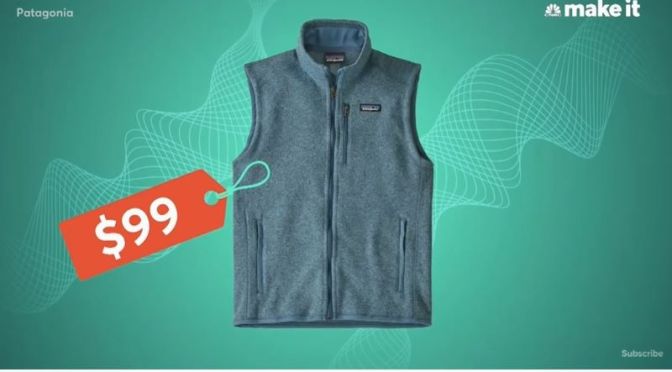
The Patagonia Better Sweater Fleece Vest is by far one of the brand’s most popular products. It’s also one of its most divisive. Over the last five years, the vest became a must-have accessory for Wall Street workers in Manhattan’s financial district to tech bros in Silicon Valley.
The company says at its height, it was fielding 60 requests for co branded vests, a day. But Patagonia, a private company that values environmental and political activism, never sought out to become the go-to status symbol for some of the biggest and richest corporations in the world.
The combination of hefty price tags and a professional-class of super fans earned it the nickname “Patagucci” prompting it to reevaluate which companies it allowed to put a moniker on the vest as a way to ensure their partners align with their progressive culture.
Patagonia even discouraged consumers from partaking in Black Friday sales and snuck political messages into the tags of its clothing. Here’s how Patagonia’s anti consumption philosophy helped it build a billion dollar outdoor brand.
Zach & Zoe Sweet Bee Farm owners Kam and Summer Johnson started keeping bees after learning how raw and local honey could benefit their son, who suffered with asthma and seasonal allergies. After studying how to best keep bees, harvest honey, and keep up their own bee farm, they were able to sell their local honey to restaurants around NYC, and even have a shop in Chelsea Market. https://zachandzoe.co/




 Boomers Daily