
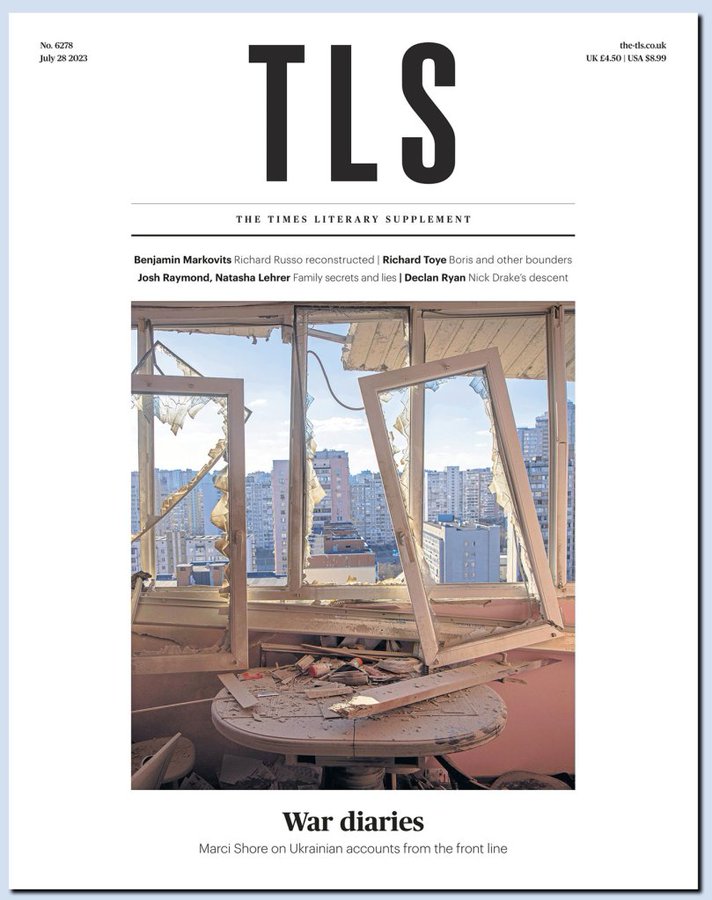

Times Literary Supplement (July 28, 2023): War diaries – Marci Shore on Ukrainian accounts from the front line; Richard Russo reconstructed; Boris and other bounders; Family secrets and lies; and more…

Times Literary Supplement (July 28, 2023): War diaries – Marci Shore on Ukrainian accounts from the front line; Richard Russo reconstructed; Boris and other bounders; Family secrets and lies; and more…


Jeffrey Toobin’s book about Timothy McVeigh and the Oklahoma City bombing traces the path from Ronald Reagan’s antigovernment ideology to today’s radicalized right.
By Sean Wilentz
Ronald Reagan’s pronouncement, in his first inaugural address in 1981, that “government is not the solution to our problem, government is the problem” marked a signal moment in what has become the most successful political counterrevolution in modern American history.


/https%3A%2F%2Fdev.lareviewofbooks.org%2Fwp-content%2Fuploads%2F2023%2F07%2FQJ_LARB.jpg)
ON AN UNUSUALLY rainy evening in Los Angeles this March, at the Thomas Mann House in Pacific Palisades, two investigative reporters from Germany gave a talk about a financial scandal known as “cum-ex.” Against the backdrop of a mid-century modern terrace, its polished cement looking dull and gray in the storm, the pair flashed through a series of slides about international tax embezzlement.
A relatively small drip of funds from the German cultural ministry sometimes supports talks like these in the name of Mann’s legacy. When the capital of German literary life was exiled to Los Angeles around the Second World War, the author built a home that now still hosts salons in the name of democratic cultural exchange.
/https%3A%2F%2Fdev.lareviewofbooks.org%2Fwp-content%2Fuploads%2F2023%2F07%2FGhetto-Fights.jpg)
THE YEAR WAS 1971, the place Łódź. Journalist Hanna Krall was interviewing a pioneering heart surgeon named Jan Moll. The good doctor, apparently unhappy with the outcome of previous interviews, told Krall that everything journalists ever wrote about medicine was nonsense. So, if she wanted to avoid doing the same, he strongly suggested she have her article vetted by a certain cardiologist, a Dr. Edelman, who, said Moll, would correct her mistakes. Krall agreed and arranged a meeting. She sat down with Marek Edelman in the Grand Hotel café, where it took 15 minutes for him to read through her article.
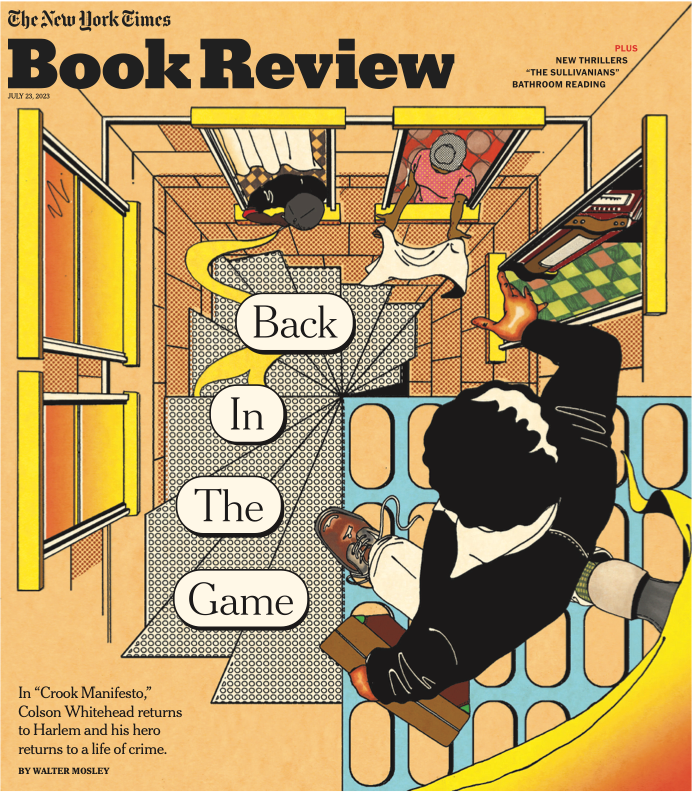

THE NEW YORK TIMES BOOK REVIEW – JULY 23, 2023:
The Pulitzer-winning novelist discusses the sequel to his 2021 crime story “Harlem Shuffle.”
A museum in England devoted to the best-selling children’s author, who died in 1990, condemned his antisemitic views.


James Lasdun
John Burnside
Florence Sutcliffe-Braithwaite
Deborah Friedell
James Butler
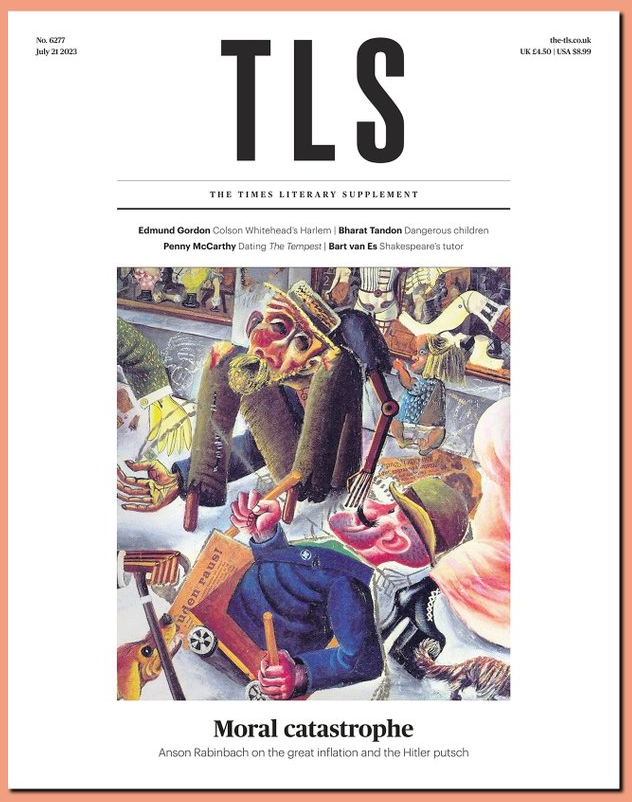
Times Literary Supplement (July 21, 2023) – Moral catastrophe – The great inflation in Germany in 1923 and the Hitler putsch; Pioneer’s in Women’s Sport; Colson Whitehead’s Harlem; Dangerous children; Dating The Tempest and Shakespreare’s tutor….
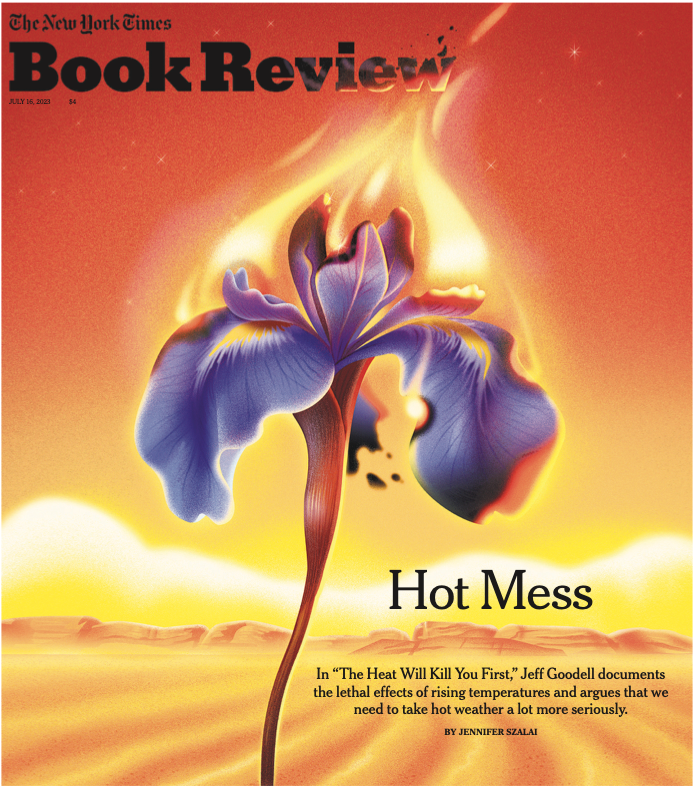
THE NEW YORK TIMES BOOK REVIEW – JULY 16, 2023: This week, Jeff Goodell’s “The Heat Will Kill You First,” feels particularly apt. “This is a propulsive book, one to be raced through; the planet is burning,” writes our critic Jennifer Szalai. But maybe you don’t want to think more than you already do about impending doom. We’ve got you covered: The issue brims with diversions — a charming novel about a reality TV show set on Mars, fiction about complicated families and a slew of good memoirs, including ones from a senior intelligence official, the war reporter Jane Ferguson and the actor Elliot Page.

In “The Heat Will Kill You First,” Jeff Goodell documents the lethal effects of rising temperatures and argues that we need to take hot weather a lot more seriously.
In Deborah Willis’s novel “Girlfriend on Mars,” a young woman enters a reality-TV contest to leave the planet, and her marijuana-farming boyfriend, behind.

GIRLFRIEND ON MARS, by Deborah Willis
Sometimes, a girlfriend needs space. Sometimes, she goes to space. That’s the — OK, obvious — premise of “Girlfriend on Mars,” a novel by the Canadian writer Deborah Willis, who knows what we’ve wished for from books all along, which is that they were TV instead.

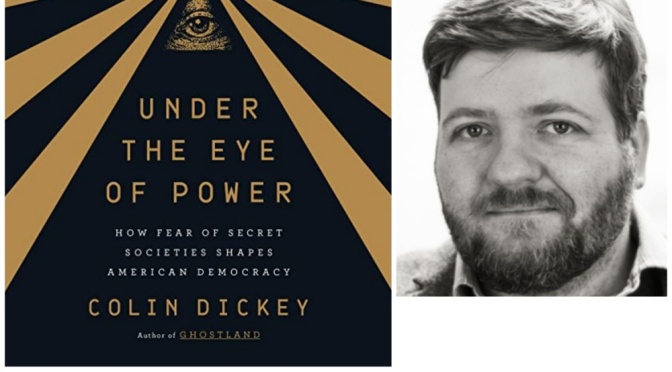
The American Scholar (July 14, 2023): In his new book, ‘Under the Eye of Power’, Colin Dickey asks, “What if paranoia, particularly a paranoia of secret, subversive societies, is not just peripheral to the functioning of democracy, but at its very heart?”
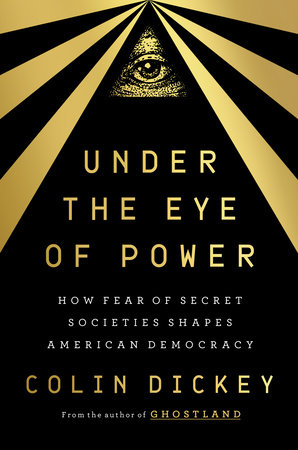
The litany of contemporary conspiracy theories runs long: Pizzagate, QAnon, chemtrails, “jet fuel can’t melt steel beams,” “birds aren’t real.”
Some of these are funny—the rumor that Avril Lavigne and/or Paul McCartney have been replaced by doppelgängers—and some have deadly consequences, like the mass murders motivated by replacement theory or the Chronicles of the Elders of Zion.
We might like to think this is a recent phenomenon, but the first American president to espouse a conspiracy theory was actually George Washington, a freemason who believed that the Illuminati caused the French Revolution.
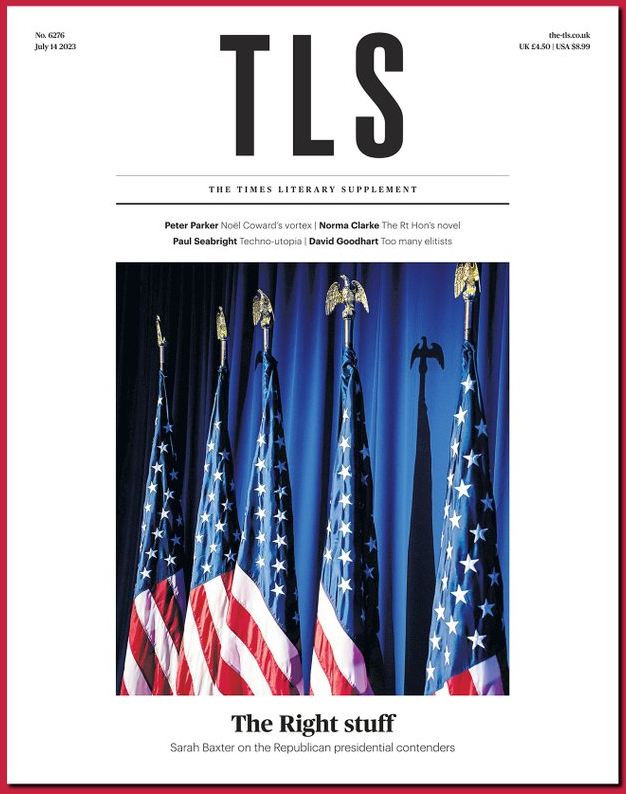
Times Literary Supplement (July 14, 2023) @TheTLS : The Republican presidential contenders; Noël Coward’s vortex; Techno-utopia; Too many elitists and more…

Meticulously rendered maps chart the sequence of broad historical trends, from the dispersal of our species across the globe to the colonizing efforts of imperial European powers in the 18th century, as well as exploring moments of particular significance in rich detail.
• Visualizes 7 million years of human history.
• Analyses cities and kingdoms as well as countries and continents.
• Features major technical developments, from the invention of farming in the Fertile Crescent to the Industrial Revolution.
• Charts the spread of major global religions, including Christianity and Islam.
• Explores the increasing interconnectivity of our world through exploration and trade.
• Investigates warfare and battles from across the ages, from Alexander the Great’s conquests to the D-Day offensive.




 Boomers Daily