


Times Literary Supplement (January 31 2024): The latest issue features ‘Back to Nature’ – The counterculture begins with Thoreau; Enlightenment dimmed; The secret state and the IRA; Homosexuality in early modern Europe and A family haunting….

Times Literary Supplement (January 31 2024): The latest issue features ‘Back to Nature’ – The counterculture begins with Thoreau; Enlightenment dimmed; The secret state and the IRA; Homosexuality in early modern Europe and A family haunting….


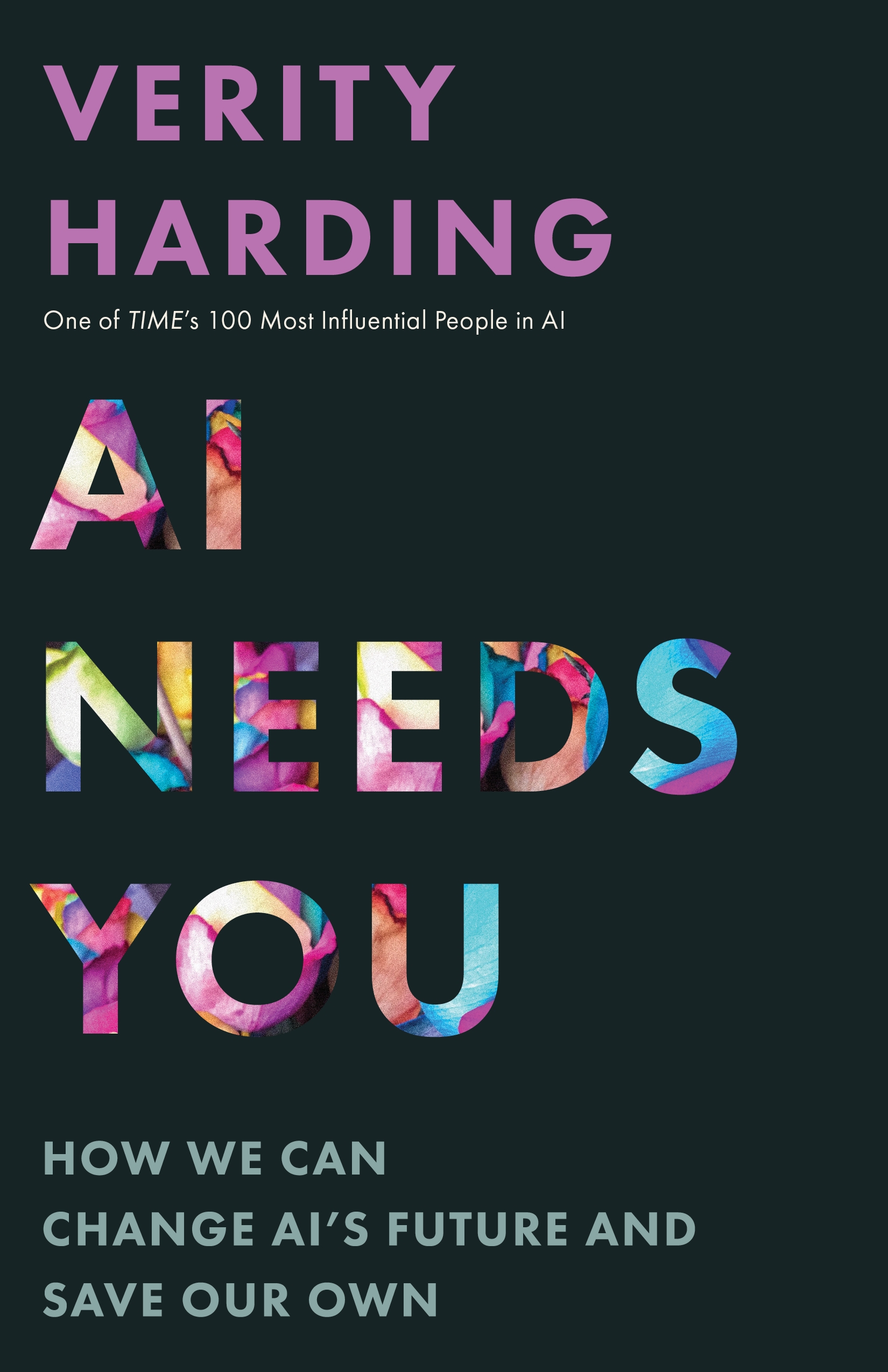
Artificial intelligence (ai) is one of them. Several books will look at how it might reshape the world: “ai Needs You”, a “humanist manifesto for the age of ai” by Verity Harding, formerly of Google DeepMind; “The Heart and the Chip: Our Bright Future with Robots” by Daniela Rus, director of the ai laboratory at mit; and “Literary Theory for Robots”, an examination of how machine intelligence will influence the way we read, write and think, by Dennis Yi Tenen, a professor of English at Columbia University.

Geopolitics will also dominate publishers’ frontlists. Dale Copeland, a professor of international relations, will chronicle how commerce has shaped America’s foreign policy; Jim Sciutto of cnn will explore “The Return of Great Powers: Russia, China and the Next World War”. Several authors will focus on the war in Europe. Eugene Finkel, who was born in Ukraine, will offer a “deeper history of Russian violence against civilians” in the country; in “Putin and the Return of History” Martin Sixsmith will look back over a thousand years to put the Russian president’s aggression in context. Peter Pomerantsev’s “How to Win an Information War” will apply the perspective of a propagandist during the second world war to the conflict.
For those hoping for a few hours of diversion, there will be plenty of novels to look forward to. Bestselling authors including Percival Everett, Yann Martel, David Nicholls, Kiley Reid, Colm Toibin and Amor Towles will return with new stories in 2024. James Patterson will be completing an unfinished manuscript left behind by Michael Crichton, the author of “Jurassic Park”.
An unseen work by Gabriel Garcia Marquez, who died in 2014, will also be released. In “En Agosto Nos Vemos” (“Until August”), a novella of fewer than 150 pages, the late Nobel laureate told the tale of a middle-aged woman’s affair. His children opposed its publication but now say it has the author’s trademark “capacity for invention, his poetic language [and] his captivating storytelling”. True or not, García Marquez will probably enjoy a resurgence, as an adaptation of his most celebrated work, “One Hundred Years of Solitude”, is also in production at Netflix. If you want a fantastical tale, who better to turn to than the Colombian master of magical realism?
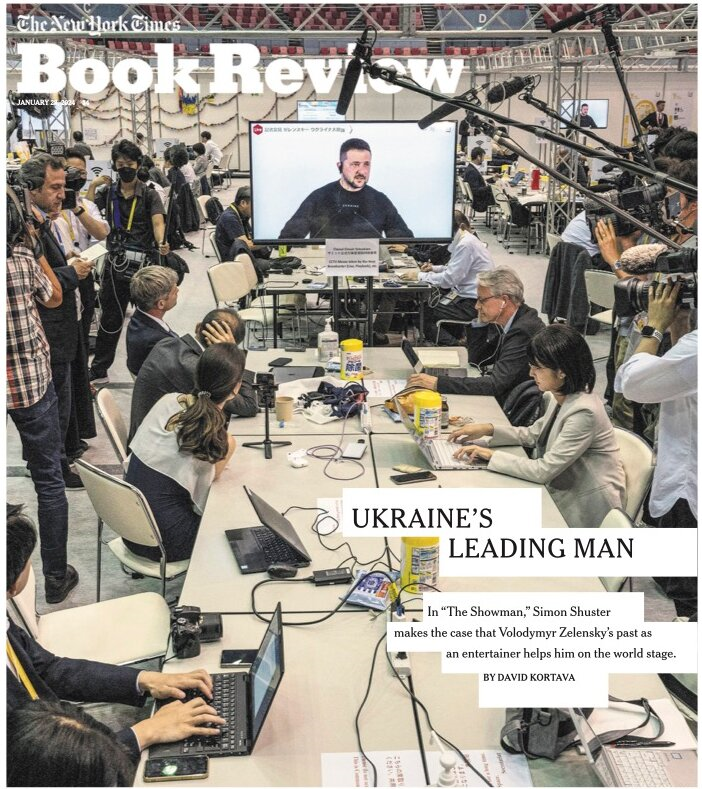

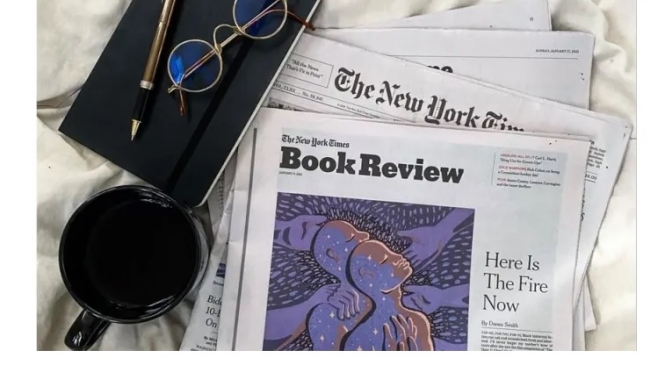
THE NEW YORK TIMES BOOK REVIEW (January 26, 2024): The latest issue features ‘Ukraine’s Leading Man’ – In “The Showman”, Simon Shuster makes the case that Volodymyr Zelensky’s past as an entertainer helps him on the world stage…

In “The Showman,” the journalist Simon Shuster trails the entertainer-turned-wartime president as he rallies the world for support.
By David Kortava
THE SHOWMAN: Inside the Invasion That Shook the World and Made a Leader of Volodymyr Zelensky, by Simon Shuster
Nine months into Russia’s full-scale invasion of Ukraine, in 2022, the Time magazine correspondent Simon Shuster caught a ride on a presidential train that few, if any, journalists had seen from the inside. In a private carriage, with the blinds drawn, Volodymyr Zelensky was fueling up on coffee during a trip to the frontline. He’d been reading about Winston Churchill, but with Shuster he’d sooner discuss another key World War II figure: Charlie Chaplin.
“He used the weapon of information during the Second World War to fight against fascism,” Zelensky said. “There were these people, these artists, who helped society. And their influence was often stronger than artillery.”
Emily Cockayne’s “Penning Poison,” a history of anonymous letters, reveals the ways we’ve been torturing one another, verbally, for centuries.
Two books — “The Longest Minute,” by Matthew J. Davenport, and “Portal,” by John King — examine the City by the Bay’s resiliency from very different angles.
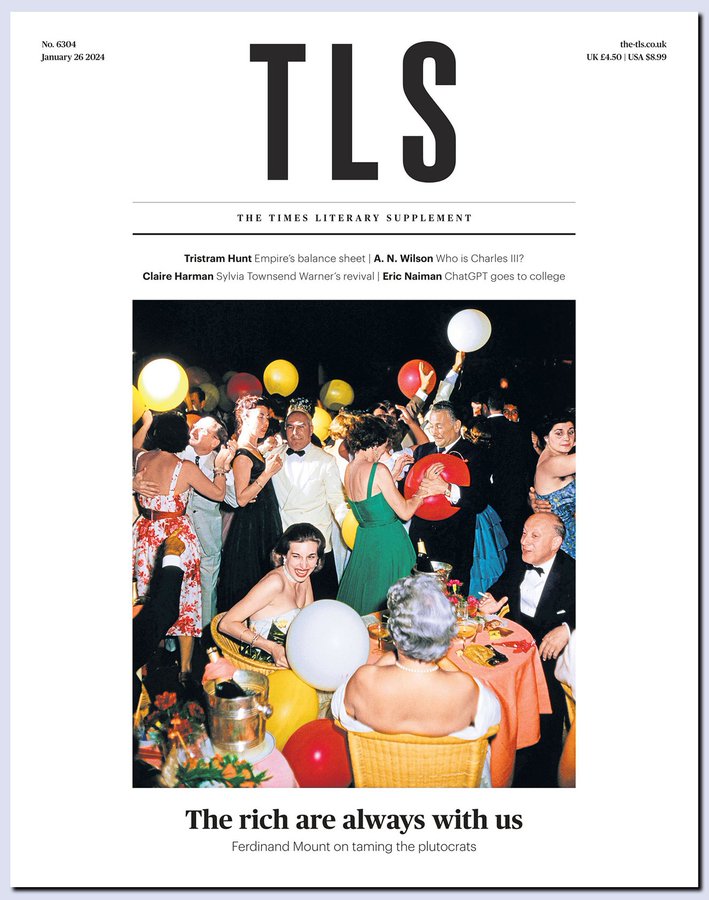
Times Literary Supplement (January 24, 2024): The latest issue features ‘The Rich Are Always With Us’ – Ferdinand Mount on taming the plutocrats; Empire’s balance sheet; Who is Charles III?; Silvia Townsend Warner’s revival and ChatGPT goes to college…

THE NEW YORK TIMES BOOK REVIEW (January 19, 2024): The latest issue features the excitement over advance copy reviews of a January novel, Kaveh Akbar’s “Martyr!” …“You’ve got to read this,” one editor said. “One of the most electric novels I’ve read in a long while,” another said. This kind of thing — everyone thrilled by the same book — is unusual at the TBR, and explains why “Martyr!,” about a grieving young man’s search for meaning, graces our cover this week.

In “Martyr!,” the poet Kaveh Akbar turns a grieving young man’s search for meaning into a piercing family saga.
Martyr!, by Kaveh Akbar
Reviewed by By Junot Díaz
Cyrus Shams, the aching protagonist at the heart of Kaveh Akbar’s incandescent first novel, is a veritable Rushdiean multitude: an Iranian-born American, a “bad” immigrant, a recovering addict, a straight-passing queer, an almost-30 poet who rarely writes, an orphan, a runner of open mics, an indefatigable logophile, a fiery wit, a self-pitying malcontent. But above all else Cyrus is sad; profoundly, inconsolably, suicidally sad.
Here are the books discussed in this week’s episode:
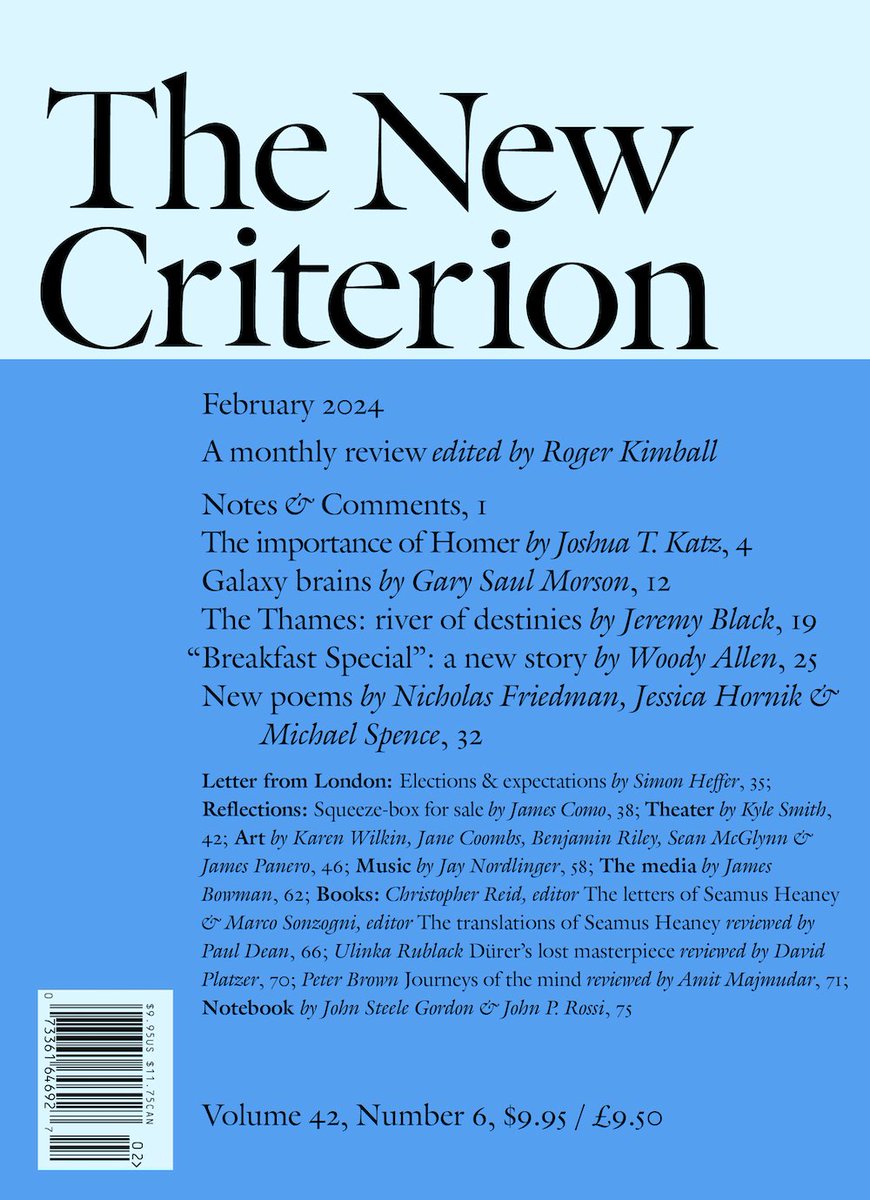
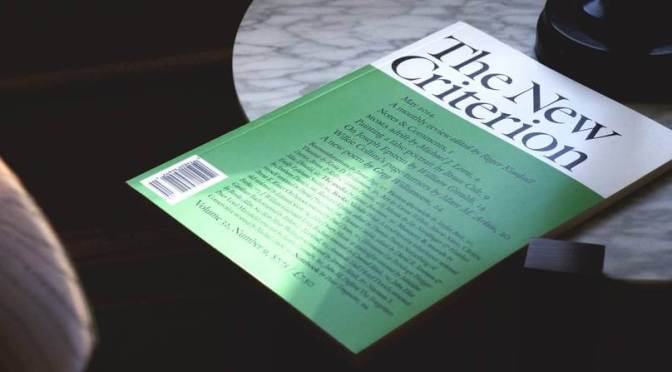
 The New Criterion – The February 2024 issue features: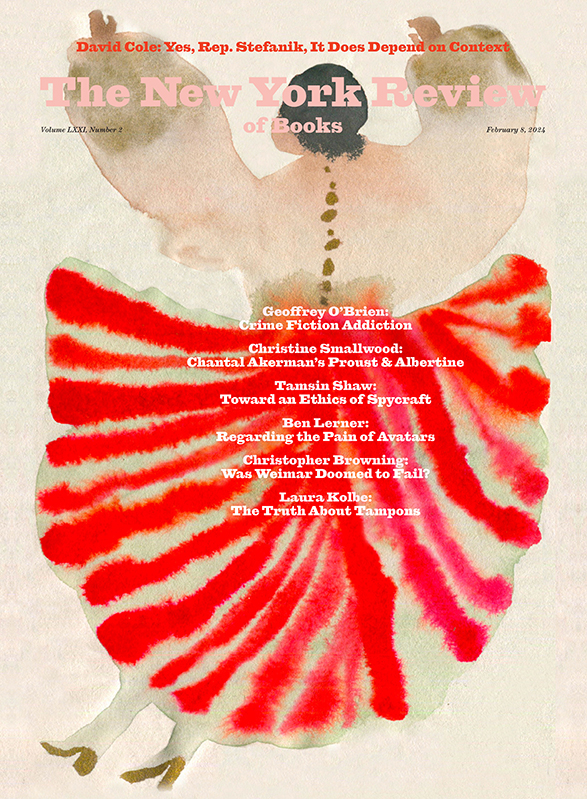

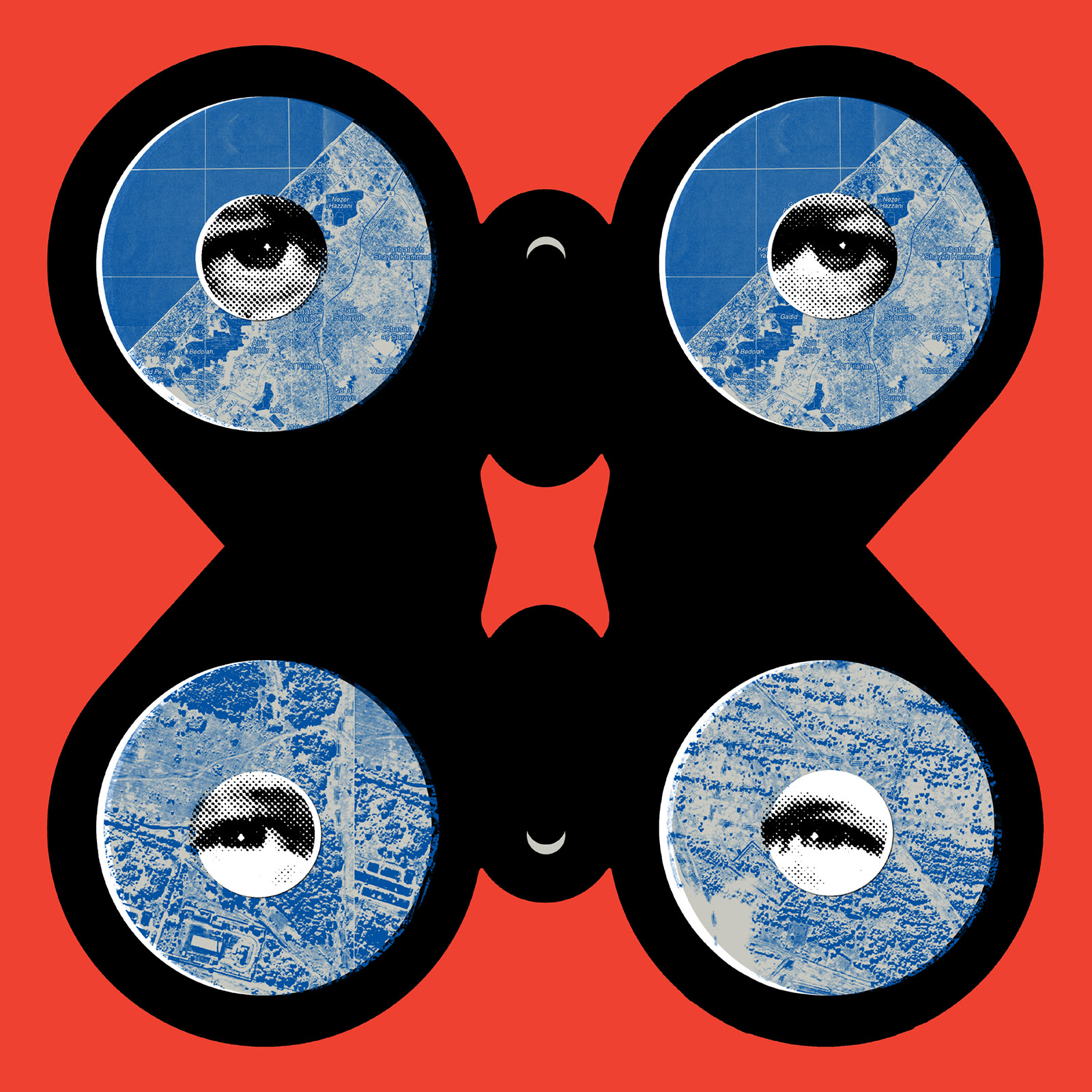
What moral principles should guide our intelligence-gathering agencies?
Spies: The Epic Intelligence War Between East and West by Calder Walton
Spying Through a Glass Darkly: The Ethics of Espionage and Counter-Intelligence by Cécile Fabre
On October 7, as Hamas fighters roared into southern Israel from Gaza, bringing terror and death to anyone they encountered—Israeli soldiers, Bedouins, young people dancing and getting high together, kibbutzniks scooping up small children into desperate arms—I was sleeping in a comfortable hotel room in Georgia. All around me in the sultry darkness of a beautiful resort, many of the US intelligence community’s finest minds were also slumbering. We awoke with the expectation that we would be addressed by CIA director William Burns at the opening of the Cipher Brief’s annual Threat Conference, a yearly gathering of national security professionals from the private and public sectors, plus a few academics and journalists.
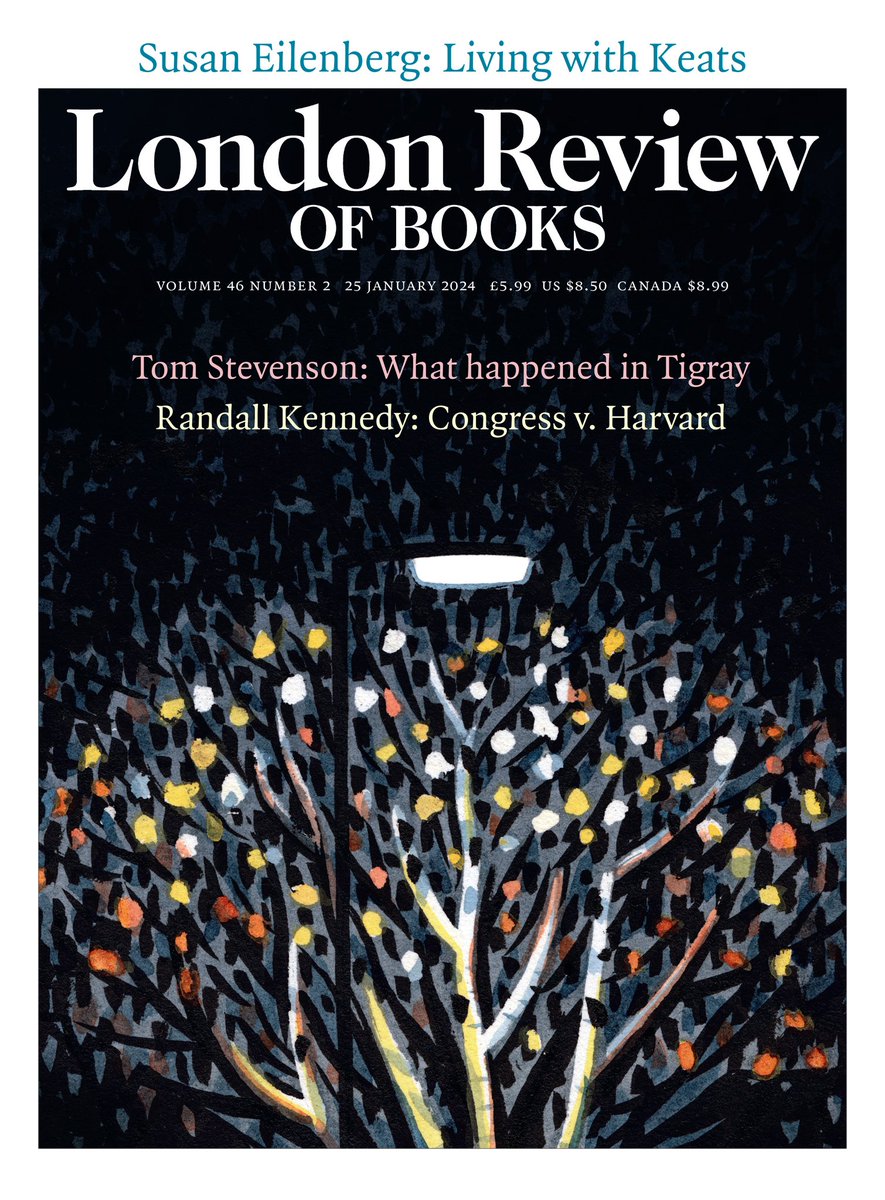
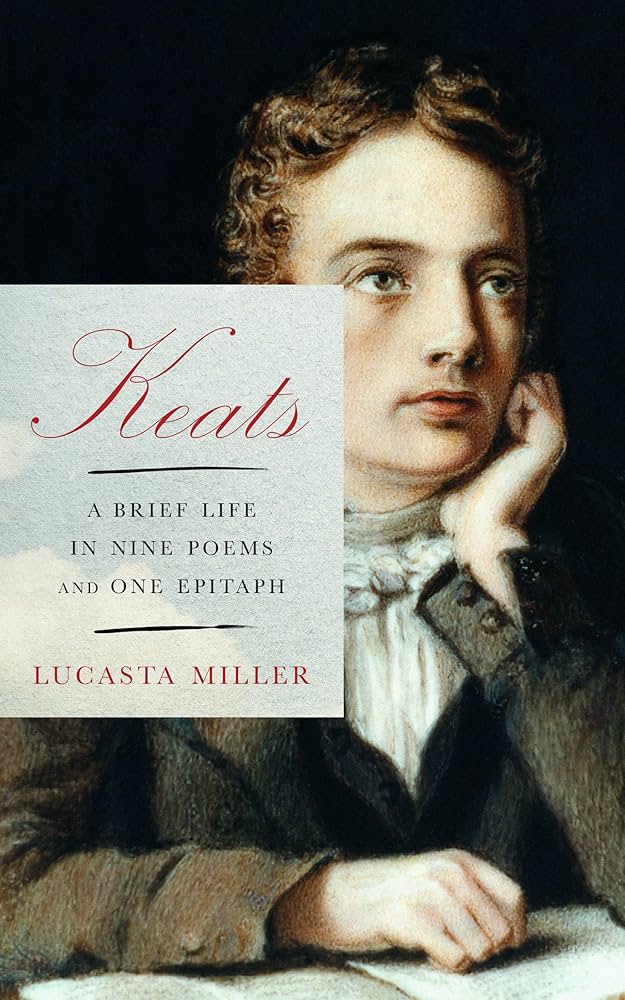
Keats: A Brief Life in Nine Poems and One Epitaph
by Lucasta Miller.
Keats’s Odes: A Lover’s Discourse
by Anahid Nersessian.
Looking back to September 1820, when things had gone badly wrong but not yet so grotesquely as to be visibly beyond repair, we can see how few and how poor Keats’s options were. Surely it was better that (in the absence of other volunteers) the young artist Joseph Severn agreed to travel with the dying poet to Rome that autumn than that he had refused.
A Nasty Little War: The West’s Fight to Reverse the Russian Revolution
by Anna Reid.
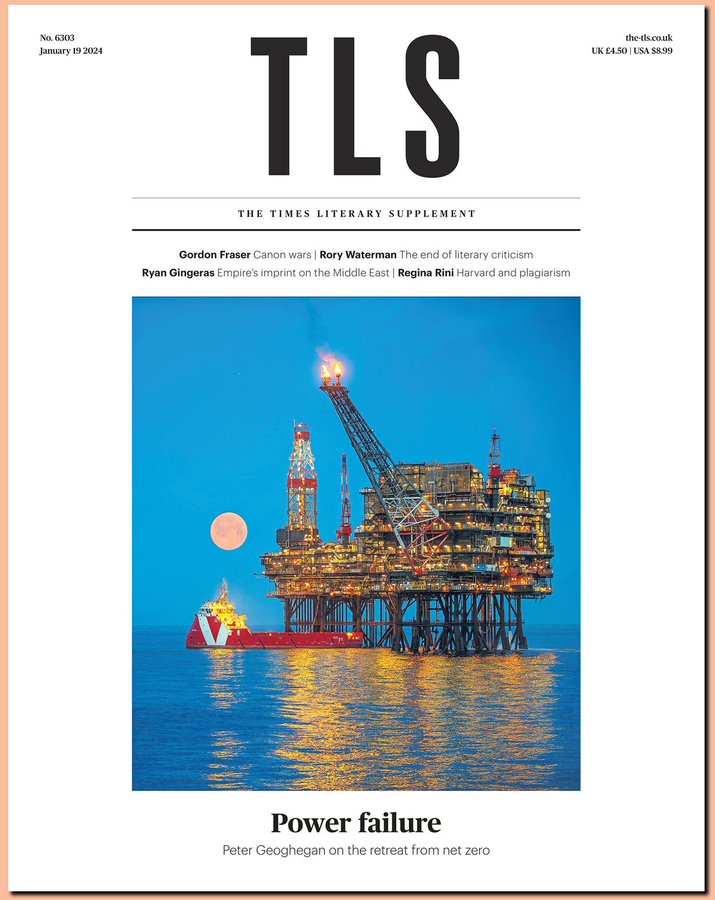
Times Literary Supplement (January 17, 2024): The latest issue features ‘Power Failure’ – The retreat from net zero; Canon wars; The end of literary criticism; Empires imprint on the Middle East; Harvard and plagarism….
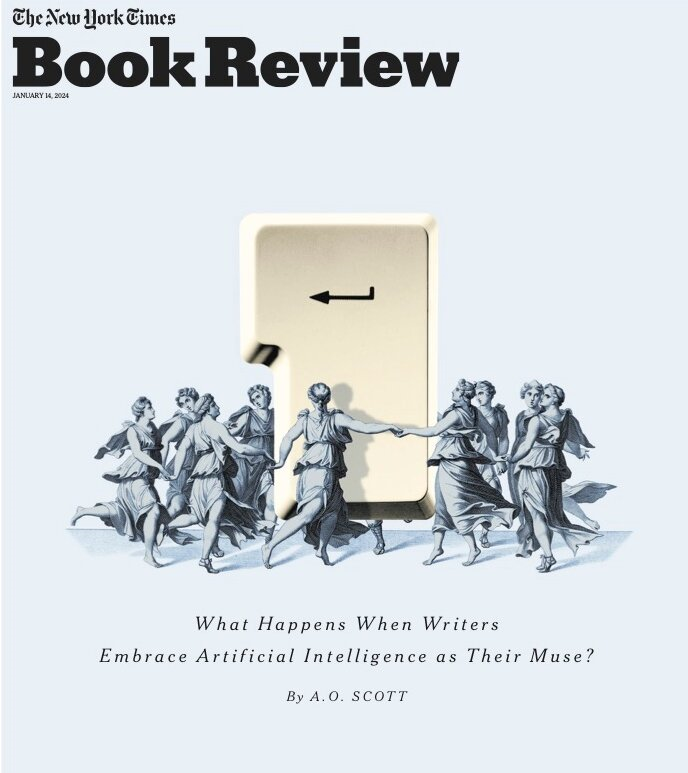
THE NEW YORK TIMES BOOK REVIEW (January 12, 2024): The latest issue features ‘What Happens When Writers Embrace Artificial Intelligence as Their Muse? by A.O. Scott…

What happens when writers embrace artificial intelligence as their muse?
By A.O. Scott
The robots of literature and movies usually present either an existential danger or an erotic frisson. Those who don’t follow in the melancholy footsteps of Frankenstein’s misunderstood monster march in line with the murderous HAL 9000 from “2001: A Space Odyssey,” unless they echo the siren songs of sexualized androids like the ones played by Sean Young in “Blade Runner” and Alicia Vikander in “Ex Machina.”
We fantasize that A.I. programs will seduce us or wipe us out, enslave us or make us feel unsure of our own humanity. Trained by such narratives, whether we find them in “Terminator” movies or in novels by Nobel laureates, we brace ourselves for a future populated by all kinds of smart, possibly sentient machines that will disrupt our most cherished notions of what it means to be human.

For Álvaro Enrigue, a novelist fascinated with historical detail, the first meeting of the Aztecs and Spanish conquistadors is the obsession of a lifetime. He brings it to life in “You Dreamed of Empires.”
By Benjamin P. Russell
The Aug. 13, 2021 edition of The New York Times failed to mention the 500th anniversary of the fall of Tenochtitlan, the erstwhile Aztec capital out of which Mexico City was born. Álvaro Enrigue noticed. Of course.
The 54-year-old Enrigue, who grew up in Mexico City, believes that early meeting between Europe and the Americas changed the trajectory of global commerce, urbanism, industry and much else besides. Modernity itself, he argues, was born in the moment the Aztec emperor Moctezuma and Hernan Cortés, the Spanish conquistador, first looked each other in the eye in 1519, a clash of empires that set in motion the city’s capture two years later.
 Boomers Daily