
Category Archives: Arts & Literature


Artist Profile: Painter Claude Monet’s Birthday Celebrated At Denver Art Museum On November 14
 The Denver Art Museum will celebrate famed French Impressionist Claude Monet’s birthday on November 14, 2019, in conjunction with the exhibition Claude Monet: The Truth of Nature. The DAM will celebrate the artist’s 179th birthday with cake, the launch of the DAM’s first-ever podcast titled Beyond Monet, the reveal of a Monet-inspired painting by local artist Ashley Joon, a special Art & About program dedicated to Monet’s birthday, and a surprise Monet-themed gift bag for one lucky visitor.
Born in Paris on November 14, 1840, Claude Monet was a prolific painter and founder of the French Impressionist movement, bridging the gap between the artistic movements of the 19th century and the modernized art world of the 20th century. Monet lived a long life and had an extensive artistic career that spanned nearly 70 years. In the Monet exhibition, visitors can see more than 120 works by Monet, including the first painting Monet ever exhibited when he was just 18 years old, along with some of his very last paintings.
To read more: https://denverartmuseum.org/article/celebrate-monets-birthday-dam-november-14
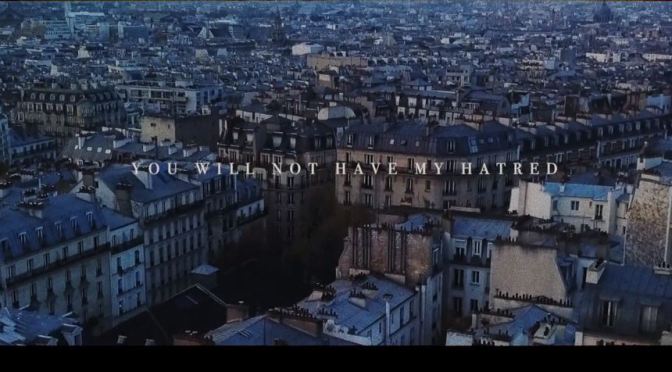
Short Film Showcase: “You Will Not Have My Hatred” In France Directed By Salomon Lightelm (2019)
Edited and Directed by: Salomon Lightelm
Words by: Antoine Leiris
Cinematographer: Zack Spiger
Production Co.: Gang Films
Music Score: AWVFTS

Filmed at: Chateaux Fontainebleau
“I vividly remember the morning I read these powerful words for the first time. It was a cold November afternoon and a friend of mine had shared it on Instagram. As I was reading, I glanced over at my son playing in the living room – he was 17 months old, and I started coming undone. My wife looked over at me and I couldn’t speak, I just handed her the phone, and she also just came undone. These words had stuck with me for 4 years and they haven’t let go of me. How can a man, who had suffered so much, have a such a spirit of resilience and grace? Thank you Antoine Leiris for seeing the world unlike how most people see it – for showing a way that flows in the opposite direction of hate, and retaliation. Its words like yours that change the world. This film is a contemplative meditation on those words, be patient with it.”
Website: http://www.ligthelm.work/

Book Review Podcasts: “In Love With George Eliot” By Kathy O’Shaughnessy (BBC)
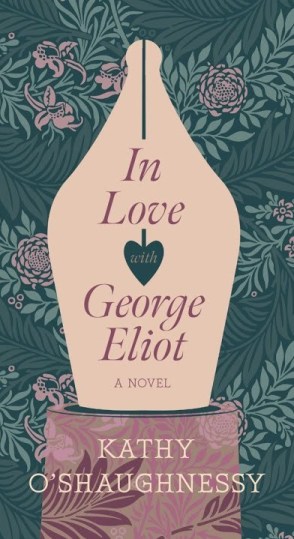 Kathy O’Shaughnessy talks to Mariella about her novel charting the life of George Eliot.
Who was the real George Eliot? In Love with George Eliot is a glorious debut novel which tells the compelling story of England’s greatest woman novelist as you’ve never read it before.
Marian Evans is a scandalous figure, living in sin with a married man, George Henry Lewes. She has shocked polite society, and women rarely deign to visit her. In secret, though, she has begun writing fiction under the pseudonym George Eliot. As Adam Bede’s fame grows, curiosity rises as to the identity of its mysterious writer. Gradually it becomes apparent that the moral genius Eliot is none other than the disgraced woman living with Lewes.

Animated Visual Essay: Songwriter “Leonard Cohen” Interview In Video By Joe Donaldson (2019)
Direction, Design & Animation: Joe Donaldson
Original Music and Sound Design: Ambrose Yu
Executive Producer: Soo-Jeong Kang
Senior Producer: Yara Bishara
Senior Editor: Brian Redondo
Producer: Sara Joe Wolansky
Audio Engineer: Jill Du Boff

“I was recently commissioned by The New Yorker to direct, design, and animate a pilot series of three animated visual essays.
“I know there’s a spiritual aspect to everybody’s life, whether they want to cop to it or not,” he said at one point. “It’s there, you can feel it in people—there’s some recognition that there is a reality that they cannot penetrate but which influences their mood and activity. So that’s operating. . . . Sometimes it’s just, like, ‘You are losing too much weight, Leonard. You’re dying, but you don’t have to coöperate enthusiastically with the process.’ Force yourself to have a sandwich.”
Leonard Cohen (1934 – 2016)

The first film features the great Leonard Cohen as he reflects on death and preparing for the end. The initial interview, by David Remnick, was recorded at Cohen’s home in Los Angeles a month before he passed away.”

You can view the full article on The New Yorker here: newyorker.com/culture/video-dept/leonard-cohen-and-the-divine-voice

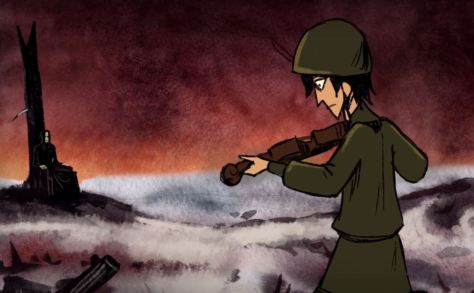
Short Film Showcase: “Concert Of The Fire” Directed By Mariia Konopatova (2019)
Directed by: Mariia Konopatova

Composer: Yury Konstantinov
“This is a story of struggle between art and death. A violinist finds himself in the middle of a war and is ready to die. Will the music in his heart and a violin in his heands help him to resist Death itself?”
Website: https://vimeo.com/mariikono

Top New Animated Videos: “Six Kinetic Characters” By Lucas Zanotto (2019)
Filmed, Animated and Music by: Lucas Zanotto

A series of abstract kinetic characters.

Website: instagram.com/lucas_zanotto

Top Podcasts: 77-Year Old Rock & Roll Legend Graham Nash Talks About His Albums And Music (PBS)
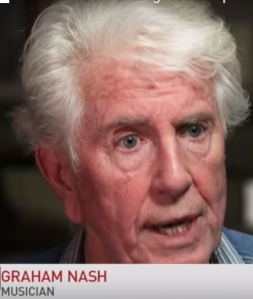 Two-time Rock and Roll Hall of Fame inductee Graham Nash has hits aplenty spanning his nearly six-decade career. But the 77-year-old singer-songwriter recently chose to perform a special run of shows featuring his lesser-known first two solo albums in their entirety, which together describe a crucial chapter in his personal and artistic life. Tom Casciato recently spoke to Nash to learn more.

Top Museum Exhibitions: “Caravaggio & Bernini” At The Kunst Historisches, Vienna (Thru Jan 19, 2020)
From a Hyperallergic online review:

Caravaggio & Bernini: The Discovery of Emotions features some of the artists’ greatest works, but also charts their influence on others. And that influence proved to be powerful and enduring. Caravaggistas spread across Europe like termites. And so we could call this exhibition a battle of the swaggerers, the pomp of a very eclectic brand of Viennese historicism facing off against the theatrical push and preen of two great Italians.

From almost the beginning, Caravaggio, that man who arrived in Rome in the 1590s, is completely outrageous. Whom did he think were his principal patrons? Churchmen, of course. Did they care that he depicted John the Baptist in an extraordinary painting, circa 1602, as a carefree, lascivious, curly-haired boy with the cheekiest of grins imaginable?

Book Review Podcasts: “Antisocial” By Andrew Marantz, “No Stopping Us Now” By Gail Collins (NYT)

From the New York Times Book Review:
“Antisocial,” the new book by Andrew Marantz, plainly states its subject in its subtitle: “Online Extremists, Techno-Utopians, and the Hijacking of the American Conversation.” In order to write it, Marantz immersed himself in corners of the internet most of us would go out of our way to avoid.
Gail Collins visits the podcast this week to discuss her new book, “No Stopping Us Now,” an eye-opening chronicle of older women’s journey to progress in the United States over the years. “It used to be, the whole vision of your life if you were a woman was that you got married, you had children and, once the children were grown, you were old — done,”

Collins says on the podcast this week. “That was the thing I was looking at: What counted as old, and then what did women do when they got to what was regarded as old? How did they use it, how did they fight it?”
To read more: https://www.nytimes.com/2019/11/08/books/review/Andrew-Marantz-Gail-Collins-interview.html
 Boomers Daily