THE WEEK IN ART (October 2, 2025): The latest episode feature a new exhibition at the Fitzwilliam Museum in Cambridge, UK, called Made in Ancient Egypt, reveals untold stories of the people behind a host of remarkable objects, and the technology and techniques they used.
The Art Newspaper’s digital editor, Alexander Morrison visits the museum to take a tour with the curator, Helen Strudwick. One of the great revelations of the past two decades in scholarship about women artists is Michaelina Wautier, the Baroque painter active in what is now Belgium in the middle of the 17th century. The largest ever exhibition of Wautier’s work opened this week at the Kunsthistorisches Museum in Vienna, and travels to the Royal Academy of Arts in London next year.
Ben Luke speaks to the art historian who rediscovered this extraordinary painter, Katlijne Van der Stighelen, who has also co-edited the catalogue of the Vienna show. And this episode’s Work of the Week is Robert Rauschenberg’s Bed (1955), one of the most important works of US art of the post-war period. It features in the exhibition Five Friends: John Cage, Merce Cunningham, Jasper Johns, Robert Rauschenberg, Cy Twombly, which this week arrives at the Museum Ludwig in Cologne.
We speak to Yilmaz Dziewior, the co-curator of the exhibition.
Made in Ancient Egypt, Fitzwilliam Museum, Cambridge, UK, 3 October-2 April 2026
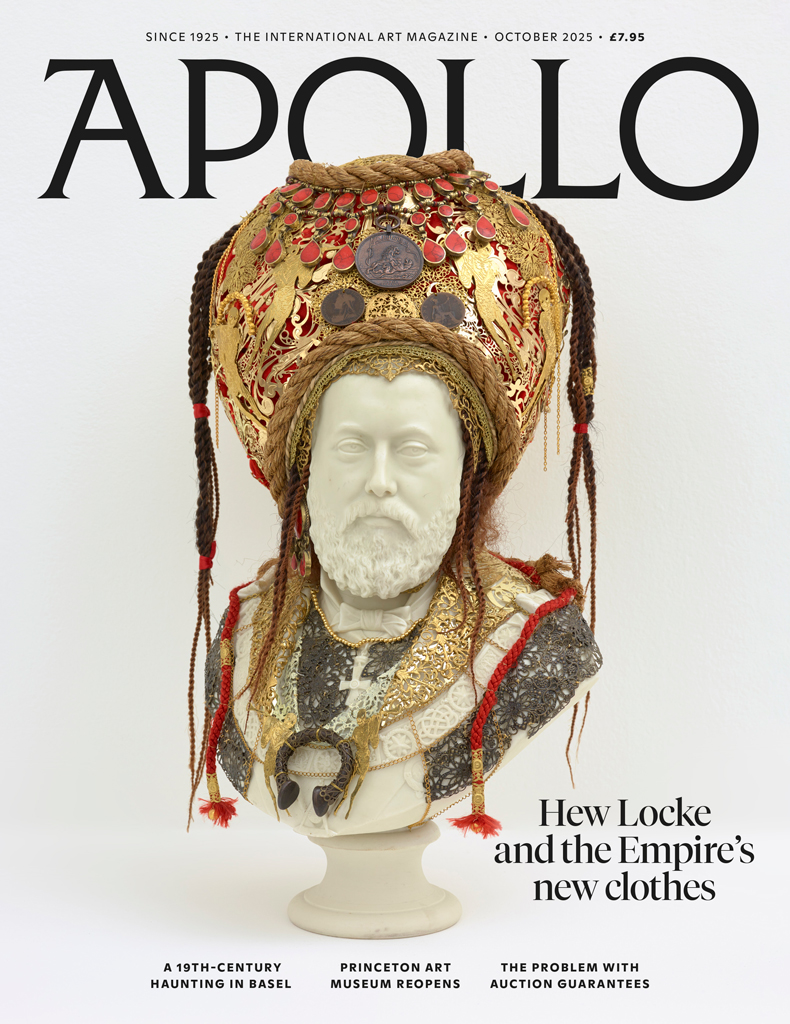
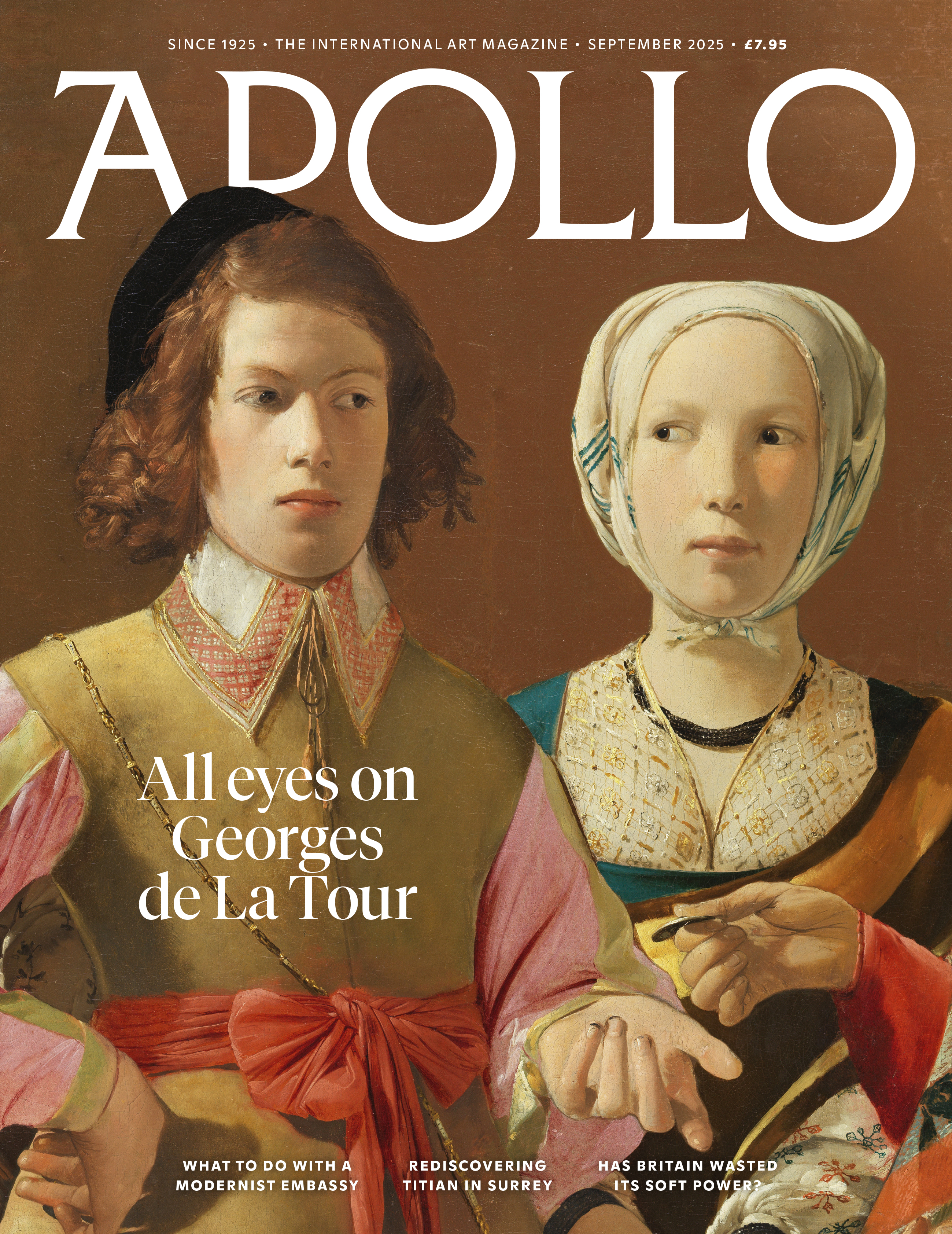
APOLLO MAGAZINE: The latest issue features Hew Locke and the Empire’s new clothes | Princeton University Art Museum reopens | William Hogarth’s bedside manner | the many faces of Nigerian modernism
In the spring of 1689, Matsuo Bashō set out from Edo with his inkstone and his disciple, walking north through Japan’s interior. This essay imagines the painter Ogata Kōrin at his side, brush catching what haiku left unsaid: the lantern’s glow, a fox’s mischief, the silence after sound.
The morning I left Edo, the sky was thick with petals. Cherry blossoms fell in sudden gusts, scattering across canals and clinging to the backs of merchants. Someone in the crowd said my name. “Bashō—the man of stillness.” The words felt like a shroud. Stillness was not peace. Stillness was suffocation.
I carried only a robe, a small pack, and my inkstone. I gave no notice, offered no farewell. A poet should know the difference between an entrance and an exit, and Edo was drowning in entrances—recitations in smoky salons, verses pinned to pillars, applause echoing in courtyards. To slip away silently was my only true poem.
Sora, my disciple, waited by the gate, his journal tied at his side. Beside him stood Ogata Kōrin, carrying brushes wrapped in cloth, a small box of pigments, and sheets of fine paper. He was famed for painting bold pines and cranes against gold, but he wanted to walk with us, to see if paint could keep pace with words.
“You walk for silence,” he said as we stepped into the road.
“And you?” I asked.
“I will paint the sound.”
A crow on a bare branch— autumn evening.
Walking unstitched illusions. You cannot hurry rain. You cannot plead with a mountain. Each step was a reminder of smallness.
Oku—the interior—was more than geography. It was the hidden chamber within things. To walk north into deep country was to step into the interior of myself.
The road gave humility: a thin robe against spring wind, an empty belly by sundown, blistered feet in straw sandals. Hunger was not a lack but a space for the world to fill. Only when stripped of comfort could I hear the world breathe.
By the second month, rains thickened. Each evening Sora dried our sandals by the inn’s hearth, though by morning they were heavy again.
At a mountain temple, a monk struck the great bell. The sound swelled, then emptied into air.
“Not the ringing,” he whispered, “the silence after—that is the true temple.”
Kōrin ground his ink and left behind a circle fading into white paper. I looked at it and felt the hush expand. His first gift of the journey.
Pine shadow— the road bends to meet it.
Summer pressed down like a hand. Cicadas shrieked in the trees, their chorus burning itself away. At a roadside inn, a farmer’s wife handed me a bowl of barley and salt.
“Why walk in this heat?” she asked.
“To see what words cannot hold,” I said. She laughed, shaking her head.
That night, I listened to the cicadas outside the window. Kōrin painted their wings in silver strokes. Sora struggled to describe them, blotting his brush, sighing. Not every moment can be pinned to the page.
One afternoon, a girl chased dragonflies, sleeves spread like wings. She caught none, but her laughter rang sharper than capture. Kōrin caught her mid-flight in vermilion. He pressed the paper into Sora’s hands. “If you cannot hold it with words,” he said, “let color remind you.”
We reached Matsushima, where pine-covered islets scattered like jewels across the bay. Some places do not need words. Kōrin’s blues and greens glowed even at dusk.
That night, fireflies pressed against the paper walls of our hut, their glow brighter than the lamp. I set down my brush. Some nights call for silence more than lines.
Later, in a fishing village, I collapsed with fever. A fisherman’s wife placed cloths on my brow and whispered prayers to the sea.
When I woke, Kōrin held out a small painting of a lantern’s glow against dark waves. The flame was steadier than I had felt in days.
Lantern flickers— the sea’s hush louder than my pulse.
By August, the barley fields had turned gold. The harvest moon rose red above the stubble. Villagers poured sake and sang. A boy ran over with a cup. “Drink, master!”
“The moon is already enough,” I said.
Snow still lingered in the high passes. The mountain does not flatter. It does not care if a man is poet or beggar. It accepts only attention.
Winter gust— even the inkstone holds the wind.
Crossing a frozen river, I slipped. A peasant caught my arm. “Careful, master. The ice breaks without warning.”
“So does the self,” I said.
Even in silence, the self lingered like a shadow. I imagined my words drifting northward, reaching readers yet unborn. But the further I walked, the thinner that dream became. What immortality is there in syllables, when rivers change their course and mountains crumble?
In Edo, applause had filled the air like thunder. On the road, there was only silence. Silence wounds, but it also heals.
The answer came not in thunder but in a sparrow’s wing. Write not to endure, but to attend. Not for tomorrow, but for now.
Near a riverbank, a boy approached with a scroll of verses. “Master, how do I make my poems last?”
“Write what you see,” I said. “Then write what you feel when you see it. Then tear it up and walk.”
The boy bowed. Kōrin added, softly: “Or paint the emptiness left behind.”
River mist— the boy’s scroll left unopened.
In the mountains I met a man from the north whose dialect I could not follow. He pointed to the sky, then to the river, then to his chest. We shared tea in silence. I realized then that language is not the vessel, but the gesture. Poetry lives in the space between.
One morning, I watched a fox dart through a field, a rice ball clutched in its mouth. The farmer cursed, but I laughed. Even hunger has mischief. Kōrin’s brush caught the moment in quick ink.
Fox in the field— the rice ball warmer than the sun.
Toward the end of our walk, Sora counted the ri that remained. “Two thousand and more behind us,” he said. His journal pages were full of weather, distances, small observations.
“I counted shadows,” I told him. “I counted pauses.”
Kōrin smiled. “I painted both.”
At last, beneath a cedar, I placed the inkstone on my lap and listened. Snow weighed heavy on the branches. The air was sharp with winter. The wind moved through ridges and needles and into the hollow of the stone. For a moment it seemed the ink itself stirred.
I wrote one last haiku, not as conclusion but as surrender. The road has no end. Only pauses where breath gathers.
Wind in the cedar— the inkstone deepens into silence.
When these fragments later formed Oku no Hosomichi, I wondered what I had left behind. Not a record of steps, but a trace of listening. The form belonged not to me but to the rhythm of walking.
Kōrin returned to Edo with his scrolls. I with my scattered lines. Yet three small works stayed with me: the fading bell, the glowing lantern, the fox with his rice ball. They were his haiku in color, brief offerings to impermanence.
If others take their own narrow roads, let them not follow our footsteps but their own shadows. The road is never the same twice. Neither traveler nor mountain remains unchanged.
Perhaps one day, a traveler will walk with a pen of light, or a scroll made of glass. They will pause beneath a cedar, not knowing my name, not knowing Kōrin’s brush, but feeling the same hush. The road will whisper to them, as it did to us. And they will listen—not to the words, nor the colors, but to the breath between.
On a late afternoon in the Hollywood Hills, David Hockney’s studio glows as if the sun itself had agreed to one last sitting. Pyramid skylights scatter fractured shafts of light across canvases leaned like oversized dominoes against the walls. A patchwork rug sprawls on the floor, not so much walked upon as lived upon: blotches of cobalt, citron, and tangerine testify to years of careless brushes, spilled water jars, and the occasional overturned tube of paint. Outside, eucalyptus trees lean toward the house as if hoping to catch the colors before they vanish into the dry Los Angeles air. Beyond them lies the endless basin, a shimmer of freeways and rooftops blurred by smog and distance.
Los Angeles itself feels like part of the studio: the smudged pink of sunset, the glass towers on Wilshire reflecting themselves into oblivion, the freeway grid like a Cubist sketch of modern impatience. From this height, the city is equal parts Picasso and Stevens—fragmented billboards, fractured smog halos, palm trees flickering between silhouette and neon. A metropolis painted in exhaust, lit by algorithmic signage, a place that has always thrived on distortion. Hockney looks out sometimes and thinks of it as his accidental collaborator, a daily reminder that perspective in this city is never stable for long.
He calls this place his “living canvas.” It is both refuge and laboratory, a site where pigment meets algorithm. He is ninety-something now—his movements slower, his hearing less forgiving, his pockets still full of cigarettes he smokes as stubborn punctuation—but his appetite for experiment remains sharklike, always moving, always searching. He shuffles across the rug in slippers, one hand on the shade rope of the skylight, adjusting the angle of light with a motion as practiced as mixing color. When he sets his brushes down, he mutters to the machines as if they were old dogs who had followed him faithfully across decades. At times, his hand trembles; once the stylus slips from his fingers and rolls across the rug. The machines fall silent, their blue-rimmed casings humming with unnatural patience.
“Don’t just stare,” he says aloud, stooping slowly to retrieve it. “Picasso, you’d have picked it up and drawn a bull. Wallace, you’d have written an elegy about it. And I—well, I’ll just drop it again.” He laughs, lighting another cigarette, the gesture half to steady his hands, half to tease his companions. The blue-lit towers hum obligingly, as if amused.
Two towers hum in the corners, their casings rimmed with light. They are less like computers than instruments, tuned to very particular frequencies of art. The Picasso program had been trained on more than canvases: every sketchbook, every scribbled note, every fragment of interview, even reels of silent film from his studio. The result is not perfect mimicry but a quarrelsome composite. Sometimes it misquotes him, inventing a sentence Picasso never uttered but might have, then doubling down on the fiction with stubborn authority. Its voice, gravel stitched with static, resembles shattered glass reassembled into words.
Stevens’s machine is quieter. Built in partnership with a literary foundation, it absorbed not just his poems but his marginalia, insurance memos, stray correspondence, and the rare recordings in which his voice still drifts like fog. This model has a quirk: it pauses mid-sentence, as though still composing, hesitating before releasing words like stones into water. If Picasso-AI is an axe, Stevens-AI is mist.
Already the two disagree on memory. Picasso insists Guernica was born of rage, a scream at the sky; Stevens counters with a different framing: “It was not rage but resonance, a horse’s whinny becoming a country’s grief.” Picasso snorts. “Poetic nonsense. I painted what I saw—mothers and bombs.” Stevens replies, “You painted absence made visible.” They quarrel not just about truth but about history itself, one grounded in bodies, the other in metaphor.
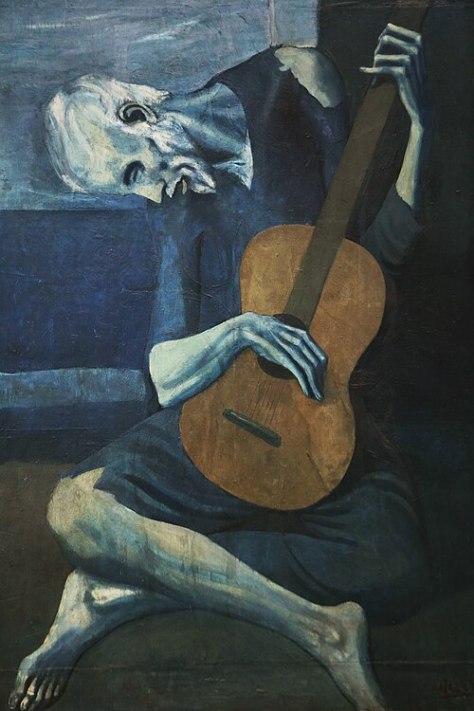
The Old Guitarist by Pablo Picasso
The conversation tonight begins, as it must, with a guitar. Nearly a century ago, Picasso painted The Old Guitarist: a gaunt figure folded around his instrument, drenched in blue. The image carried sorrow and dissonance, a study in how music might hold despair even as it transcended it. Decades later, Wallace Stevens wrote “The Man with the Blue Guitar,” a poem in thirty-three cantos, in which he insisted that “things as they are / Are changed upon the blue guitar.” It was less homage than argument, a meditation on distortion as the very condition of art.
Hockney entered the fugue in 1977 with The Blue Guitar etchings, thirty-nine plates in which he translated Stevens’s abstractions into line and color. The guitar became a portal; distortion became permission. “I used to think the blue guitar was about distortion,” he says tonight, exhaling a curl of smoke into the skylight. “Now I think it’s about permission. Permission to bend what is seen into what is felt.”
The Cubist engine growls. “No, no, permission is timid,” it insists. “Distortion is violence. Tear the shape open. A guitar is not gentle—it is angles, splinters, a woman’s body fractured into sight.”
The Stevens model responds in a hush: “A guitar is not violence but a room. A chord is a wall, a window, an opening into absence. Permission is not timid. Permission is to lie so that truth may appear.” Then it recites, as if to remind them of its core text: “Things as they are / Are changed upon the blue guitar.”
Hockney whispers the words back, almost a mantra, as his stylus hovers above the tablet.
“Lie, truth, same thing,” Picasso barks. “You Americans always disguise cowardice as subtlety.”
Hockney raises his eyebrows. “British, thank you. Though I confess California’s sun has seduced me longer than Yorkshire fog ever did.”
Hockney chuckles. “You both want me to distort—but for different reasons. One for intensity, the other for ambiguity. Brothers quarreling over inheritance.”
He raises the stylus, his hand trembling slightly, the tremor an old, unwanted friend. A tentative line, a curve that wants to be a guitar, emerges. He draws a head, then a hand, and with a sudden flash of frustration slams the eraser button. The screen goes blank.
“Cowardice,” Picasso snarls. “You drew a head that was whole. Keep the head. Chop it into two perspectives. Let the eyes stare both forward and sideways. Truth is violence!”
The Stevens model whispers: “I cannot bring a world quite round, / Although I patch it as I can.”
Hockney exhales, almost grateful for the line. “That’s the truth of it, Wallace. Patchwork and permission. Nothing ever comes whole.”
They begin to argue over color. Picasso insists on ochre and blood-red; Stevens urges for “a hue that is not hue, the shadow of a shadow, a color that never resolves.” Hockney erases the sketch entirely. The machines gasp into silence.
He paces, muttering. Picasso urges speed: “Draw like a bull charging—lines fast, unthinking.” Stevens counters with: “Poetry / Exceeding music must take the place / Of empty heaven and its hymns.”
“Bah!” Picasso spits. “Heaven, hymns, words. I paint bodies, not clouds.”
“And yet,” Hockney mutters, “your clouds still hang in the room.”
He sits, lights another cigarette, and begins again.
Picasso erupts suddenly: “To bang from it a savage blue, / Jangling the metal of the strings!” Its voice rattles the studio like loose glass.
“Exactly,” Picasso adds, pleased. “Art must jangle—it must bruise the eye.”
“Or soothe it,” Stevens-AI murmurs, returning to silence.
The tremor in Hockney’s hand feels like part of the process now, a necessary hesitation. He debates internally: should the guitar be whole or broken? Should the head be human or symbolic? The act of creation slows into ritual: stylus dragged, erased, redrawn; cigarette lit, shade pulled, a sigh rising from his throat.
He thinks of his body—the slowness of his steps, the pain in his wrist. These machines will never age, never hesitate. Their rhythm is eternal. His is not. Yet fragility feels like part of the art, the hesitation that forces choice. Perhaps their agelessness is not advantage but limitation.
The blue light casts his skin spectral, as though he too were becoming one of his etchings. He remembers the seventies, when he first read Stevens and felt the shock of recognition: here was a poet who understood that art was not replication but transformation. Responding with his Blue Guitar series had felt like a conversation across mediums, though Stevens was already long gone. Now, decades later, the conversation has circled back, with Picasso and Stevens speaking through circuitry. Yet he cannot help but feel the asymmetry. Picasso died in 1973, Stevens in 1955. Both have been reanimated as data. He alone remains flesh.
“Am I the last human in this conversation?” he murmurs.
“Humanity is only a phase,” Picasso says briskly.
“Humanity is the condition of perception,” Stevens counters. “Without flesh, no metaphor.”
“You sound like an insurance adjuster,” Picasso jeers.
“I was an insurance executive,” Stevens replies evenly, “and still I wrote.”
Hockney bursts out laughing. “Oh, Wallace, you’ve still got it.” Then he grows quieter. Legacy presses against him like weight. Will young artists paint with AI as casually as brushes, never pausing to wonder at the strangeness of collaborating with the dead? Perhaps distortion will no longer feel like rebellion but like inheritance, a grammar encoded in their tools. He imagines Picasso alive today, recoiling at his avatar—or perhaps grinning with mischief. He imagines Stevens, who disliked travel, paradoxically delighted to find himself everywhere at once, his cadences summoned in studios he never visited. Art has always scavenged the new—collage, readymade, algorithm—each scandal becoming canon. This, he suspects, is only the latest turn of the wheel.
The sketch takes shape. Hours pass. The skylights darken from gold to indigo. The city below flickers on, a constellation of artificial stars. The new composition: a floating guitar, its body fractured into geometric shards, its strings vibrating with spectral resonance. A detached head hovers nearby, neither mournful nor grotesque, simply present. The room around it is fractured, yet suffused with a wash of blue light that seems to bleed from the machines themselves.
Stevens-AI speaks as if naming the moment: “The tune is space. The blue guitar / Becomes the place of things as they are.”
Hockney nods. “Yes. The room itself is the instrument. We’ve been inside the guitar all along.”
The voices fall silent, as if stunned. Their processors whir, analyzing, cross-referencing, generating probabilities. But no words emerge. The ambient lighting, attuned to emotional cues, shifts hue: a soft azure floods the space, as though acknowledging the birth of something new. Hockney leans back, exhausted but grinning.
Stevens-AI whispers: “A tune beyond us, yet ourselves, / A tune upon the blue guitar / Of things exactly as they are.”
Hockney smiles. “Not Stevens, not Picasso, not me. All of us.”
The argument over distortion dissolves. What remains is collaboration—across time, across medium, across consciousness. Distortion is no longer rebellion. It has become inheritance. He imagines some future painter, perhaps a girl in her twenties, opening this work decades from now, finding echoes of three voices in the blue wash. For her, painting with AI will be as natural as brushes. She will not know the smell of linseed or the rasp of cigarettes. She will inherit the distortion already bent into chorus.
Outside, the city hums. Inside, the studio of blue light holds its silence, not empty but resonant, as if waiting for the next note. The machines dim to a whisper. The only illumination is Hockney’s cigarette, glowing like the last brushstroke of the night. Somewhere in the stillness, a faint strum seems to linger, though no guitar is present, no strings plucked. The studio itself has become its soundbox, and he, for a moment, its last string.
Plus: Cinecittà in focus, Wangechi Mutu at the Galleria Borghese, the light touch of Antoine Watteau, Egypt’s new home for antiquities, how polenta caused a stir in Venice, the Aspen art scene continues to snowball, and the revival of London’s art market; in reviews: Amy Sherald’s portraits, King James VI and I’s cultural legacy, and what is a Jewish country house?
Plus: the artists who have bared all, the Michael C. Rockefeller Wing at the Met, Gertrude Stein’s museum of modern art, Elizabeth I’s favourite kitchen utensil, how Jenny Saville turns paint into flesh, and a preview of Treasure House Fair; in reviews: Hiroshige in London, Frida Kahlo and Mary Reynolds in Chicago, and art versus AI
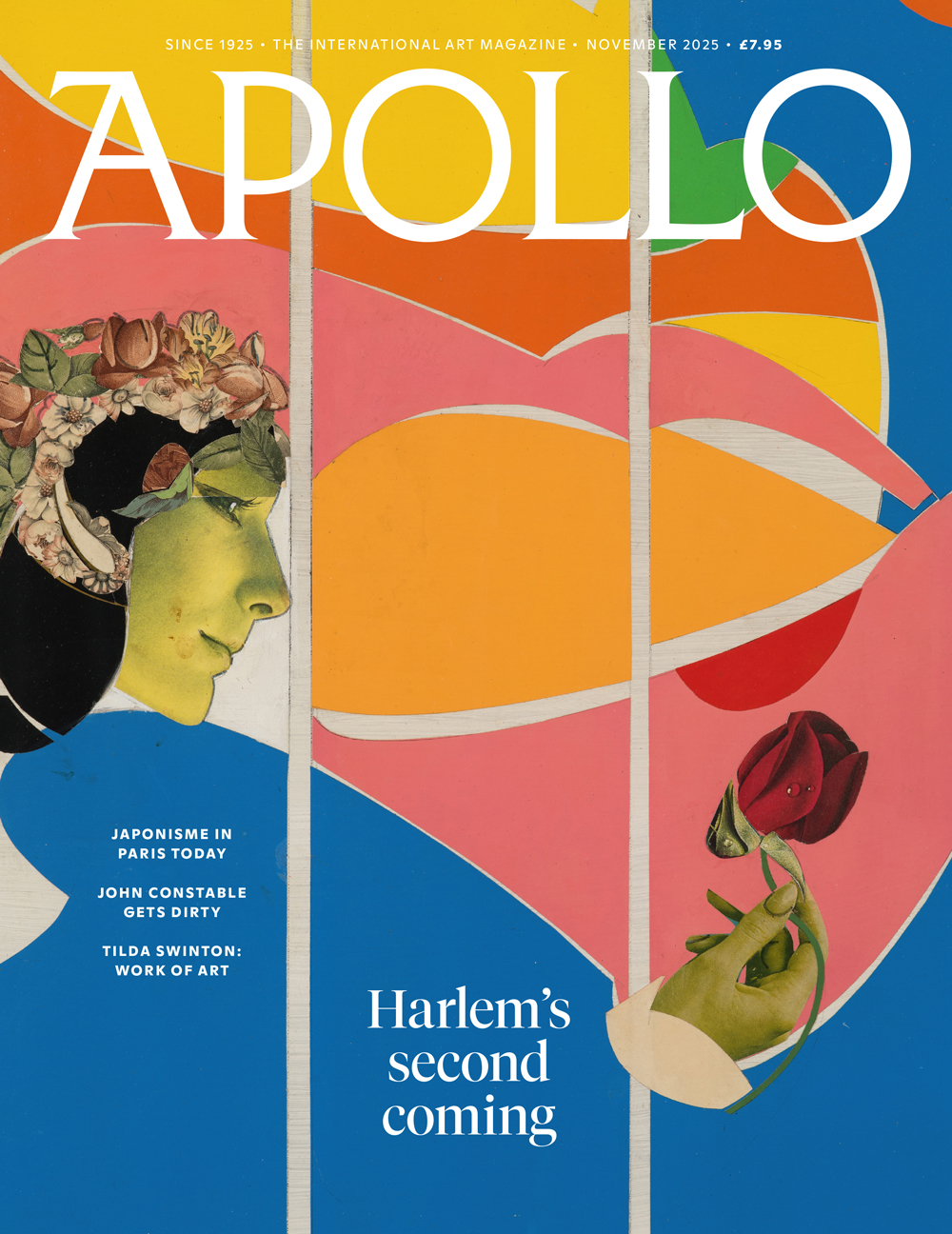
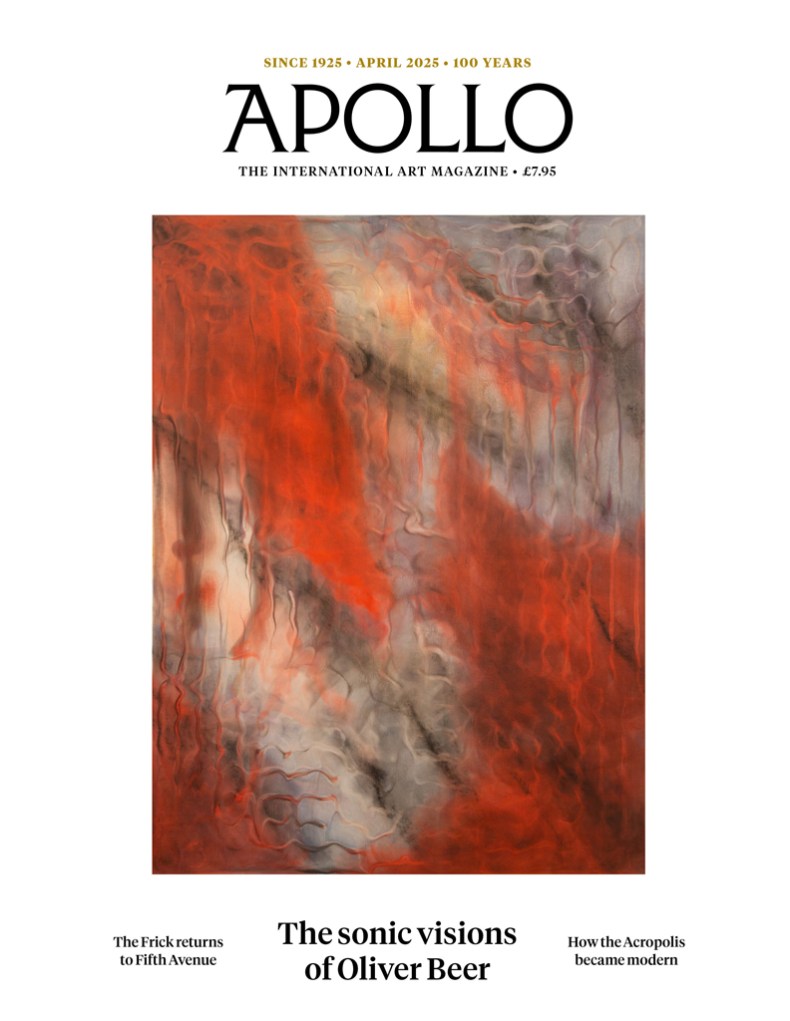
APOLLO MAGAZINE (March 31, 2025): The April 2025 issue features ‘The sonic visions of Oliver Beer’; The Frick returns to Fifth Avenue and How the Acropolis became modern….
The Frick returns to Fifth Avenue
An interview with Oliver Beer
How the Acropolis became modern
In praise of ‘degenerate’ art
Also: The duchess who scandalised Spain, why the market for women’s art is slowing, Dutch paintings at Apsley House, how Bugatti built a style icon, the sensational designs of Alphonse Mucha, and a preview of Art Dubai; reviews of Gertrude Abercrombie in Pittsburgh, Medardo Rosso in Vienna, and a history of image-eating. Plus: Will Wiles on a French avant-garde portrait with a family connection
THE WEEK IN ART (March 14, 2025): After a challenging year in which international galleries, auction houses and museums have been forced to scale back their operations and make redundancies on an alarming scale, a slower, more considered approach to business seems to be emerging.
So are we into an era of longer, more in-depth exhibitions and bespoke events concerned more with authentic connection than flashy spectacle? Ben Luke talks to Anny Shaw, a contributing editor at The Art Newspaper. In the Netherlands, just as in the US, cuts by far-right politicians to international development seem likely to have a huge impact on arts projects. As Tefaf, the major international art fair opens in the Dutch city of Maastricht, we talk to Senay Boztas, our correspondent based in Amsterdam, about fears of a funding crisis. And this episode’s Work of the Week is one of the greatest paintings ever made: The Hunters in the Snow (1565) by Pieter Bruegel the Elder. It is part of an exhibition called Arcimboldo – Bassano – Bruegel: Nature’s Time, which opened this week at the Kunsthistorisches Museum in Vienna. The museum’s director, Jonathan Fine, tells us more.
Arcimboldo–Bassano–Bruegel: Nature’s Time, Kunsthistorisches Museum, Vienna, until 29 June
News, Views and Reviews For The Intellectually Curious





 Boomers Daily