Category Archives: Architecture

Design Tour: Crown Jewel Penthouse In Canberra

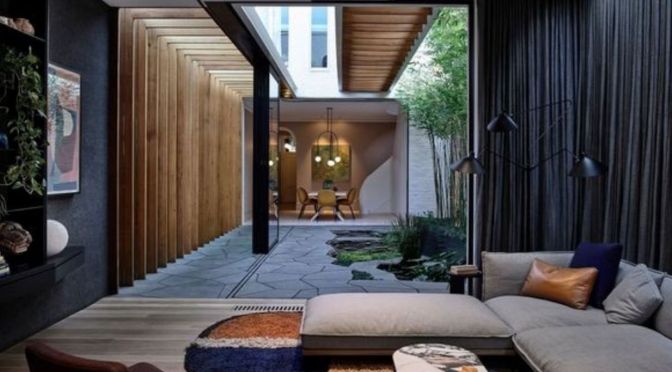
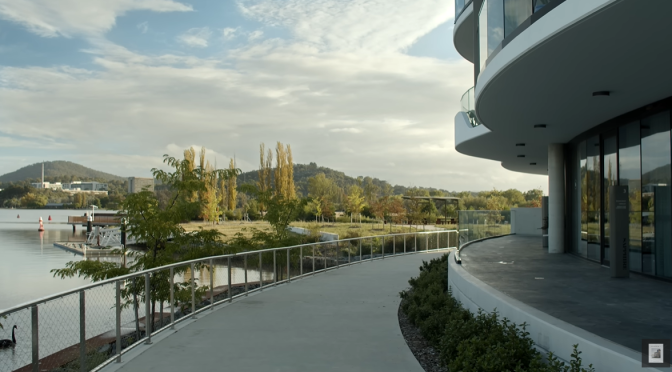
Named in relation to its amazing city views, Crown Jewel is a luxury penthouse capturing some of Canberra’s most striking vistas. Inside a penthouse crafted by Parallel Workshop Architects, residents are immediately met with a strong sense of natural connection.

Video timeline: 00:00 – Introduction to the Penthouse 00:30 – Creating the Clients Dream Home 01:01 – Incorporation of the Natural Landscape 01:15 – Catering for Different Occasions 01:44 – Referencing the Structural Architecture 02:05 – Creating a Kingdom from the Penthouse 03:10 – The Design Strategy 03:29 – Favourable Aspects of the Penthouse 03:52 – The Freedom of Design

Situated on the southern shore of Lake Burley Griffin in Canberra, Crown Jewel is one of six penthouses in the lavish Sapphire development. From inside a penthouse, occupants can enjoy amazing city views including those of Lake Burley Griffin, Kingston Harbour and the lush wetlands. A tranquil experience inside a penthouse often begins with the occupant feeling settled in place.

Parallel Workshop Architects connects residents to the character of Canberra by reflecting elements of the natural landscape in the architecture and interior design of the home. While joining the apartment to its natural context, Parallel Workshop Architects pays homage to the clients’ request for luxury inside a penthouse. The deep, rich colours of the Australian landscape are featured in the immersive architecture and interior design, including the navy furnishings, muted green finishes and consistent interplays of light and dark grey.

Translating both the surrounds and design brief into a cohesive architectural outcome, Parallel Workshop Architects establishes a family life in place. Functional and aesthetically generous, Crown Jewel is equipped to provide for multiple generations, fostering an authentic love for living inside a penthouse in Canberra.
Greek Architecture: ‘O Lofos’ Residence On Crete

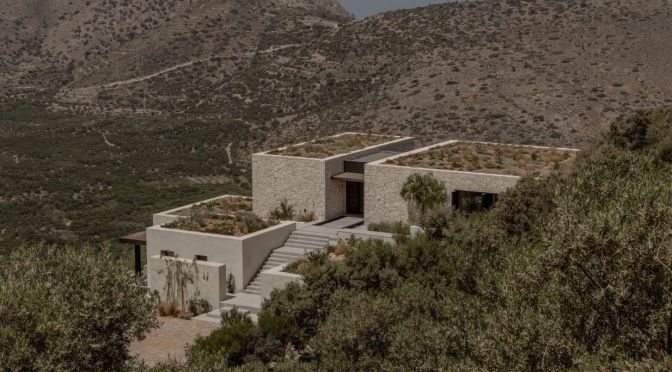
O Lofos*: The green, wild Cretan landscape and the richness and heritage of traditional crafts define this new, thoroughly contemporary residential design by Block722. Sat on the northern foothills of Thrypti mountain within the Greek island’s eastern side, the project is a commission by a private client.

The main home is divided into two low buildings linked by a semi-enclosed area with an envy-inducing water feature | O Lofos by Block722 | STIRworld
The main home is divided into two low buildings linked by a semi-enclosed area with an envy-inducing water featureImage: Ana Santl

It called for a 280 sq m home on a slope, including two guestrooms and generous outdoors areas. Balancing the needs of the brief with the natural setting that combines vistas of mountains, plains, and the Mediterranean Sea, was critical in the architects’ design solution. The architecture was driven by desire to create a modern house that is discreet and respectful to its surroundings.

The built is in harmonious continuation of the Cretan context | O Lofos by Block722 | STIRworld
The built is in harmonious continuation of the Cretan context

Negotiating the site’s angle through levels instead of steps was also critical in moulding a relaxing environment that embraces its setting.
A path down a slope from the main road leads visitors to the residence’s entrance. The complex’s size is cleverly broken down into smaller volumes, which are interconnected through circulation routes and in-between spaces – some indoors and some open-air. The main home is divided into two low buildings linked by a semi-enclosed area with a water feature.

The design merges natural materials that are often used in the local vernacular, such as wood and stone. At the same time, the atmosphere is distinctly contemporary, blending Block722’s inherent Scandinavian sensibility and organic minimalism with Japanese architecture influences. This nod to Japan unfolds through the design’s refreshing simplicity of clean, almost austere lines that balance the materials’ natural, tactile nature and the overall craft-rich approach. The powerful Greek sunlight helps define shapes and surfaces,

Read more

Australian Architecture: ‘Fitzroy Bridge House’

A modern house, Fitzroy Bridge House is a work of collaboration led by Matt Gibson Architecture + Design. Featuring a glass bridge – from which the project receives its name – the home emerges as a considered and personal dwelling that celebrates its older architectural elements.

Video timeline: 00:00 – The Local Project’s Print Publication 00:20 – The Name Behind Fitzroy Bridge House 00:57 – South Fitzroy Heritage Precinct 01:36 – Moving Through the Home 01:53 – Dissolution of Interior and Exterior 02:16 – The Bridge 02:40 – The Rear Retreat 03:14 – Involvement of the Clients and Their Non-Negotiables 03:57 – Key Sustainable Moves 04:51 – The Cellar

Located in the southern Fitzroy heritage precinct, Fitzroy Bridge House sits an enviable two kilometres from the Melbourne CBD. The residence occupies a long, thin site and is comprised of distinct pavilions, encapsulating both the pre-existing architecture and the work of the modern house.

As Fitzroy Bridge House is situated in a heritage overlay, the exterior of the home could not be altered in relation to the front two rooms. Entering the home, residents move through the Victorian-style environments before reaching the rear architecture of the modern house that features a refined internal courtyard settled into the dining room interior design.

Connecting two pavilions, the glass bridge forms the focal point of the modern house. The bold feature provides a view down to the manicured garden in the Japanese-inspired courtyard – a fine work of landscape architecture requested by the client and executed by Robyn Barlow. A product of collaboration, Fitzroy Bridge House is closely connected to the client. Warm, inviting and personal, the modern house expresses its own built narrative, enabling the client to retell the story of its creation for years to come.

Australian Architecture: A Tiny Home In Adelaide

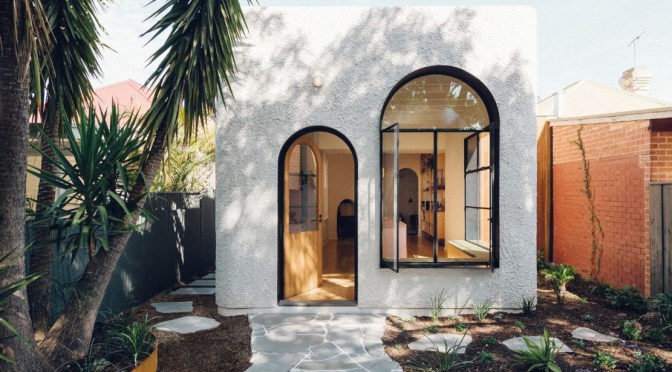
A sculptural tiny house enveloped by the garden, Plaster Fun House represents a light-hearted shift from the residential norm. Designed by Sans-Arc Studio, the extension of the tiny house sees the old and new united in a home defined by curves. Located in Torrensville, a western suburb of Adelaide, Plaster Fun House takes inspiration from its cultural surroundings.

Video timeline: 00:00 – The Local Project’s Print Publication 00:14 – Introduction to Plaster Fun House 00:50 – An Interesting Brief 01:15 – Integrating Old and New 01:41 – A Backyard Oasis 02:00 – Curves in all the Right Places 02:28 – Taking Inspiration from Migrant Housing 03:00 – Colour Splashing Throughout 03:50 – A Display of the Clients Personalities 04:32 – Interacting with the Surrounding Environment 05:45 – Subscribe to The Local Project’s Print Publication

Though, a house tour reveals that the primary architectural aspects of the tiny house contrast the immediate built landscape, testifying instead to an art deco style. Sans-Arc Studio introduces curves into the architecture, interior design and particularly the custom joinery of the tiny house.

As well as injecting a playful character into the home, the curves enable effortless movement through the compact space. Responding to the clients’ request for terrazzo to be used wherever possible, Sans-Arc Studio employs terrazzo benchtops. Stepping down into the extension of the home, the terrazzo material of the kitchen island benchtop unites the old and new aspects of the dwelling, a staggering from kitchen bench to dining surface marks the threshold between new and existing.

Across the façade of the tiny house, natural light plays across the stucco wall treatment; a crafted ode to the Mediterranean-inspired housing of the surrounds. The resulting home is peaceful, artistic and unique, providing the clients with a new and inviting extension.

Previews: Architectural Record – August 2022

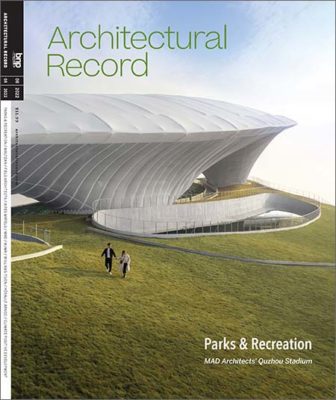
Architectural Record - August 2022

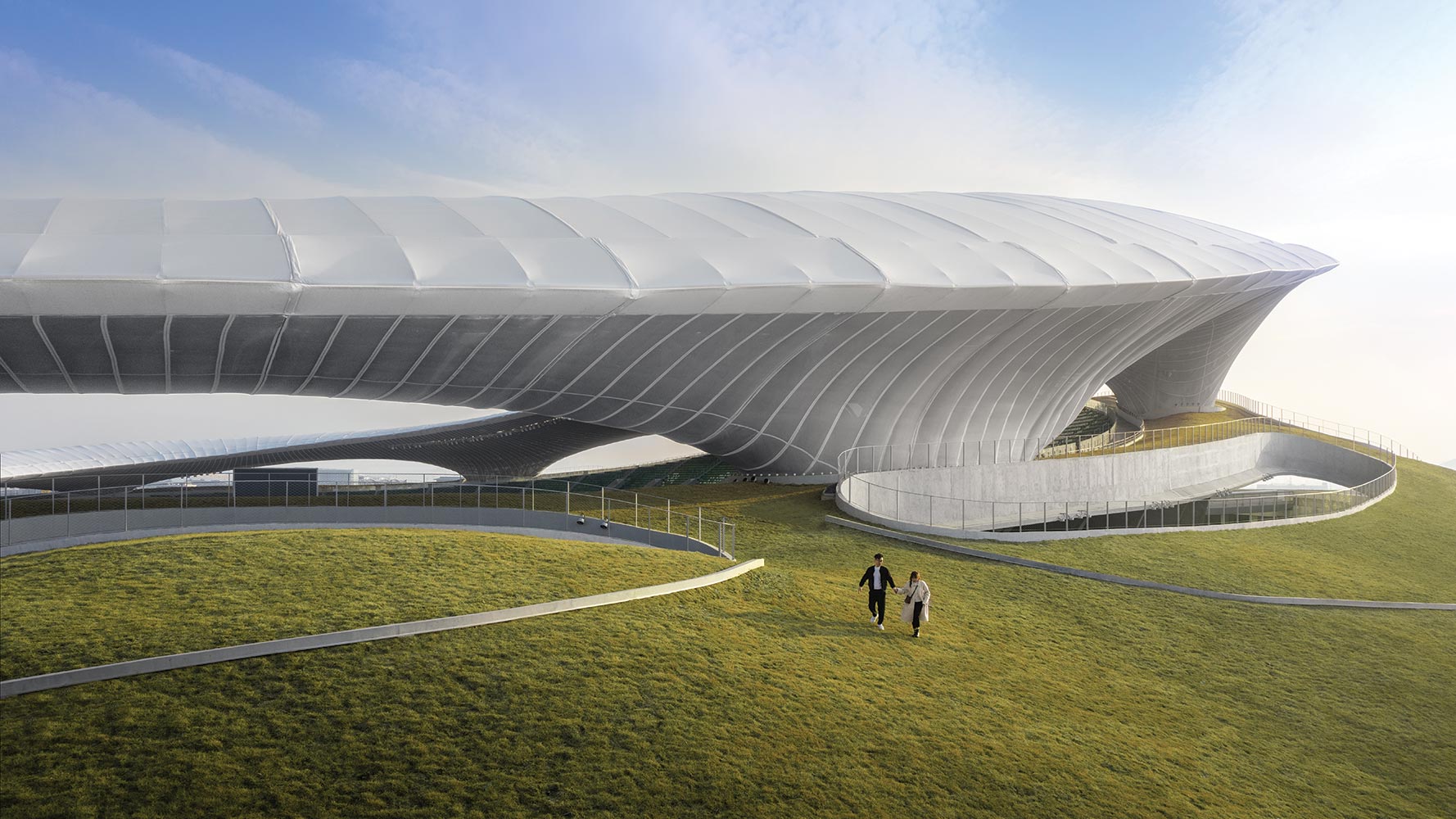
MAD Architects Creates a Volcano-Inspired Stadium in China

Quzhou-Stadium-01.jpg
Quzhou Stadium. Image © CreatAR Images

For the past three decades, China has been furiously turning farmland into instant cities, transforming a heavily agrarian society into one with nearly 64 percent of its population now urbanized. In recent years, though, affluent Chinese have started to rediscover their culture’s deep roots in the countryside and the lure of the nation’s often dramatic landscapes. Architects like Ma Yansong, who founded MAD Architects in Beijing in 2004, are now busy exploring new ways of connecting the constructed environment to the natural one. Ma often talks of his notions of shanshui culture, referring to the Chinese words for “mountain” and “water” and to design inspired by a reverence for earth and sky. Yet his approach is anything but traditional. Instead, it aims to reinvent nature—for example, crafting an opera house in Harbin to look as if it were sculpted by wind and water and calling a 5 million-square-foot residential complex in Beihai with rolling roofs Fake Hills.

Architectural Design: ‘Yacht House’ By ARNO MATIS ARCHITECTURE (2022)

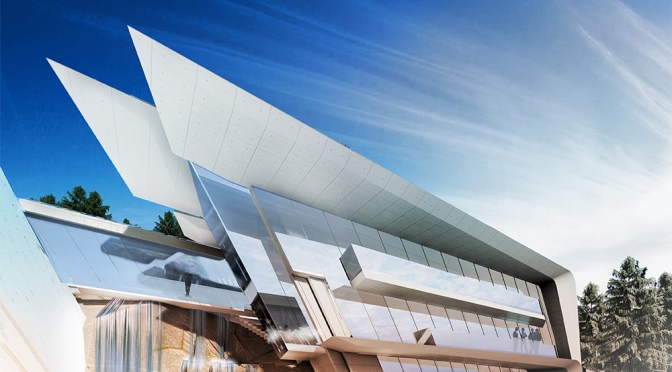
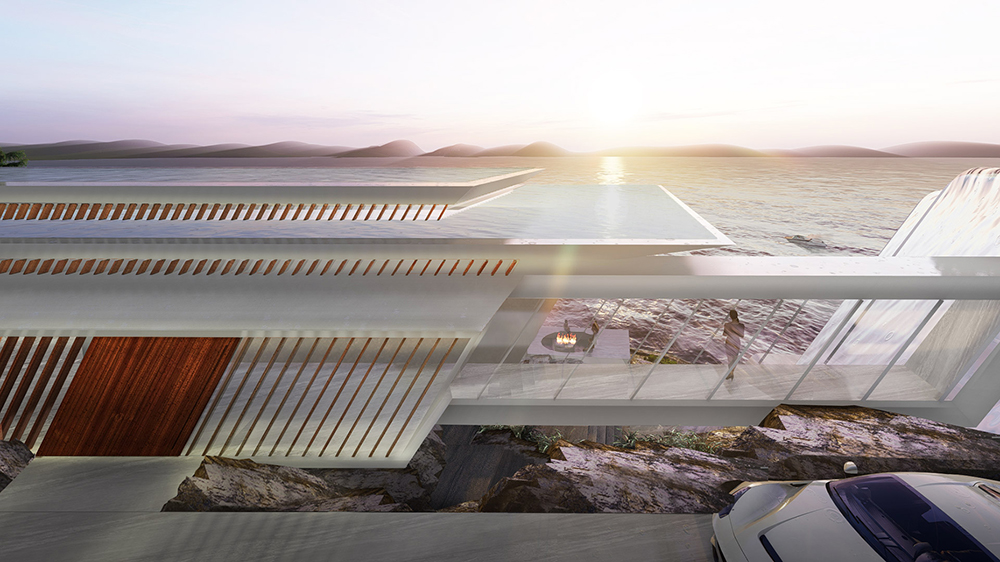
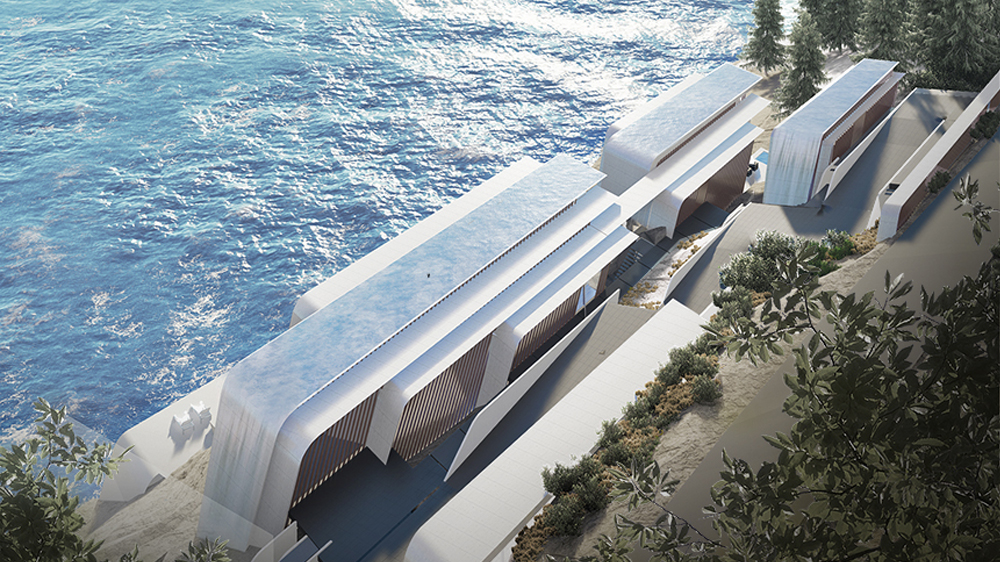
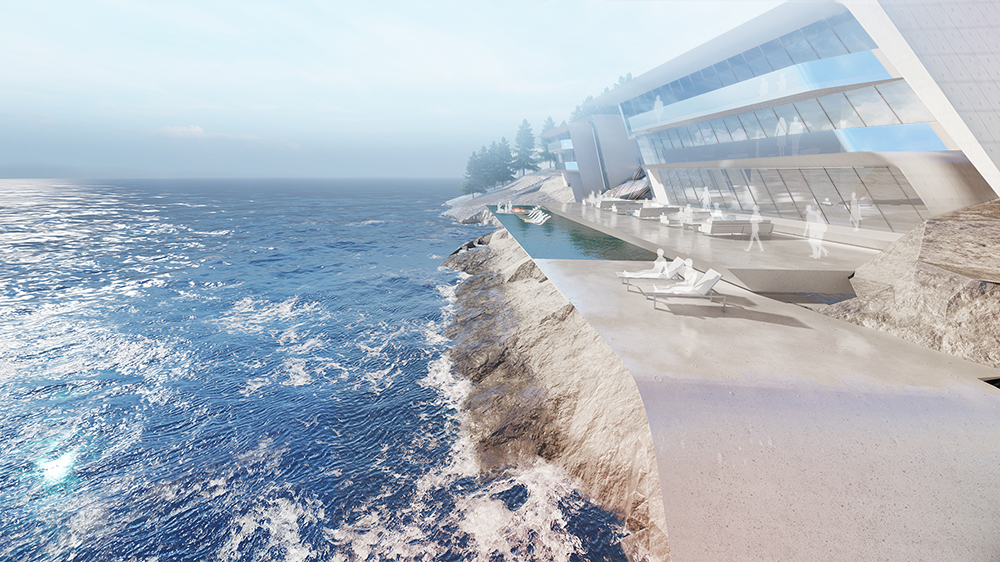
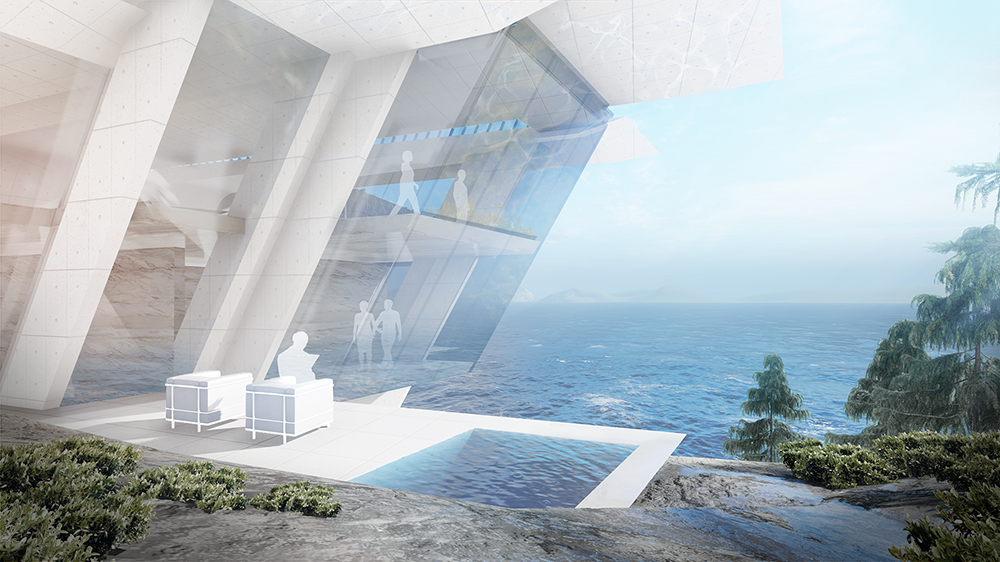
This concrete waterfront residence explores the lines between landscape and architecture; blurring nature and building. In a postmodern world of dislocation, the use of landscape and topography as form-generator is a particularly cogent means to establish a sense of “poetic belonging”.

Yacht House west vancouver modern house waterfront luxury architect contemporary design california, Modern Architecture Design, Vancouver, Canada, Arno Matis Architecture

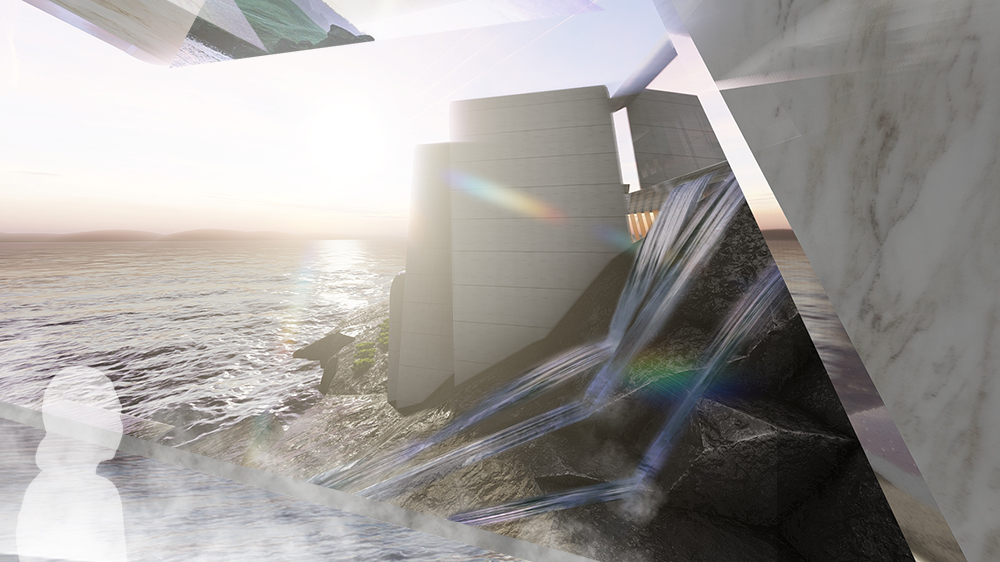
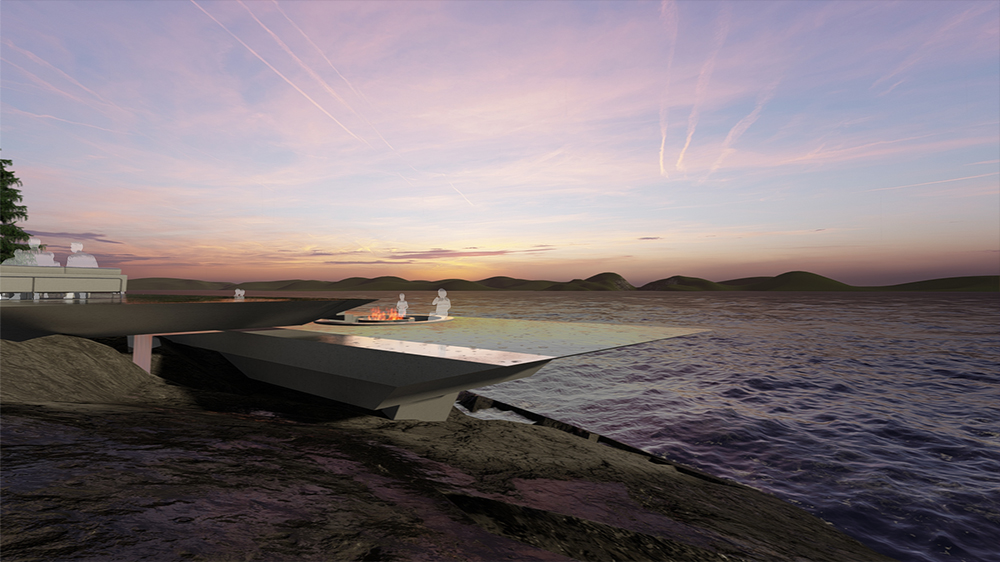
This rocky, steeply sloping waterfront site was an ideal source of inspiration to create a residence which explores this dialectical tension. The residence is massed in two forms that cascade to the waterfront.

Yacht House west vancouver modern house waterfront luxury architect contemporary design california, Modern Architecture Design, Vancouver, Canada, Arno Matis Architecture

The spaces between the forms, expressed as slip-planes, undulate like the rock formations on the Burrard Inlet shoreline. The juxtaposition of forms are loose and geometries are non-orthogonal and sympathetic to the site contours.

Website

Architecture: Historical Tour Of Georgetown D.C.

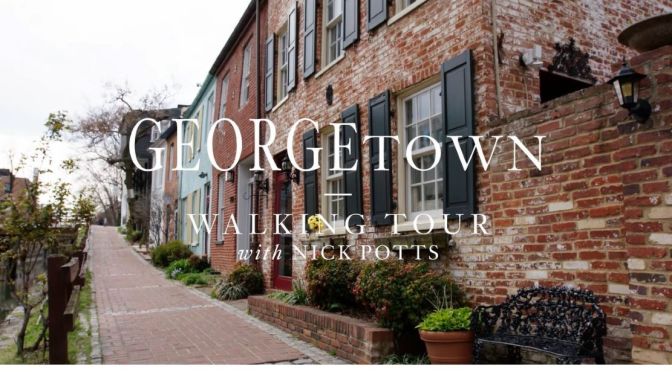
Today Architectural Digest takes you to Washington, D.C. for a walking tour of Georgetown with architect Nicholas Potts, highlighting historical architectural details hidden in plain sight. Georgetown’s founding predates that of Washington, D.C. and it wasn’t incorporated into the nation’s capital until the 19th century. Nick demonstrates how vestiges of Georgetown’s origins remain to this day, explaining how the neighborhood has retained its distinctive feel.

Check out Nicholas Potts here: Website: https://nicholasgpotts.com/

Design: Hidden Garden House, Sydney, Australia

Imbued with a sense of tranquillity, Hidden Garden House is a minimalist residence with a restrained materiality. Designed by TRIAS in collaboration with the clients, the home emerges as a peaceful ode to simplicity.

Video timeline: 00:00 – The Local Project’s Print Publication 00:15 – Introduction to Hidden Garden House 00:40 – The Surrounding Neighbourhood 01:01 – A Walkthrough of the House 01:43 – Views from the Upper Level 01:54 – The Hidden Garden 02:13 – The Creative Clients 02:35 – Hand Made House Features from the Client 03:09 – Warmth Through Material Selections 04:17 – Taking Pride in the Project 05:09 – The Architects Favourite Features 05:38 – Subscribe to The Local Project’s Print Publication

Located in the Sydney suburb of Darlinghurst, Hidden Garden House celebrates small living on the fringe of the CBD. A house tour of the property elucidates its floor plan. Entering the home, the living room leads to an elevated dining room, which in turn flows to the kitchen space. The kitchen wraps around a courtyard garden and upstairs, the bedroom and bathroom are separated by blocks of joinery. As one of the occupants of Hidden Garden House is a ceramicist, their influence is apparent throughout the home. Terracotta floor tiles line the kitchen whilst white tiles in the lightwell bounce sunlight into the home. Brass hardware and elegant furniture also testify to the quality of the client’s work. TRIAS uses natural materials to establish a sense of warmth in Hidden Garden House. Bagged brickwork proposes a feeling of tactility, while timber floors and joinery visually soften the interior. Smaller details such as pendant lights and brass finishes speak endearingly to the idea of careful consideration. Refined and minimal, Hidden Garden House stands as a timeless residence; a ceramicist’s own home. Working closely with the clients and embracing their unique contributions, TRIAS translates a joint vision into an architectural success.

Home Tours: A Scottish Highlands Retreat (Video)

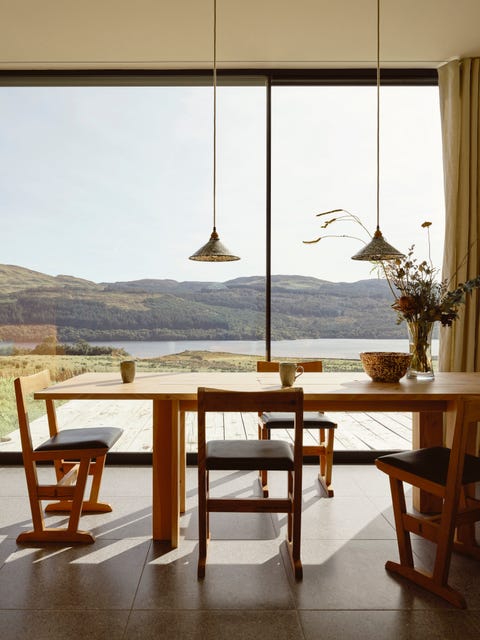
Interior designer Jill Macnair shows us around her home in the Scottish Highlands, a place of retreat that brings her a sense of peace, place and connection to the natural world.

“If there were a window into my soul, I think the view would be a rain-soaked Scottish landscape. Not, I hope, because I have a relentlessly bleak nature. My dad plotted family holidays all over the small but majestic country I grew up in, and while I didn’t greatly appreciate his efforts at the time – the walks were a bit too long, the cycles often too uphill – the colours and scenes etched into my memory from those trips are the ones that still restore me today. They form the palette that now underpins the design of my holiday home on Loch Tay, Perthshire.

Interior designer Jill Macnair’s Scottish home from the cover of ELLE Decoration Country Vol.16

Read more

Home Design: Crane Lodge In Palm Beach, Australia

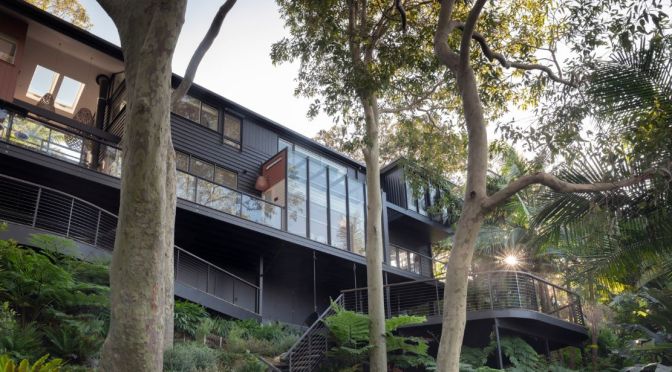
A luxury getaway home settled on a unique site, Crane Lodge immerses visitors in its natural context. Designed by Secret Gardens, the landscape architecture of the home enhances the sensory experience of the outdoors.

Video timeline: 00:00 – Crane Lodge as an Experience 00:44 – The Client’s Vision 01:05 – The Garden and The Setting 01:58 – Lodged Unusually High 02:21 – The Inclusion of Amenities 02:37 – The Team Involved 03:04 – Major Site Components 03:34 – A Strong Connection to The Outdoors 03:49 – A Natural Watering Hole 04:28 – Sympathetic Materials and Beautiful Features

Located in the Sydney suburb of Palm Beach, Crane Lodge sits on an elevated site. The design brief for the landscape of the luxury getaway home centred on creating a sense of arrival whilst allowing access to the house across the terrain. Employing an inclinator, Secret Gardens instils the arrival process with a sense of anticipation and discovery.

Many endangered species of plant are championed in the landscape design of the luxury getaway home and are designed to appear slightly unkempt. Secret Gardens also includes indigenous plants for cooking and educational purposes. A smattering of boulders surrounds the luxury getaway home, contributing to the impressive character of its external environment.

Secret Gardens purposefully positions the swimming pool adjacent to boulders, creating the impression that the amenity emerged naturally. The materials chosen for the landscape architecture of Crane Lodge express a sympathetic approach to nature. As a result, the luxury getaway home entirely embraces its context, with a landscape design that captures the essence of a bushwalk experience.