Category Archives: Archaeology

Egyptian History: Saving The Temples On The Nile

A timeless treasure, nearly lost forever. Without the UNESCO‘s unprecedented rescue operation, future generations might have only seen the stunning temples of Ramses II and Cleopatra in the pages of history books. Majestic stone colossi rising from the desert sands, structures like these kept their secrets for generations.

For centuries, Abu Simbel, Dendur, Amada and other monuments faced threats from looters, earthquakes, and floods. Ultimately, it was the waters of the Aswan Dam that nearly sealed their fate. In 1960, then Egyptian President Nasser ordered the dam‘s construction. In order to save the temples of Ramses II and Cleopatra, among others, UNESCO reached out to over 50 countries, and raised $80 million.

After receiving multiple proposals to save the structure, it was one from Sweden that proved successful. The plan: dismantling the complex and rebuilding it on higher ground. Between November 1963 and September 1968, saws were used to cut the two temples into 1,036 blocks, each weighing between seven and 30 tons.

Their new location was 64 meters above the old site and 180 meters further inland. After five years of construction, this major undertaking was completed on September 22, 1968. The Nubian temples of Abu Simbel are now a UNESCO World Heritage Site.
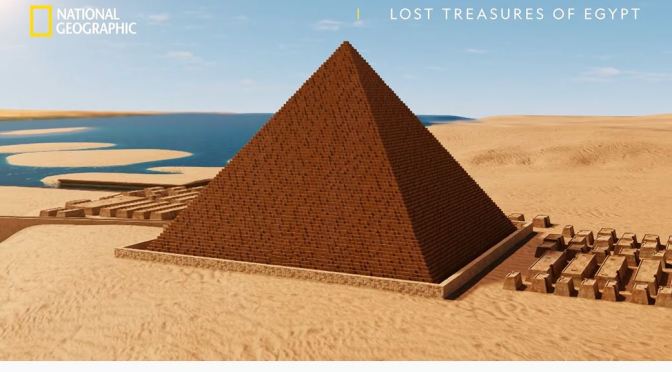
Egyptology: Engineering Secrets Of King Khufu’s Great Pyramid Of Giza

The Great Pyramid of Giza is the largest pyramid ever built and is a staple of Egyptian pyramid architecture. It was built to protect the tomb of King Khufu and was the first-ever true pyramid, due to its perfect shape and extraordinary features.

The entrance of the tomb is located 24 feet off centre and even if trespassers found it, a pulley system of ropes 130 feet above the passage dropped 3 enormous granite slabs to seal the burial chamber entrance. Topped with a layer of white limestone, The Great Pyramid was and is a symbol of the Pharaoh’s reputation and respect. Now, explorers are eagerly searching the pyramid for clues about the life and death of the great King Khufu.

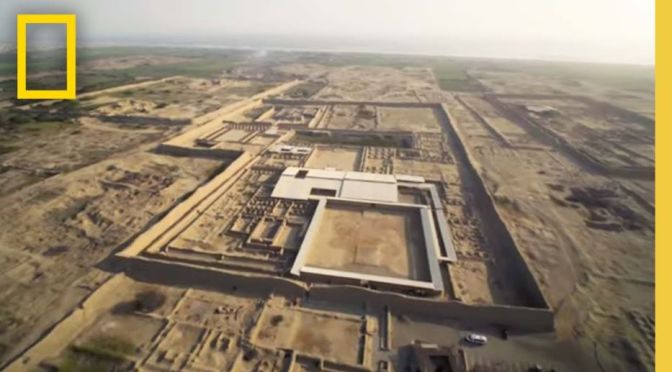
Archaeology: The Lost City Of Chan Chan In Peru

Dr. Albert Lin is investigating the true origin of the ancient story of the great flood. In his search for answers he comes to the lost city of Chan Chan where the Chimú people have recorded a violent shift in the ocean currents.

Chan Chan was the largest city of the pre-Columbian era in South America.[1] It is now an archaeological site in La Libertad Region 5 kilometres (3.1 mi) west of Trujillo, Peru.[2]

Chan Chan is located in the mouth of the Moche Valley[3] and was the capital of the historical empire of the Chimor from 900 to 1470,[4] when they were defeated and incorporated into the Inca Empire.[5] Chimor, a conquest state,[3] developed from the Chimú culture which established itself along the Peruvian coast around 900 AD.[6]

Chan Chan is in a particularly arid section of the coastal desert of northern Peru.[7] Due to the lack of rain in this area, the major source of nonsalted water for Chan Chan is in the form of rivers carrying surface runoff from the Andes.[4] This runoff allows for control of land and water through irrigation systems.

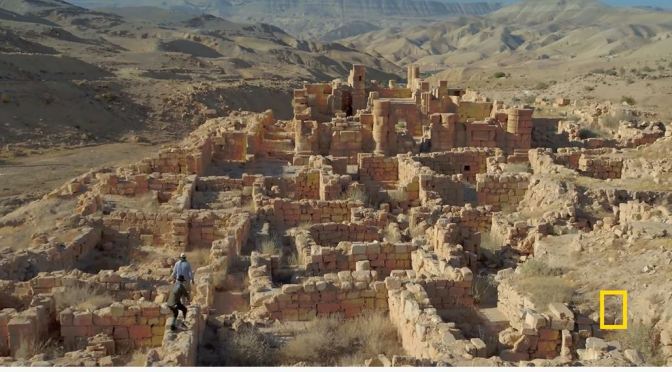
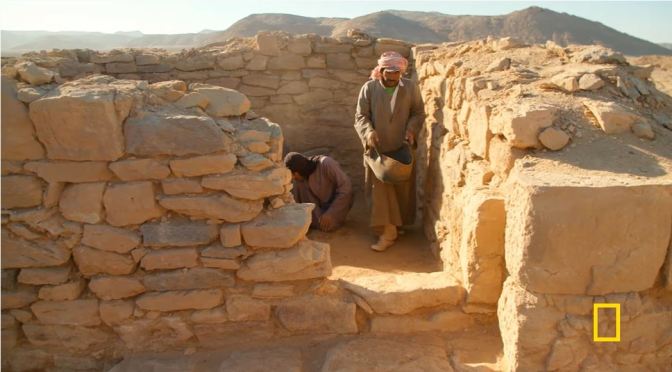
Archaeology: Lost Cities Of The Nabateans, Jordan (National Geographic)

Dr. Albert Lin is exploring the ancient architecture of the Nabateans, and recreates one of their lost cities using lidar.

The Nabataeans, also Nabateans, were an ancient Arab people who inhabited northern Arabia and the southern Levant. Their settlements—most prominently the assumed capital city of Raqmu —gave the name Nabatene to the Arabian borderland that stretched from the Euphrates to the Red Sea.

Ancient Egypt: Ramses II & The Hittite Peace Treaty

While Ramses II is often hailed for his military achievements and his skill as a warrior, he was also a well versed diplomat. During his reign he brought the 20 year war with the Hittites to an end and created one of the first written peace treaties.

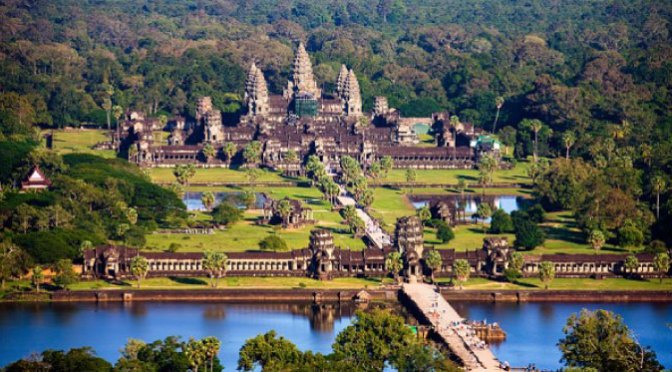
Views: History Of Angkor Wat In Cambodia (Video)

Angkor Wat, located in northwest Cambodia, is the largest religious structure in the world by land area, measuring 162.6 hectares. At the centre of the temple stands a quincunx of four towers surrounding a central spire that rises to a height of 65 m above the ground.

The cause of the Angkor empire’s demise in the early 15th century long remained a mystery. But researchers have now shown that intense monsoon rains that followed a prolonged drought in the region caused widespread damage to the city’s infrastructure, leading to its collapse.

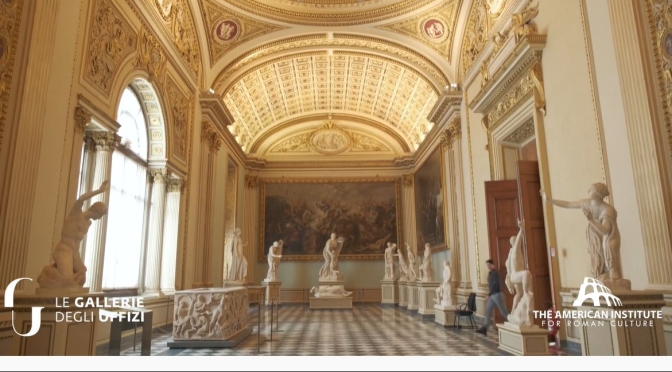
Archaeology: ‘Ancient Rome Live – Episode 1’ – Uffizi Gallery, Florence

Here is the first episode of the series about archaeology at the Uffizi Galleries, realized by the American Institute for Roman Culture. Darius Arya today speaks about some masterpieces of the Uffizi and the Boboli Gardens.

History: ‘Turkmenistan – Cultural Treasures’

To outsiders, Turkmenistan is one of the world’s least known countries. For the first time in ten years, a film crew has been free to visit spectacular excavation sites and follow international researchers into areas that have long been off-limits. Once considered the poorest part of the Soviet Union, oil and natural gas have brought new wealth to Turkmenistan today.

A little known fact in the West is that 4,000 years ago, the country was home to one of the ancient world’s centers of power. Although it flourished around the same time as the advanced civilizations of Mesopotamia and Egypt, the Margiana empire was later largely forgotten. But recently, archaeologists have discovered palace buildings and magnificent burial treasures at the site of the capital, Gonur Depe, in the Karakum Desert. Incredible aerial photography shows the dimensions of the lost metropolis. An international team of researchers also unearthed monumental fortifications in neighboring Ulug Depe.

The ruined cities of Merv and Kunya-Urgench have been declared UNESCO World Heritage Sites. Suddenly, historians and the media are paying much more attention to Central Asia. Why has Turkmenistan seen powerful empires rise and fall since the Bronze Age? DNA analysis shows a highly mobile population, whose contacts reached as far as India, the Urals and the Mediterranean Sea. The Silk Road between China and Europe was the world’s most important trade route for thousands of years, lending Turkmenistan great historical significance. Since the fall of the Soviet Union, the country has been slowly opening up to international researchers, and its astounding cultural heritage is coming to light.