

Republican state legislators across the country began to formulate new voting laws in response to the tumultuous 2020 presidential election in State Houses across the country. In Georgia, the voting law known as SB 202 has become mired in controversy, as opponents of the law claim it will further voter suppression, and supporters of the new law argue that it will bring back confidence in elections.
Category Archives: Analysis

Covid-19: Latest Research On Vaccine Side-Effects
The risk of dying from COVID is much higher than getting a blood clot from a vaccine. But even more concerning is a new report from Oxford University that shows catching the coronavirus puts you at even more risk of a deadly blood clot. Each delay puts more lives at risk, as the coronavirus spreads. It’s a balancing act between speed and caution in the fight against COVID-19.

Smartphone Tracking: ‘Apple vs Facebook’ (WSJ)
Big Tech Fight Night: Cook vs. Zuck A new privacy feature in Apple’s iOS 14.5 requires apps to request permission to track you. And Facebook isn’t happy about it. WSJ’s Joanna Stern put Facebook CEO Mark Zuckerberg and Apple CEO Tim Cook into the ring to explain why this software update has kicked off a tech slugfest. Photo illustration: Preston Jessee for The Wall Street Journal Personal Technology With Joanna Stern Technology is overwhelming and making decisions about what gadget to buy is harder than ever. WSJ personal tech columnist Joanna Stern makes it all a bit easier in her lively and informative videos.

Climate: How Biden’s Infrastructure Plan Impacts Electric Vehicles
The Biden Administration wants to bet big on electric vehicles. Can it implement policy that reduces transportation emissions while positioning America as the leader in global EV production?
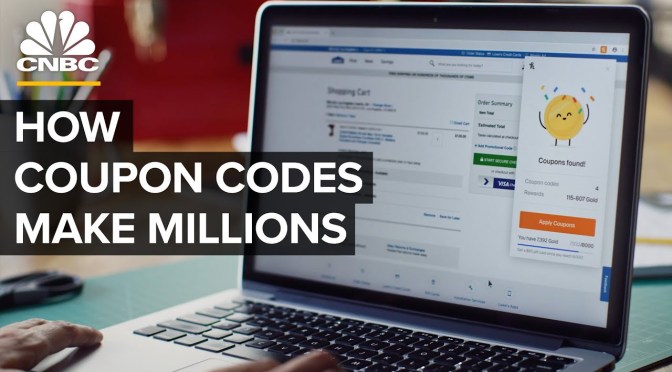
Online Shopping: ‘Digital Coupon Codes’ – Making Curators Millions (Video)
Promo code sites have become big business, with digital coupons surpassing paper for the first time in 2020. Major deal sites make millions based almost entirely on commissions from each sale. They don’t sell shopper data and it’s not a scam. In fact, big companies like PayPal and Rakuten are buying up deal sites for billions.
From Honey to Slickdeals, Rakuten Rewards to Brad’s Deals, CNBC asked the major sites what it takes to find deals that are real and why the business model works. With the huge boost in online shopping during the pandemic, deal-finding sites have become a major business. In 2020, Inmar Intelligence found that digital coupons surpassed printed coupons for the first time ever. Also in recent years, behemoths like Goldman Sachs and PayPal have paid hundreds of millions – or even billions – for sites like Slickdeals and Honey that automatically curate coupon codes or offer shoppers cash back for making purchases through their sites.
Even banks like Capital One are getting into the game. The business model is not a scam. All major deal sites say they don’t sell shopper data. Instead, each sale generates a commission for the deal site and for the middleman known as the affiliate marketer – a company that connects the vast world of retailers with deal sites. With nearly 2,000 businesses in the daily deal site space, it’s a crowded industry filled with legitimate businesses as well as plenty of sites that are riddled with ads and expired coupon codes. That’s because regardless of whether a coupon code works, the site that provided the code will get commission for that sale. When the deals are legitimate, however, it can mean big money for shoppers, retailers, and the deal sites.
From Honey to Slickdeals, Rakuten Rewards to Brad’s Deals, CNBC asked the major deal sites, and shoppers, what it takes to find deals that are real and why the business model works. Watch the video to learn how saving consumers’ money makes big bucks for companies in the vast world of online deal hunting.

Cryptocurrencies: ‘What Coinbase’s Listing Means’
The listing of Coinbase, the largest bitcoin exchange in the U.S., introduces a new way to invest in cryptocurrencies. WSJ explains how Coinbase is trying to distance itself from the risks of bitcoin to succeed on Wall Street. Photo illustration: George Downs

Covid-19: Why ‘Johnson & Johnson Vaccine’ Was ‘Paused’ In U.S. & Europe
The rollout of the Johnson & Johnson vaccine has been paused in the US, Europe and South Africa after reports of rare blood clotting in a very small number of people. Health authorities said they were halting the use of the shot while they investigate the cases — and that they were doing this out of “an abundance of caution.” The Astra Zeneca jab was also recently temporarily suspended in some countries after being linked to rare blood clots. Authorities are calling it a short “pause.” The US’s Johnson and Johnson vaccine has hit the same stumbling block as the UK’s AstraZeneca jab did last month: a likely link to a rare and deadly blood clot. Use of Johnson and Johnson’s Janssen vaccine has now been halted across the US, Europe and South Africa, with health authorities investigating six incidents of clotting in younger women, one of them fatal. The US-developed vaccine uses an adenovirus to trigger immunity – the same mechanism as the UK’s AstraZeneca vaccine. It accounts for roughly 5 percent of vaccines delivered so far in the US. This is a setback to Europe, too. Johnson and Johnson announced it will delay it’s rollout on the continent. The company had already started processing an order from the EU of 200 million doses. The Janssen jab has been partially rolled out in Africa, where a majority of countries don’t have enough vaccines even for their healthcare workers. The African Union signed a deal for 220 million doses this year. But US authorities remain hopeful. They’re saying it could only be a matter of days before the rollout resumes.
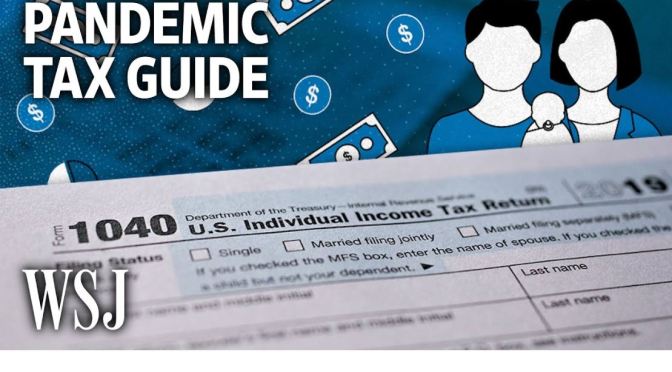
Finance: ‘What To Know About 2020 Tax Returns’
The coronavirus pandemic disrupted the global economy in ways that may affect your 2020 taxes. WSJ tax reporter Richard Rubin shares his tips for this unusual tax season. Photo illustration:Laura Kammermann

Anaylysis: The Cargo Ship Bottleneck In L.A. (Video)
An average of 30 container ships a day have been stuck outside the Ports of Los Angeles and Long Beach just waiting to deliver their goods. The backlog is part of a global supply-chain mess spurred by the pandemic that means consumers could see delivery delays for weeks. Photo Composite: Adam Falk/The Wall Street Journal
Analysis: The Rise Of ‘Robo-Advisors’ To Manage Personal Investments
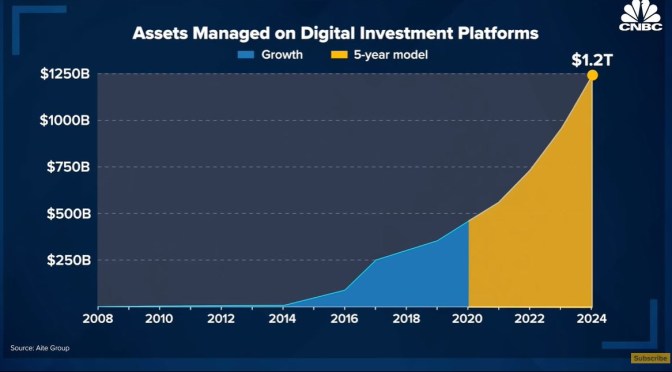
Robo-advisors have had a meteoric rise in popularity since their debut in 2008 thanks to the support from millennials and Gen Z. Today, Robo-advisors manage $460 billion, with some analysts predicting it will become a $1.2 trillion industry by 2024. Watch the video to find out why some investors believe it will never replace traditional human financial.
Since their debut in 2008, robo-advisors have had a meteoric rise in popularity. In 2020, they managed $460 billion, a 30% increase compared with 2019. Some analysts predict robo-advising will become a $1.2 trillion industry by 2024. “Investors historically have had two options when it comes to managing their investments. They could do it themselves through something like an online broker or you can work with a financial advisor,” explained Brian Concannon, head of Digital Advisor at Vanguard.
“Now, with the advent of robo-advisors, there’s a third option, and that’s to merge the benefits of professional money management and advice with the convenience of an all-digital application.” Robo-advisors’ sudden rise to prominence was made possible due to massive interest and support from millennials and Gen Z. According to a recent survey by Vanguard, millennials were twice as likely as young baby boomers to consider using a robo-advisor for investments.
“I believe that there are things that technology or algorithms can do better than humans can,” said Taylor Crane, a robo-advisor customer. “And I have no problem trusting a software to do that.” Skeptics do not expect robo-advisors to replace human advisors entirely in the near future. “Clearly, there’s always going to be a human element that’s missing,” said Jason Snipe, chief investment officer at Odyssey Capital Advisors. “My problem always will be the emotional response. Take a situation like last year when we’re going through Covid-19 and markets are moving a lot, dramatically. …
You can’t talk to the technology, right?” To combat this, many robo-advisor companies including Betterment and Vanguard began providing the option of hybrid services that combine both human and digital advice. “[Some] investors we see crave validation from a financial advisor,” said Concannon. “So for those investors, being able to pick up the phone and have a video conference with a financial advisor, have a discussion about their needs and wants goes an incredibly long way to providing them the peace of mind that they so desperately need.”
Time is on the side of the robo-advisory industry as the technology continues to improve and the younger generations accrue more wealth. “I think some combination of the two probably is where we are headed for in the future,” said Snipe. “I think the robo space has room to grow. I think it will obviously modify and change and become even more sophisticated.”
 Boomers Daily