Category Archives: Aging

TENDER GEOMETRY

How a Texas robot named Apollo became a meditation on dignity, dependence, and the future of care.

This essay is inspired by an episode of the WSJ Bold Names podcast (September 26, 2025), in which Christopher Mims and Tim Higgins speak with Jeff Cardenas, CEO of Apptronik. While the podcast traces Apollo’s business and technical promise, this meditation follows the deeper question at the heart of humanoid robotics: what does it mean to delegate dignity itself?

By Michael Cummins, Editor, September 26, 2025


The robot stands motionless in a bright Austin lab, catching the fluorescence the way bone catches light in an X-ray—white, clinical, unblinking. Human-height, five foot eight, a little more than a hundred and fifty pounds, all clean lines and exposed joints. What matters is not the size. What matters is the task.

An engineer wheels over a geriatric training mannequin—slack limbs, paper skin, the posture of someone who has spent too many days watching the ceiling. With a gesture the engineer has practiced until it feels like superstition, he cues the robot forward.

Apollo bends.

The motors don’t roar; they murmur, like a refrigerator. A camera blinks; a wrist pivots. Aluminum fingers spread, hesitate, then—lightly, so lightly—close around the mannequin’s forearm. The lift is almost slow enough to be reverent. Apollo steadies the spine, tips the chin, makes a shelf of its palm for the tremor the mannequin doesn’t have but real people do. This is not warehouse choreography—no pallets, no conveyor belts. This is rehearsal for something harder: the geometry of tenderness.

If the mannequin stays upright, the room exhales. If Apollo’s grasp has that elusive quality—control without clench—there’s a hush you wouldn’t expect in a lab. The hush is not triumph. It is reckoning: the movement from factory floor to bedside, from productivity to intimacy, from the public square to the room where the curtains are drawn and a person is trying, stubbornly, not to be embarrassed.

Apptronik calls this horizon “assistive care.” The phrase is both clinical and audacious. It’s the third act in a rollout that starts in logistics, passes through healthcare, and ends—if it ever ends—at the bedroom door. You do not get to a sentence like that by accident. You get there because someone keeps repeating the same word until it stops sounding sentimental and starts sounding like strategy: dignity.

Jeff Cardenas is the one who says it most. He moves quickly when he talks, as if there are only so many breaths before the demo window closes, but the word slows him. Dignity. He says it with the persistence of an engineer and the stubbornness of a grandson. Both of his grandfathers were war heroes, the kind of men who could tie a rope with their eyes closed and a hand in a sling. For years they didn’t need anyone. Then, in their final seasons, they needed everyone. The bathroom became a negotiation. A shirt, an adversary. “To watch proud men forced into total dependency,” he says, “was to watch their dignity collapse.”

A robot, he thinks, can give some of that back. No sigh at 3 a.m. No opinion about the smell of a body that has been ill for too long. No making a nurse late for the next room. The machine has no ego. It does not collect small resentments. It will never tell a friend over coffee what it had to do for you. If dignity is partly autonomy, the argument goes, then autonomy might be partly engineered.

There is, of course, a domestic irony humming in the background. The week Cardenas was scheduled to sit for an interview about a future of household humanoids, a human arrived in his own household ahead of schedule: a baby girl. Two creations, two needs. One cries, one hums. One exhausts you into sleeplessness; the other promises to be tireless so you can rest. Perhaps that tension—between what we make and who we make—is the essay we keep writing in every age. It is, at minimum, the ethical prompt for the engineering to follow.

In the lab, empathy is equipment. Apollo’s body is a lattice of proprietary actuators—the muscles—and a tangle of sensors—the nerves. Cameras for eyes, force feedback in the hands, gyros whispering balance, accelerometers keeping score of every tilt. The old robots were position robots: go here, stop there, open, close, repeat until someone hit the red button. Apollo lives in a different grammar. It isn’t memorizing a path through space; it’s listening, constantly, to the body it carries and the moment it enters. It can’t afford to be brittle. Brittleness drops the cup. And the patient.

But muscle and nerve require a brain, and for that Apptronik has made a pragmatic peace with the present: Google DeepMind is the partner for the mind. A decade ago, “humanoid” was a dirty word in Mountain View—too soon, too much. Now the bet is that a robot shaped like us can learn from us, not only in principle but in practice. Generative AI, so adept at turning words into words and images into images, now tries to learn movement by watching. Show it a person steadying a frail arm. Show it again. Give it the perspective of a sensor array; let it taste gravity through a gyroscope. The hope is that the skill transfers. The hope is that the world’s largest training set—human life—can be translated into action without scripts.

This is where the prose threatens to float away on its own optimism, and where Apptronik pulls it back with a price. Less than a luxury car, they say. Under $50,000, once the supply chain exists. They like first principles—aluminum is cheap, and there are only a few hundred dollars of it in the frame. Batteries have ridden down the cost curve on the back of cars; motors rode it down on the back of drones. The math is meant to short-circuit disbelief: compassion at scale is not only possible; it may be affordable.

Not today. Today, Apollo earns its keep in the places compassion is an accounting line: warehouses and factories. The partners—GXO, Mercedes—sound like waypoints on the long gray bridge to the bedside. If the robot can move boxes without breaking a wrist, maybe it can later move a human without breaking trust. The lab keeps its metaphors comforting: a pianist running scales before attempting the nocturne. Still, the nocturne is the point.

What changes when the machine crosses a threshold and the space smells like hand soap and evening soup? Warehouse floors are taped and square; homes are not. Homes are improvisations of furniture and mood and politics. The job shifts from lifting to witnessing. A perfect employee becomes a perfect observer. Cameras are not “eyes” in a home; they are records. To invite a machine into a room is to invite a log of the room. The promise of dignity—the mercy of not asking another person to do what shames you—meets the chill of being watched perfectly.

“Trust is the long-term battle,” Cardenas says, not as a slogan but like someone naming the boss level in a game with only one life. Companies have slogans about privacy. People have rules: who gets a key, who knows where the blanket is. Does a robot get a key? Does it remember where you hide the letter from the old friend? The engineers will answer, rightly, that these are solvable problems—air-gapped systems, on-device processing, audit logs. The heart will answer, not wrongly, that solvable is not the same as solved.

Then there is the bigger shadow. Cardenas calls humanoid robotics “the space race of our time,” and the analogy is less breathless than it sounds. Space wasn’t about stars; it was about order. The Moon was a stage for policy. In this script the rocket is a humanoid—replicable labor, general-purpose motion—and the nation that deploys a million of them first rewrites the math of productivity. China has poured capital into robotics; some of its companies share data and designs in a way U.S. rivals—each a separate species in a crowded ecosystem—do not. One country is trying to build a forest; the other, a bouquet. The metaphor is unfair and therefore, in the compressed logic of arguments, persuasive.

He reduces it to a line that is either obvious or terrifying. What is an economy? Productivity per person. Change the number of productive units and you change the economy. If a robot is, in practice, a unit, it will be counted. That doesn’t make it a citizen. It makes it a denominator. And once it’s in the denominator, it is in the policy.

This is the point where the skeptic clears his throat. We have heard this promise before—in the eighties, the nineties, the 2000s. We have seen Optimus and its cousins, and the men who owned them. We know the edited video, the cropped wire, the demo that never leaves the demo. We know how stubborn carpets can be and how doors, innocent as they seem, have a way of humiliating machines.

The lab knows this better than anyone. On the third lift of the morning, Apollo’s wrist overshoots with a faint metallic snap, the servo stuttering as it corrects. The mannequin’s elbow jerks, too quick, and an engineer’s breath catches in the silence. A tiny tweak. Again. “Yes,” someone says, almost to avoid saying “please.” Again.

What keeps the room honest is not the demo. It’s the memory you carry into it. Everyone has one: a grandmother who insisted she didn’t need help until she slid to the kitchen floor and refused to call it a fall; a father who couldn’t stand the indignity of a hand on his waistband; the friend who became a quiet inventory of what he could no longer do alone. The argument for a robot at the bedside lives in those rooms—in the hour when help is heavy and kindness is too human to be invisible.

But dignity is a duet word. It means independence. It also means being treated like a person. A perfect lift that leaves you feeling handled may be less dignified than an imperfect lift performed by a nurse who knows your dog’s name and laughs at your old jokes. Some people will choose privacy over presence every time. Others want the tremor in the human hand because it’s a sign that someone is afraid to hurt them. There is a universe of ethics in that tremor.

The money is not bashful about picking a side. Investors like markets that look like graphs and revolutions that can be amortized—unlike a nurse’s memory of the patient who loved a certain song, which lingers, resists, refuses to be tallied. If a robot can deliver the “last great service”—to borrow a phrase from a theologian who wasn’t thinking of robots—it will attract capital because the service can be repeated without running out of love, patience, or hours. The price point matters not only because it makes the machine seem plausible in a catalog but because it promises a shift in who gets help. A family that cannot afford round-the-clock care might afford a tireless assistant for the night shift. The machine will not call in sick. It will not gossip. It will not quit. It will, of course, fail, and those failures will be as intimate as its successes.

There are imaginable safeguards. A local brain that forgets what it doesn’t need to know. A green light you can see when the camera is on. Clear policies about where data goes and who can ask for it and how long it lives. An emergency override you can use without being a systems administrator at three in the morning. None of these will quiet the unease entirely. Unease is the tax we pay for bringing a new witness into the house.

And yet—watch closely—the room keeps coaching the robot toward a kind of grace. Engineers insist this isn’t poetry; it’s control theory. They talk about torque and closed loops and compliance control, about the way a hand can be strong by being soft. But if you mute the jargon, you hear something else: a search for a tempo that reads as care. The difference between a shove and a support is partly physics and partly music. A breath between actions signals attention. A tiny pause at the top of the lift says: I am with you. Apollo cannot mean that. But it can perform it. When it does, the engineers get quiet in the way people do in chapels and concert halls, the secular places where we admit that precision can pass for grace and that grace is, occasionally, a kind of precision.

There is an old superstition in technology: every new machine arrives with a mirror for the person who fears it most. The mirror in this lab shows two figures. In the first: a patient who would rather accept the cold touch of aluminum than the pity of a stranger. In the second: a nurse who knows that skill is not love but that love, in her line of work, often sounds like skill. The mirror does not choose. It simply refuses to lie.

The machine will steady a trembling arm, and we will learn a new word for the mix of gratitude and suspicion that touches the back of the neck when help arrives without a heartbeat. It is the geometry of tenderness, rendered in aluminum. A question with hands.

THIS ESSAY WAS WRITTEN AND EDITED UTILIZING AI

HEALTHY AGING: WHY LEAN MUSCLE MASS IS ESSENTIAL

By Michael Cummins, Editor, August 5, 2025

When we envision the journey of aging, we often focus on the more visible signs—the lines on our faces, the graying hair, or the occasional ache in our joints. But the most profound changes occur beneath the surface, particularly within our muscular system. The gradual loss of muscle mass, a condition known as sarcopenia, is often accepted as an inevitable part of getting older. Yet, this decline is far from a cosmetic concern. It represents a fundamental shift in our body’s operating system, compromising our resilience and making us more vulnerable to chronic disease.

Modern science has revolutionized our understanding of skeletal muscle. It is not merely a tool for movement but a dynamic, multifaceted endocrine organ—a bustling chemical factory that profoundly influences every aspect of our health. By actively engaging and maintaining this “factory,” we can effectively fight back against the aging process at a cellular and systemic level. This essay will explore the critical importance of preserving lean muscle mass, detailing its key functions in regulating metabolism, combating chronic inflammation, bolstering our immune system, and acting as a protective shield for the entire body. Ultimately, it will argue that building and maintaining muscle should be a foundational and non-negotiable pillar of any strategy for promoting a long, healthy, and vibrant life.

The Unseen Architects: A Deeper Look at Mitochondria

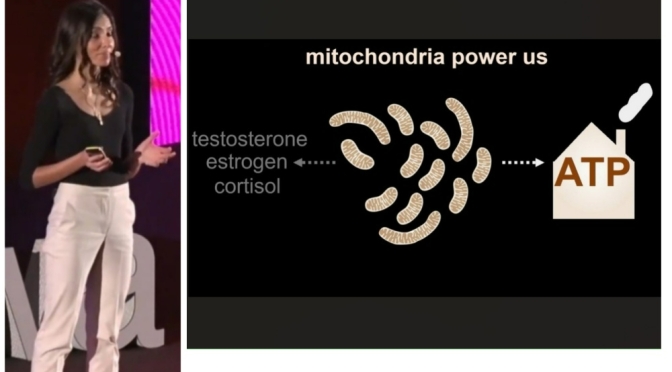
To truly appreciate the power of muscle, we must first look inside the cell at the microscopic architects that make it all possible: the mitochondria. While famously known as the “powerhouses” of the cell, their story is far more fascinating. As scientist Lena Pernas from the Max Planck Institute for Biology of Ageing explains in her TEDxPadova talk, their ancestors were ancient bacteria that, over 1.5 billion years ago, forged a symbiotic relationship with our early eukaryotic ancestors by finding their way into a larger cell and staying. This remarkable evolutionary event is why mitochondria still retain some bacterial traits, including their own unique circular DNA, known as mtDNA. Interestingly, all of our mitochondrial DNA is passed down exclusively from our mothers.

“To truly appreciate the power of muscle, we must first look inside the cell at the microscopic architects that make it all possible: the mitochondria.”

These tiny organelles are responsible for converting the oxygen we breathe and the nutrients we consume into adenosine triphosphate (ATP), the chemical energy that powers our every thought, movement, and biological process. Mitochondria are not scattered randomly in our bodies; they are strategically placed in the greatest numbers and size within the tissues that have the highest energy demands. This makes our lean muscle tissue a prime location for these cellular power plants. A healthy, active muscle is packed with a dense network of mitochondria, ready to produce the vast amounts of energy needed for physical activity. The strength and efficiency of this mitochondrial network are directly linked to the health and vitality of your muscles, making the connection between muscle mass and healthy aging all the more profound.

The Metabolic Engine Room: Regulating Your Body’s Energy

Skeletal muscle is the single largest organ in the human body, constituting nearly 50% of total body weight in a lean individual. Its sheer size and constant activity make it a metabolic powerhouse. One of its most vital roles is as the body’s primary glucose regulator. After a meal, muscle tissue acts as a massive storage container, efficiently taking up glucose from the bloodstream in response to insulin’s signal. This action is crucial for keeping blood sugar levels balanced and preventing the dangerous spikes and crashes associated with metabolic dysfunction.

“By maintaining a robust amount of muscle mass, you effectively protect this system, keeping your metabolic ‘engine room’ running smoothly.”

However, as we age and lose muscle mass, this storage container shrinks. The remaining cells have to work harder to manage blood sugar, which often leads to a condition called insulin resistance. In this state, your body’s cells become less responsive to insulin’s message, causing glucose to accumulate in the bloodstream—a key precursor to Type 2 diabetes. Insulin resistance triggers a dangerous cascade of events. The excess glucose in the blood can bind to proteins, forming pro-inflammatory molecules known as Advanced Glycation End-products (AGEs).

Additionally, impaired insulin action leads to a rise in circulating free fatty acids, which directly activate inflammatory pathways within cells. This vicious cycle, where metabolic dysfunction drives inflammation and vice versa, is a cornerstone of numerous age-related diseases. By maintaining a robust amount of muscle mass, you effectively protect this system, keeping your metabolic “engine room” running smoothly and providing a high-leverage strategy for preventing chronic conditions.

Fighting Inflammation: Your Body’s Internal Anti-Inflammatory Factory

Chronic, low-grade systemic inflammation is a major driver of age-related decline. Known as inflammaging, this slow-burning inflammatory state contributes to everything from heart disease and arthritis to neurodegenerative disorders. The genius of skeletal muscle lies in its ability to actively combat this process.

When muscles contract during physical activity, they release a complex cocktail of signaling molecules called myokines. These myokines act as powerful, natural anti-inflammatory agents. They are the chemical messengers of your muscle’s “pharmacy,” traveling throughout the body to modulate inflammatory and immune responses. Without enough muscle and physical activity, you lose this natural defense, allowing the chronic inflammatory “fire” to burn hotter.

One of the most well-studied myokines, Interleukin-6 (IL-6), beautifully illustrates this concept. While often associated with inflammation in its chronic state, when it is secreted acutely by working muscles, it acts as a powerful anti-inflammatory signal. Muscle-derived IL-6 can inhibit the production of other pro-inflammatory cytokines, creating a more balanced and healthy systemic environment.

Brown Fat: Your Body’s Calorie-Burning Furnace

A particularly exciting and potent anti-inflammatory function of myokines is their ability to influence your body’s fat tissue. Not all fat is created equal. While white fat stores energy, brown fat is a specialized tissue packed with mitochondria that burns calories to produce heat. People with higher levels of brown fat are often at a lower risk for conditions like type 2 diabetes and heart disease, even if they are overweight.

“By keeping your muscles active, you are sending out potent signals that actively work to counteract the systemic inflammation and metabolic dysfunction that drives the aging process.”

Skeletal muscle plays a vital, direct role in the production and activation of this beneficial brown fat. Exercise-induced myokines, notably Irisin and Fibroblast Growth Factor 21 (FGF21), are key players in a process called “browning.” This is a remarkable biological feat where white fat cells, particularly in certain areas of the body, are signaled to transform into brown-like fat cells (often called “beige” adipocytes).

These new beige fat cells become metabolic furnaces, increasing your overall energy expenditure and helping to improve blood sugar control and cholesterol levels. By keeping your muscles active, you are not just building strength; you are sending out these potent signals that actively work to counteract the systemic inflammation and metabolic dysfunction that drives the aging process.

The Vicious Cycle: How Inactivity and Obesity Degrade Muscle

While lean muscle can act as a powerful protective agent, a sedentary lifestyle and obesity create a detrimental environment that actively degrades both mitochondrial and muscle health.

“In essence, inactivity and obesity create a vicious cycle…a dangerous cycle that accelerates the decline of overall health.”

This is a complex interplay of chronic inflammation, insulin resistance, and altered metabolic processes that forms a dangerous cycle.

Impact on Mitochondria: Inactivity and obesity are a direct assault on the cell’s powerhouses.

They impair their function by:

Reduced Mitochondrial Biogenesis: Without the stimulus of physical activity, the body suppresses the process of creating new mitochondria. This leads to a decrease in the overall number and density of these crucial power plants in your muscle cells.

Impaired Function: The existing mitochondria become less efficient at producing ATP, reducing your muscles’ capacity to generate energy.

Increased Oxidative Stress: A sedentary lifestyle and excess metabolic load lead to a significant increase in reactive oxygen species (ROS). This oxidative stress damages mitochondria and reduces your body’s natural antioxidant defenses, leading to an accumulation of cellular damage.

Compromised Quality Control: Your body has a clean-up process called mitophagy that removes damaged mitochondria. Inactivity and obesity make this process sluggish, allowing unhealthy mitochondria to build up and further compromise energy production.

Impact on Lean Muscle:
Beyond the cellular level, inactivity and obesity degrade muscle tissue through a state of chronic low-grade inflammation. This silent inflammation is a hallmark of obesity and is characterized by the infiltration of immune cells and the release of harmful molecules.

Pro-inflammatory Molecules: Immune cells and fat cells in obese individuals secrete inflammatory molecules like TNF-α and MCP-1. These molecules cause inflammation within muscle cells and interfere with their metabolism, leading to insulin resistance.

Insulin Resistance and Protein Degradation: The insulin resistance that is common with obesity directly accelerates muscle breakdown. It does this by suppressing a crucial signaling pathway responsible for building muscle protein, while simultaneously activating pathways that break down protein.

Ectopic Lipid Deposition: This is the accumulation of fat within the muscle itself, a condition known as myosteatosis. This fatty infiltration is directly linked to decreased muscle strength and a reduced ability for muscle regeneration.

In essence, inactivity and obesity create a vicious cycle. They promote chronic inflammation and insulin resistance, which in turn damages mitochondria and leads to the breakdown of muscle protein. This loss of muscle then further worsens metabolic function, fueling the cycle and accelerating the decline of overall health.

The Immune System’s Secret Fuel Tank and Guardian

Beyond their metabolic and anti-inflammatory functions, muscles are a critical support system for your immune health. The human body is a constant battlefield, and your immune cells are your first line of defense. But these cells are metabolically demanding, requiring a constant supply of energy and building blocks to function effectively. This is where lean muscle mass becomes an unsung hero.

“Think of your muscles as a vast ‘fuel tank’ for your immune system.”

Skeletal muscle is your body’s largest reservoir of protein and amino acids. This vast store is not just for building brawn; it actively provides essential amino acids for vital functions, including the rapid proliferation and activation of immune cells. A prime example is glutamine, an amino acid that is abundantly produced by skeletal muscle. Glutamine is the primary energy source for rapidly dividing immune cells like lymphocytes and monocytes. Think of your muscles as a vast “fuel tank” for your immune system.

If this tank is full, your immune cells have the fuel they need to mount a robust defense against pathogens. However, if you lose muscle mass or your body is under severe stress (such as during a serious illness), this glutamine tank can run low. When this happens, immune cells are deprived of their primary fuel source, which can compromise their function, proliferative capacity, and ability to effectively fight off infections. This direct metabolic link explains why individuals with sarcopenia or significant muscle wasting are often more susceptible to infections and have poorer outcomes when they get sick.

Beyond Strength: A Whole-Body Protective Shield

The benefits of maintaining muscle mass extend far and wide, touching virtually every system in the body. A higher lean body mass is a powerful indicator of overall health and resilience.

Bone Health: The act of resistance training creates tension on your muscles, which in turn puts a positive, mechanical stress on your bones. This stimulus signals to the bones to get stronger and denser, making resistance training one of the most effective defenses against osteoporosis.

Heart Health: A higher ratio of muscle to fat mass is associated with a healthier lipid profile, lower blood pressure, and a reduced risk of heart disease. The myokines released during exercise also play a role in protecting the cardiovascular system.

Brain Power: Research shows a fascinating link between muscle and brain health. Myokines released during exercise can have neuroprotective effects, enhancing cognitive function and potentially reducing the risk of neurodegenerative diseases. They can influence the production of brain-derived neurotrophic factor (BDNF), a molecule essential for neuronal growth and survival.

“A higher lean body mass is a powerful indicator of overall health and resilience.”

The sheer volume and metabolic activity of muscle mean that even subtle changes in its health can have widespread systemic effects, offering a powerful, protective shield for the entire body.

The Action Plan: What You Can Do

The good news is that sarcopenia is not an irreversible fate. You can actively fight muscle loss at any age, and the most effective strategy is a powerful combination of resistance training and a strategic approach to nutrition.

Resistance Training: This is the most crucial signal you can give your body to keep and build muscle. This doesn’t mean you have to become a bodybuilder; it means making your muscles work against a force. This can include:

Lifting weights: Using dumbbells, barbells, or machines.

Resistance bands: An excellent, low-impact option.

Bodyweight exercises: Squats, lunges, push-ups, and planks are highly effective.
The key is progressive overload, which means gradually increasing the intensity over time to challenge your muscles and force them to adapt and grow.

Eating Enough Protein: Protein is the essential building block of muscle tissue. As we get older, our bodies become less efficient at using protein, a phenomenon called “anabolic resistance.” This means older adults need a higher intake of protein per meal than younger individuals to achieve the same muscle-building response. Aim for a consistent intake of high-quality protein with every meal, especially around your resistance training sessions, to maximize muscle protein synthesis and counteract sarcopenia.

Crucially, the research shows that combining these two strategies—exercise and nutrition—creates a synergistic effect. The benefits are amplified when you support your muscles with both the mechanical stimulus to grow and the nutritional building blocks they need.

Conclusion

The journey of healthy aging is not about avoiding the passage of time but about building a body that can withstand its effects. At the heart of this process lies our skeletal muscle. By moving beyond the old paradigm of muscle as a simple locomotive tool, we can appreciate its central and multifaceted role as a metabolic regulator, an anti-inflammatory agent, and a vital supporter of our immune system. The progressive loss of this powerful organ is a primary driver of age-related decline and chronic disease.

“The secret to a long, healthy life isn’t hidden in a mythical fountain of youth—it’s waiting for you to build it, one muscle fiber at a time.”

However, this new understanding also provides a clear and empowering path forward. By prioritizing regular resistance training and a thoughtful approach to nutrition, we can actively build and maintain our lean muscle mass. This is not just an investment in a stronger body; it is an investment in a more resilient metabolism, a calmer inflammatory system, and a more robust immune defense. The secret to a long, healthy life isn’t hidden in a mythical fountain of youth—it’s waiting for you to build it, one muscle fiber at a time.

THIS ESSAY WAS WRITTEN AND EDITED UTILIZING AI
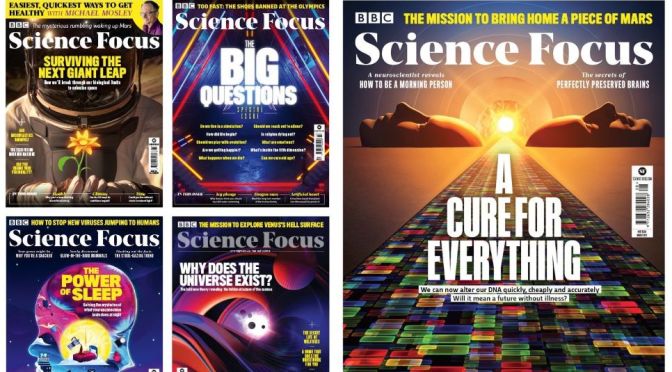
Science Focus Magazine – October 2024 Preview

New issue: A cure for ageing | BBC Science Focus Magazine

BBC Science Focus Magazine (September17, 2024) The latest issue features ‘A Cure For Aging’ – How Medicine is tackling the final frontier of health

Secrets of the Pyramids

The technical knowledge of Egyptian architects once again exceeds expectations. Was Egypt’s oldest pyramid, the Step Pyramid of Djoser, built using some seriously high-tech kit? And what’s with the huge, unexplained cavity that’s been discovered in the Great Pyramid of Giza?

Living fossils

Meet the creatures for whom time has almost stood still. These animals give us a glimpse into what life was like millions of years ago, and show us just how resilient some groups have been to the calamitous events that have consigned others – such as the dinosaurs – to extinction.

A mysterious UFO

There’s a mysterious object hurtling at one million miles per hour across the Milky Way. It’s moving so fast that it could exit the Milky Way entirely – and scientists are still trying to figure out what it is. Not quite a planet and not quite a star, so what is it?

Proba-3

The Proba-3 mission aims to unravel the mysteries of the Sun’s atmosphere by creating artificial eclipses on demand. But achieving this feat means teaching two spacecraft to perform a complicated dance with an unprecedented level of precision. If the mission is successful, scientists will be able to study the Sun’s corona in unprecedented detail, ushering in a new era for space observation.

Plus

Impostor syndrome: Ever feel like you’re an impostor, who’s bluffing their way through life? You’re not alone. Even the world’s most brilliant minds suffer from the fear of being ‘found out’. But what causes impostor syndrome? And more importantly, how can you overcome it?

Q&A: Boost your general knowledge! This issue: How do I break free of blame culture? How often should I change my toothbrush? How are identical twins created? Did dinosaurs have fleas? Why does my computer screen look so weird when I take a picture of it? What’s the smelliest animal? And more.

Sleep gadgets: A bad night’s sleep can follow you for days, making you tired and grumpy. Our tech experts have rounded up the best gadgets to help perfect your sleep routine and make the most of your shut-eye.

Old Age: What We Can Learn From SuperAgers

Northwestern University (August 19, 2024): By studying older individuals with exceptional memories, the Northwestern SuperAging Program advances our understanding of the aging brain — and why some stay younger than their peers. 

Tamar Gefen, Molly Mather, Robert Vassar and many more at Feinberg’s Mesulam Center are on a mission to end Alzheimer’s disease and combat all forms of neurodegenerative disease.

To learn more, visit Northwestern Magazine: https://magazine.northwestern.edu/fea…

Health Podcasts: What Can Be Done To Age Well

BBC Radio 4 (July 30, 2024): From the Hay Festival, James and a panel of experts explain what we can all do to help ourselves age well. We discover what’s going on in our bodies when we age, the difference between biological and chronological age, as well as getting the audience moving for a physical test.

James is joined by gerontologist Sarah Harper from the University of Oxford, biomedical scientist Georgina Ellison-Hughes from King’s College London, and doctor Norman Lazarus to understand how exercise, diet, and mental health all have a part to play in how we age.

Old Age: What Is ‘Normal’ And ‘Abnormal’ Aging?

CBS Sunday Morning (February 18, 2024): This isn’t your grandfather’s old age. CBS News chief medical correspondent Dr. Jonathan LaPook talks with experts about the distinctions between normal and abnormal aging as it affects memory issues, a workforce continuing beyond traditional retirement age, and the testing of surgeons who currently work without age limits.

Health: How Organs In Our Bodies Age Over Time

WIRED (November 13, 2023) – Dr. Jeffrey Laitman joins WIRED to break down how our organs and body parts age from head to toe. From hearing and hair loss to sagging skin and deteriorating joints, Dr. Laitman highlights the impact of aging on the human body—and what we can do about it.

Director: Lisandro Perez-Rey; Director of Photography: Francis Bernal

Reviews: Best Books On Aging And Retirement

The Wall Street Journal (November 10, 2023)There was plenty to learn from and entertain—including the third novel of a Richard Russo trilogy and a podcast with Julia Louis-Dreyfus

HBR Guide to Designing Your Retirement 

HBR Guide to Designing Your Retirement

By Harvard Business Review | Harvard Business Review Press (256 pages)

What sets this retirement guide apart from others is the perspectives brought by the contributing writers. In addition to presenting case histories and addressing the best ways to assess your life goals and financial needs, the authors discuss specific steps to help you think about encore careers in coaching, consulting or teaching; practical tips for coping with different stresses; and how to view the career you’re leaving as a period of “preretirement” to help you evaluate what comes next.


Still Life at Eighty: The Next Interesting Thing  

Still Life at Eighty: The Next... by Thomas, Abigail

By Abigail Thomas | Golden Notebook Press (196 pages)

Veteran book editor, agent and author Abigail Thomas begins her third memoir with the observation that at 80, her thoughts can sometimes be “interrupted by a memory so vivid that I am in two places at once.” Perhaps a jarring thought to some, but to Thomas, such moments can be “an inexpensive, unpatented, readily available form of time travel,” and readers who choose to accompany her will be rewarded. 

Funny gripes, wistful reflections, rueful memories and realizations about aging fill these pages. Some of the best entries are about her days as a single mother of three living in Greenwich Village and protesting the Vietnam War. “The times that were a-changing have changed,” Thomas writes, “but for a little while I’m going to ignore what went off the rails, and let myself remember what innocence and hope felt like.”  


Somebody’s Fool

Somebody's Fool by Richard Russo: 9780593317891 | PenguinRandomHouse.com:  Books

By Richard Russo | Knopf (464 pages)

The closing piece of the “North Bath” trilogy by Pulitzer Prize-winner Richard Russo is a wondrous novel that captures the changing pace of small-town life in the 21st century. The setting once again is a fictional, blue-collar community in upstate New York whose senior residents must grapple not only with the daily indignities of financial troubles and aging bodies, but with intrusions from the inhabitants of a more-prosperous neighboring town.  

No worries if you are new to these books. You can jump right in to enjoy the fun even if you haven’t read the previous two (“Nobody’s Fool” and “Everyone’s Fool”). You can also expand your immersion in Russo’s world by streaming the 1994 movie of “Nobody’s Fool,” starring Paul Newman in an Oscar-nominated role.  


The Measure of Our Age

The Measure of Our Age by M.T. Connolly | Hachette Book Group

By M.T. Connolly | PublicAffairs (384 pages)

In this compassionate book, M.T. Connolly, founding head of the Justice Department’s Elder Justice Initiative, lays out many of the problems associated with giving and finding care for seniors in our aging society. And as its subtitle, “Navigating Care, Safety, Money, and Meaning Later in Life,” suggests, she also has ideas for solutions to help avert a worse crisis. 

Connolly draws on research, interviews and her own experience to explore these issues. “Our norms and systems have not kept up with our longevity, sometimes with terrible, and usually preventable, consequences,” she writes. She is optimistic, however, that “change is possible—and some is even under way” on community, federal and individual levels.

One thing that needs to continue, she writes, is “increasing our capacity to make meaning of aging, and of our fleeting time on Earth, by paying more attention to the power of purpose, curiosity, stories, awe, and love.”


The Well-Lived Life

By Dr. Gladys McGarey Atria Books (256 pages)

To remain healthy in mind and body, consider the wisdom of Dr. Gladys McGarey, still a consulting physician at the age of 102, and co-founder of the American Holistic Medical Association. McGarey sums up her approach to life in six lessons, hence the book’s subtitle: “A 102-Year-Old Doctor’s Six Secrets to Health and Happiness at Every Age.” We won’t list them, and they are probably not what you would expect.

Based on her own experience—some of it difficult and emotionally draining—she places huge importance on the ability to regain perspective and purpose after a physical illness or crisis. This is essential for healing, medically and emotionally, says McGarey, whose own life story reveals she has had to practice what she preaches. At 69, she had to find a new path when her husband and medical partner of 46 years left her for a younger woman.

Research: Lena Pernas PhD On ‘How Mitochondria Protects Us From Disease’

TEDx Talks (November 4, 2023) – Approximately 1.5 billion years ago, a lone bacterium found its way into a larger cell. The exchanges that transpired between the two are considered to have driven the evolution of this bacterium into the organelle we now call the mitochondrion.

Emerging research suggests that mitochondria are not simply the ‘powerhouses’ of the cell, but also function as cellular guardians against microbial intruders. Consequently, maintaining mitochondrial health is not only vital for our well-being, but may serve to protect us against infectious disease.

Dr. Lena Pernas started as a Max Planck Research Group Leader at the MPI Biology for Ageing (Cologne, Germany) in late 2018, where her lab investigates the organelle and metabolic dynamics of the host-pathogen interaction. Her lab will open its doors at UCLA in the Metabolism Research Theme in 2023.

Research: What Happens To Your Brain As You Age

The Economist (November 2, 2023) – As the most complex organ in your body, your brain changes radically throughout your life. Starting from before birth and continuing even after you’ve died. This is what happens to your brain as you age.

Video timeline: 00:00 – What happens to your brain when you age? 00:32 – In the womb 01:03 – Childhood 03:19 – Teenage years 04:48 – Early adulthood 05:27 – Middle age 07:04 – Later life 07:36 – Death