
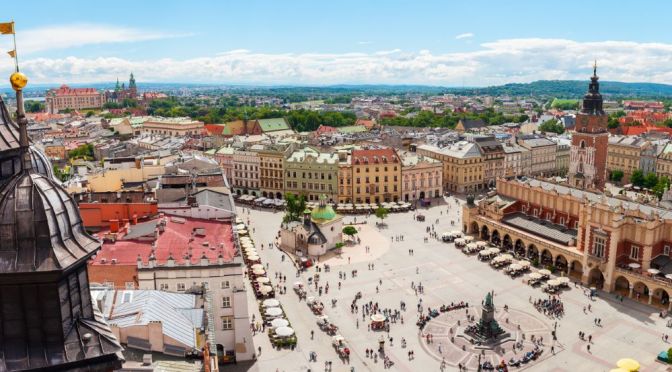
Kraków, a southern Poland city near the border of the Czech Republic, is known for its well-preserved medieval core and Jewish quarter. Its old town – ringed by Planty Park and remnants of the city’s medieval walls – is centered on the stately, expansive Rynek Glówny (market square). This plaza is the site of the Cloth Hall, a Renaissance-era trading outpost, and St. Mary’s Basilica, a 14th-century Gothic church.
Monthly Archives: May 2022
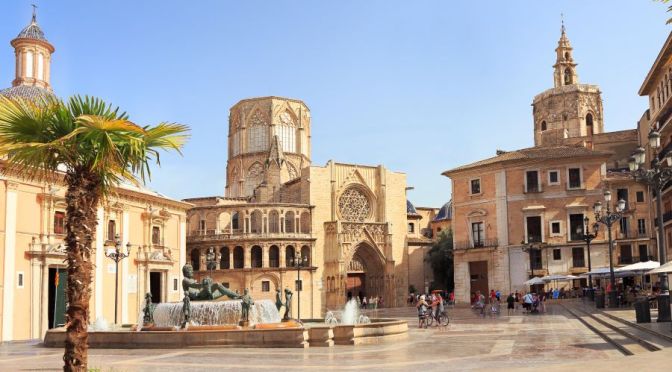
Local’s Guide: Five Must-See’s In Valencia, Spain
Valencia, a popular vacation destination on Spain’s Mediterranean coast. We asked some locals for their travel tips. What are Valencia’s must-sees? Here are five highlights! Would you like to visit Spain one day?
Timeline: 00:00 Intro 00:20 City of Arts and Sciences 00:52 Jardín del Turia 01T:49 Central Market 02:32 Valencia Cathedral 03:23 Eating Paella at Bar Cremaet
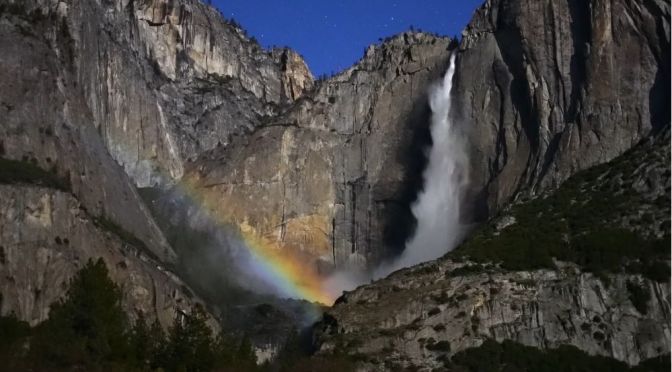
Yosemite Moonbows: A View Of Rainbows At Night
Ever see a rainbow at night? Moonbows (aka lunar rainbows) are a rare and mesmerizing phenomenon caused by light from a full moon shining on rain or the spray of a large waterfall. This first-of-its-kind video captures the famous moonbows of Yosemite National Park in a way that has never been seen before – by filming at real-time speed!
Until recently, the only way to film by moonlight was to use timelapse to gain more light through longer exposures. While timelapse is a useful filming technique, the fast motion doesn’t illustrate the immense scale of Yosemite’s waterfalls. I wanted to capture a true-to-life moonbow experience using a cinematic 24 frames-per-second frame rate. To meet this goal, I started experimenting with a new camera, fast lenses, and advanced noise-reduction software during the 2016 moonbow season. Every April, May, and June since then I would collect more footage and refine my low-light shooting skills while enjoying the incredible beauty of Yosemite in spring. In all, the footage in this video was filmed during 11 separate visits to Yosemite.
Filming at 24 frames-per-second allowed me to capture brief details that would easily be missed by timelapse. The shooting star (see if you can spot it!) was my favorite fleeting moment. I also enjoyed being able to film the fine textures of the falling water, the hypnotic ebb and flow of the wind-borne mist, and the excited reactions from people enjoying Yosemite at night. Filming at normal speed also accommodated live audio recording of Yosemite’s nocturnal soundscape.
In addition to the technical challenges of filming moonbows, I also needed to know when and where to see them. As with rainbows, moonbows require a precise alignment of the light source (the full moon, in this case), an area of rain or mist in the air, and the person observing. Using 3D-modeling software, I developed a method to visualize when moonbows could be seen for a given location. These calculations have helped me discover new compositions for photographing this striking phenomenon, and in 2018 I created the website YosemiteMoonbow.com so that I could share this information with others who want to see the moonbow from popular vantage points in the park.
Moonbows are just as common in nature as rainbows, but they often go unnoticed because human vision isn’t as sensitive to color in low light. When you first arrive at the base of the falls, you might see the bow as a gray arc in the mist, but as your eyes get acclimated to the dark, the moonbow will grow more vivid, especially when wind intensifies the spray. Compared to humans, cameras are much better at perceiving color in the dark, easily revealing the hidden beauty of moonlit nights.
Capturing the Yosemite moonbow with video hasn’t been easy. These dark scenes are a stretch for even the best low-light cameras, to say nothing of the challenges of trying to do quality photography while being sprayed with water in the cold dark of night. But that’s all part of the moonbow experience. There’s something a little wild about heading out into the forest at night to stand in the spray of a raging waterfall, but it’s always a good time!
Learn more about moonbows in Yosemite by visiting yosemitemoonbow.com
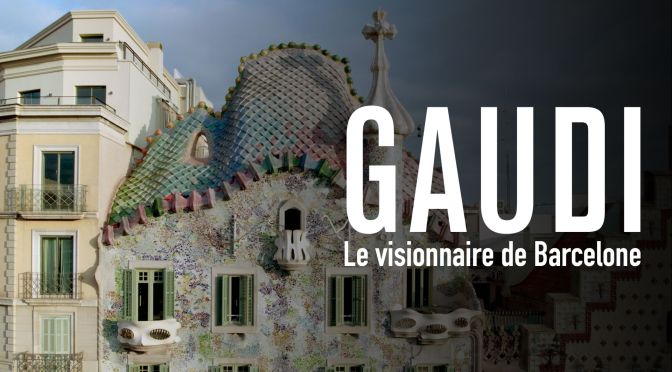
Exhibits: ‘Antoni Gaudí’ At The Musée d’Orsay In Paris
The Musée d’Orsay is hosting the first major exhibition devoted to Antoni Gaudí organized in France in Paris in fifty years. In an immersive museographic experience, it will show the spectacular creations of this unique artist, in particular, presenting sets of furniture never before exhibited in France. It will offer a new vision of the artist as a unique and singular figure, a non-isolated genius who practiced in a Catalonia in the midst of social, political and urbanistic upheaval.
Until July 17th, 2022
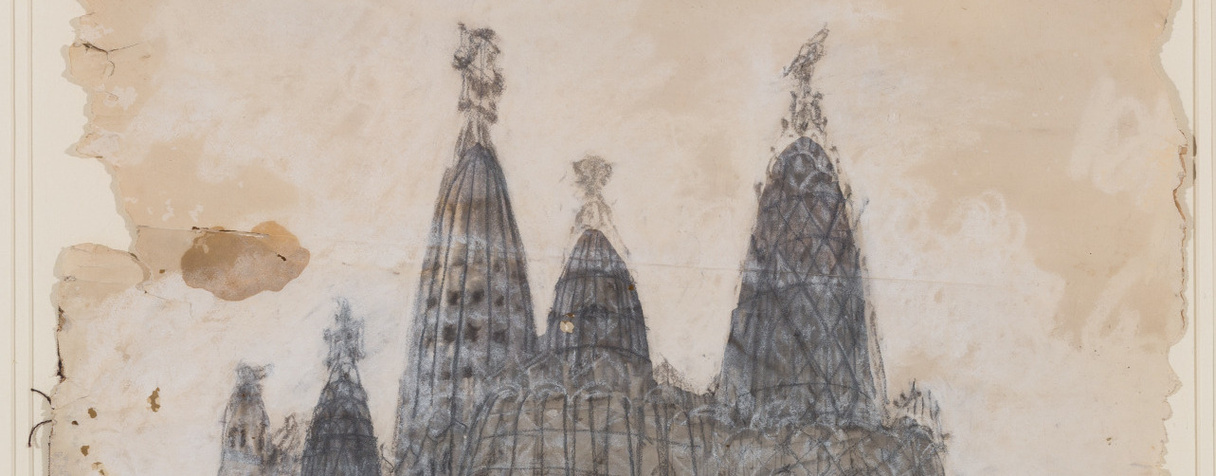
©Museu Nacional d’Art de Catalunya, Barcelona / Marc Vidal i Aparicio
The exhibition will focus on showing the architect’s creative process at a time of an exceptional local artistic profusion linked to “Modernism” or the Art Nouveau movement in Spain, supported by distinguished patrons, anxious to distinguish Catalonia, a land of Mediterranean identity. Gaudí’s workshop, his many collaborators, and his sophisticated working techniques will be the guiding line of the exhibition to make the public understand the extraordinary inventive capacity of the architect who defied all the creation of the moment.

Cover Preview: Barron’s Magazine – May 30, 2022

Barron’s Magazine – May 30, 2022
Crypto’s Future Is Nothing Like You Imagined. Here’s What Lies Ahead.
Panelists at our inaugural cryptocurrency roundtable offer bold predictions for Bitcoin, stablecoins, blockchain, and more.

Preview: WSJ Weekend Edition – May 28, 2022
WSJ Weekend Edition, May 28-29, 2022.

Tours: Harborview House In Manly Cove, Sydney
Combining old and new, Harbourview House is a modern home that retains elements of its federation-style heritage. Situated in Sydney’s Manly Cove – a location associated with swimming, boating and surfing – Harbourview House is inspired by both its scenic location and residing family.
Timeline: 00:00 – The Feeling of the Timeless and Modern Home 00:27 – Introduction to the Home 00:55 – Collaboration Between the Designers 01:35 – Walking Through the Home 02:49 – Material Choice 03:22 – Juxtaposition Between the Old and New 03:53 – The Kitchen 04:24 – The Master Bedroom and Ensuite 05:08 – Inspiration for the Home
The modern home is designed to express appreciation for natural beauty, reflecting the warm and energetic nature of the clients. Approaching the modern home, the pre-existing, federation-style structure remains as the primary façade whilst the new, minimalist architecture can be seen beyond. Internally, the master suite occupies a heritage element of the home, positioned at the front of the build and benefitting from broad bay windows. Further in, the open-plan lounge and kitchen lead to the landscaped garden. The material palette of Harbourview House makes for a texturally-dense experience that maintains a sense of refinement, aligning with the vision of a modern home. Hand-glazed tiles, honed marble and brass features are purposefully chosen for their aesthetically pleasing and organic natures. In the kitchen, a robust and non-porous surface on the rear bench is complemented by an elegant marble splashback and island. Working within a monochromatic colour palette, Penman Brown Interior Design crafts a modern home that enriches the senses through texture. Interacting with the work of Collins Pennington Architects and landscape by Jamie Durie, the design of Harbourview House embraces the difference between the old home and the new.
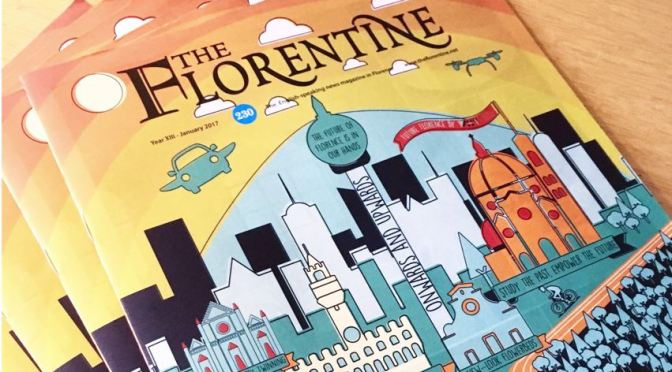
Preview: The Florentine Magazine – June 2022
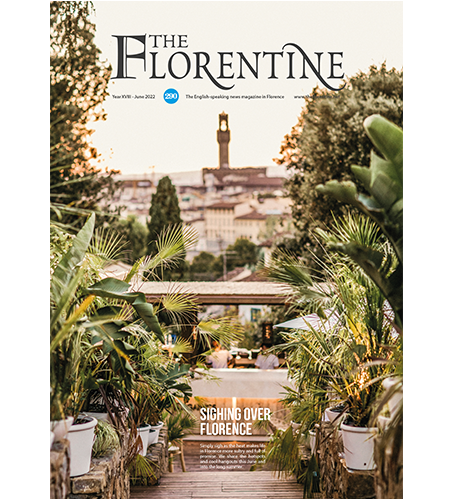
Florentine Magazine, June 2022 – Sighing over Florence
There’s a garden on a hillside overlooking Florence where it feels like you’ve struck the pot of gold—and all the colours of the rainbow. This art park is the life’s work of Alice Esclapon de Villeneuve, who started to expand the family’s plot of land just off viale Michelangelo on the occasion of her daughter’s birth over 20 years ago. Finding the art park is something of a treasure hunt, however, hence the enlistment of bilingual guide Elena Fulceri for tours in Italian or English.
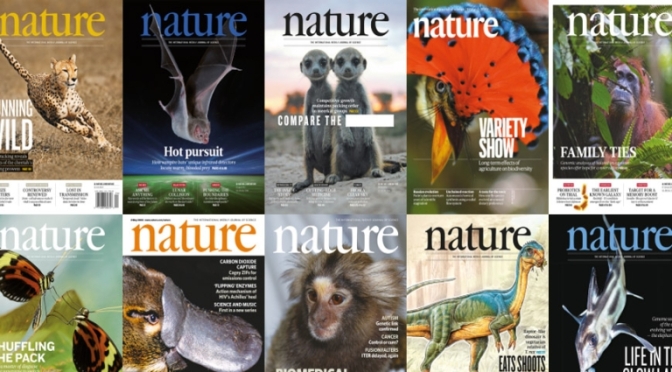
Cover Preview: Nature Magazine – May 26, 2022

Fluid dynamics
Cilia are characterized by slender, threadlike projections, which are used by biological organisms to control fluid flows at the microscale. Attempts to mimic these structures and engineer cilia-like systems to have broad applications have proved problematic. In this week’s issue, Wei Wang and colleagues present electronically controlled artificial cilia that can be used to create flow patterns in near-surface liquids. The researchers use surface-mounted platinum strips, each about 50 micrometres long, 5 micrometres wide and 10 nanometres thick, and capped on one side with titanium. Applying an oscillating potential with an amplitude of around 1 volt to the cilia drives ions on to and off of the exposed platinum surface. These ions create asymmetric forces that generate a beating pattern that can be used to pump surface liquids in various flow geometries. The cover shows an artist’s impression of the artificial cilia in action.
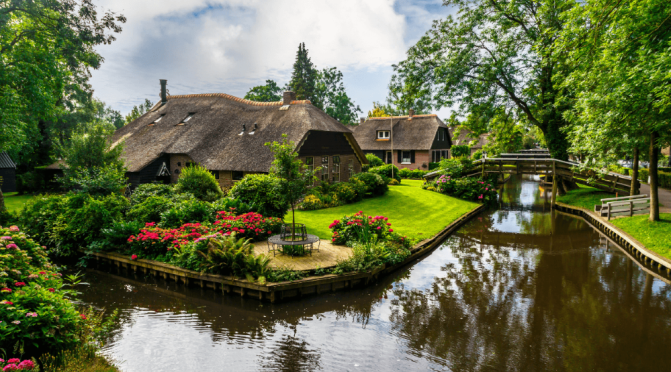
Walking Tour: Giethoorn In The Netherlands (4K)
Giethoorn is located in National Park Weerribben-Wieden, is an idyllic village in Overijssel where countless thatched farms have been built on small peat islands connected by over 170 small wooden bridges.
– What is there to do in Giethoorn? In Giethoorn, a typically Dutch village in Overijssel, you can perfectly see how the Dutch love to live with and on the water. In an environment full of lakes, reed beds and forests lies this picturesque village with its many handsome farms with thatched roofs and characteristic wooden bridges.
– Giethoorn was established as a settlement of peat harvesters. Peat cutting created ponds and lakes, and people built houses on the islands between them. As a result, access was only possible by bridge or using traditional Giethoorn boats, so-called punters – narrow boats pushed along using a long pole by a punteraar.
 Boomers Daily