Tag Archives: Wildlife

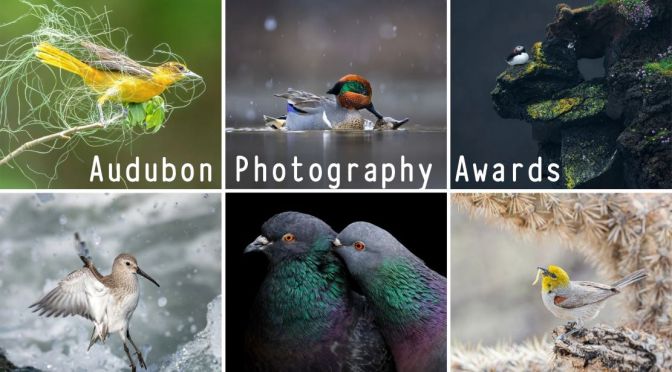
Wildlife Views: Audubon Photography Awards 2023

Grand Prize Winner

Grand Prize: Liron Gertsman

Rock Pigeon. Photo: Liron Gertsman/Audubon Photography Awards

Category: Professional
Species: Rock Pigeon
Location: White Rock, British Columbia, Canada

Professional Winner

Professional Award Winner: Shane Kalyn

Species: Atlantic Puffin
Location: Westman Islands, Iceland

Amateur Winner

Amateur Award Winner: Karen Blackwood

Species: Chinstrap Penguin
Location: Cierva Cove, Antarctica

READ MORE

Reviews: The Rotterdam Wildlife Film Festival 2023

Wildlife Film Festival Rotterdam
Filmmaker: Rachel Scott (Groot-Brittannië, 42 min, 2023)
Filmmaker: Yann Sochaczewski (Duitsland, 50 min, 2023)
Filmmaker: Christian Baumeister & Moritz Mayerle (Duitsland, 50 min, 2022)

Filmmaker: Lars Ostenfeld (Denemarken, 90 min, 2022)

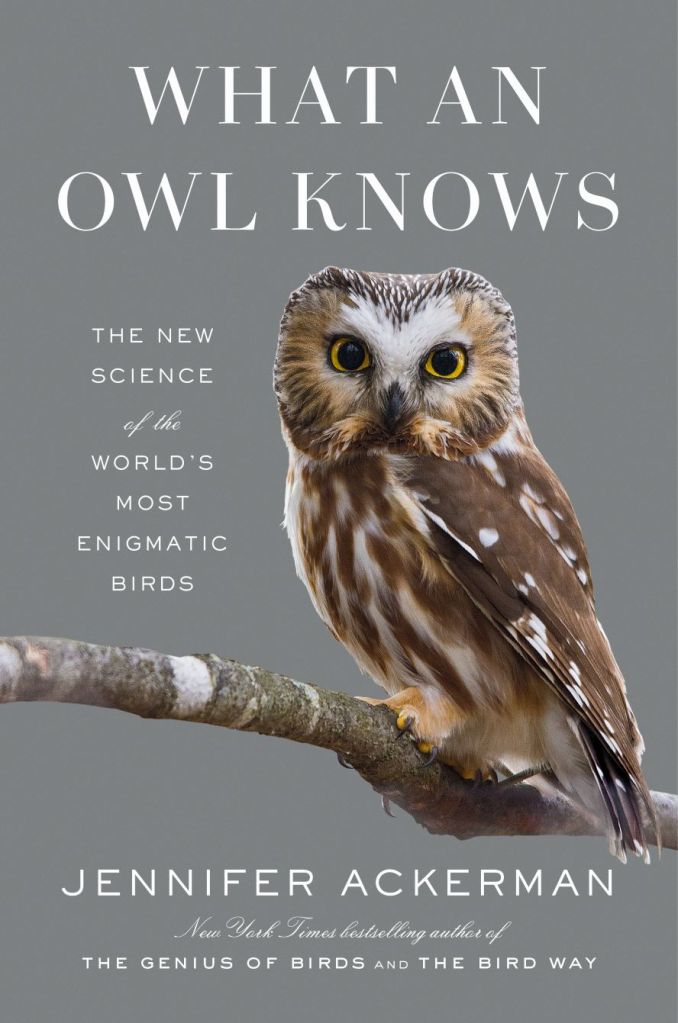
Book Reviews: ‘What An Owl Knows’ By Jennifer Ackerman (June 2023)

With their unnerving stare and eerie ways, it is small wonder that owls provoke superstition—and flights of fancy, as in the owl who sails with the pussycat in Edward Lear’s poem. In myths, stories and art, “owls speak of wisdom and luck, of misfortune and malevolence”, the author writes. They were associated with Athena, Greek goddess of wisdom.

The Economist (June 11, 2023) – With a face as round as the first letter of its name and a stance as upright as the last—along with human-like features and a haunting cry—the owl has a mystical, mythical perch in the imagination. Difficult to spot because of their mostly nocturnal habits, and sporting cryptic plumage that helps them melt into landscapes, owls, writes Jennifer Ackerman, are the most enigmatic of birds.

Ms Ackerman is a natural-history writer who specialises in the avian world. In What an Owl Knows” she offers an absorbing ear-tuft-to-tail appreciation of the raptor that Mary Oliver, a poet, called a “god of plunge and blood”. Owls, it seems, know a lot. Ms Ackerman draws on recent research to explain what and how.

To begin with, she stresses, there is no generic owl, but rather a diversity of some 260 species found on every continent bar Antarctica. They stretch from the fire-hydrant-sized Blakiston’s Fish Owl to the Elf Owl, which could fit in your palm. Most, but not all, are nocturnal. 

Read more

Jennifer Ackerman has been writing about science and nature for almost three decades. Her most recent book, What an Owl Knows: The New Science of the World’s Most Enigmatic Birds, explores recent findings on the biology, behavior, and conservation of owls. Her previous book, The Bird Way: A New Look at How Birds Talk, Work, Play, Parent, and Think, was a finalist for the PEN/E. O. Wilson Literary Science Writing Award. Her New York Times bestselling book, The Genius of Birds, has been translated into twenty-five languages and was named one of the best nonfiction books of 2016 by The Wall Street Journal, a Best Science Book by NPR’s Science Friday, and a Nature Book of the Year by The Sunday Times

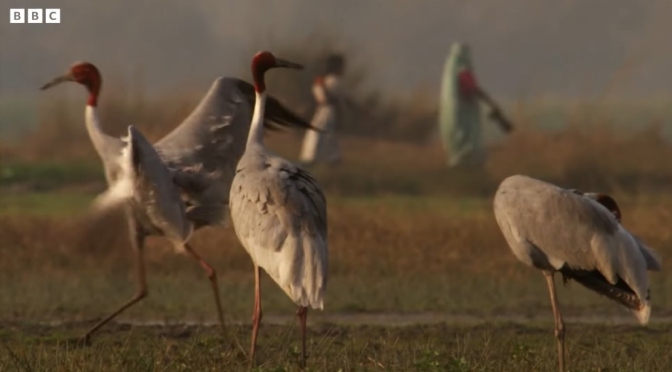
Wetlands: Wild Birds Of The Ganges River In India

BBC Earth (June 1, 2023) – The Ganges River fills to capacity during monsoon season, flooding the wetlands that surrounds its banks. Not only do these wetlands foster an ideal habitat for wild birds, but they also create perfect the conditions for cultivating rice with their mineral-rich soil.

Ganges River, Hindi Ganga, great river of the plains of the northern Indian subcontinent. Although officially as well as popularly called the Ganga in Hindi and in other Indian languages, internationally it is known by its conventional name, the Ganges. From time immemorial it has been the holy river of Hinduism. For most of its course it is a wide and sluggish stream, flowing through one of the most fertile and densely populated regions in the world.

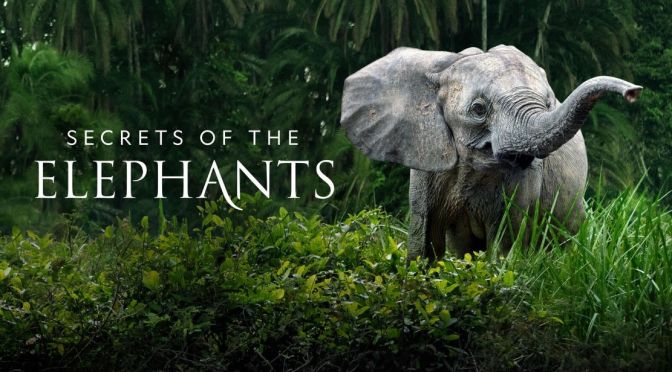
Wildlife Documentary: ‘Secrets Of The Elephants’

National Geographic (May 21, 2023) – Elephants are powerful, loving and wise, but we are only starting to unlock their deepest secrets.

The ground-breaking, award-winning natural history franchise Secrets Of returns with its next installment, Secrets of the Elephants. From Academy Award®-winning filmmaker and National Geographic Explorer-at-Large James Cameron, the series travels the world — from the Savannahs of Africa to the urban landscapes of Asia — to discover the strategic thinking, complex emotions and sophisticated language of elephants, shaping a unique and dynamic culture.

Narrated by Academy Award-winning actress Natalie Portman and featuring renowned National Geographic Explorer and elephant expert Dr. Paula Kahumbu, the four-part series not only reveals the extraordinary lives of different families of elephants but also highlights how similar they are to us. Secrets of the Elephants will change everything you thought you knew about elephants forever.

#SecretsOfTheElephants #FullEpisode #NationalGeographic

Aerial Views: Kumana National Park, Sri Lanka

May 2, 2023: Located in the southeast corner of Sri Lanka, the 18,149 hectares  Kumana National Park is a well-known eco-tourism attraction and bird sanctuary where a multitude of birds breed and roost. Kumana National Park is the eastern sector of Yala National Park.

One of the most significant features of the Kumana National Park is the ‘Kumana Villu’ – a 200 hectare natural swamp lake, fed by the ‘Kumbukkan Oya’ through a half mile long narrow channel. It is at this mangrove swamp that many water birds’ nest in May and June. Regular sightings include such species of bird as pelicans, painted storks, spoonbills, white ibis, herons, egrets and little cormorants.

Filmed and edited by: Mesmerizing Time

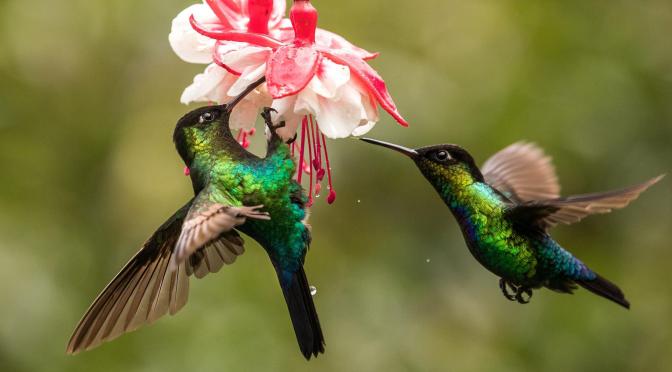
Nature: The Hummingbird Effect In Costa Rica (PBS)

Nature on PBS (April 12, 2023) – Discover how tiny hummingbirds influence their many flowering kingdoms and their ripple effects on macaws, quetzals, monkeys, tapirs and more. Set in the exotic landscapes of Costa Rica.

Costa Rica’s motto is Pura Vida – Pure Life – and this deceptively small country is bursting with some of the most spectacular wildlife and pristine ecosystems in the world. All this diversity thrives, in part, thanks to one surprising little creature: hummingbirds.

Venture across Costa Rica’s wild and rugged landscapes, from volcanic peaks to coastal jungle to misty cloud forests, and discover the nation’s dazzling diversity of hummingbirds. There are more than 50 species of hummingbirds here, and they play an outsize role in maintaining some of the richest and wildest environments on Earth.

The Hummingbird Effect premiered on April 12, 2023.

Habitats: Wild Monkeys On ‘The Rock’ In Gibraltar

BBC Earth (April 9, 2023) – “The Rock” in Gibraltar is home to Europe’s only wild monkey, the endangered Barbary macaque. But these monkeys are competing for their habitat, as around one thousand tourists travel to their territory on a daily basis. Can they peacefully co-exist alongisde humans?

Animals are learning to survive and thrive in one very surprising habitat – cities. Join wildlife presenter Hannah Stitfall as she sets out on a mission to meet our new neighbours.

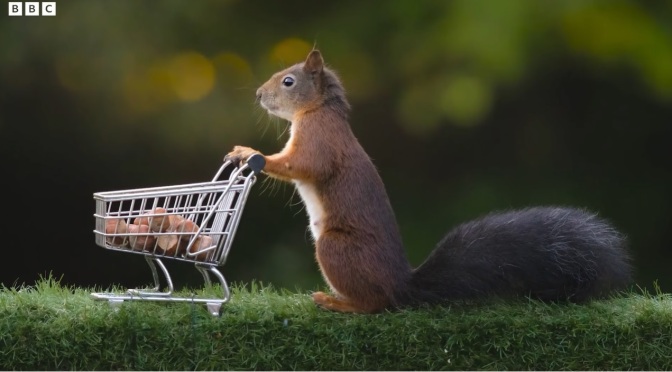
Small Town Nature: Red Squirrels Thriving In UK

BBC Earth (April 2, 2023) – Red squirrel populations are declining in the UK, with deadly diseases such as squirrelpox threatening their survival. But in the small town of Formby, people are coming together to help secure their future.

Hosted by wildlife presenter Hannah Stitfall (@hannahstitfall via IG).

Costa Rica Views: The Tiny ‘Volcano Hummingbird’

Nature on PBS (March 27, 2023) – No bigger than a human thumb, the volcano hummingbird exists only in the Talamancas.

The volcano hummingbird (Selasphorus flammula ) is a very small  hummingbird, native to the Talamancan montane forests of Costa Rica and western Panama.

This tiny endemic bird inhabits open brushy areas, paramo, and edges of elfin forest at altitudes from 1850 m to the highest peaks. It is only 7.5 cm long. The male weighs 2.5 g and the female 2.8 g. The black bill is short and straight.

The adult male volcano hummingbird has bronze-green upperparts and rufous-edged black outer tail feathers. The throat is grey-purple in the Talamanca range, red in the Poas-Barva mountains and pink-purple in the Irazú-Turrialba area, the rest of the underparts being white. The female is similar, but her throat is white with dusky spots. Young birds resemble the female but have buff fringes to the upperpart plumage.

The female volcano hummingbird is entirely responsible for nest building and incubation. She lays two white eggs in her tiny plant-down cup nest 1–5 m high in a scrub or on a root below a south or east facing bank. Incubation takes 15–19 days, and fledging another 20–26.