

Animals are learning to survive and thrive in one very surprising habitat – cities. Join wildlife presenter Hannah Stitfall as she sets out on a mission to meet our new neighbours.

Animals are learning to survive and thrive in one very surprising habitat – cities. Join wildlife presenter Hannah Stitfall as she sets out on a mission to meet our new neighbours.
Hosted by wildlife presenter Hannah Stitfall (@hannahstitfall via IG).
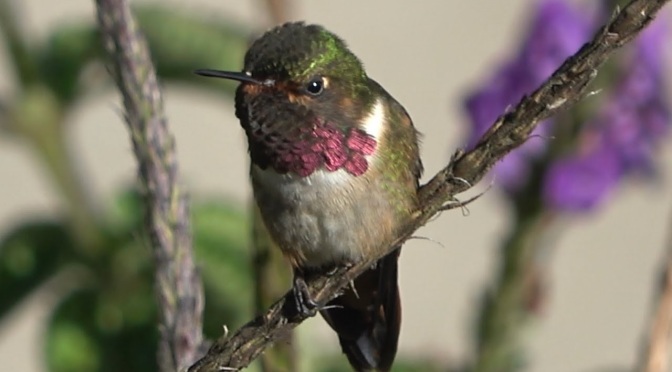
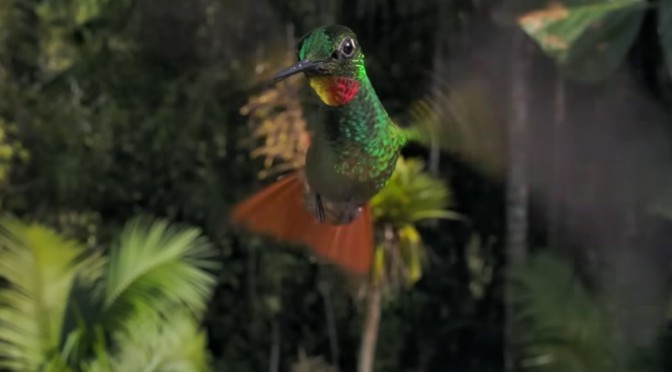
The volcano hummingbird (Selasphorus flammula ) is a very small hummingbird, native to the Talamancan montane forests of Costa Rica and western Panama.
This tiny endemic bird inhabits open brushy areas, paramo, and edges of elfin forest at altitudes from 1850 m to the highest peaks. It is only 7.5 cm long. The male weighs 2.5 g and the female 2.8 g. The black bill is short and straight.
The adult male volcano hummingbird has bronze-green upperparts and rufous-edged black outer tail feathers. The throat is grey-purple in the Talamanca range, red in the Poas-Barva mountains and pink-purple in the Irazú-Turrialba area, the rest of the underparts being white. The female is similar, but her throat is white with dusky spots. Young birds resemble the female but have buff fringes to the upperpart plumage.
The female volcano hummingbird is entirely responsible for nest building and incubation. She lays two white eggs in her tiny plant-down cup nest 1–5 m high in a scrub or on a root below a south or east facing bank. Incubation takes 15–19 days, and fledging another 20–26.
Eurasian Beaver (Castor fiber)
The beaver is the “master builder” of riverine landscapes. By felling trees, the beaver makes a significant contribution to biodiversity by providing habitats for many other species.
In Austria, in the Danube-March-Thaya wetlands; migrates to the Weinviertel (“Forest Quarter”) and the Vienna Woods, but also from the Inn and Salzach down the Danube to Linz.
Endangerment and Conservation Status
In Austria, beavers had been extinguished by the middle of the 19th century. Starting in the 1970s, they were restored on the Salzach and Inn rivers as well as in the Danube wetlands east of Vienna. Protecting the riparian forests is essential to the conservation of the beaver.

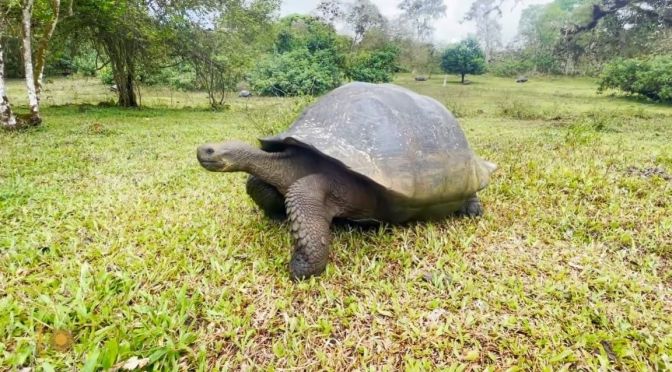
There are 13 living species of Galápagos tortoises, which are also sometimes called giant tortoises. These reptiles are among the longest-lived of all land vertebrates, averaging more than a hundred years. The oldest on record lived to be 175. They are also the world’s largest tortoises, with some specimens exceeding five feet in length and reaching more than 500 pounds.
Giant tortoises were once so abundant on the Galápagos archipelago off Ecuador that the Spanish sailors who explored the region in 1535 named the string of islands for them. (The Spanish word for tortoise is galápago.) Although the islands were once thought to be home to at least 250,000 tortoises, only about 15,000 remain in the wild today.
The grey heron (Ardea cinerea ) is a long-legged wading bird of the heron family, Ardeidae, native throughout temperate Europe and Asia and also parts of Africa. It is resident in much of its range, but some populations from the more northern parts migrate southwards in autumn. A bird of wetland areas, it can be seen around lakes, rivers, ponds, marshes and on the sea coast. It feeds mostly on aquatic creatures which it catches after standing stationary beside or in the water or stalking its prey through the shallows.

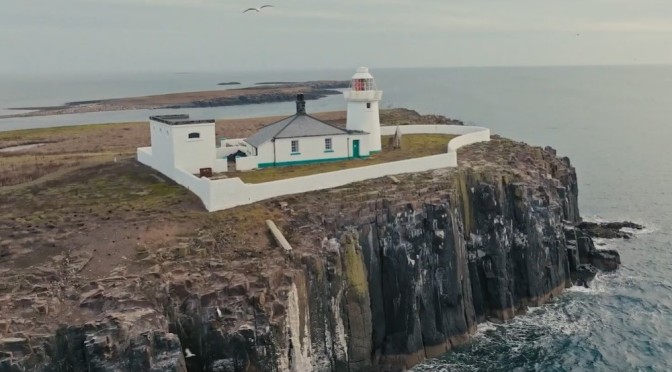
The islands are also home to grey seals with around 2,000 pups born every autumn. With an introduction from presenter Julia Bradbury, this film explores the Inner Farne, where you’ll see dive-bombing terns, a medieval chapel and a Victorian lighthouse. Levison finds out what life is like for the rangers who had to deal with the devastating impact of bird flu. He also learns more about the work being done to maintain and protect the area’s fragile ecosystem, address the impact of climate change, protect bird nests and monitor species.
Parts of the Farne Islands may be closed to the public and landing on the islands may not be possible due to bird flu. If closures are in place, you can still experience the islands on a boat tour. Please check the website before you visit: Farne Islands | Northumberland | National Trust With your support we can continue to care for coastal places like The Farne Islands.
Donate today and help protect wildlife and nature for future generations. https://www.nationaltrust.org.uk/supp…
In the Atlantic Rainforest of Argentina and Brazil, hummingbirds gather around flowers in a spectacular dance.
January 29, 2023: We leave you this Sunday morning in a snowstorm, in the White Mountains of New Hampshire. Videographer: Scot Miller.
There are 733 named mountains in the White Mountains of New Hampshire. The highest and most prominent of these mountains is Mount Washington, which stands at a respectable 6,288 feet (1,917 meters), making it the tallest peak in the Northeastern United States.
While the peaks of the White Mountains don’t manage to break the 6,500 ft (1,981m) barrier, they are home to some of the most difficult hiking terrain and worst weather in the continental United States.
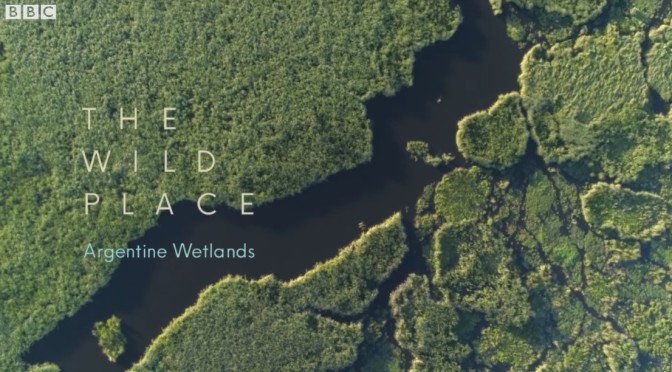
The wetlands are home to a staggering 4,000 plant and animal species, which make up 30 % of Argentina’s biodiversity. The indigenous communities of the wetlands inhabited the area as early as in the 9th century.



 Boomers Daily