

From a Wall Street Journal article:
We asked Lord Fellowes about the servants and family members who made it to the movie. Here are edited excerpts:
 “It’s a way of life that’s gone and I don’t think it’s a bad state that it’s gone. But realistically it must’ve been livable on a level by pretty well everyone involved or it wouldn’t have gone on for a thousand years.”
In what ways did you think it was essential for “Downtown Abbey” to be accurate?
I think if you try to get all the details right and you talk to enough people who remember that life—which there were when I was much younger—you can imbue it with a kind of reality that seems believable to people who maybe don’t know about that way of life and certainly may not approve of it, but when they watch it, they can see how it worked. They can understand how people lived like that. Whereas when you start to get all the details wrong, it doesn’t feel believable. It doesn’t feel truthful.
To read more: https://www.wsj.com/articles/writer-julian-fellowes-prepares-downton-abbey-for-the-big-screen-11568552402

 Many self-styled “wine educators” online claim to be certified sommeliers, but that doesn’t mean they have worked in a restaurant. Others are winemakers, adjunct professors or simply oenophiles with a pedagogical bent. Whether via video or podcast, the education they offer tends to fall into two categories: basic (grape names, how to hold a glass) or wonky (the role of tannins, grapevine blights).
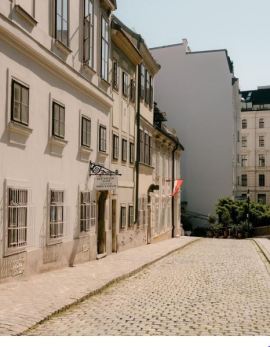 Beethoven moved nearly 70 times while living in Vienna. Two of his former homes are open to the public, and many more are marked with commemorative plaques.
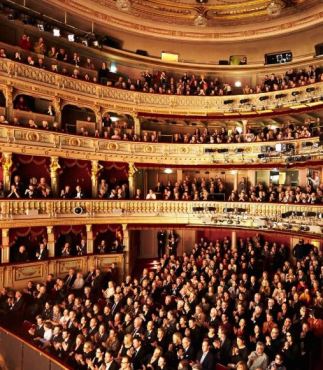 LUDWIG VAN BEETHOVEN is as Viennese as apple strudel. Though born in Bonn, Germany in 1770, he moved to the Austrian capital when he was in his early 20s, and then spent the rest of his 56 years changing the course of Western music from the city on the Danube. A quirky, cantankerous celebrity in his own time, he premiered his groundbreaking symphonies and concertos in Vienna’s grand palaces, escaped the summer heat in what are now its sleepy suburbs, and moved around between dozens of supposedly squalid apartments that sprawl across much of the city.
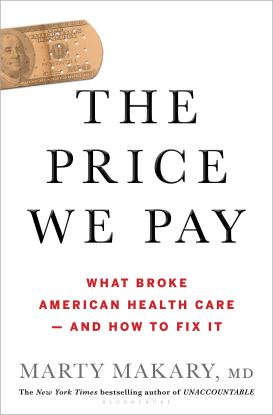 Dr. Makary examines the practice of performing unnecessary vascular procedures in a chapter of his new book, “The Price We Pay,” published Sept. 10. In it, he describes what seems to be the “predatory” practice of some doctors seeking out patients at health screenings in churches.
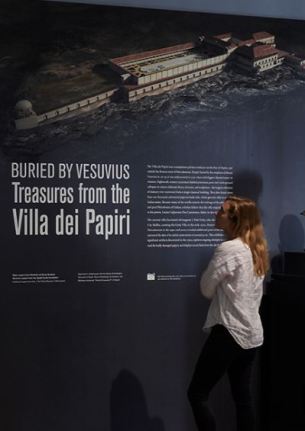 …the Getty Villa, despite some anomalies and insertions, is considered a strong likeness, which makes it a powerful locale for “Buried by Vesuvius: Treasures From the Villa dei Papiri,” the first major exhibition of works discovered in the Roman residence. The show includes Weber’s 1758 architectural map—used to build the Getty Villa—along with some of the approximately 90 sculptures pulled from the site, showing athletes, philosophers, rulers, poets and mythological figures. The exhibition also displays findings from the recent excavations.
 I built a frame out of ash wood. Then I hand-formed and welded body panels onto the frame. I re-engineered the brakes, the steering and the clutch system to fit properly, and I hand-formed the grille out of aluminum. The seats I built out of plywood, foam and vinyl that looks like leather. When I started, I had no idea how to do any of this.
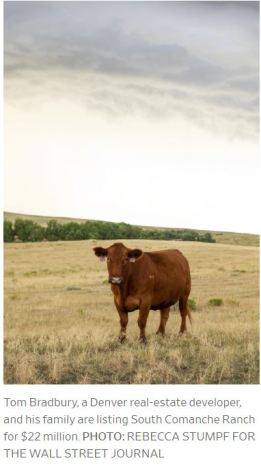 “If you look back in the day to the ’70s and ’80s, there were these guys…raised with this mythology of the West,” said Ken Mirr, a local ranch broker. “It was attachment to something Hollywood produced. Their children aren’t necessarily always as interested in operating the properties. Sometimes the kids just see cows and think ‘What should I do with this?’”
 There is no official definition of what constitutes a dry wine in the U.S. The amount of sugar left in the wine after fermentation or added afterward is, however, sometimes noted on a wine’s label, in grams per liter. According to Mr. Ramey, a wine generally considered dry would have less than 1 gram per liter RS (residual sugar), or 0.1%. Beyond that, a wine with 1% RS (10 grams per liter) is off-dry, and a wine at 3% RS (30 grams per liter) or above is sweet.
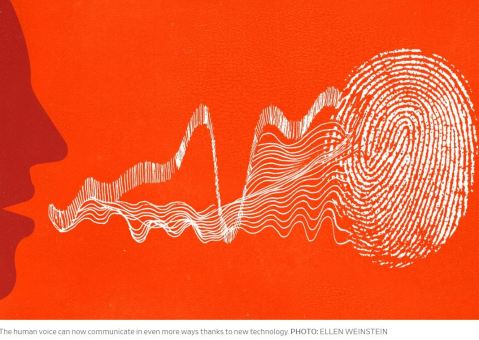 Slower speech, for example, could indicate fatigue or sorrow at one point in time, but over longer periods could signal something more severe, co-founder Jim Harper said.
 At the center of the attack on those of us born between 1946 and 1964, days when the U.S. birth rate was extraordinarily high, is our supposed radical individualism. Its roots are said to be found in the excesses of the 1960s, a decade for which “boomers have become fall guys.”
 Boomers Daily