Tag Archives: Wall Street Journal

Adventure Bicycle Trips: Touring In America On 1,357,430 Miles Of “Quieter, Unpaved Roads”

From a Wall Street Journal online article:

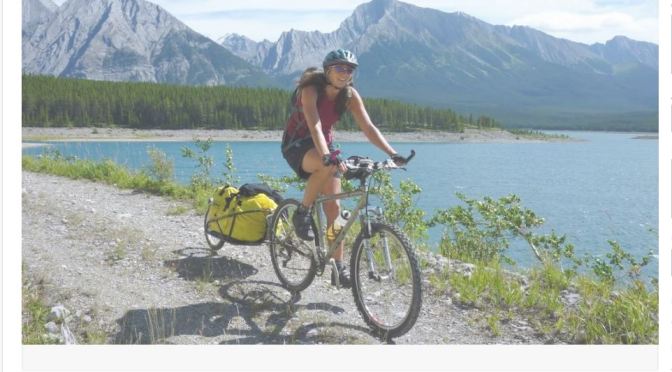
Patricia McNeal, a 58-year-old brain-aneurysm survivor from Panama City, Fla., is currently riding home from Seattle on her 2017 Trek Émonda SL 6 road bike. She’s improvising a route, but confessed she’d one day love to ride the Great American Rail Trail, a transcontinental route from Washington, D.C. to Washington state that’s now in piecemeal development.

A self-described “credit-card camper,” Ms. McNeal doesn’t rough it. She carries a single bag and sleeps at hotels and homestays arranged via warmshowers.org, a peer-to-peer cyclist’s site, as well as supporters who learn about her travels via the Black Girls Do Bike organization. Her necessities are padded shorts, a gel seat, chamois cream to help with chafing and some music. 

ACA Bicycle routes in U.S. Illustration by John S. Dykes Wall Street Journal

Bicycle touring in America is shifting gears away from that old school derring-do on skinny tires, when cyclists scraped by 18-wheelers on highways. Instead, the sort of protected cycling paths common in urban centers are now stretching tendrils over abandoned railroad lines to link cities coast-to-coast. Meanwhile, riders are joining mass multiday fundraising rides for safety in numbers, or taking to America’s 1,357,430 miles of quieter unpaved roads. For that, they ride increasingly popular “gravel bikes,” a toughened road bike designed for speed on off-road with added mounts for gear.

To read more: https://www.wsj.com/articles/the-right-bicycles-for-an-epic-ride-across-america-11573235337

Online Ads Explained: How Google Operates Its Advertising Machine (Wall Street Journal)

From a Wall Street Journal online article:

In interviews, dozens of publishing and advertising executives said Google is doing just that with an array of interwoven products. Google operates the leading selling and buying tools, and the biggest marketplace where online ad deals happen.

OG-DK310_201911_E_20191106192428

Overall, Google made $116 billion in advertising revenue last year, a 22% rise from the previous year and 85% of the company’s total revenue. Most of that ad revenue came from Google’s own properties, but the company’s vast role in brokering online ad sales off its own platforms gives it an added level of dominance.

Alphabet Inc. ’s Google is under fire for its dominance in digital advertising, in part because of issues like this. The U.S. Justice Department and state attorneys general are investigating whether Google is abusing its power, including as the dominant broker of digital ad sales across the web. Most of the nearly 130 questions the states asked in a September subpoena were about the inner workings of Google’s ad products and how they interact.

To read more: https://www.wsj.com/articles/how-google-edged-out-rivals-and-built-the-worlds-dominant-ad-machine-a-visual-guide-11573142071?mod=hp_lead_pos8

Housing Market: Baby Boomers Staying In Homes Longer, Reducing Supply

From a Wall Street Journal online article:

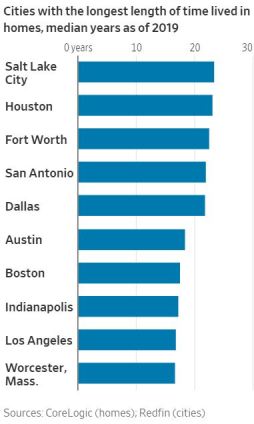
Cities with longest length of time lived in homes CoreLogic 2019Economists say aging baby boomers are the biggest culprits because many are staying healthier later in life and choosing not to downsize. Some look around at the lack of smaller, less expensive homes and are loath to get into bidding wars with their children’s generation to get one.


Homeowners there are staying more than three years longer than they did in 2010. The inventory of homes for sale in Seattle has declined more than 50% over the last nine years, while home prices have risen more than 80%, according to Redfin.

Americans are staying in their homes much longer than before, creating a logjam of housing inventory off the market that helps explain why home sales have been sputtering.

Homeowners nationwide are remaining in their homes typically 13 years, five years longer than they did in 2010, according to a new analysis by real-estate brokerage Redfin. When owners don’t trade up to a larger home for a growing family or downsize when children leave, it plugs up the market for buyers coming behind them.

To read more: https://www.wsj.com/articles/people-are-staying-in-their-homes-longera-big-reason-for-slower-sales-11572777001

Road Trip Adventures: The “Khar Us Nuur National Park” In Mongolia

From a Wall Street Journal online article:

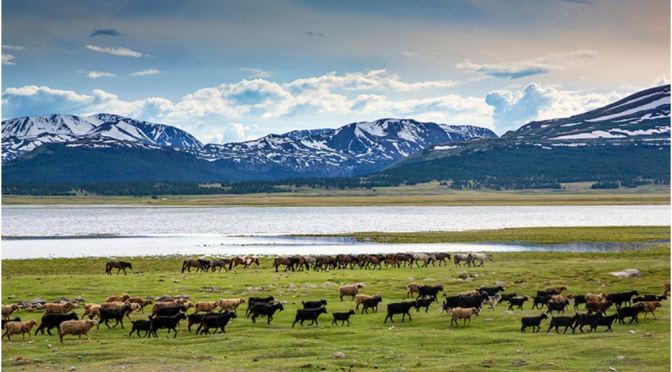
A will to avoid traveling absurd distances had informed our itinerary, but in Mongolia, it seems, you can’t get anywhere without one hell of a journey. The arena for this particular expedition was the Khar Us Nuur National Park. Accessible by road from the dusty town of Khovd, itself a two-hour flight from the capital, Ulaanbaatar, the park spans a transitional zone between the Altai highlands and the Gobi Desert. In the company of our driver, Gala, my friend Marcus and I had set out to experience three of Mongolia’s predominant habitats—steppe, mountains and desert—in the space of one drivable circuit.

Khar Us Nuur National Park - Wall Street Journal Illustration by JOHN S. DYKES

WE HAD already been driving for three hours when the lake appeared in the heat-shimmer and the pink smear behind it resolved into sand dunes. I guessed it would be around 10 minutes until we reached the shore. Fifteen tops. We arrived at the water’s edge two hours later. On the empty plains of Western Mongolia, perspective is illusory, patience a necessity.

To read more: https://www.wsj.com/articles/a-road-trip-in-mongolia-bizarre-in-the-best-way-11572520659

Travel Destinations: Bonefishing In Bermuda Combines Luxury Leisure With Island Adventure

From a Wall Street Journal online review:

Bonefishing in Bermuda Wall Street JouranlWe headed west and hugged the shallow shoreline, casting at shadows of fish as the sun mixed with clouds making it more difficult to sight fish. We curled around a point of land I instantly recognized as Cambridge Beaches, where I stayed with my parents on my first visit to the island and where my sister celebrated her honeymoon.

Mr. Linnell used a push pole to move the skiff quietly along shore as he chatted up guests snorkeling nearby, expertly keeping them away from our bonefish spots by urging the snorkelers to take in sights a safe distance away.

I HAD NEVER considered fly fishing for bonefish in Bermuda. Chasing the elusive, silver-green creatures, prized for their fight, was something you did at remote outposts and rustic camps, where showering was optional and accommodations primitive. Such a trip could be fun for a few days, but you’d never dare drag your wife or kids along.

To read more: https://www.wsj.com/articles/for-a-luxe-fly-fishing-trip-try-bermuda-11572455090

Boomers Fitness: 63-Year Old Unicycler Pedaled 30,000 Miles To Peak Health

From a Wall Street Journal online article:

Mr. Peterson pulls a trick on his unicycle in Redondo Beach, Calif. PHOTO DAVID WALTER BANKS FOR THE WALL STREET JOURNALNow 63, Mr. Peterson has progressed from bike paths to rugged mountain trails and is known for his caped helmet emblazoned with his nickname, UniGeezer. Based on his GPS and bike computer, he estimates he’s logged nearly 30,000 miles, or 24 million pedal revolutions, since he started.
He thinks there’s a fear factor that prevents more people from trying unicycling. “If you fall, 99% of the time you land on your feet,” Mr. Peterson says. His worst injury was a torn piriformis, a tiny muscle behind the glutes, from overuse.

Unicycling isn’t as trendy as spin class, but Terry Peterson says he sweats just as much and smiles way more.

In 2006, at age 50, Mr. Peterson was 30 pounds overweight and got winded climbing a flight of stairs. His job as a piano tuner in Lomita, Calif., was mostly sedentary.

Popular workouts like running, cycling and boot camp sounded boring. “I needed something that would constantly demand my attention and keep me entertained,” he says. He thought back to his childhood unicycle, googled his old toy and was wowed by online videos of Canadian off-road unicycling pioneer Kris Holm. “This wasn’t the cheap ride I had when I was 11,” he says. “He was on a real, purpose-built unicycle doing unreal tricks.”

To read more: https://www.wsj.com/articles/hes-gone-a-long-way-on-his-unicycle-11571572801

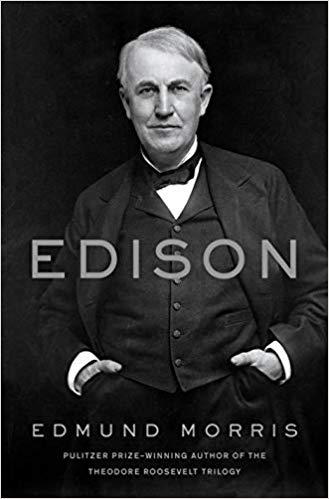
New Books: “Edison” By Pulitzer Prize-Winner Edmund Morris (2019)

From a Wall Street Journal online review:

Edison by Edmuns Morris 2019Not until July 16 did Edison feel that he had a device worth patenting. The application he signed that day specified multiple timpani that “reproduced” vocal inflections and a sibilant-sensitive diaphragm. But a laboratory visitor (spying for Bell) found the instrument more powerful than clear, with the word schism sounding more like kim.

“We have had terrible hard work on the Speaking telegraph,” Batchelor complained to his fellow inventor Ezra Gilliland. For the past five to six weeks, he added, Edison’s team had been “frequently working 2 nights together until we all had to knock off from want of sleep.”

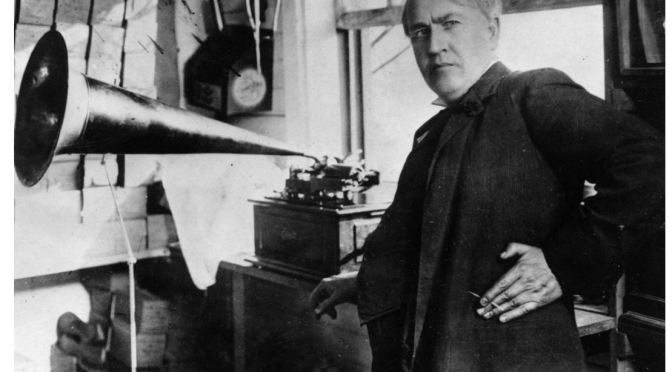
Thomas Alva Edison’s self-proclaimed greatest invention, the phonograph, won him overnight fame. Journalists would marvel that such an acoustic revolution, adding a whole new dimension to human memory, could have been accomplished by a man half deaf in one ear and wholly deaf in the other.

In February 1877, the same month that saw Edison turn 30 and show his first streaks of silver hair, he and his fellow inventor Charles Batchelor began a new series of experiments on what they called, variously, the “telephonic telegraph,” the “speaking telegraph” and the “talking telephone.”

To read more: https://www.wsj.com/articles/the-making-of-thomas-edisons-miraculous-machine-11571324989

Travel Destinations: The Nikko Kanaya Hotel Is A “Glorious Relic From A Lost World” In Japan

From a Wall Street Journal online review:

Nikko Kanaya Hotel Japan HistoryFINICKY WESTERN EATERS would still be relieved to find filet mignon on the French menu of the hotel, now known as the Nikko Kanaya, a 90-minute drive from Tokyo. The dining room itself looks much as it did when it first opened, in 1893 and eagle-eyed diners might notice that the wooden pillars are decorated with flower carvings that echo those of the nearby Toshogu shrine. The views from the guest rooms are likewise unchanged—forest-covered mountains in the background, the same fastidiously manicured gardens in the foreground that the Einsteins strolled in 1922. Other parts of the hotel feel mildly haunted, like a Japanese version of “The Shining.” The wood-paneled lobby is well worn, stairwells creak noticeably and a shadowy cocktail bar features fading black-and-white photos of forgotten ’20s parties, with men in tuxedos and women in frocks smiling at the camera. 

THE 19TH-CENTURY FOREIGNERS who first ventured to the Japanese mountain town of Nikko came away enchanted by the scenery: ornate Shinto shrines set among rivers, forests and waterfalls. But those same visitors were less impressed with the lodging options. Many griped about the local inns, furnished with futon-beds set on the floor and paper walls that offered no privacy. And the food? Overly exotic at best. British traveler Isabella Bird offered a typical review: “The fishy and vegetable abominations known as ‘Japanese food’ can only be swallowed and digested by a few, and that after long practice.” In 1873, in an attempt to cater to Western sensibilities, Zenichiro Kanaya, a 21-year-old temple musician, opened rooms in his family house, serving guests simply-prepared poultry, rainbow trout and eggs.

To read more: https://www.wsj.com/articles/this-japanese-hotel-is-a-glorious-relic-from-a-lost-world-11571314355

New Books: Frank Lloyd Wright Bio “Plagued By Fire” By Paul Hendrickson

From a Wall Street Journal online review:

Plagued by Fire Paul HendrickonWhereas most Wright biographies build from one structure to the next, this one caroms from one digression to the next. Mr. Hendrickson spins miniature biographies of the people who commissioned Wright to build their homes and office buildings. An array of midcentury figures appears: e.g., Glenway Wescott, the novelist and poet who rubbed shoulders with Gertrude Stein in Paris and whose sister commissioned one of Wright’s homes; and Clarence Darrow, the renowned lawyer, who waded into the murk of Wright’s personal life when a disgruntled housekeeper attempted to use the Mann Act to have Wright arrested. We also meet the little-known residents of various structures. Seth Peterson, for instance, dreamed of living in a Wright home so powerfully that he camped out in the one he commissioned as it was being built. 

Even when you grant how exposed to the elements an architect’s work may be, Frank Lloyd Wright appears to have been an insurer’s nightmare. If a building could shake, burn or flood, time and again Wright’s structures did. Like the exquisite Rose Pauson House in Phoenix, which lasted a mere year before succumbing to fire. Or the Imperial Hotel in Tokyo, with its gorgeous H-shaped guest wing, rocked by an earthquake on the day it opened. The Johnson Wax building in Racine, Wis., was so porous that office staff were known to keep buckets by their desk on rainy days.

To read more: https://www.wsj.com/articles/plagued-by-fire-review-the-spirit-in-the-form-11570806240?mod=ig_booksoctober12

Health Studies: Reducing Skin Inflammation With “Topical Emollient” Cream Reduces Chronic Disease

From a Wall Street Journal online article:

nci-vol-4604-150…a new small study in humans suggests that using a barrier-forming cream, such as those with an ingredient called ceramide, to treat and prevent problems associated with aging skin—such as dryness, itching and cracking—may help reduce the low-grade inflammation that occurs in otherwise healthy people as they age. Researchers from the University of California, San Francisco and the San Francisco Veterans Hospital say reducing age-related inflammation could help slow the progression of age-related disorders associated with chronic inflammation, such as Type 2 diabetes, heart disease and loss of muscle mass.

Systemic disease usually stems from multiple sources, so skin protection alone is unlikely to be a panacea, experts say. But the hope is that it can help slow the onset or progression of chronic conditions that often crop up in patients with skin disorders such as psoriasis. And the UCSF study, which was published in the Journal of the European Academy of Dermatology and Venereology in March, provides the first hint in humans that protecting the skin with a barrier cream might benefit otherwise healthy adults whose skin invariably starts to lose its barrier function around middle age.

To read PDF of study, click below:

https://onlinelibrary.wiley.com/doi/epdf/10.1111/jdv.15540?referrer_access_token=lXsArqMcf5AHrI-R4oiwg4ta6bR2k8jH0KrdpFOxC67kdqa5-Q_Q8ltT6uQSa3kUEZMm6mEN7_8mvDywkPe9AOCn7aCLNi_CV3iAMck0BQxAu1SyLpdlTkFwF7hXxUCR6TazFFGPRwZ_EfW2P-26dA%3D%3D

To read more: https://www.wsj.com/articles/skin-protection-may-offer-surprising-benefits-for-overall-health-11568599320