Tag Archives: Videos

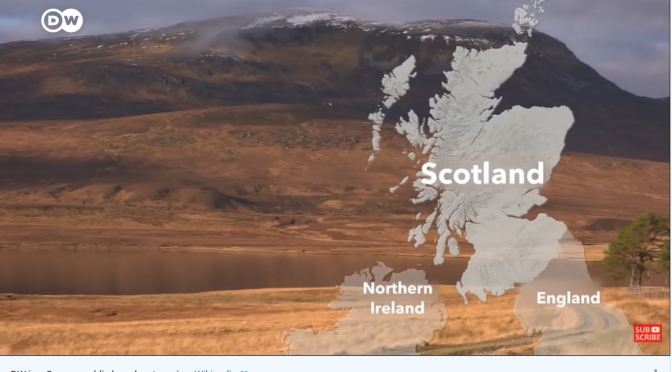
Cultural View: What Will An Independent Scotland Look Like? (Documentary)

What does it mean to be Scottish? Since Brexit, people here at the northernmost end of the island of Great Britain have been asking this question with renewed vigour. Now, with the Scottish Parliament election approaching, many Scots see their future outside of the United Kingdom. So how do ordinary Scottish citizens see their homeland?

On her journey through Scotland, journalist Diana Zimmermann quickly learns that it is impossible to travel through the country these days without talking about Brexit. Geography and history have brought the Scots to a breaking point. Just ask Sophie Gault, a deer-hunter whose breath-taking workplace is in the heart of the Highlands, at the foot of Ben Alder. “Being Scottish is something I’m really proud of,” says Gault, adding that taking this job was the best decision she ever made.

“Being with nature and with wildlife, it makes you appreciate Scotland even more. There’s always that sense of community. And I’m very proud of our own Scottish humour.” What does fisherman Victor Laurenson, who had hoped Brexit would bring him better fishing conditions, think of his country now?

Janey Godley, a comedian from Glasgow, brings yet another perspective: In the Scottish independence referendum in 2014, she says, the English told the Scots to vote against independence so that Scotland could stay in the EU. “It’s basically like your Mum and Dad saying – look – if you go to bed early, when you wake up, you will have a pony. And you go to bed, you sleep early, you wake up and there’s just a cushion in the shape of a cat instead, and it’s not even a good cat.”

Analysis: How China Came To Dominate Rare Earth Minerals (WSJ Video)

Neodymium is critical to making the wheels of a Tesla spin or creating sound in Apple’s Airpods, and China dominates the mining and processing of this rare-earth mineral. So the U.S. and its allies are building their own supply chain. Photo illustration: Clément Bürge/WSJ

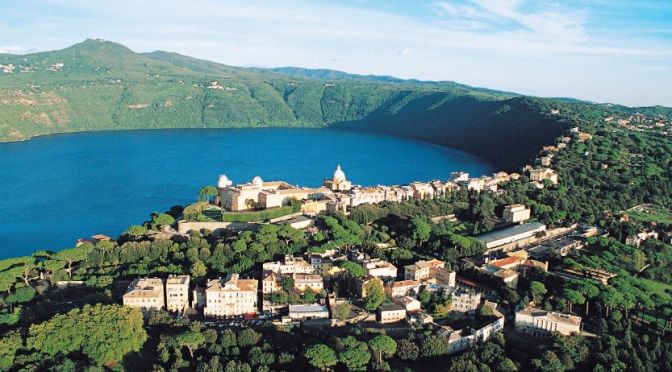
Bike Tour: Lake Albano & Castel Gandolfo, Italy (4K)

Castel Gandolfo, colloquially just Castello in the Castelli Romani dialects, is a town located 25 kilometres southeast of Rome in the Lazio region of Italy. 

Lake Albano is a small volcanic crater lake in the Alban Hills of Lazio, at the foot of Monte Cavo, 20 km southeast of Rome. Castel Gandolfo, overlooking the lake, is the site of the Papal Palace of Castel Gandolfo. It hosted the canoeing and rowing events of the 1960 Summer Olympic Games that were held in Rome.

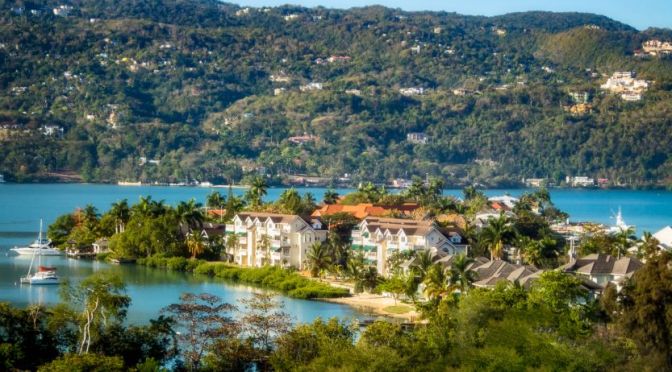
Aerial Views: Montego Bay – Jamaica (4K Video)

Montego Bay, the capital of Saint James Parish on Jamaica’s north coast, is a major cruise ship port with numerous beach resorts and golf courses outside its commercial core. Popular beaches include Doctor’s Cave Beach and Walter Fletcher Beach, home to an amusement park. There’s also snorkelling and diving at coral reefs in the protected waters of Montego Bay Marine Park. 

Politics Monday: Tamara Keith And Amy Walter On Biden’s Legislative Agenda

NPR’s Tamara Keith and Amy Walter of the Cook Political Report join Lisa Desjardins to discuss the latest in politics, including President Biden’s ambitious plans for American families, the status of the Republican party and its support for former President Trump, the fate of Democrats in upcoming elections, and the politicization of COVID-19 vaccines.

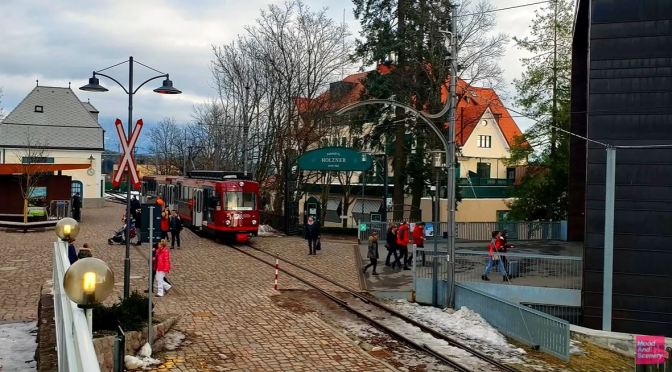
Walks: Soprabolzano – Northern Italy (Video)

Soprabolzano, belonging to the municipality of Renon, is located on the high plateau extending above the provincial capital, at an altitude of 1,221 m asl.

In order to reach Soprabolzano you can take the modern cableway starting from Bolzano, which is by the way not only a comfortable, but also a very fast means of transport. Originally this cableway used to be a rack railway, in 1966 it was replaced by a cableway that used to be in operation until 2007. After a construction period of 2 years, the 4,560 m long 3-S cableway was put into operation, transporting people from Bolzano to Soprabolzano. From Soprabolzano to Collalbo, however, still today the historical train is operating.

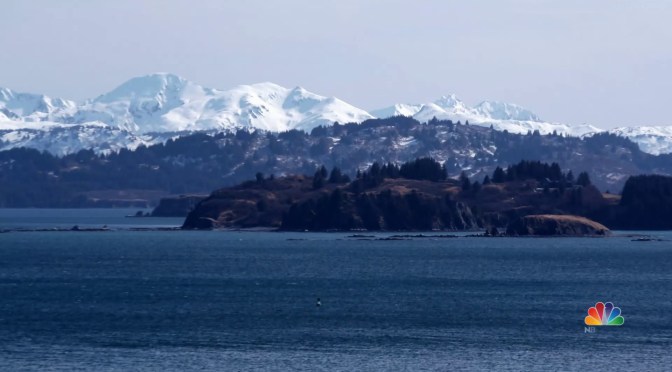
Travel: Alaska Tourism’s Post-Pandemic Comeback

Alaskan tourism was slammed by the pandemic, including charter tours. One business owner said he typically had as many as 700 tourists a summer, but last year there were just 12. In a push to get tourism to rebound, Alaska is offering to vaccinate tourists for free and with so many already vaccinated there, many are hopeful for the upcoming season.

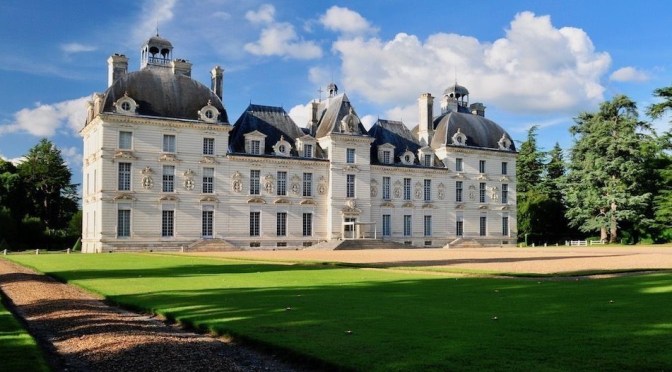
French Estates: ‘Cheverny Chateau’ – Loire Valley

We take you to discover a magnificent stately home located in #France​’s #LoireValley​. The #Château​ of #Cheverny​ is listed as a historical monument and it also inspired #Tintin​ creator Hergé for the family home of Captain Haddock. One in three visitors to Cheverny comes for the world of Tintin, an important source of income. The same family has carefully maintained the castle and grounds for more than six centuries, with each generation laying a new stone to the edifice.

The Château de Cheverny is a grand estate which has been in the same family for over six centuries. Cheverny has always been lived in and every generation has made a great effort to take care and embellish it with a true passion.

Science: Rise Of ‘Exascale Supercomputers’ (Video)

The next generation of computing is on the horizon, and several new machines may just smash all the records…with two nations neck and neck in a race to get there first.

The ENIAC was capable of about 400 FLOPS. FLOPS stands for floating-point operations per second, which basically tells us how many calculations the computer can do per second. This makes measuring FLOPS a way of calculating computing power. So, the ENIAC was sitting at 400 FLOPS in 1945, and in the ten years it was operational, it may have performed more calculations than all of humanity had up until that point in time—that was the kind of leap digital computing gave us. From that 400 FLOPS we upgraded to 10,000 FLOPS, and then a million, a billion, a trillion, a quadrillion FLOPS. That’s petascale computing, and that’s the level of today’s most powerful supercomputers. But what’s coming next is exascale computing. That’s zeroes. 1 quintillion operations per second. Exascale computers will be a thousand times better performing than the petascale machines we have now. Or, to put it another way, if you wanted to do the same number of calculations that an exascale computer can do in ONE second…you’d be doing math for over 31 billion years.