

Chapters: 0:00 Intro 0:10 What are cataracts? 0:43 What are the warning signs of cataracts? 2:44 How are cataracts diagnosed? 3:04 Talk to your eye doctor

Chapters: 0:00 Intro 0:10 What are cataracts? 0:43 What are the warning signs of cataracts? 2:44 How are cataracts diagnosed? 3:04 Talk to your eye doctor

is a famous archaeological site. It was one of the world’s first known settlements, founded some 9,000 years ago. The site has produced magnificent finds including an ancient necklace made of 2,500 beads. What prompted our Neolithic ancestors to settle down? Why did they change their nomadic, hunter-gatherer lives so radically?
As is so often the case in archaeology, it is tombs that tell us the most, while also raising new questions. One of the most magnificent finds at the Ba’ja archaeological site is the richly furnished tomb of a young girl. In 2018, as the excavation team was about to depart, beads emerged from beneath the slab of a nondescript tomb. The team kept working until they finally recovered around 2,500 beads.
Further research showed the beads belonged to an elaborately crafted necklace that had been buried with the girl. The team affectionately christened her Jamila, “the beautiful one.” Jamila’s necklace is a sensation, and has been put on display at the new Petra Museum. There, the entire history of the country is presented, beginning with Ba’ja and humankind’s decision to leave behind the hunter-gatherer lifestyle.
Along with other finds from Ba’ja, Jamila’s finely wrought necklace calls into question much of what we thought we knew about the Stone Age. In recent decades, the burial site in Jordan has helped us see Neolithic people through different eyes. One thing seems clear: They were able to invest time in aesthetics, jewelry and furnishings because their food supply was secure.
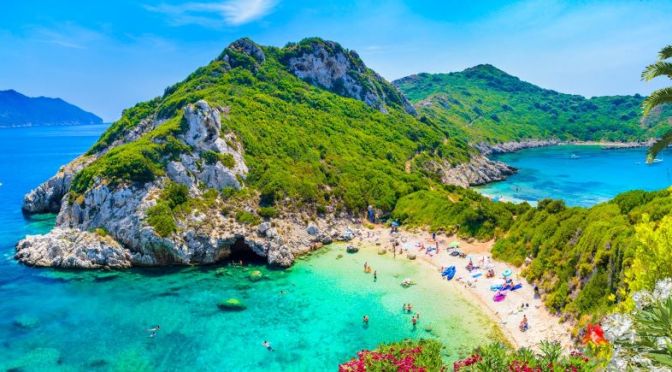
With the passage of time the island may have changed, but we can still feel the spirit of a distant glorious past. Its rich multi-cultural heritage, its historic monuments, its stunning natural landscape, its crystal clear seas, and its excellent weather all year round explain why Corfu is one of the most cosmopolitan Mediterranean destinations weaving a powerful spell on its visitors.
Corfu (Kerkyra in Greek), unlike the rest of Greece, never fell under the Ottoman oppression. Due to the successive dominations of the Venetians, the French and the British over the centuries, the island has primarily become part of the Western rather the Levantine world. Their culture wielded strong influence in the city: it was here that the first Greek University (the Ionian Academy), the first Philharmonic Orchestra and the First School of Fine Arts were founded.
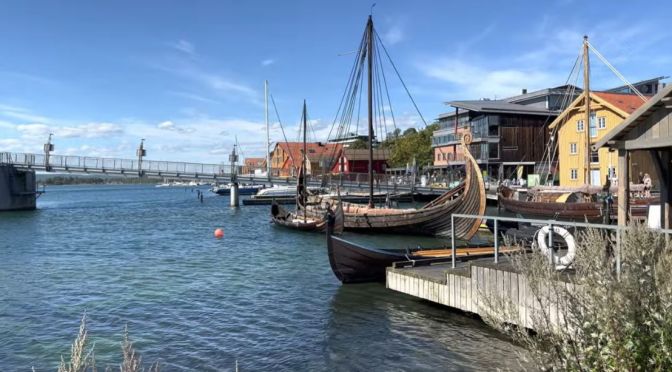
Tønsberg, town, southeastern Norway, at the head of Tønsbergfjorden. Considered to be the oldest town in Norway, Tønsberg was founded c. AD 871 and became an important trading centre. In the 13th century King Håkon Håkonsson built his castle, Tønsberghus, there.
The town was destroyed by fire in 1536 and only in the 18th and 19th centuries did it become a major port and one of Norway’s major shipping and whaling centres. Until the late 1960s it was Norway’s third largest maritime town. Tønsberg remains an industrial and shipping centre, with such diverse concerns as metal shops, shipyards, paper mills, leather processing, and breweries; it is noted especially for its silverware.
Tourist sites include ruins of the Tønsberghus, St. Michael’s Church (c. 1150), the ruins of the Royal Castle (1276), Sem Church (c. 1100), and the Vestfold Museum.
The Galapagos Islands are home to some of the most unspoiled nature in the world. But even here plastic waste is a problem, and biodiversity is under threat. Marine biologists and conservationists are campaigning for the expansion of protected zones. The fauna and flora of the Galapagos Islands in the Pacific Ocean is a treasure trove for marine biologists.
They still know very little about many of the fish, rays and sea turtles that can be found here. But these days, their work is focused primarily on conservation, because many of these species are endangered due to threats such as overfishing and boat strikes. Efforts to protect local wildlife include attaching tracking devices to juvenile hammerhead sharks to determine their migration routes, which can then be designated as protected areas.
Other research teams are focused on the problem of plastic waste in the Pacific – identifying where it comes from and exploring its impact on marine life. Meanwhile, local fishermen are under pressure: Large fishing fleets from China and elsewhere ply the waters near the Galapagos Islands, severely depleting fish stocks. As a result, local fishing boats are forced to move into designated conservation zones. If the delicate marine environment surrounding the Galapagos Islands is to survive, fishing needs to become more sustainable.
Sitting on the edge of Parramatta River, Fisherman’s House is a unique underground home with a sense of the unexpected. Without revealing all at once, the waterfront house is a unique underground home by Studio Prineas that instils moments of awe within every level.
Video Timeline: 00:00 – Introduction to the Underground Home 00:30 – The Waterfront Location of the Home 00:45 – The Original Timber Cottage 01:04 – A Minimalistic View On Arrival 01:35 – A Longstanding Friendship Between Architect and Client 02:05 – Working with an Open Design Brief for the Home 02:33 – The Original Steel Cladding 02:46 – Restoring and Reusing Original Materials from the House 03:28 – Careful Contrast of the New Wing to The Cottage 04:08 – Taking Pride in Preservation and Creation 04:30 – The Swimming Pool
Fisherman’s House is one of the last remaining timber cottages in the area that sits nine metres below the road, hidden from the public eye and offering a serene escape from the city. The client – an engineer and family friend of the architects – delivered an open design brief and sense of freedom for Studio Prineas to organically explore what the unique underground home could become.
The main desire for the client was to have the living spaces facing the water; while there was no desire to keep the original cottage, this was something that Studio Prineas knew they needed to maintain. Throughout the restoration process, removing previous cladding revealed the original weather boards underneath; inside the home, the original timber flooring and lining boards were saved to bring back the lightness of the architecture. With waterfront views from the kitchen, living and dining spaces and entertainment deck, the interior design of the original cottage defers from the new wing.
Additionally, the glazed link is a vertical connection from the original cottage to the private living spaces above. From the lightness of the timber cottage below, the upper levels speak to the rockface behind whilst offering a more grounded appearance with darker timbers. Employing concrete ceilings with rough sawn Oregon formworks that brought a timber look and imprint on the concrete, Studio Prineas established a differentiating space that still feels connected through minute details.
Conserving the history of the cottage whilst creating a contemporary unique underground home for the clients, Studio Prineas were able to embody many design ideas that they have been establishing over many years. As one of the more memorable aspects, the pool acts as one of the last additions of the unique underground home. Unexpected and holding much of the original cottage’s history, the pool offers an enchanting place to sit and watch as the sun sets over the home.
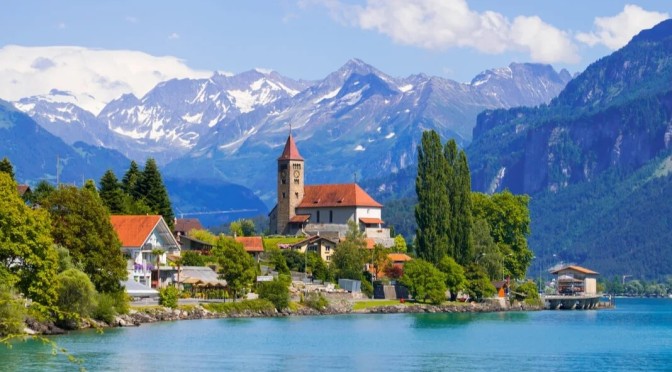
Brienz is a village on the northeast shore of Lake Brienz, in Switzerland’s Bernese Oberland region. The village’s 18th-century wooden chalets and the sculptures dotted throughout the village are testimonials to a woodcarving tradition. North, a steam train runs up Brienzer Rothorn Mountain, with views of the lake and surrounding Alps. East of Brienz, the Ballenberg Open Air Museum offers glimpses of rural life.
The most romantic part of Brienz is the Brunngasse which, having once been awarded the title «most beautiful street in Europe», is well-known abroad. Most of the houses in the street date from the 18th century and are decorated with wood carvings. Brienz, which is well-known as the “village of carving” has a long tradition in wood processing and to this day has a school for carving and violin-making.
Filmed and edited by: Jeka Kiriloff
The bus takes about 1.5 hours and takes us on a journey past some breathtaking views of coastal scenery and charming towns such as Newhaven, Peacehaven and Seaford, before arriving in Brighton, a seaside metropolitan located in the Southeast coast of England.
Eastbourne is a resort town on England’s southeast coast. On the seafront are Victorian hotels, the 19th-century Eastbourne Pier and a 1930s bandstand. Towner Art Gallery includes modern British works. Nearby, Redoubt Fortress, built during the Napoleonic Wars, has a military museum. Southwest along the coast, in South Downs National Park, are the tall chalk cliffs of Beachy Head and its striped 1902 lighthouse.
Brighton is a seaside resort and one of the two main areas of the City of Brighton and Hove in the county of East Sussex, England. Brighton is 47 miles south of London. Archaeological evidence of settlement in the area dates back to the Bronze Age, Roman and Anglo-Saxon periods.
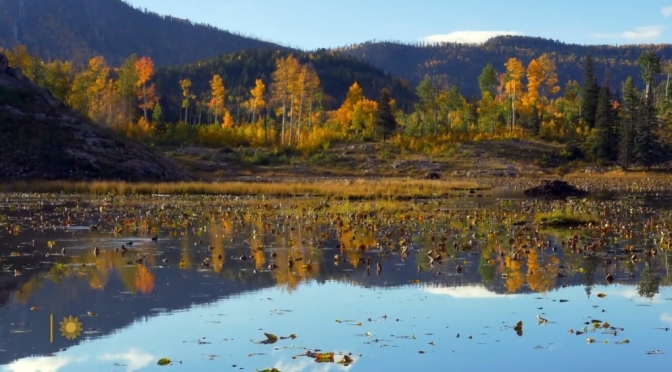
“Sunday Morning” takes us to San Juan National Forest in Colorado. Videographer: Scot Miller.
The San Juan National Forest covers the southern half of the massive and complex San Juan Mountains. There are numerous peaks, rivers, lakes, and remote stretches in the forest, including the Weminuche Wilderness, the largest in the state. Parts of the forest are accessible from Cortez, Durango, Pagosa Springs, Silverton, Telluride, and Ouray.
The most beautiful places to visit in Portugal:
0:00 – Intro 0:31 – Ursa Beach & Cabo da Roca 1:30 – Pena Palace 2:11 – Castle of the Moors 2:44 – Lisbon 3:24 – Òbidos 4:27 – Nazaré 5:13 – Berlengas Islands 5:53 – Tomar 6:17 – Castle of Leiria 6:37 – Coimbra 7:16 – Serra da Estrela 7:47 – Azores – (São Miguel & Pico Island) 8:48 – Algarve Coast & Lagos 9:18 – Bengali Cave & Ponta da Piedade 9:36 – Porto & Duoro Valley 10:20 – Peneda-Gerês National Park 10:52 – Guimarães 11:28 – Madeira 11:27 – Ponta do Sol 12:24 – Fanal Forest 13:05 – São Vincente Church 13:24 – Pico do Ariero 14:38 – Outro





 Boomers Daily