March 20, 2023: A selection of three essential articles read aloud from the latest issue of The Economist. This week, what’s wrong with the banks? Also, we ask whether Bibi will break Israel (10:39) and why men should get a good night’s sleep to ensure vaccines work properly (19:03).
Rising interest rates have left banks exposed. Time to fix the system—again
Only ten days ago you might have thought that the banks had been fixed after the nightmare of the financial crisis in 2007-09. Now it is clear that they still have the power to cause a heart-stopping scare. A ferocious run at Silicon Valley Bank on March 9th saw $42bn in deposits flee in a day. svb was just one of three American lenders to collapse in the space of a week. Regulators worked frantically over the weekend to devise a rescue. Even so, customers are asking once again if their money is safe.
When Israel’s best and brightest are up in arms it is time to worry
This should have been Israel’s moment. As it approaches its 75th birthday in April the risk of a conventional war with neighbouring Arab states, for decades an existential danger, is at its lowest since 1948. The last Palestinian intifada, or uprising against occupation, ended 18 years ago. Israel’s tech-powered economy is more successful and globally relevant than ever. Last year gdp per person hit $55,000, making it richer than the eu.
Vaccines get all the glory, but it is really the immune system that does the heavy lifting. Indeed, those with weak immune systems often benefit little from vaccines. Aware of this, researchers have long thought that people deprived of sleep also ought to benefit less from vaccines, as sleeping less is thought to reduce immune function. A new analysis reveals that this is clearly the case—though only in men.
Could wildfires be depleting the ozone all over again? Staff Writer Paul Voosen talks with host Sarah Crespi about the evidence from the Polarstern research ship for wildfire smoke lofting itself high into the stratosphere, and how it can affect the ozone layer once it gets there.
Next, we talk ticks—the ones that bite, take blood, and can leave you with a nasty infection. Andaleeb Sajid, a staff scientist at the National Cancer Institute, joins Sarah to talk about her Science Translational Medicine paper describing an mRNA vaccine intended to reduce the length of tick bites to before the pests can transmit diseases to a host.
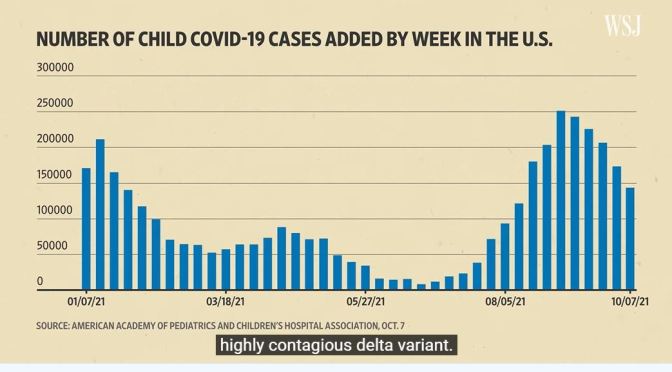
As the FDA nears a decision on authorizing Pfizer’s Covid-19 vaccine for children 5-11 years old, public-health officials and pediatricians are sharing research with families to assure hesitant parents of the shot’s safety. Photo: John Locher/Associated Press
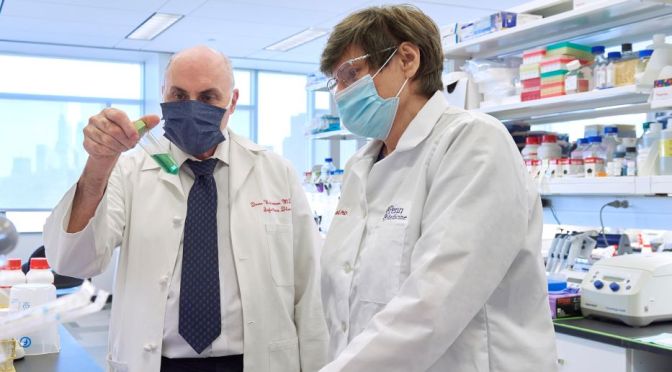
As mRNA-based COVID-19 vaccines are deployed to protect hundreds of millions of people across the world from the deadly global pandemic, the University of Pennsylvania scientists whose research breakthroughs laid the foundation for swift vaccine development have been awarded the 2021 Lasker-DeBakey Clinical Medical Research Award. Here, mRNA vaccine pioneers Drew Weissman, MD, PhD, and Katalin Karikó, PhD, share the story behind their development of this groundbreaking technology, and what it means for the future of medicine.
For decades the world’s cities seemed invincible, but the pandemic has hastened and hardened a shift in urban demographics and economics. And an ancient Finnish burial site scrambles notions of gender roles in the distant past.
The decision to pivot an entire business to focus on the coronavirus is an obvious one in hindsight, at least for Moderna, BioNTech and Pfizer, which succeeded beyond anyone’s expectations — and will reap billions of dollars in sales of their vaccines this year alone.
It wasn’t such a clear decision in the early months of 2020, though that’s when Moderna’s chief executive, Stephane Bancel, and BioNTech’s chief, Ugur Sahin, starting turning their ships, they told CNBC in interviews for this documentary about the vaccine race, produced by CNBC senior health and science reporter Meg Tirrell and senior digital producer Sam Rega.
“The night that China locked down Wuhan, I’m like: ‘When was the last time I know a city has been locked down because of an infectious disease?’” Bancel recalled. “And what goes through my mind is: what do the Chinese know that we don’t know?“ Bancel said he awoke sweating at 4 a.m., realizing, “Jeez, there’s going to be a pandemic like 1918.” For Sahin, it was reading a paper in the Lancet in late January describing the outbreak in China.
“I did a number of calculations, fast calculations, and realized it had already spread,” Sahin said. “And it was clear that it was already too late to stop the disease.” But he was convinced BioNTech, then focused mainly on personalized cancer therapies, may be able to do something. His company reached out to Pfizer, he said, proposing to work on a vaccine for the novel coronavirus using the same technology, messenger RNA, on which they’d already partnered to try to tackle the flu.
“We had the first contact a few days after starting the project,” Sahin said. “At that time, Pfizer was not yet interested.” Albert Bourla, Pfizer’s CEO, confirmed Sahin’s account, saying in the earliest months of 2020, he was focused on maintaining the company’s operations in China. But by late February, he said, he’d determined Pfizer needed to work on a treatment and a vaccine.
“What is the best approach?” Bourla said he asked his team. Kathrin Jansen, head of Pfizer’s vaccine research and development, said they assessed all existing technologies, including protein-based vaccines and vaccines using viral vectors. “They all have too few pros and too many cons,” she said.
But messenger RNA was a risk; it had never been used before as an approved vaccine or drug. “I wrestled a little bit with the decision,” Bourla said. But after another meeting with the team, “they convinced me.” That’s when Sahin called a second time. The outbreak, by that point, was already in New York, he said. Reaching Jansen, he described the work that BioNTech already had underway, and asked if Pfizer would like to work together. “And I said: absolutely,” Jansen remembered. “Let’s talk about this.”
At Moderna, it was never a question that messenger RNA would be the way forward; that was the technology around which the company was founded in 2010. But that didn’t mean questions didn’t exist. “Even going into March, there were voices that said vaccines were false hope,” recalled Dr. Stephen Hoge, Moderna’s president.
“It did feel for a period of time that we needed to defend even the idea of trying.” “When we were thinking about how do we get into Phase 1, what does it look like to prepare for a pandemic, the eyes of the world felt as though they were looking at Moderna as this biotech … ‘what are they trying to do?’” said Hamilton Bennett, Moderna’s senior director of vaccine access and partnerships.
“It was only when we transitioned in that March notification from the WHO that this was a global pandemic, it’s an emergency, that I think people started to realize that what we’re doing isn’t playing in a sandbox trying to demonstrate our technology,” Bennett said. “We’re developing a vaccine that’s going to stop the pandemic.” The companies succeeded, in what became one of the greatest medical races in history. Here, they recall how it happened.
With so many myths about COVID-19 vaccines regarding their impact on our health, many people don’t know what to believe. In our fact check, find out what you need to know about the mRNA vaccines — as we expose the myths and reveal the facts.
The bloc seems at last to have a firm hand on inoculation and recovery—but efforts to engineer even progress among member states are not quite panning out.
In recent years Bangladesh’s government has been cosy with a puritanical Islamist group; we ask why the relationship has grown complicated. And a genetic-engineering solution to the problem of mosquito-borne disease.
News, Views and Reviews For The Intellectually Curious









 Boomers Daily