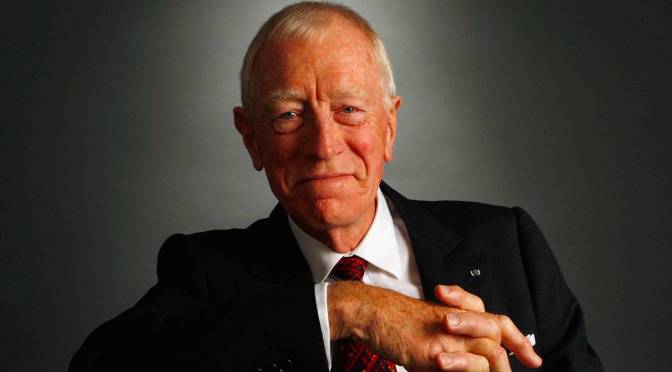
Born in Lund, Sweden, von Sydow studied at Stockholm’s Royal Dramatic Theatre before getting his start in the film business through his work with mentor Ingmar Bergman. The pair’s credits included world cinema classic The Seventh Seal, in which he portrays a man who plays a chess game with Death, the Oscar-nominated Wild Strawberries, and the Oscar-winning The Virgin Spring.
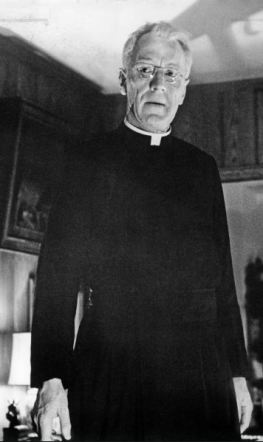
Max von Sydow, the Sweden-born French actor whose credits included Ingmar Bergman’s The Seventh Seal, William Friedkin’s The Exorcist, and the role of Emperor Ming in Flash Gordon, has died at the age of 90.
The actor’s 65-year career spanned acclaimed arthouse, Hollywood blockbusters, and television. In recent years, he played Lor San Tekka in Star Wars: The Force Awakens, the Three-Eyed Raven in Game Of Thrones, and voiced a character on The Simpsons.
On the eve of his retirement in 2001, the former CEO of G.E. spoke with Lesley Stahl about turning his company around, embracing the internet, and the reputation that earned him the nickname “Neutron Jack.” Welch died Monday, March 2, 2020.
Excerpts from a New York Times article (Feb 28, 2020):
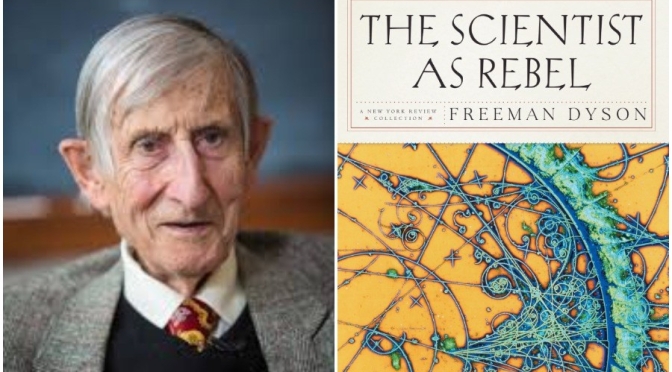
“Life begins at 55, the age at which I published my first book,” he wrote in “From Eros to Gaia,” one of the collections of his writings that appeared while he was a professor of physics at the Institute for Advanced Study — an august position for someone who finished school without a Ph.D. The lack of a doctorate was a badge of honor, he said. With his slew of honorary degrees and a fellowship in the Royal Society, people called him Dr. Dyson anyway.
Freeman J. Dyson, a mathematical prodigy who left his mark on subatomic physics before turning to messier subjects like Earth’s environmental future and the morality of war, died on Friday at a hospital near Princeton, N.J. He was 96.
As a young graduate student at Cornell University in 1949, Dr. Dyson wrote a landmark paper — worthy, some colleagues thought, of a Nobel Prize — that deepened the understanding of how light interacts with matter to produce the palpable world. The theory the paper advanced, called quantum electrodynamics, or QED, ranks among the great achievements of modern science.
Novelist Clive Cussler, the man whose maritime alter-ego, adventurer Dirk Pitt, raised the Titanic and explored countless shipwrecks, has himself located more than 60 sunken ships and submarines. Cussler (who died on February 24, 2020, at age 88) talked to correspondent Anthony Mason in this interview that originally aired on “Sunday Morning” on January 25, 1998, in which he discussed his passion for vintage cars, and for going beneath the ocean’s surface to find the answers to naval history’s perplexing questions.
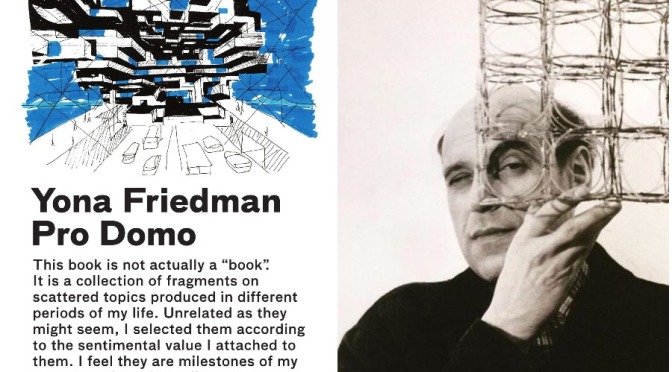
“After 96 years on this earth, Yona has moved up to build a Spatial City and install some Space Chains in the sky. The Fonds de Dotation Denise and Yona Friedman, which he founded last year, will continue his work.”
From an Instagram post (02/21/20)
Yona Friedman (5 June 1923 – 21 February 2020) was a Hungarian-born French architect, urban planner and designer. He was influential in the late 1950s and early 1960s, best known for his theory of mobile architecture.
In 1958, Yona Friedman published his first manifesto : “Mobile architecture”. It described a new kind of mobility not of the buildings, but for the inhabitants, who are given a new freedom.
Mobile architecture is the “dwelling decided on by the occupant” by way of “infrastructures that are neither determined nor determining”. Mobile architecture embodies an architecture available for a “mobile society”. To deal with it, the classical architect invented “the Average Man”. The projects of architects in the 1950s were undertaken, according to Friedman, to meet the needs of this make-believe entity, and not as an attempt to meet the needs of the actual members of this mobile society.
The teaching of architecture was largely responsible for the “classical” architect’s under-estimation of the role of the user. Furthermore, this teaching did not embrace any real theory of architecture. Friedman proposed then teaching manuals for the fundamentals of architecture for the general public.
The spatial city, which is a materialization of this theory, makes it possible for everyone to develop his or her own hypothesis. This is why, in the mobile city, buildings should :
touch the ground over a minimum area
be capable of being dismantled and moved
and be alterable as required by the individual occupant.
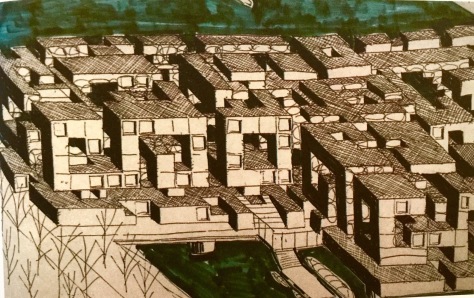
The Spatial City is the most significant application of “mobile architecture”. It is raised up on piles which contains inhabited volumes, fitted inside some of the “voids”, alternating with other unused volumes, making it look aesthetically pleasant. The basis of its design is that of trihedral elements which operate as “neighbourhoods” where dwellings are distributed without a price.
This structure introduces a kind of merger between countryside and city (compare to Paolo Soleri’s Arcology concept) and may span:
certain unavailable sites,
areas where building is not possible or permitted (expanses of water, marshland),
areas that have already been built upon (an existing city),
above farmland.
This spanning technique which includes container structures ushers in a new development in town-planning. Raised plans increase the original area of the city becoming three-dimensional. The tiering of the spatial city on several independent levels, one on top of the other, determines “spatial town-planning” both from the functional and from the aesthetic viewpoint. The lower level may be earmarked for public life and for premises designed for community services as well as pedestrian areas. The piles contain the vertical means of transport (lifts, staircases). The superposition of levels should make it possible to build a whole industrial city, or a residential or commercial city, on the same site. In this way, the Spatial City forms what Yona Friedman would call an “artificial topography”. This grid suspended in space outlines a new cartography of the terrain with the help of a continuous and indeterminate homogeneous network with a major positive outcome: this modular grid would authorize the limitless growth of the city.
The spaces in this grid are rectangular and habitable modular “voids”, with an average area of 25–35 square meters. Conversely, the form of the volumes included within the grid depends solely on the occupant, and their configuration set with a “Flatwriter” in the grid is completely free. Only one half of the spatial city would be occupied. The “fillings” which correspond to the dwellings only actually take up 50% of the three-dimensional lattice, permitting the light to spread freely in the spatial city. This introduction of elements on a three-dimensional grid with several levels on piles permits a changeable occupancy of the space by means of the convertibility of the forms and their adaptation to multiple uses.
In Yona Friedman’s own words “The city, as a mechanism, is thus nothing other than a labyrinth : a configuration of points of departure, and terminal points, separated by obstacles”.
From a New York Times online article (Feb 17, 2020):
Charles Portis, Elusive Author of ‘True Grit,’ Dies at 86 The publicity-shy Mr. Portis earned a modest but devoted readership and accolades as America’s “least-known great writer.”Charles Portis, the publicity-shy author of “True Grit” and a short list of other novels that drew a cult following and accolades as the work of possibly the nation’s best unknown writer, died on Monday at a hospice in Little Rock, Ark.
He was 86.His death was confirmed by his brother Jonathan, who said Mr. Portis had been in hospice care for two years and in an Alzheimer’s care facility for six years prior.Mr. Portis was in his early 30s and well established as a reporter at The New York Herald Tribune in 1964, when he decided to turn to fiction full time. The decision astonished his friends and colleagues at the paper, among them Jimmy Breslin, Tom Wolfe and Nora Ephron.He had covered the civil rights movement in the South: riots in Birmingham, Ala.; the jailing of the Rev. Dr. Martin Luther King Jr. in Albany, Ga.; Gov. George C. Wallace’s attempt to stop the desegregation of the University of Alabama.
Bertrand Arthur William Russell, 3rd Earl Russell (18 May 1872 – 2 February 1970) was a British philosopher, logician, mathematician, historian, writer, essayist, social critic, political activist, and Nobel laureate. At various points in his life, Russell considered himself a liberal, a socialist and a pacifist, although he also confessed that his sceptical nature had led him to feel that he had “never been any of these things, in any profound sense.” Russell was born in Monmouthshire into one of the most prominent aristocratic families in the United Kingdom.
In the early 20th century, Russell led the British “revolt against idealism”. He is considered one of the founders of analytic philosophy along with his predecessor Gottlob Frege, colleague G. E. Moore and protégé Ludwig Wittgenstein. He is widely held to be one of the 20th century’s premier logicians. With A. N. Whitehead he wrote Principia Mathematica, an attempt to create a logical basis for mathematics, the quintessential work of classical logic. His philosophical essay “On Denoting” has been considered a “paradigm of philosophy”. His work has had a considerable influence on mathematics, logic, set theory, linguistics, artificial intelligence, cognitive science, computer science (see type theory and type system) and philosophy, especially the philosophy of language, epistemology and metaphysics.
Russell was a prominent anti-war activist and he championed anti-imperialism. Occasionally, he advocated preventive nuclear war, before the opportunity provided by the atomic monopoly had passed and he decided he would “welcome with enthusiasm” world government. He went to prison for his pacifism during World War I.[75] Later, Russell concluded that war against Adolf Hitler’s Nazi Germany was a necessary “lesser of two evils” and criticised Stalinist totalitarianism, attacked the involvement of the United States in the Vietnam War and was an outspoken proponent of nuclear disarmament. In 1950, Russell was awarded the Nobel Prize in Literature “in recognition of his varied and significant writings in which he champions humanitarian ideals and freedom of thought”.
Robert Conrad, the actor best known for his role in the television show The Wild Wild West, died today in Malibu, Calif. of heart failure. He was 84 and his death was announced by a family spokesman. Born in Chicago, Illinois, Conrad moved to Los Angeles in 1958 and found almost instant success, booking a recurring role on the TV show Hawaiian Eye in 1959.
Robert Conrad (born Conrad Robert Falk; March 1, 1935 – died February 8, 2020) was an American film and television actor, singer, and stuntman. He is best known for his role in the 1965–69 television series The Wild Wild West, playing the sophisticated Secret Service agent James T. West. He portrayed World War II ace Pappy Boyington in the television series Baa Baa Black Sheep (later syndicated as Black Sheep Squadron). In addition to acting, he was a singer, and recorded several pop/rock songs in the late 1950s and early 1960s as Bob Conrad. He hosted a weekly two-hour national radio show (The PM Show with Robert Conrad) on CRN Digital Talk Radio since 2008.
From a New Yorker online article (February 5, 2020):
He was the real thing, the last of the great middle-European intellectual journeyers, one with Benjamin and Cioran and the other exiles, for whom books were the one constant country and reading them a matter of life and death. With him gone, we can only reread his writing, determined to honor the intensity of his commitment by intensifying our own.
The word “awesome” is most easily used by adolescents these days, but the range of learning that the critic and novelist George Steiner possessed was awesome in the old-fashioned, grown-up sense: truly, genuinely awe-inspiring. Steiner, who died on Monday, at the age of ninety, knew modern languages, ancient languages, classical literature, and modern literature. He had memorized the rhymes of Racine and he could elucidate the puns in Joyce and he could tell you why both were, in his thorny but not cheaply won view, superior to the prolixities of Shakespeare. He was what many people call a human encyclopedia—not in the American sense, a blank vault of facts, but in the French Enlightenment one: a critical repository of significant knowledge.
“It is with tremendous sadness that my brothers and I announce that Kirk Douglas left us today at the age of 103. To the world he was a legend, an actor from the golden age of movies who lived well into his golden years, a humanitarian whose commitment to justice and the causes he believed in set a standard for all of us to aspire to.
But to me and my brothers Joel and Peter he was simply Dad, to Catherine, a wonderful father-in-law, to his grandchildren and great grandchild their loving grandfather, and to his wife Anne, a wonderful husband.
Kirk’s life was well lived, and he leaves a legacy in film that will endure for generations to come, and a history as a renowned philanthropist who worked to aid the public and bring peace to the planet.
Let me end with the words I told him on his last birthday and which will always remain true. Dad- I love you so much and I am so proud to be your son.”

 Born in Lund, Sweden, von Sydow studied at Stockholm’s Royal Dramatic Theatre before getting his start in the film business through his work with mentor Ingmar Bergman. The pair’s credits included world cinema classic The Seventh Seal, in which he portrays a man who plays a chess game with Death, the Oscar-nominated Wild Strawberries, and the Oscar-winning The Virgin Spring.
 “Life begins at 55, the age at which I published my first book,” he wrote in “From Eros to Gaia,” one of the collections of his writings that appeared while he was a professor of physics at the Institute for Advanced Study — an august position for someone who finished school without a Ph.D. The lack of a doctorate was a badge of honor, he said. With his slew of honorary degrees and a fellowship in the Royal Society, people called him Dr. Dyson anyway.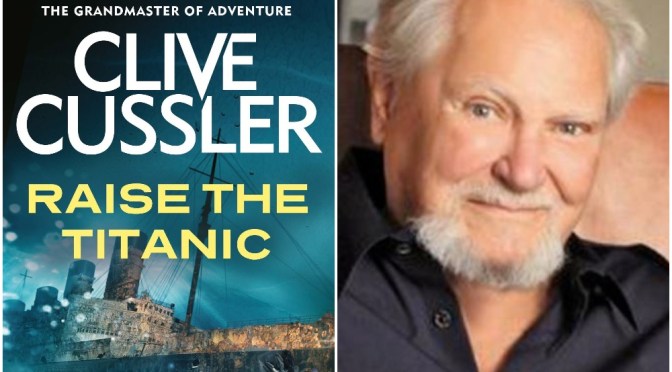
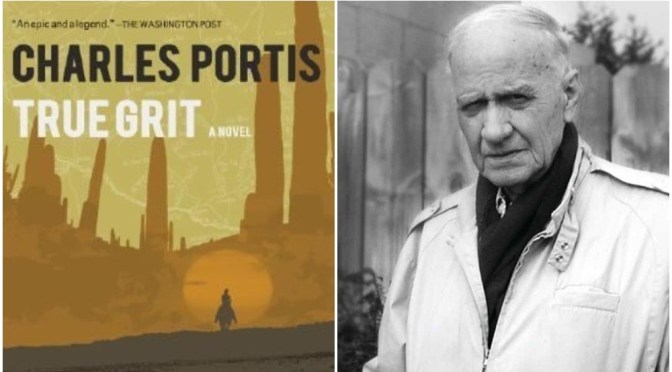
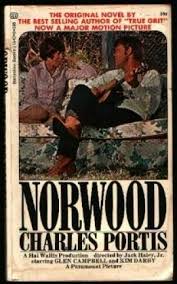 Charles Portis, Elusive Author of ‘True Grit,’ Dies at 86 The publicity-shy Mr. Portis earned a modest but devoted readership and accolades as America’s “least-known great writer.”Charles Portis, the publicity-shy author of “True Grit” and a short list of other novels that drew a cult following and accolades as the work of possibly the nation’s best unknown writer, died on Monday at a hospice in Little Rock, Ark.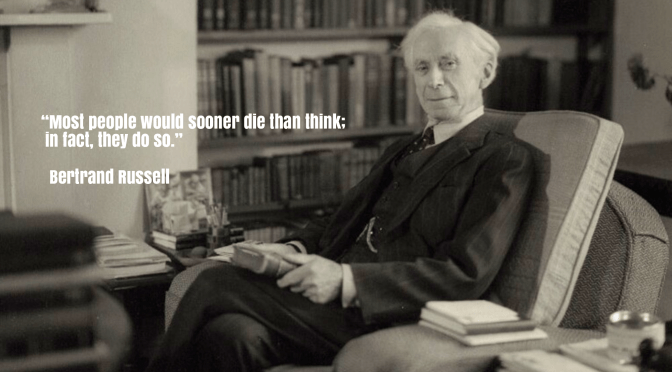
 Bertrand Arthur William Russell, 3rd Earl Russell (18 May 1872 – 2 February 1970) was a British philosopher, logician, mathematician, historian, writer, essayist, social critic, political activist, and Nobel laureate. At various points in his life, Russell considered himself a liberal, a socialist and a pacifist, although he also confessed that his sceptical nature had led him to feel that he had “never been any of these things, in any profound sense.” Russell was born in Monmouthshire into one of the most prominent aristocratic families in the United Kingdom.
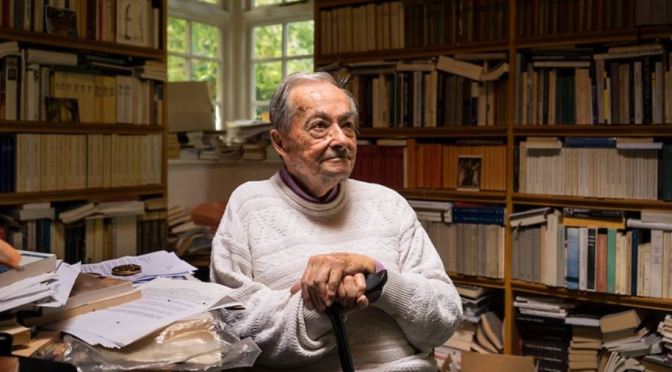
 He was the real thing, the last of the great middle-European intellectual journeyers, one with Benjamin and Cioran and the other exiles, for whom books were the one constant country and reading them a matter of life and death. With him gone, we can only reread his writing, determined to honor the intensity of his commitment by intensifying our own.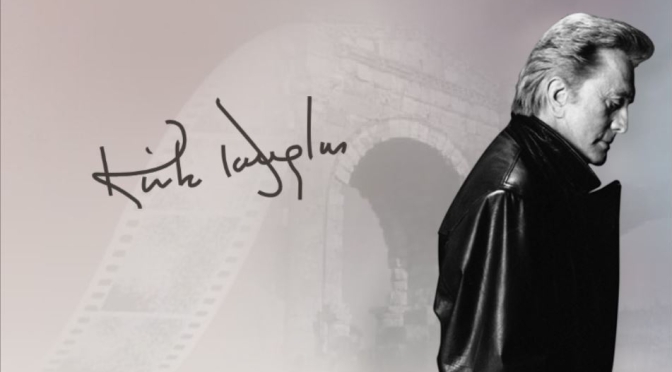
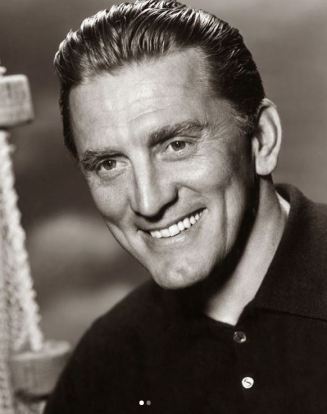 “It is with tremendous sadness that my brothers and I announce that Kirk Douglas left us today at the age of 103. To the world he was a legend, an actor from the golden age of movies who lived well into his golden years, a humanitarian whose commitment to justice and the causes he believed in set a standard for all of us to aspire to.
 Boomers Daily