Tag Archives: Travel

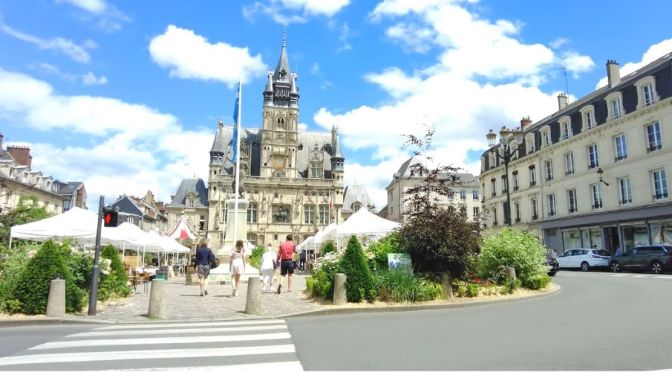
Walking Tour: Compiègne In Northern France (4K)

Compiègne, town, Oise départementHauts-de-France région, northern France. It lies along the Oise River, at the northwest edge of the forest of Compiègne.

Of Roman origin, it was referred to in 557 as Compendium, a name derived from a word meaning “short cut” (between Beauvais and Soissons). The town flourished in the Middle Ages and was the site of assemblies and councils under the Merovingian kings. In 833 Louis the Pious was deposed there. Charles II the Bald enlarged the town and founded the Abbey of Saint-Corneille, now the home of the municipal library. Compiègne became a commune in 1153, and a monument to Joan of Arc commemorates her capture there by the Burgundians in 1430.

City Walks: The ‘Latin Quarter’ In Paris, France

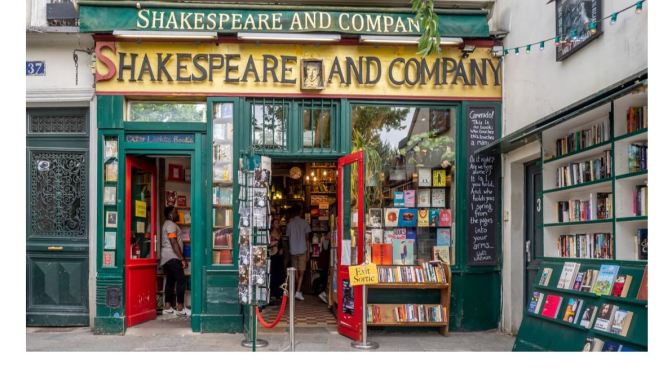
Also known as the 5th arrondissement, the quaint Latin Quarter is home to the Sorbonne University and student-filled cafes. It’s also famed for its bookshops, including the landmark Shakespeare & Company. Family-friendly attractions include the Jardin des Plantes botanical gardens and the National Museum of Natural History. The stately Panthéon building holds the remains of notables like Voltaire and Marie Curie.

South Carolina: French Quarter In Charleston

The busy French Quarter, in Charleston’s original walled city, is home to the 19th-century Charleston City Market, selling clothing, crafts, and artwork, with the Confederate Museum in the old Market Hall. African-American history is recounted at the Old Slave Mart Museum on the site of slave auctions. Families and visitors head to Waterfront Park on the Cooper River, while boutiques and galleries dot King Street.

Bike Tours: Hamburg In Northern Germany (4K)

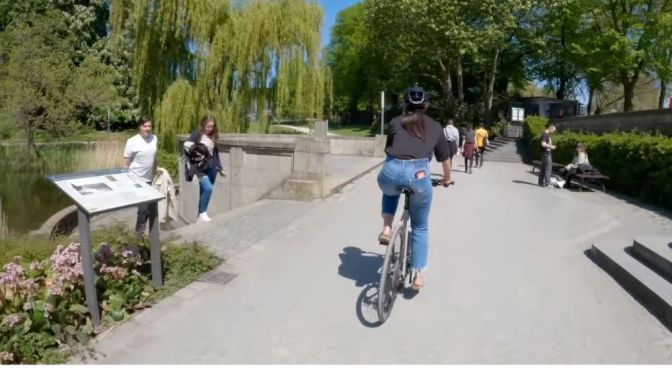
Two wheels, one goal: exploring Hamburg from a cycling perspective. Rather than exploring Hamburg through a city walk, Amélie’s mission on a sunny day in Hamburg is to bike through the urban jungle as well as through the green parts of the city. Amélie starts at the Fischmarkt in the Rad Race Shop and crosses the Elbtunnel, which connects the centre of Hamburg with the docks and shipyards on the south side of the Elbe.

Video timeline: 00:00 Fischmarkt | Rad Race Shop 03:44 Elbtunnel 08:33 Landungsbrücken 11:34 Elbphilharmonie 12:37 Hafencity 18:22 Speicherstadt 25:41 Hamburger Rathaus 28:16 Jungfernstieg 40:14 Planten un Blomen 49:06 Reeperbahn

Out of the lift of the Elbtunnel, the route continues via the Landungsbrücken to the Elbphilharmonie. From there, via the Speicherstadt to Hamburg City Hall. After the Jungfernstieg, the tour continues along the green side of Hamburg through the Old Botanical Garden and Planten un Blomen.

Via the Reeperbahn, we return to the Rad Race Shop for Amélie to enjoy a cup of coffee.

In case you want to follow the same bike tour through Hamburg, you can check the route here: https://click.canyon.com/3HLn8Nq

Italian Culture: ‘Mitico – Follow The Art Path’ (2022)

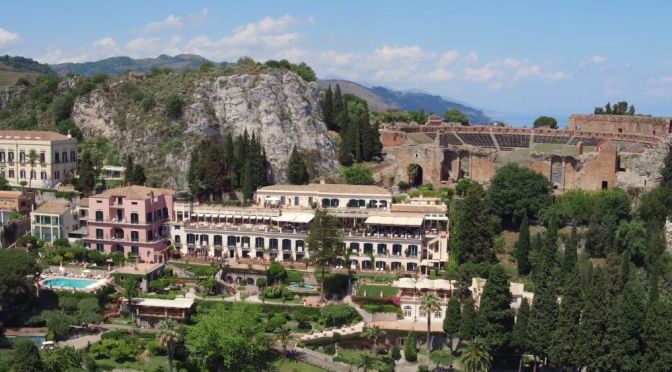
For the 2022 season, Belmond has launched a partnership with internationally acclaimed art gallery – Galleria Continua – entitled MITICO, which celebrates the talents of four prominent artists, as they take the spotlight in some of Belmond’s captivating landmark gardens across Italy.

Evoking a feeling of inclusivity and community, MITICO embodies a new art philosophy: it is the reinterpretation of universal customs shared amongst different societies, such as cooking, painting, observing, and appreciating, and how these are consumed in their environments.

MITICO is a moment in time and history where cultures interact – ultimately it is a celebration of art de vivre. Deepening its long-standing connection to the arts, through MITICO, Galleria Continua and Belmond invite guests to see cultures through a different lens, tapping into each individual destination’s essence and beauty.

Food Culture: Germany’s Love Of White Asparagus

Even the ancient Greeks, wealthy Romans and Emperor August were big asparagus fans. Presumably, the Romans with their expansionist campaigns were behind its quick spread in Europe, including in Germany.

Today, Germany is one of the leading producers of asparagus in Europe. But why are Germans so crazy about the “white gold”? Our reporter Brant Dennis visits an asparagus farm during harvest, to see what exactly makes this funny-looking vegetable so popular.

Cover Preview: Scotland Magazine – July/Aug 2022

SCOTLAND MAGAZINE

Published six times a year, every issue of Scotland showcases its stunning landscapes and natural  beauty, and delves deep into Scottish history. From mysterious clans and famous Scots (both past and present), to the hidden histories of the country’s greatest castles and houses, Scotland‘s pages brim with the soul and secrets of the country.
Scotland magazine captures the spirit of this wild and wonderful nation, explores its history and heritage and recommends great places to visit, so you feel at home here, wherever you are in the world.

Read more

Driving Tour: Naarden To Nieuwkoop, Netherlands

The Gooi is an area around Hilversum, in the centre of the Netherlands. It is a slightly hilly area characterised by its green landscape, its historical charm, the wealth of its inhabitants, and its villas. The Gooi is known in the Netherlands as the home of the rich and famous.

Places and Interesting points along the route ———- • 0:00 – Naarden, Netherlands • 11:53 – Bussum, Netherlands • 13:46 – Hilversumse Meent, Netherlands • 16:44 – ‘s-Graveland, Netherlands • 19:11 – Ankeveen, Netherlands • 29:25 – Kortenhoef, Netherlands • 32:37 – Oud-Loosdrecht, Netherlands • 40:02 – Loenen aan de Vecht, Netherlands • 42:38 – Nieuwersluis, Netherlands • 46:03 – Breukelen, Netherlands • 1:04:46 – Woerdense Verlaat, Netherlands • 1:08:01 – Noorden, Netherlands • 1:16:02 – Nieuwkoop, Netherlands

Route Info ———- ◎ Drive Date: May 2, 2022 ◎ Start: Naarden, Netherlands ◎ End: Nieuwkoop, Netherlands ◎ Drive Distance: 40 km / 25 mi ◎ Drive Time: 1 Hour 18 Minutes ◎ Route: https://goo.gl/maps/xrnUu2shHT6jkDPN6

Dorset Views: Is This Thomas Hardy’s Wessex?

Thomas Hardy’s depictions of a fictional Wessex and his own dear Dorset are more accurate than they may at first appear, says Susan Owens.

We feel a frisson when a real place plays a key part in a novel. The Cobb at Lyme Regis will always be associated with silly Louisa Musgrove and her tumble in Jane Austen’s Persuasion and Knole in Kent with Virginia Woolf’s hero-heroine Orlando. Thomas Hardy, however, took the use of known locations to another level. He may have invented the characters in his novels, but he made them walk along actual roads, look across valleys at real views and live in recognisable villages and towns — sometimes, even in identifiable buildings.

For all its operatic symbolism, Tess of the d’Urbervilles (1891) is a novel in which practical footwear matters. Among its heart-breaking moments is when Tess’s walking boots are discovered stuffed in a hedge where she had hidden them, mistaken for a tramp’s pair and taken away, forcing her to walk many miles back home along a rough road in pretty, but thin-soled, patent-leather ones.

A map depicting Hardy’s Wessex by Emery Walker, drawn for Tess of the d’Urbervilles. Credit: BBC / Album

Those who live in the country come to know land by ear as much as by eye. Hardy’s characters are expert in this — even in the dark and when drunk, as in Desperate Remedies (1871): ‘Sometimes a soaking hiss proclaimed that they were passing by a pasture, then a patter would show that the rain fell on some large-leafed root crop, then a paddling plash announced the naked arable.’