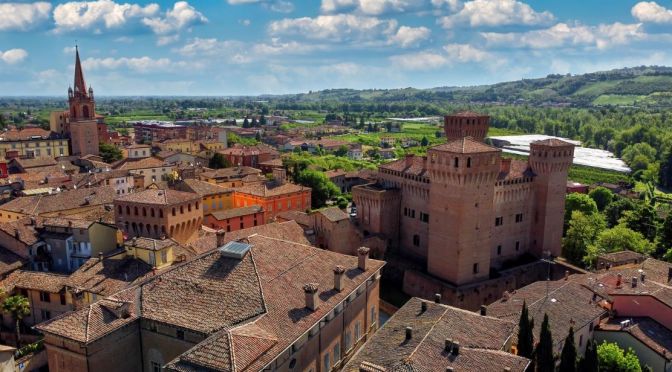
Modena and the surrounding area is extremely rich in historic and cultural treasures like these. In their unparalleled beauty, within each castle’s walls lies a special story.
The castles of the Modena area date to a range of historical periods but together make up an invaluable legacy. They remain today—just as they were when they were built—important cultural landmarks for local community residents.
First stop – Palazzo Pio Carpi – Palazzo Pio in Carpi is an imposing and complex structure that comprises fortifications, towers, courtyards, and buildings constructed between the fourteenth and seventeenth centuries. The Palazzo looks out onto Piazza dei Martiri, one of Italy’s most beautiful piazzas, to breathtaking effect. Starting in 1300 and for most of the following two centuries, Palazzo Pio was the residence of the Pio family. The Pio Prince Alberto III, nephew of the famous Pico della Mirandola, transformed the fortress into a splendid Renaissance palace whose rooms were decorated with frescoes by court painters.Today, the town of Carpi has adapted the palazzo for use as a world-class cultural center that houses the Palazzo Pio Museum; the Municipal Museum; the Castello dei Ragazzi, a children’s art and recreation center; and the fascinating Museum and Monument to Political and Racial Deportees.
Second stop – Calcagnini Fortress Formigine – The ravishing Rocca Calcagnini Fortress stands in the heart ofFormigine, a symbol of the local community and a center for collective historical memories. Built in 1201 by the city of Modena as a defense against attacks by the rival city of Reggio Emilia and to secure its control of the territory, beginning in 1300 the Rocca Calcagnini Fortress was passed among various local noble families until it became property of the Pio family of Carpi, the Estes, and finally the Calcagninis.Around 1400, when the fortress was under the control of the Pios, it was turned into a castle-residence that appears today much as it did then, with a marquis’s palazzo and grounds encircled by a wall with four corner towers and a guardhouse.During the Second World War, the fortress was irreparably damaged in a ferocious bombardment in which virtually the entire Calcagnini family was lost. In 1946, it became the property of the town government and was rebuilt and transformed for use as the city hall.Today the castle houses municipal offices on its ground floor (the city council chambers and a venue for wedding ceremonies) with reception halls located in the northeast tower.To make your visit to the Rocca Calcagnini Fortress extra special, don’t miss the Multimedia Museum of Archaeology. Beautiful and innovative multimedia displays tell the story of the fortress and of the Calcagnini nobility.The Calcagnini Fortress is Formigine’s sparkling “living room.” In addition to housing a restaurant and a wine cellar, each year the castle hosts events of all kinds—music, theater, and much more.
Third stop – Spezzano Castle Fiorano Modenese – The origins of Spezzano Castle date to the Middle Ages. The castle was transformed into a noble family residence by the Pios of Savoia in 1529.Today, Spezzano Castle is an elegant country residence surrounded by grounds landscaped in the 19th-century—a lovely place to relax or perhaps have lunch in one of the designated picnic areas.The splendid porticoed courtyard dates to the Renaissance, and the Sala delle Vedute, with its splendid frescoes of towns, towers, and castles of Sassuolo’s feudal period, is especially striking.Its pentagonal tower, at one time a prison, today houses the Municipal Vinegar Cellar and the Fiorano Museum of Ceramics, dedicated to the local history of ceramics, one of the area’s most admired products.
Fourth stop – Vignola Fortress Vignola – The VignolaFortress has also become a symbol—in this case, of Italy’s cherry capital. Its towers, drawbridge, and moat provide one of the most fascinating examples of defensive architecture in the entire Emilia-Romagna Region.The Vignola Fortress was built in the eighth century by the abbot of Nonantola to defend the abbey’s lands. After passing through the hands of several noble families, in 1401 it was ceded by the Este family of Ferrara to Uguccione Contrari who transformed it into a sumptuous noble home and filled the residence with frescoes and precious objets d’art.Vignola’s picturesque city center provides the perfect setting for the imposing and well-preserved Vignola Fortress. The four-sided structure contains five floors and has three square towers. The internal courtyard is magnificent and, on the left side, the “Rocchetta” (the “little fortress”) and the Contrari and Grassoni halls are located. One of the most beautiful structures is the frescoed chapel, a rare gem of “International Gothic” style.
Fifth stop – Montecuccoli Castle in Pavullo Pavullo nel – FrignanoMontecuccoli Castle is perched on a spur of rock that overlooks the Scoltenna-Panaro River Valley, three kilometers from the center of Pavullo in the heart of the Frignano area.After briefly being governed by Modena, the surrounding area was ruled by the Montecuccoli family, the powerful lords of Frignano, until the arrival of the House of Este in the mid-fourteenth century. In these ancient times, the Montecuccoli Castle was the residence and military center of the Montecuccoli family, who built dozens of attached towers and fortresses to keep watch over the roads to Tuscany. At the highest point of this point of rock is the original castle keep, which is surrounded by other structures and three rings of walls, constructed over time.Below the castle and through a Gothic portal lies a beautiful medieval village, where the Palazzo del Podestà and the fifteenth-century Church of San Lorenzo are especially noteworthy.Starting in the 1960s, the castle became the property of the town, which restored it and built the Montecuccoli Museum Complex. The Complex contains the Frignano Botanical Museum; Raffaele Biolchini’s “Donazione,” a sculpture gallery featuring works in marble, wood, terracotta, and other materials by one of Modena’s preeminent modern sculptors; and Gino Covili’s “Paese Ritrovato,” a cycle of paintings and drawings dedicated to the work, lives, and history of the people of Frignagno.
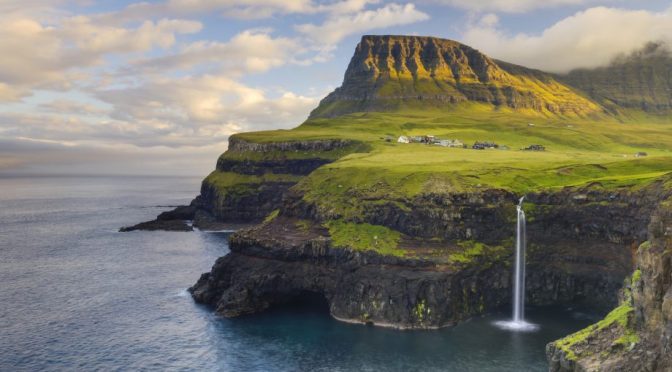
The Faroe Islands is a self-governing archipelago, part of the Kingdom of Denmark. It comprises 18 rocky, volcanic islands between Iceland and Norway in the North Atlantic Ocean, connected by road tunnels, ferries, causeways and bridges. Hikers and bird-watchers are drawn to the islands’ mountains, valleys and grassy heathland, and steep coastal cliffs that harbor thousands of seabirds.
Video timeline: 0:00 Day One in the Faroe Islands 1:49 Estroy Tunnel 5:25 Day Three in the Faroe Islands 8:14 Faroe Islands Helicopter
Pokhara is a city on Phewa Lake, in central Nepal. It’s known as a gateway to the Annapurna Circuit, a popular trail in the Himalayas. Tal Barahi Temple, a 2-story pagoda, sits on an island in the lake. On the eastern shore, the Lakeside district has yoga centers and restaurants. In the city’s south, the International Mountain Museum has exhibits on the history of mountaineering and the people of the Himalayas.
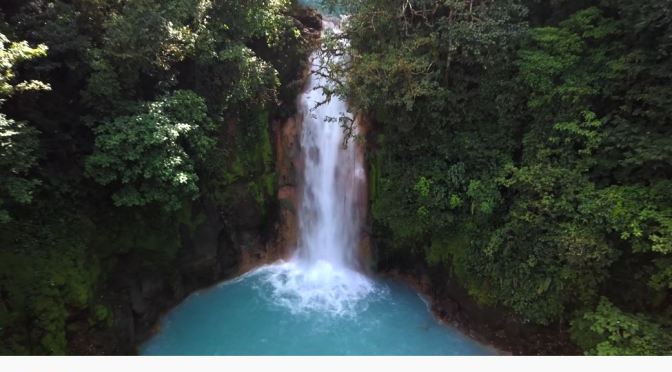
Costa Rica is a rugged, rainforested Central American country with coastlines on the Caribbean and Pacific. Though its capital, San Jose, is home to cultural institutions like the Pre-Columbian Gold Museum, Costa Rica is known for its beaches, volcanoes, and biodiversity. Roughly a quarter of its area is made up of protected jungle, teeming with wildlife including spider monkeys and quetzal birds.
Video timeline: 0:00 intro of costa rica 0:03 Yellow snake curled 0:06 Aerial view of irazu volcano 0:08 Snake python 0:11 Cinematic view of oak tree 0:16 Close up view of iguana 0:22 skydiving in Costa Rica 0:26 nauyaca waterfalls 0:31 galloping horse 0:39 Aerial view of pavon bay 0:46 waterfall rio celeste 0:50 Close up iguana 0:53 Drone view of palm oil 0:58 tree frog 1:01 Trachycephalus 1:04 Montezuma Beach 1:09 Oka tree 1:13 naped snake 1:18 Blue Yellow Macaw 1:23 Green Python 1:28 Rio celeste waterfall 1:35 meanders river 1:45 Bilobatum 1:49 punta banco Beach 1:57 irazu volcano 2:05 Close up view of butterfly 2:08 Corcovado 2:13 Playa Zancudo 2:21 manuel antonio 2:32 Green iguana 2:46 tortoiseshell 2:59 Costa Rica rainforest 3:05 quetzal Bird 3:11 Sloth 3:16 Irazu volcano 3:22 paragliding 3:29 skydiving 3:34 la paz waterfall 3:43 whales 3:50 Coto river Aerial view 4:02 Aerial costarica 4:10 Beautiful parrots 4:18 Forest Frog 4:25 Rain forest 4:29 iguana 4:35 Wild lizard 4:40 flamingos 4:47 capucinus 4:55 Rain forest 5:02 capuchin 5:09 Violetear
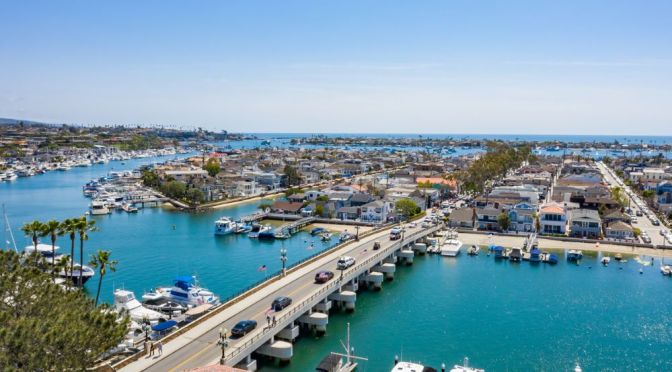
Balboa Island is a harborside community located in Newport Beach, California, accessible to the public via bridge, ferry and several public docks. The community is surrounded by a paved concrete boardwalk open to pedestrian traffic, designated as a public walking trail by the city.
Originally a sandbar, Balboa Island was built between 1905 and 1913 by developer William S. Collins. It’s a small community with just 3,000 residents, but on weekends and holidays it comes alive as a day trip destination for Southern Californians. With abundant boutiques and restaurants, there are plenty of things to do on Balboa Island.
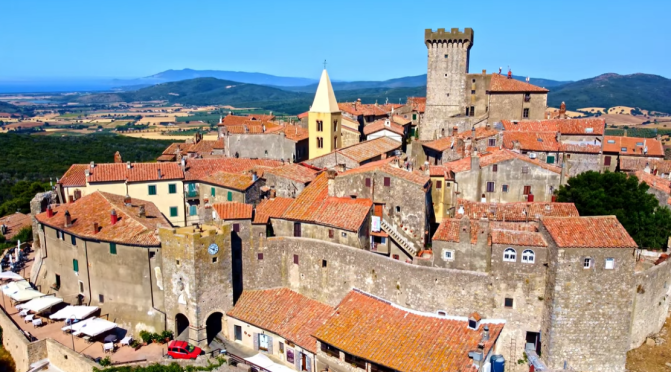
Capalbio, in the province of Grosseto, is called the small Athens, due to its position and the historical and artistic importance assumed in the Renaissance era. Located in the south of Tuscany, Capalbio stands on a hill covered by the typical Maremma scrub. The municipality was awarded with the 5 sails and it is in first place in the Blue Guide for the reception and quality of its area.
Video Timeline: 0:00 – [Drone intro] 3:00 – [Walking tour begins / Start at Piazza Giordano⛲] 4:50 – [Porta Senese (Siena Gate)☀️🏰] 6:20 – [History of Capalbio…more later…at 11:10] 9:34 – [Piazza Magenta⛲] 11:00 – [Panorama and tour around the walls👣] 11:10 – [📋𝗕𝗿𝗶𝗲𝗳 𝗛𝗶𝘀𝘁𝗼𝗿𝘆📋] 14:50 – [Via delle Campane (Bells’ Alley)] 20:30 – [Piazza della Chiesa (Church Square)] 21:40 – [Aldobrandini Castle / Collacchioni Palace🏰] 22:10 – [Church of St.Nicola – *tour inside*☀️⛪] 26:10 – [D’Annunzio’s poem of Capalbio🎼] 27:50 – [Northern Gate🏰] 28:35 – […touring the narrow medieval alleys of Capalbio…👣] 53:20 – [Walking along the walls – history of the walls☀️🏰] 1:01:00 – [☕️…some relax after this beautiful walk!…minutes of Ambient Sounds☕️]
Its history is closely connected to the Tre Fontane Castle of Rome, which today dominates the valley below. The different and characteristic neighboring hamlets make the village very famous. All small and characteristic, some of the hamlets are also known for the wonderful beaches, which offer numerous services and are suitable for families with children and for young people looking for fun.
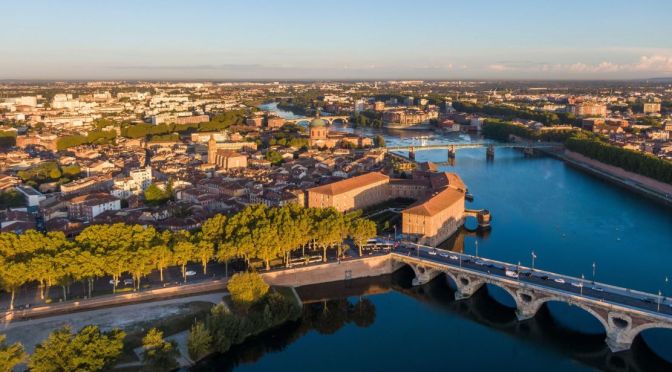
Toulouse, capital of France’s southern Occitanie region, is bisected by the Garonne River and sits near the Spanish border. It’s known as La Ville Rose (‘The Pink City’) due to the terra-cotta bricks used in many of its buildings. Its 17th-century Canal du Midi links the Garonne to the Mediterranean Sea, and can be traveled by boat, bike or on foot.
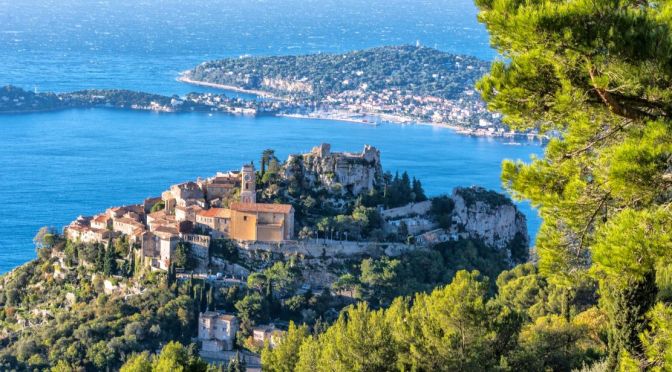
Eze is a beautiful hilltop medieval village in the south of France, between Monaco and Nice. The village is famous for its spectacular views, impressive architecture, and stunning geographical location above the French Riviera.
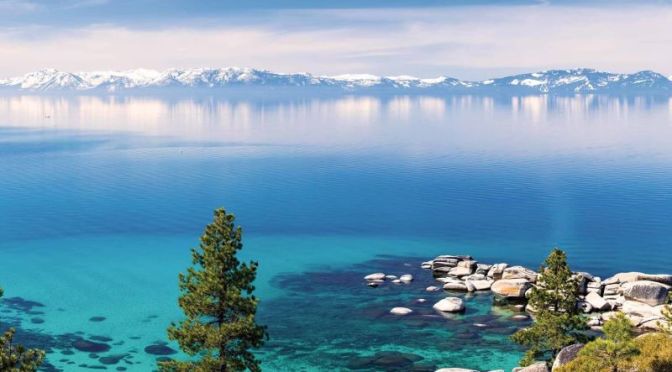
Nevada, constituent state of the United States of America. It borders Oregon and Idaho to the north, Utah to the east, Arizona to the southeast, and California to the west. It ranks seventh among the 50 U.S. states in terms of total area. It also, however, is one of the most sparsely settled. Carson City, in the western part of the state, is the capital. Nevada became the 36th state of the union on October 31, 1864.
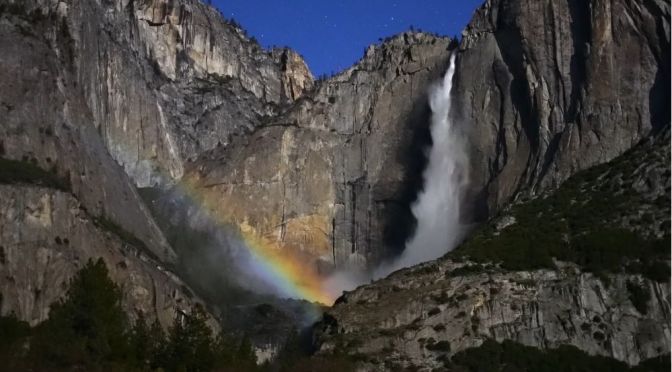
First protected in 1864, Yosemite National Park is best known for its waterfalls, but within its nearly 1,200 square miles, you can find deep valleys, grand meadows, ancient giant sequoias, a vast wilderness area, and much more.
Chapters: 0:00 Intro 0:27 Yosemite Falls 1:48 Yosemite Firefall 2:31 Yosemite Valley 4:18 Yosemite Stars View 5:05 Vernal Falls 7:06 Tenaya Lake 8:57 Rafting in Merced River 10:48 Glacier Point Yosemite 12:14 Half Dome 14:36 El Capitan 15:18 Bridalveil Fall 16:35 Mariposa Grove 17:25 Tunnel View 18:04 Taft Point 18:39 Tuolumne Meadows
News, Views and Reviews For The Intellectually Curious


 Boomers Daily