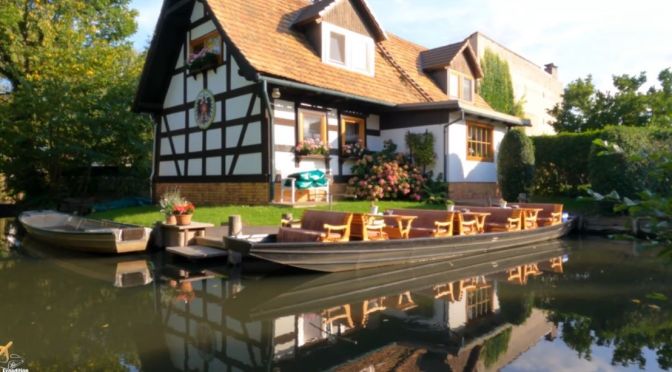
Lübbenau lies nestling in the UNESCO Spreewald Biosphere Reserve and it makes an immediate impression with its charming Old Town and a bustling port quarter for boat trips into the Spreewald.
Lübbenau is part of the Upper Spreewald-Lausitz district in southern Brandenburg, about one hour’s drive from Berlin. The town was first mentioned in records in 1315 and in 2015 it celebrates its 700th anniversary. Traces of its medieval beginnings can still be found in the historical town centre. The lively port quarter of Lübbenau is a popular starting point for boat trips into the Spreewald.
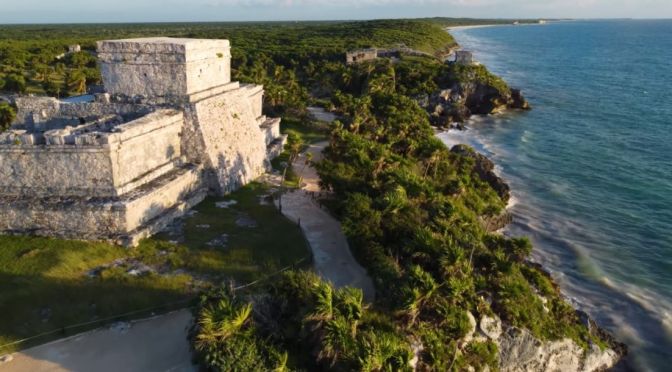
Yucatán, estado (state), southeastern Mexico. Occupying part of the northern Yucatán Peninsula, it is bounded to the north by the Gulf of Mexico, to the east and southeast by the state of Quintana Roo, and to the southwest and west by the state of Campeche. The state capital and chief commercial centre is Mérida.
The state’s relief includes coastal wetlands, semiarid hills and plains, and limestone lowlands dotted with cenotes (water-filled sinkholes). In pre-Hispanic times the peninsula was an Olmec and Maya cultural hearth, as evidenced by the monumental ruins of Chichén Itzá and Uxmal; each has been designated a UNESCOWorld Heritage site, in 1988 and 1996, respectively. Among the other numerous ruined cities are Chumul, Ek Balam, and Sayil. Strong resistance to the Spanish conquest lasted in the area from 1527 until the 1540s. Yucatán occupied the entire peninsula when it became a state in 1824, but following a series of insurrections, its territory was reduced with the loss of Campeche in 1857 (ratified in 1858) and Quintana Roo in 1902. Later boundary changes reduced the state to its present size.
These Alaskan snowy owl chicks need to triple their weight before reaching independence, meaning their parents must hunt 30 lemmings per day for them to eat!
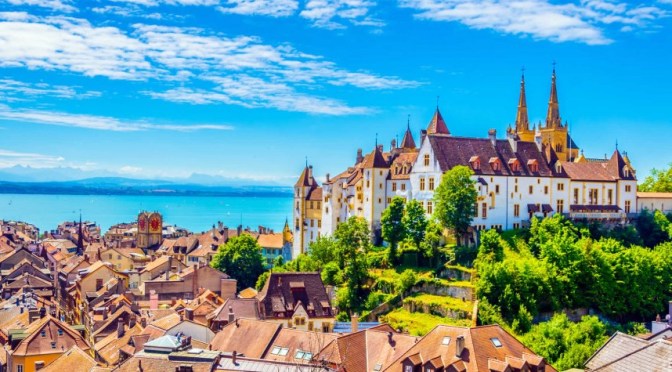
Neuchâtel (Neuenburg) is considered to be one of Switzerland most beautiful cities. It lays in the French speaking part of Switzerland and enchants with its visitors with its happy vibes. The city is very vibrant, many people love to stroll through the various streets and alleys, do shopping or go for sightseeing.
The city is full of limestone houses, which are very characteristic for Neuchâtel, rendering this city very distinct from the others of Switzerland. A must-see are the castle and the church on the hill in the middle of the city. They are considered historic landmarks from the days when Neuchâtel still followed a royal system being under French or Prussian rule. The church’s interior is very beautiful, especially with the ceiling. Neuchâtel has a beautiful lake promenade. Point of interest are Beau Rivage and the docks with the many boats.
During Summer you even can go for swimming. Neuchâtel is best to be reached by train, although arrival by car is possible. The train station is about 15 minutes from the city centre by walk, but you may take a shortcut by bus. Neuchâtel and the entire canton are great for cheap vacations as they have some attractive budget travelers offers. If you stay in any hotel in the canton, you get a booklet full of vouchers that provide you free public transportation and entry to the museums during the date of validity. It is valid for 1 day if you stay for 1 night, otherwise as many days as nights that you booked. All in all, Neuchâtel is a wonderful Swiss city, underrated but among the most beautiful ones!
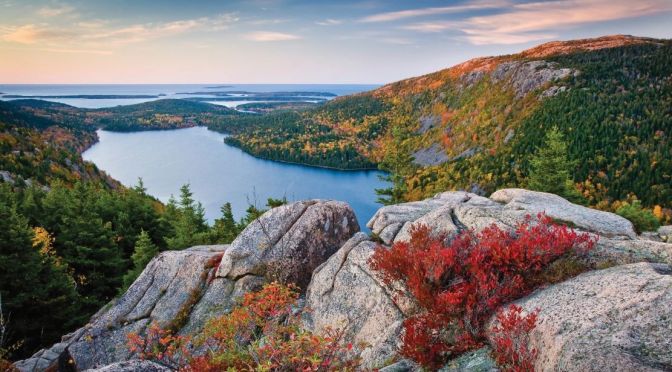
Acadia National Park is a stunning national treasure on the coast of Maine in the USA. This “insider’s” vacation guide covers all of the best places to see and the towns and villages in the Acadia Region from Bar Harbor on Mount Desert Island to Winter Harbor on the Schoodic Peninsula. Wherever you choose, the views are spectacular and nature abounds. No wonder this is one of the most visited parks in the United States and in all of North America.
Bar Harbor, a small seaside resort on the northeastern side of Mount Desert Island, has a unique symbiotic relationship with Acadia National Park. Together, they are like conjoined twins, both born of the same mother – and she is the land and ocean combined.
Historical roots are at play here, a special blend of salty air and the classic Down East character that is recognized and loved by millions. Together, these “conjoined twins” offer an unforgettable Maine vacation.
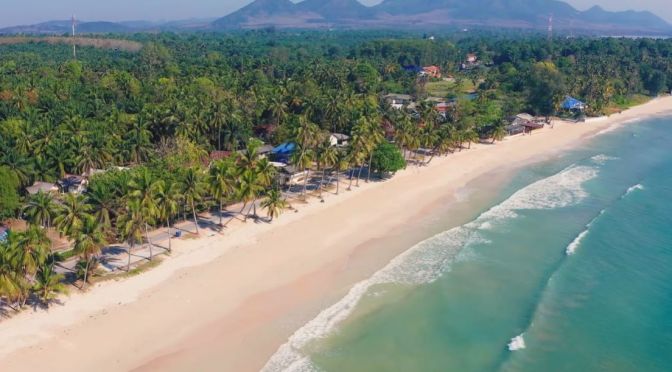
The white sandy Thung Wua Laen Beach is 2 km long and lies 13 km North of Chumphon in Southern Thailand.
The “beach of the bull running across the field” is also signposted ‘Thung Wualan’. According to the legend the beach was named by hunters who killed a wild bull. This bull was so strong that it freed itself and escaped while it was being skinned. It ran “across the field”.
Beach chairs and jet skis are not allowed on this beach. The priority here lies on environmentally friendly tourist projects where they try to keep a natural balance.
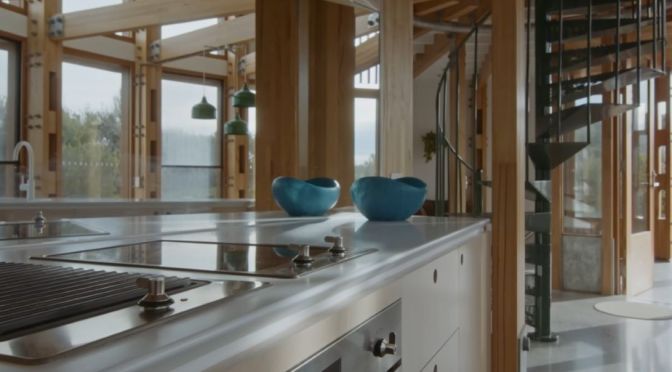
St Andrews Beach House is a holiday cabin by Austin Maynard Architects informed by a passion for sustainability. The circular cabin captures sunlight and breezes while allowing nature to regrow healthily around it. The flat roof captures water for the gardens and bathrooms. Sustainable materials include timber, double glazed windows and a concrete slab contributing thermal mass to the cabin.
Video timeline: 00:00 – Introduction to St Andrews Beach House 00:37 – The Beachside Location 01:04 – The Vision Behind The House 01:24 – Taking Inspiration From New Zealand Bach’s 01:57 – A Bach Type Layout 02:16 – Sustainably Small But Mighty 02:55 – A Carbon Storage Home 03:08 – Conditional Timber Selections 03:45 – The Importance of Sunlight 04:15 – The Positives of A Circular Home 04:38 – A Demountable Home 05:16 – Proud Moments In Designing and Creating The Home
Additionally, a heat pump system heats the water and the slab, keeping the house warm during the winter. Locally sourced eucalypt timber ensures the cabin can stand against time and the coastal elements. It also contributes to the cabin’s sustainability, capturing of carbon instead of producing it. The material is used inside as well, continuing both the warm, raw aesthetic and the sustainability benefits throughout.
Designed as one structural module repeated 26 times around, the efficiency of the cabin’s construction was optimised. It is also made to be demountable, so that clients are able to either dismantle or salvage the materials for another build in future, if needed. With the importance of sunlight stressed in the brief, large louvre doors were installed to allow light to flood through, and on days when the weather is blossoming, the doors can be opened to connect the deck with the living and dining areas of the cabin.
Due to its circular structure, the beach side cabin can capture or exclude the breeze whenever there is a need, and, as the spiral staircase in the centre leads up the private bedroom spaces, circulation of air and sun can continue around the entire cabin. With a playful and sustainable rationale, St Andrews Beach House is a home away from home that gives back to the surrounding land.
With a rich history in agriculture and shipbuilding, Kennebunk today retains her connection to the land and sea. With easy access to the ocean, river, and wooded trails, the town is one of those special communities that seems to have it all, even the prestige of name (there is only one Kennebunk in the country).
Kennebunk balances a rural feel with true convenience – Portland is only 25 miles away and catching the Downeaster train in Wells makes the commute to Boston a snap. Featured on the town seal is the Lafayette Elm, which was planted to commemorate General Lafayette’s 1825 visit to Kennebunk. The handsome tree is one of the only survivors of the Dutch Elm that destroyed hundreds of trees that once lined Kennebunk’s streets.
The residents are a bit like the mighty tree: able to withstand the changing of seasons and passing of time with a sense of quiet nobility. In this tight-knit, laid-back community, it’s easy to be a good and helpful neighbor.
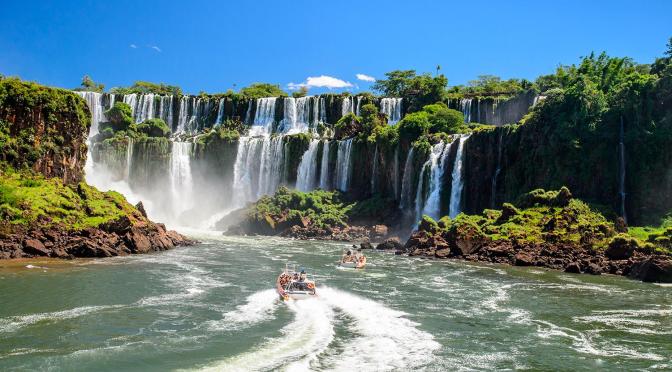
This is a walk in Iguazu Falls, in the province of Misiones in Northern Argentina. This video was recorded in the Devil’s throat.
The Iguazu National Park consists of two national parks, one in Foz de Iguazu (Brazil) and the other one in Puerto Iguazu (Argentina). The curious thing is that although one only sees the falls as the main attraction, the park has a size of 252,982 hectares (67,720 on the Argentine side and 185,262 on the Brazilian side).
These falls in Argentina and Brazil managed to attract so much attention that almost at the same time they were declared National Parks (1934 in Argentina and 1939 in Brazil). And after some years and millions of visitors fascinated by the landscape and the sound of this natural attraction, UNESCO declared them as World Heritage Site in 1984, and reaffirmed as Exceptional Universal Value (their cultural and nature it’s so important that it’s conservation should be of worldwide interest) in 2013.
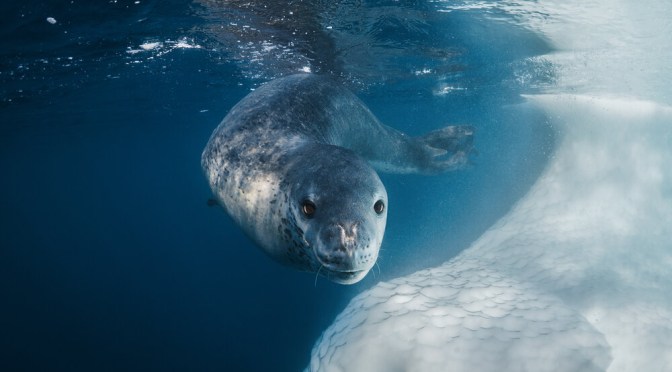
Take a peek behind the scenes of Frozen Planet 2 as the team battle conditions to film the hunting behaviours of leopard seals. The extreme cold and icy weather weren’t the only factors the team had to deal with, as some leopard seals got a little bit too curious for the crew’s liking…
The leopard seal, also referred to as the sea leopard, is the second largest species of seal in the Antarctic. Its only natural predator is the orca. It feeds on a wide range of prey including cephalopods, other pinnipeds, krill, birds, fish and penguins. It is the only species in the genus Hydrurga.
News, Views and Reviews For The Intellectually Curious



 Boomers Daily