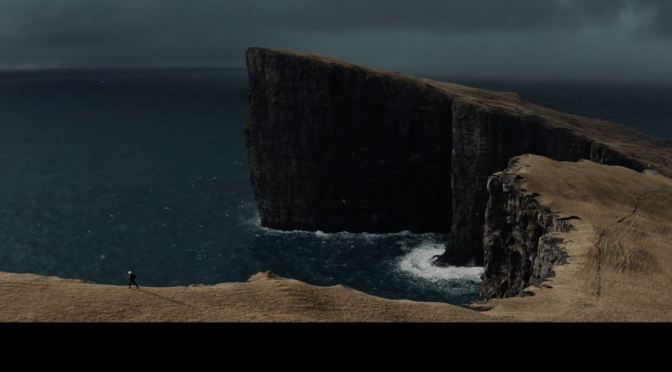
The Faroe Islands is a self-governing archipelago, part of the Kingdom of Denmark. It comprises 18 rocky, volcanic islands between Iceland and Norway in the North Atlantic Ocean, connected by road tunnels, ferries, causeways and bridges. Hikers and bird-watchers are drawn to the islands’ mountains, valleys and grassy heathland, and steep coastal cliffs that harbor thousands of seabirds.
Maryland and Delaware are two small states of great historical significance. Highlighted by the great bays of the eastern seaboard: Chesapeake and Delaware, both states are defined by the legacies of their colonial pasts. This aerial journey reveals their giant stature in the history of America.
“It’s like waking up from a dream. And then you begin wondering ‘where am I going?’ And to answer that question you have to try and find out what you want. ‘What do I want to happen? How far we could go?’ – Alan Watts”
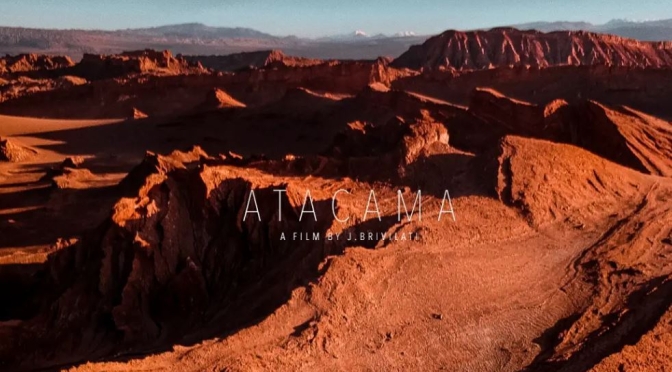
A short film I made about my last trip to Atacama, Chile, in 2020. There’s a kind of effect, something magical that happens to you in the middle of the desert. To have nothing to listen to if not the mixing of wind and your breath it forces you to look inside, to talk to your soul. This trip meant a new opportunity to learn about my experience on this planet, to learn about humility and to connect with Mother Earth.
The Atacama Desert (Spanish: Desierto de Atacama) is a desert plateau in South America covering a 1,000 km (600 mi) strip of land on the Pacific coast, west of the Andes Mountains. The Atacama Desert is one of the driest places in the world, as well as the only true desert to receive less precipitation than the polar deserts. According to estimates, the Atacama Desert occupies 105,000 km2 (41,000 sq mi), or 128,000 km2 (49,000 sq mi) if the barren lower slopes of the Andes are included. Most of the desert is composed of stony terrain, salt lakes (salares), sand, and felsic lava that flows towards the Andes.
The desert owes its extreme aridity to a constant temperature inversion due to the cool north-flowing Humboldt ocean current and to the presence of the strong Pacific anticyclone. The most arid region of the Atacama Desert is situated between two mountain chains (the Andes and the Chilean Coast Range) of sufficient height to prevent moisture advection from either the Pacific or the Atlantic Ocean, a two-sided rain shadow.(From Wikipedia)
Get ready for a Rocky Mountain adventure over the state that boasts some of the highest peaks, tallest sand dunes and largest single-site brewery in America. Every year Colorado attracts music lovers, ski buffs, and sports fans drawn to its Red Rocks, Aspen slopes and the Broncos’ Mile High Stadium. But it is also a state with a history, marked by war, a gold rush and legendary bank robberies. Through it all, Colorado remains a feast for the eyes.
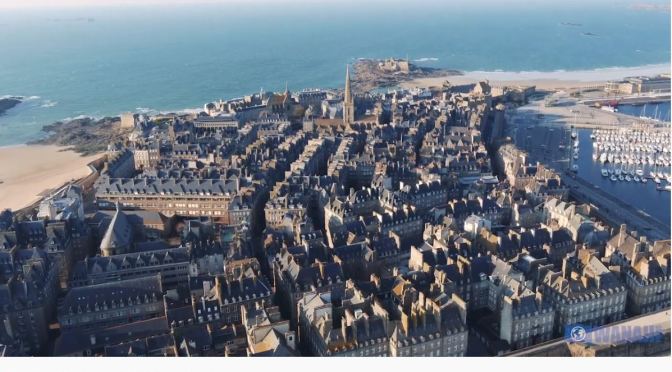
Saint-Malo is a historic French port in Ille-et-Vilaine, Brittany on the English Channel coast.
The walled city had a long history of piracy, earning much wealth from local extortion and overseas adventures. In 1944, the Allies heavily bombarded Saint-Malo, which was garrisoned by German troops. The city changed into a popular tourist centre, with a ferry terminal serving the Channel Islands of Jersey and Guernsey, as well as the Southern English settlements of Portsmouth, Hampshire and Poole, Dorset.
Founded by Gauls in the 1st century BC, the ancient town on the site of Saint-Malo was known as the Roman Reginca or Aletum. By the late 4th century AD, the Saint-Servan district was the site of a major Saxon Shore promontory fort that protected the Rance estuary from seaborne raiders from beyond the frontiers. According to the Notitia Dignitatum, the fort was garrisoned by the militum Martensium under a dux (commander) of the Tractus Armoricanus and Nervicanus section of the litus Saxonicum. During the decline of the Western Roman Empire, Armorica (modern-day Brittany) rebelled from Roman rule under the Bagaudae and in the 5th and 6th centuries received many Celtic Britons fleeing instability across the Channel. The modern Saint-Malo traces its origins to a monastic settlement founded by Saint Aaron and Saint Brendan early in the sixth century. Its name is derived from a man said to have been a follower of Brendan the Navigator, Saint Malo or Maclou, an immigrant from what is now Wales.
Saint-Malo is the setting of Marie de France’s poem “Laüstic,” an 11th-century love story. The city had a tradition of asserting its autonomy in dealings with the French authorities and even with the local Breton authorities. From 1590 to 1593, Saint-Malo declared itself to be an independent republic, taking the motto “not French, not Breton, but Malouin.
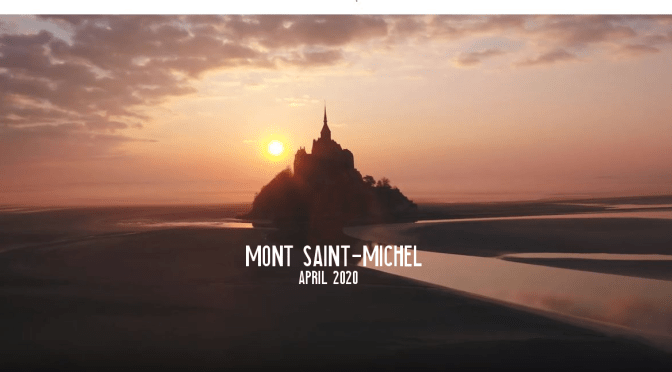
Le Mont-Saint-Michel is a tidal island and mainland commune in Normandy, France. The island is located about one kilometer off the country’s northwestern coast, at the mouth of the Couesnon River near Avranches and is 7 hectares in area.
The original site was founded by an Irish hermit, who gathered a following from the local community. Mont-Saint-Michel was used in the sixth and seventh centuries as an Armorican stronghold of Gallo-Roman culture and power until it was ransacked by the Franks, thus ending the trans-channel culture that had stood since the departure of the Romans in 460. From roughly the fifth to the eighth century, Mont Saint-Michel belonged to the territory of Neustria and, in the early ninth century, was an important place in the marches of Neustria.
When Louis XI of France founded the Order of Saint Michael in 1469, he intended that the abbey church of Mont Saint-Michel become the chapel for the Order, but because of its great distance from Paris, his intention could never be realised.
The wealth and influence of the abbey extended to many daughter foundations, including St. Michael’s Mount in Cornwall. However, its popularity and prestige as a centre of pilgrimage waned with the Reformation, and by the time of the French Revolution there were scarcely any monks in residence. The abbey was closed and converted into a prison, initially to hold clerical opponents of the republican regime. High-profile political prisoners followed, but by 1836, influential figures—including Victor Hugo—had launched a campaign to restore what was seen as a national architectural treasure. The prison was finally closed in 1863, and the mount was declared a historic monument in 1874. Mont Saint-Michel and its bay were added to the UNESCO list of World Heritage Sites in 1979, and it was listed with criteria such as cultural, historical, and architectural significance, as well as human-created and natural beauty.
Produced by // Ella Utomi, Jide Adewale
Poem by // Ntongha Ekot
Starring, voiceover by // Jide Adewale
Music composed by // John Corlis
“Eko ile”
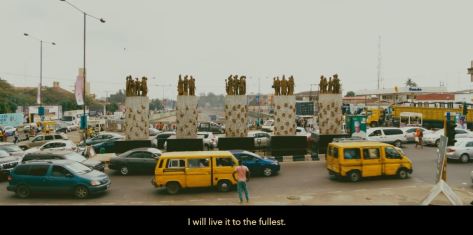
A man straddles a love-hate relationship with Lagos in which he attempts to not only grasp both the intensity and comfort that the city has to offer, but also to embrace it as his home.
—-
The City Odes Project is a passion project in which I collaborate with my composer, a poet and an actor to create a humanist, emotional, and visual story amidst the backdrop of a specific city. “Eko ile” is the second entry into this series and takes place in one of the most intense, vibrant, and overwhelming places I have ever been – Lagos, Nigeria.
The title “Eko ile” translates to “Lagos is home” in Yoruba, one of the primary languages in the country. For this piece, I wanted to capture the city in the language I encountered most when I was there – Pidgin English (which is sort of a local slang) as well as plain English, both of which my lead actor Jide Adewale (who also happens to be one of the producers) speaks as he narrates the poem. I wanted to create a character who personifies the feeling of living in Lagos in which the hustle is as real as it gets and the frenetic pace is nonstop. Lagos truly is one of a kind.
The final result here features the work of Ntongha Ekot – a Nigerian poet – who eloquently captures these push-and-pull feelings through her words, and my frequent collaborator John Corlis – an LA-based musician and composer – who complements the poetry with his emotional piano piece “Into the Atmosphere” from his latest album of the same title. My incredible producers Jide and Ella Utomi made it all happen by finding the locations, security and logistics; they took care of me during my memorable time there.
Watch in 4K, sound on. New Zealand Total Isolation is my latest time lapse show reel of the beautiful New Zealand wilderness landscapes. All sequences shot as full ‘holy grail’ time lapse scenes – that is full sequences from day through night back to day, requiring 3000 to 5000 frames each sequence.
While we are all in lock down isolation here due to the current pandemic situation we can only reminisce at present what it’s like to be out in the wilderness. If your like me and can’t stand being ‘caged up’ maybe watching this show reel unfold in front of your eyes will help ease your soul? I hope so.
So many times over the course of shooting these challenging all night scenes my body, soul, mind and gear were beaten up by the elements and bad luck or other unknown forces, however there is just something about our earth, our land and the time spent in it that just brings you back time and time again. I always seem to have unfinished business, chasing the elusive and beautiful landscapes of Aotearoa New Zealand, and I can’t wait to get back out there, soon, it’s still there, waiting.
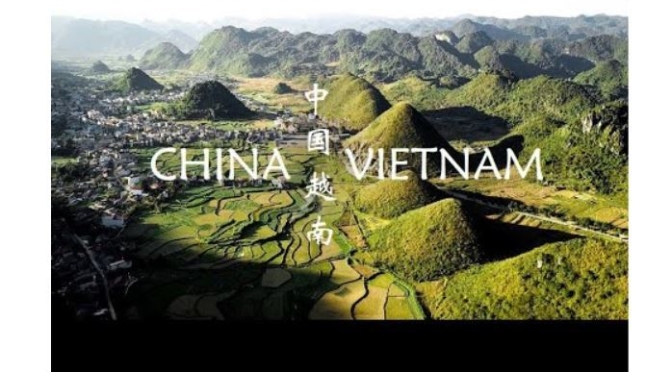
Right before the epidemic started, we had the chance to travel around western China and Vietnam. Discover some of the most beautiful spots we found from the Yunnan Province to Ha Long Bay: Puzhehei, Luoping, Sa Pa, Ha Giang, Hanoi, Ninh Binh…
Shot in 4K with a DJI Mavic Pro drone, and an iPhone X.
News, Views and Reviews For The Intellectually Curious




 Boomers Daily