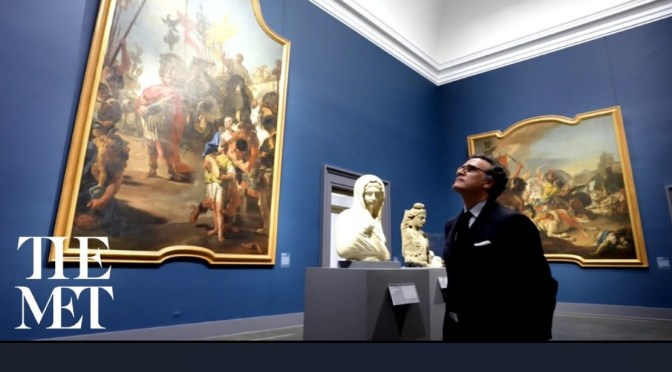
The Met (January 19, 2024): Join curators Stephan Wolohojian, Adam Eaker, David Pullins, and Anna-Claire Stinebring along with their special guests as they guide you through the newly reopened galleries dedicated to European Paintings from 1300 to 1800.
The reconfigured galleries highlight fresh narratives and dialogues among more than 700 works of art from the Museum’s world-famous holdings, which include recently acquired paintings and prestigious loans, as well as select sculptures and decorative art, showcase the interconnectedness of cultures, materials, and moments across The Met collection.
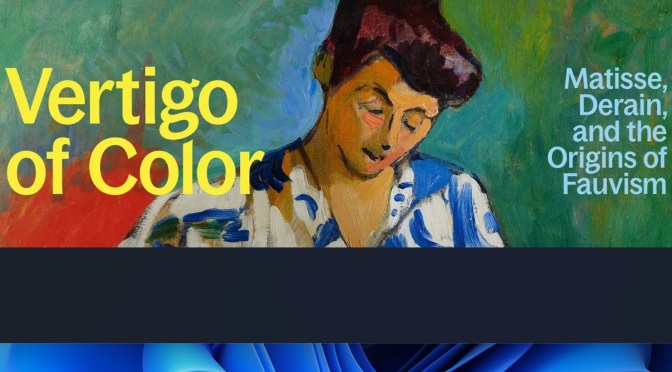
The Metropolitan Museum of Art (October 18, 2023) – Over an intense nine weeks in the summer of 1905 in the modest fishing village of Collioure on the French Mediterranean, Henri Matisse and Andre Derain embarked on a partnership that led to a wholly new, radical artistic language later known as Fauvism.
Their daring, energetic experiments with color, form, structure, and perspective changed the course of French painting; it marked an introduction to early modernism and introduced Matisse’s first important body of work in his long career.
This exhibition, which is co-organized by The Metropolitan Museum of Art and the Museum of Fine Arts, Houston, emphasizes as never before the legacy of that summer and examines the paintings, drawings, and watercolors of Matisse and Derain through sixty-five works on loan from national and international museums, including Musée National d’Art Moderne, Centre Pompidou; National Galleries of Scotland; National Gallery of Art, Washington, D.C.; San Francisco Museum of Modern Art; and the Museum of Modern Art, New York; as well as private collections.
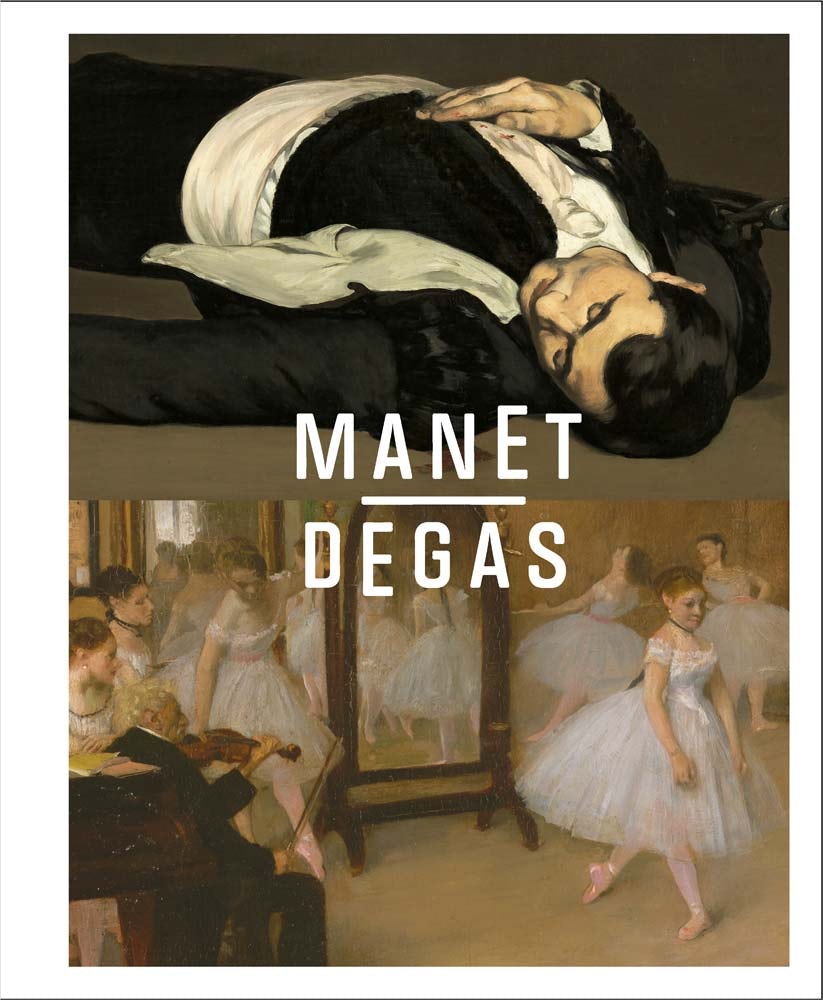
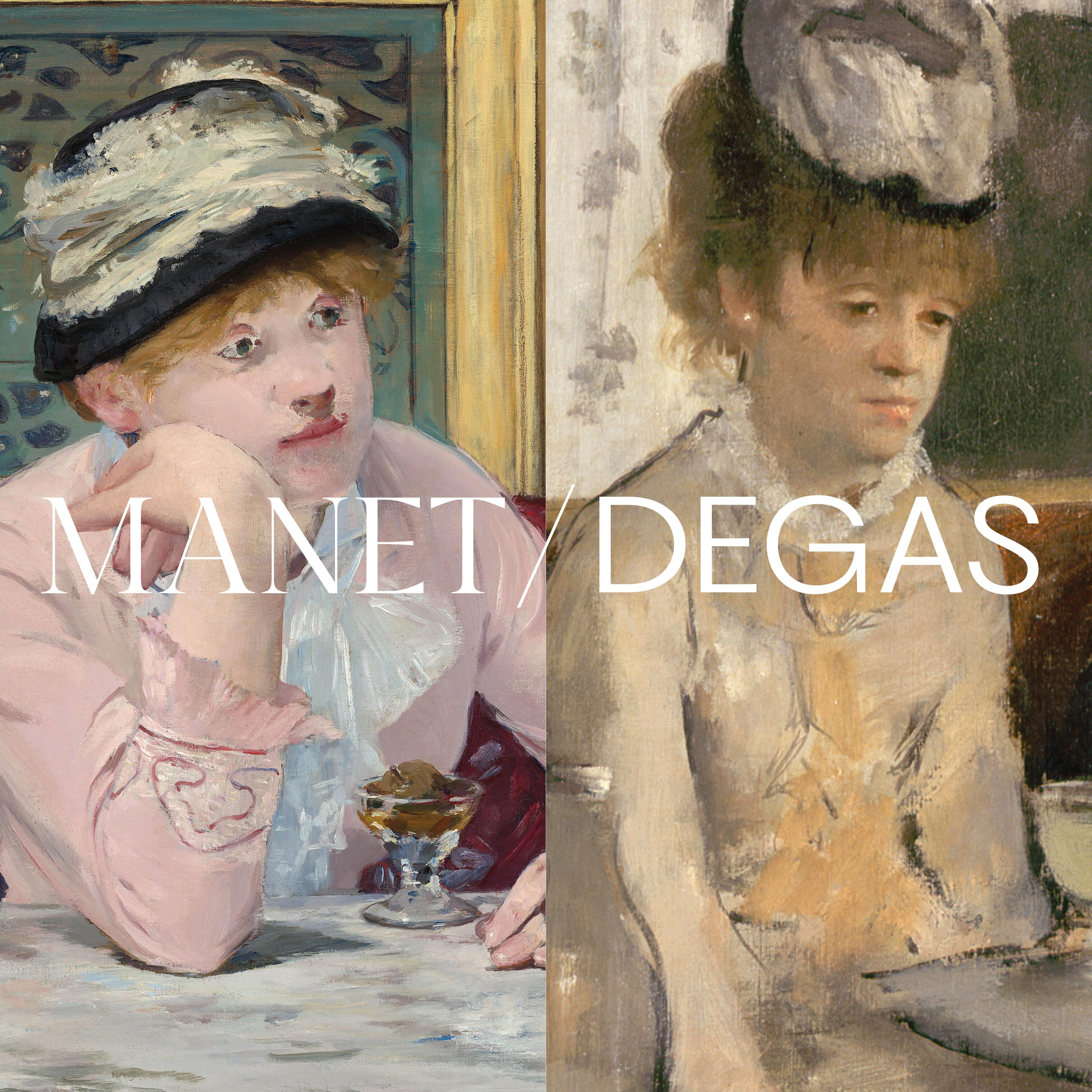
The Metropolitan Museum of Art (October 6, 2023) – Stephan Wolohojian, John Pope-Hennessy Curator in Charge, and Ashley Dunn, Associate Curator, explore Manet/Degas. This exhibition examines one of the most significant artistic dialogues in modern art history: the close and sometimes tumultuous relationship between Édouard Manet and Edgar Degas.
Born only two years apart, Manet (1832–1883) and Degas (1834–1917) were friends, rivals, and, at times, antagonists who worked to define modern painting in France. By examining their careers in parallel and presenting their work side by side, this exhibition investigates how their artistic objectives and approaches both overlapped and diverged. Through more than 160 paintings and works on paper, Manet/Degas takes a fresh look at the interactions of these two artists in the context of the family relationships, friendships, and intellectual circles that influenced their artistic and professional choices, deepening our understanding of a key moment in nineteenth-century French painting. On view: September 24, 2023–January 7, 2024
The Metropolitan Museum of Art (September 4, 2023) – This exhibition examines one of the most significant artistic dialogues in modern art history: the close and sometimes tumultuous relationship between Édouard Manet and Edgar Degas. Born only two years apart, Manet (1832–1883) and Degas (1834–1917) were friends, rivals, and, at times, antagonists who worked to define modern painting in France.
Through more than 150 paintings and works on paper, Manet/Degas takes a fresh look at the interactions of these two artists in the context of the family relationships, friendships, and intellectual circles that influenced their artistic and professional choices, deepening our understanding of a key moment in nineteenth-century French painting.
Manet/Degas is organized by The Metropolitan Museum of Art, New York, and the Musées d’Orsay et de l’Orangerie, Paris.
The Metropolitan Museum of Art (August 3, 2023) – A virtual tour of Tree & Serpent: Early Buddhist Art in India, 200 BCE–400 CE. Featuring more than 140 objects dating from 200 BCE to 400 CE, the exhibition presents a series of evocative and interlocking themes to reveal both the pre-Buddhist origins of figurative sculpture in India and the early narrative traditions that were central to this formative moment in early Indian art.
With major loans from a dozen lenders across India, as well as from the United Kingdom, Europe, and the United States, it transports visitors into the world of early Buddhist imagery that gave expression to this new religion as it grew from a core set of ethical teachings into one of the world’s great religions. Objects associated with Indo-Roman exchange reveal India’s place in early global trade.
The exhibition showcases objects in various media, including limestone sculptures, gold, silver, bronze, rock crystal, and ivory. Highlights include spectacular sculptures from southern India—newly discovered and never before publicly exhibited masterpieces—that add to the world canon of early Buddhist art. On view: July 21st–November 13th, 2023
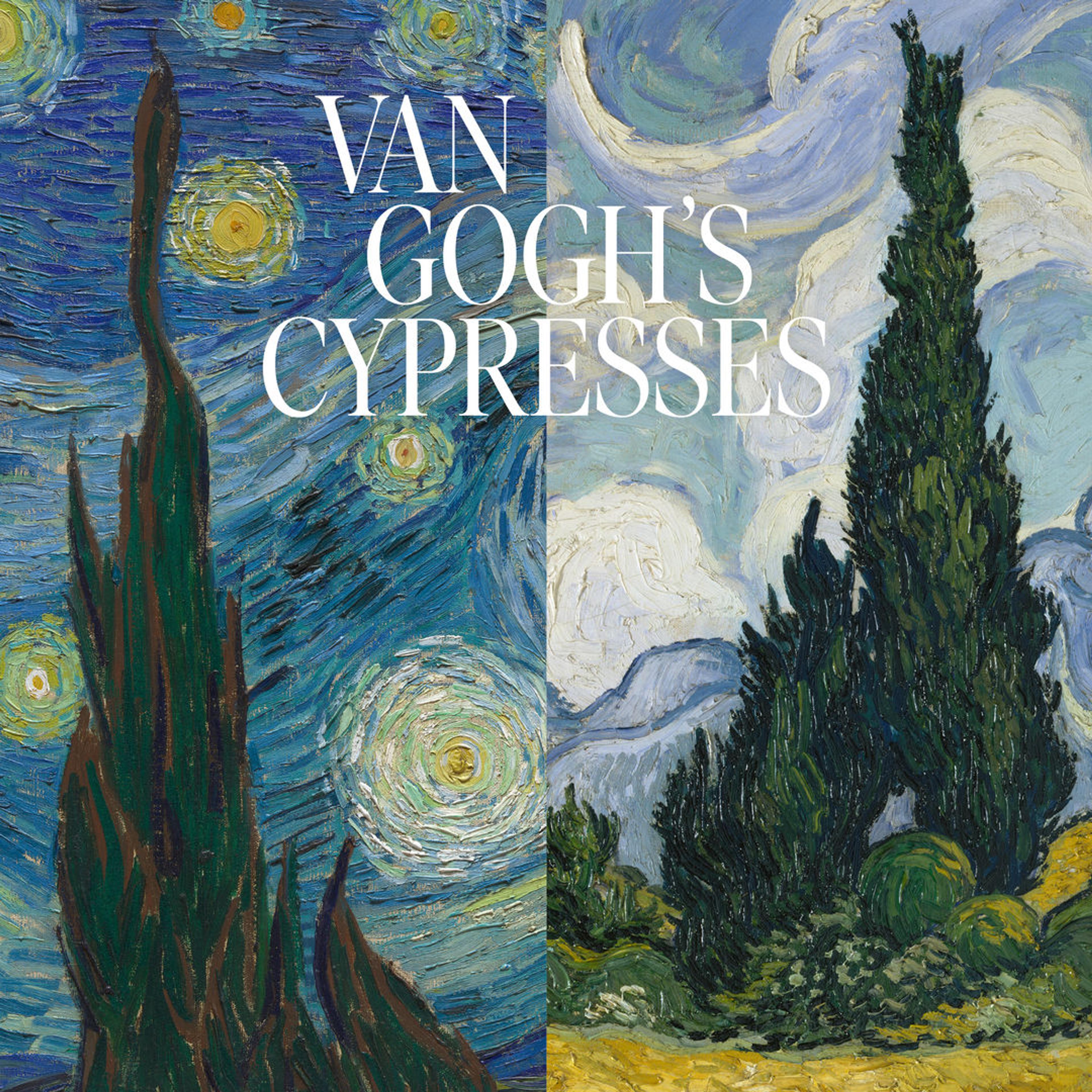
The Metropolitan Museum of Art –Join Susan Alyson Stein, Engelhard Curator of Nineteenth-Century European Painting, to virtually explore Van Gogh’s Cypresses, the first exhibition to focus on the trees—among the most famous in the history of art—immortalized in signature images by Vincent van Gogh (1853–1890).
Such iconic pictures as Wheat Field with Cypresses and The Starry Night take their place as the centerpiece in a presentation that affords an unprecedented perspective on a motif virtually synonymous with the Dutch artist’s fiercely original power of expression. Some 40 works illuminate the extent of his fascination with the region’s distinctive flamelike evergreens as they successively sparked, fueled, and stoked his imagination over the course of two years in the South of France: from his initial sightings of the “tall and dark” trees in Arles to realizing their full, evocative potential (“as I see them”) at the asylum in Saint-Rémy.
Juxtaposing landmark paintings with precious drawings and illustrated letters—many rarely, if ever, lent or exhibited together—this tightly conceived thematic exhibition offers an extraordinary opportunity to appreciate anew some of Van Gogh’s most celebrated works in a context that reveals the backstory of their invention for the first time.
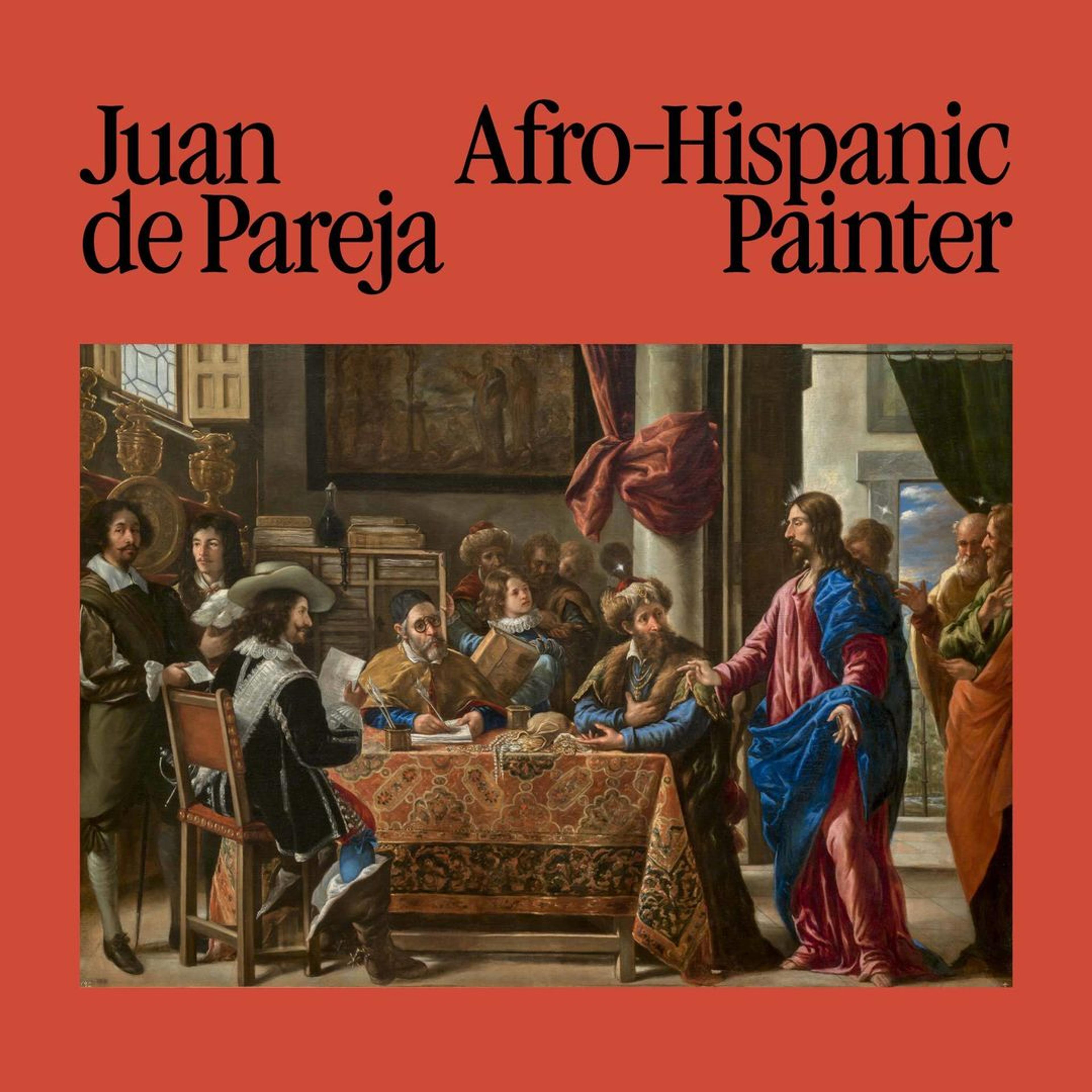
Largely known today as the subject of The Met’s iconic portrait by Diego Velázquez, Pareja—who was born in Antequera, Spain—was enslaved in Velázquez’s studio for over two decades before becoming an artist in his own right. This presentation is the first to tell his story and examine the ways in which enslaved artisanal labor and a multiracial society are inextricably linked with the art and material culture of Spain’s “Golden Age.”
Diego Velázquez’s portrait of Juan de Pareja (ca. 1608–1670) has long been a landmark of European art, but this provocative study focuses on its subject: an enslaved man who went on to build his own successful career as an artist. This catalogue—the first scholarly monograph on Pareja— discusses the painter’s ties to the Madrid School of the 1660s and revises our understanding of artistic production during Spain’s Golden Age, with a focus on enslaved artists and artisans.
The authors illuminate the highly skilled labor within Seville’s multiracial society; the role of Black saints and confraternities in the promotion of Catholicism among enslaved populations; and early twentieth-century scholar Arturo Schomburg’s project to recover Pareja’s legacy.
The book also includes the first illustrated and annotated list of known works attributed to Pareja. Published by The Metropolitan Museum of Art/Distributed by Yale University Press
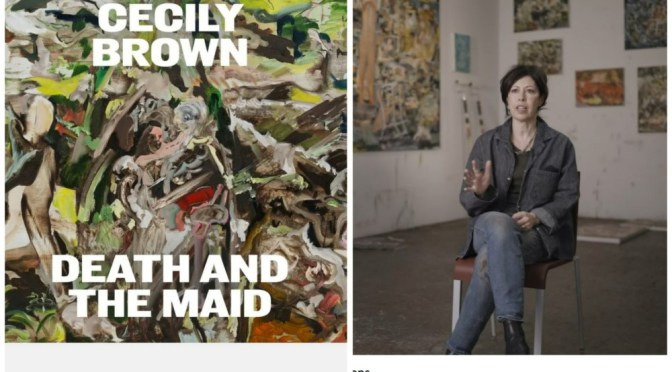
The Metropolitan Museum of Art (March 19, 2023) – Go behind the scenes with artist Cecily Brown, who discusses the inspiration and making of Cecily Brown: Death and the Maid, the first full-fledged museum survey of Brown’s work in New York since she made the city her home.
Cecily Brown: Death and the Maid assembles a select group of some fifty paintings, drawings, sketchbooks, and monotypes from across her career to explore the intertwined themes of still life, memento mori, mirroring, and vanitas—symbolic depictions of human vanity or life’s brevity—that have propelled her dynamic and impactful practice for decades. On view April 4th, 2023 through December 3rd, 2023.
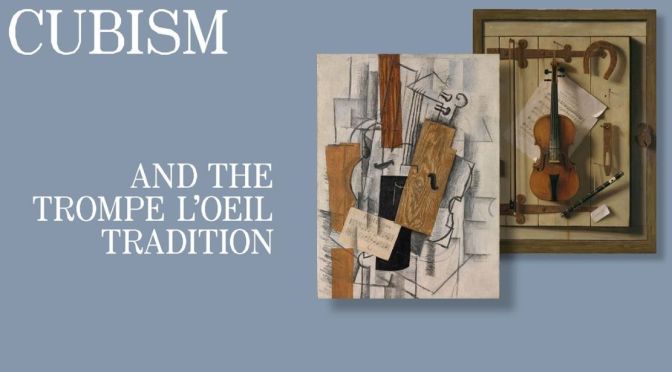
The Met – Join the exhibition’s curators Emily Braun and Elizabeth Cowling for a virtual tour of Cubism and the Trompe l’Oeil Tradition, which offers a radically new view of Cubism by demonstrating its engagement with the age-old tradition of trompe l’oeil painting.
A self-referential art concerned with the nature of representation, trompe l’oeil (“deceive the eye”) beguiles the viewer with perceptual and psychological games that complicate definitions of truth and fiction. Along with Cubist paintings, sculptures, and collages, the exhibition presents canonical examples of European and American trompe l’oeil painting from the seventeenth through the nineteenth centuries.
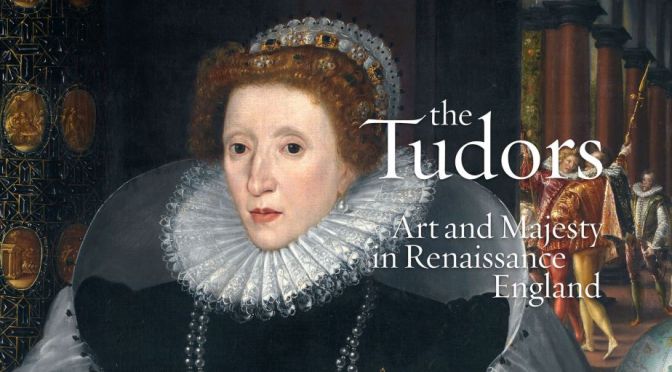
England, under the volatile Tudor dynasty, was a thriving home for the arts. An international community of artists and merchants, many of them religious refugees, navigated the high-stakes demands of royal patrons, including England’s first two reigning queens. Against the backdrop of shifting political relationships with mainland Europe, Tudor artistic patronage legitimized, promoted, and stabilized a series of tumultuous reigns, from Henry VII’s seizure of the throne in 1485 to the death of his granddaughter Elizabeth I in 1603.
The Tudor courts were truly cosmopolitan, boasting the work of Florentine sculptors, German painters, Flemish weavers, and Europe’s best armorers, goldsmiths, and printers, while also contributing to the emergence of a distinctly English style. Join Elizabeth Cleland, Curator in the Department of European Sculpture and Decorative Arts, and Adam Eaker, Associate Curator in the Department of European Paintings, to explore The Tudors: Art and Majesty in Renaissance England, which traces the transformation of the arts in Tudor England through more than 100 objects—including iconic portraits, spectacular tapestries, manuscripts, sculpture, and armor—from both The Met collection and international lenders.


 The Metropolitan Museum of Art (October 18, 2023) – Over an intense nine weeks in the summer of 1905 in the modest fishing village of Collioure on the French Mediterranean, Henri Matisse and Andre Derain embarked on a partnership that led to a wholly new, radical artistic language later known as Fauvism.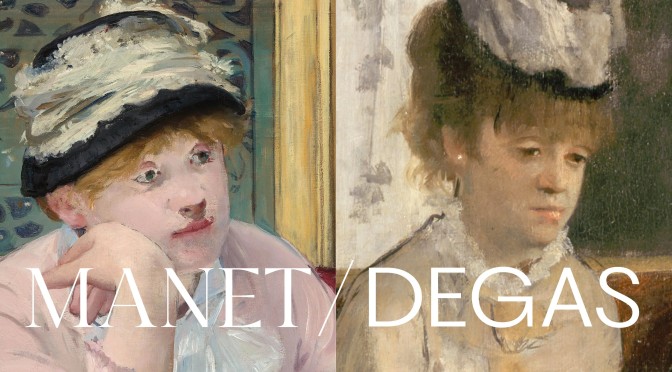


 Boomers Daily