Tag Archives: The Florentine

Previews: The Florentine Magazine – July/Aug 2022

The Florentine July/August 2022 

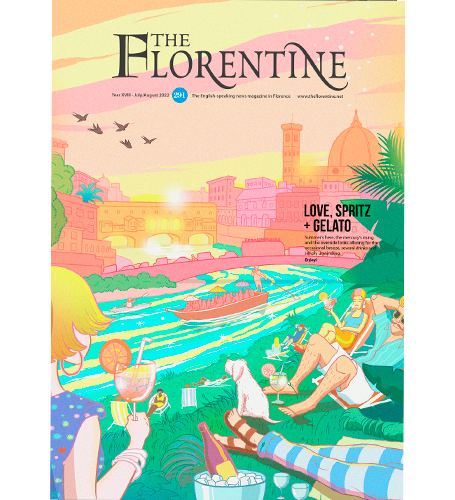
Love, Spritz + Gelato

My forearms are sticking to the desk as I type this month’s letter. It’s an irksome feeling that’s offset by last night’s joy of dancing wildly at a wedding and an afternoon dip in a kind friend’s swimming pool. Summer in Florence is an intoxicating mix of sweat, fun and gelato. While many of us escape to our countries of origin for as long as we can, there’s something undeniably alluring about these sun-streaked months in Tuscany. Just think back to movies such as Stealing Beauty and Under the Tuscan Sun before fast forwarding to recent Netflix films Toscana and Love & Gelato. Stereotypes aside—and there are far too many to mention in these productions (Netflix, we’re here if you fancy delving deeper into our city and region!)—summer in Florence never stops working its inexplicable magic. Yes, the wall of heat and buzz of mosquitoes may be draining during the day, but the night brings boundless pleasures, from movie nights by the Uffizi to exhibitions at just-reopened Forte di Belvedere, refreshing beers beside the Arno and brilliantly oddball cultural moments such as a wheat threshing festival in the hills (find out more about that gem on page 16).  
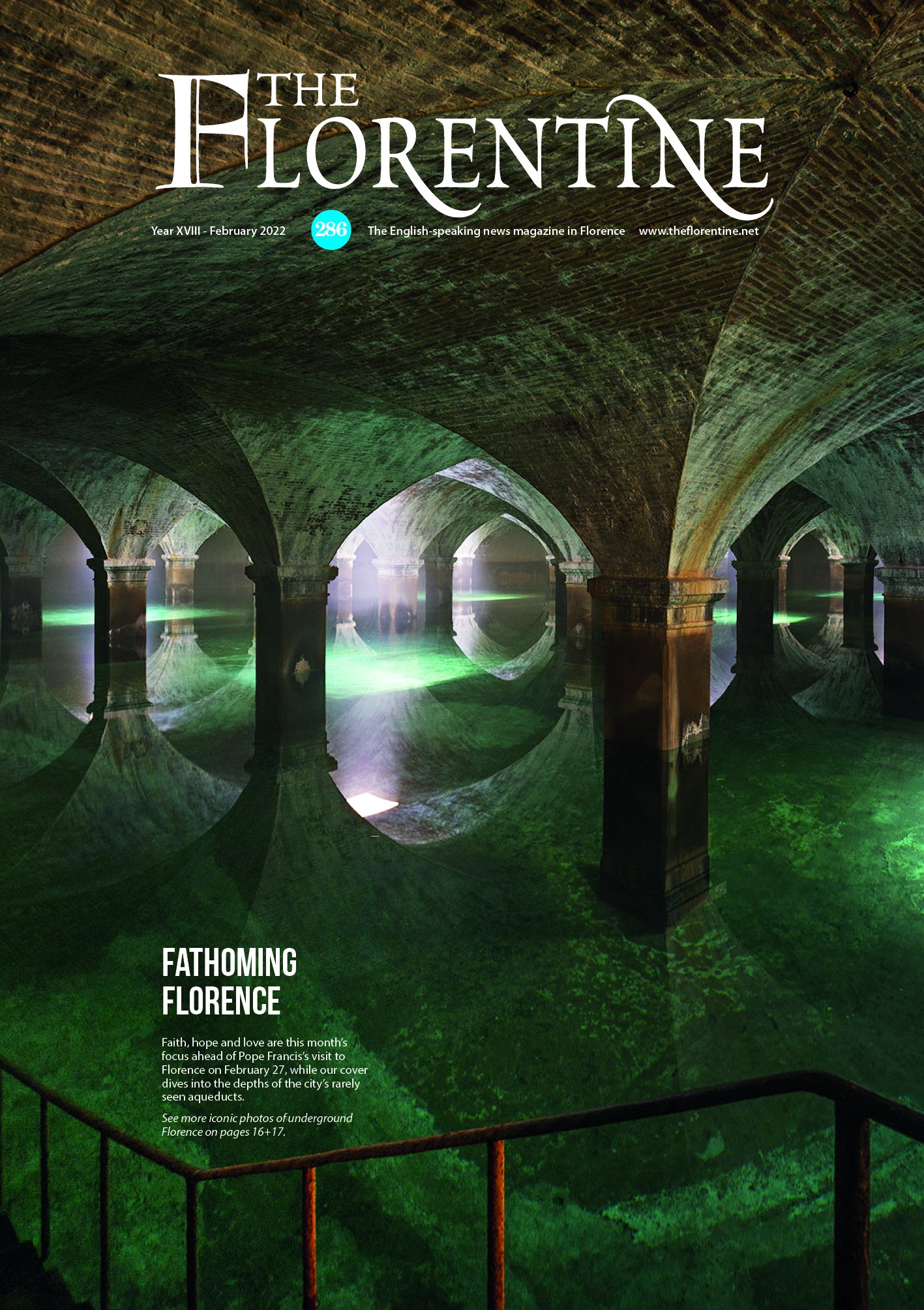
Preview: The Florentine Magazine – February 2022

Image

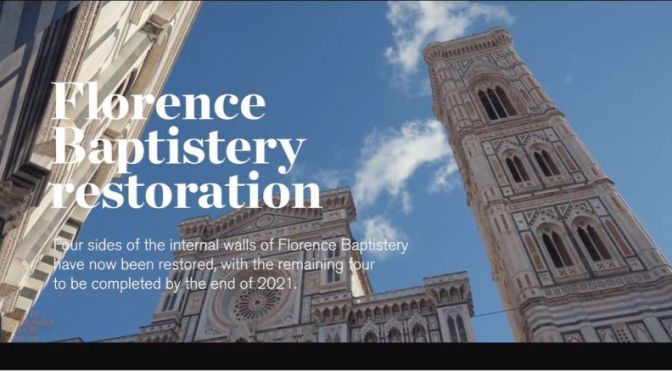
Travel & Architecture: 14th Century Florence Baptistery Restoration

Four sides of the internal walls of Florence Baptistery have been restored, with the remaining four to go by the end of 2021. “Here come all those who wish to see admirable things” is the English translation of the words set in the marble inlay of the floor of Florence’s baptistery, as visitors enter through the Gates of Paradise.

These worthy items include the fourteenth-century mosaics depicting prophets, bishops and cherubs, which are enjoying renewed vigour after the restoration of four of the eight sides of Florence’s oldest monument. The internal walls of the baptistery began to be restored towards the end of 2017 following a restoration campaign on the external walls and roof.

Many discoveries emerged from the diagnostics, the first of their kind to be conducted on the monument, including the original technique used in the parietal mosaics; the presence of a pigmented wax on the green Prato marble, used to cover the white limestone that had formed due to water coming in through the roof, now removed to reveal the stone’s natural hue; and traces of gold leaf on one of the capitals of the matroneum, which could form evidence that the capitals were all originally covered in gold leaf.

In the first couple of decades of the fourteenth century, having completed the colossal feat of the mosaics inside the baptistery’s dome, the decision was made to extend the technique to the parietal sides, something that wasn’t part of the original plans.

It was a solution that allowed the mosaics to be superimposed over the marble covering and solve the issue of the monument’s static nature. Made-to-measure hollow terracotta tiles were used, cut and fixed to the marble on the baptistery’s walls with central iron linchpins driven back and welded in a straight line.

“A hurried sinopia was then conducted on the tiles and later the mosaic with a direct method and over days, which can still be identified and interpreted today,” explained Beatrice Agostini, planner and head of the restoration campaign of Opera di Santa Maria del Fiore. “Even the mixture used to apply the mosaic tiles is absolutely unique. Ordinary mortar wasn’t used. Instead it was more of a glue, and it’s the decline of this compound that has caused the most problems in this restoration.”

International Magazines: “The Florentine” – Italy April 2020 Issue Released


pjimage

The Florentine Healing Not Broken Issue April 2020-page-11

In this special Covid-19 edition of The Florentine, rejoice in a renewed humanism from Florence, of learning, words, thoughts and creativity, with articles, poems and short stories penned by the city’s international community, plus ideas and considerations for the future from Tuscany’s leaders and institutional figures, all interspersed with iconic photography of Florence at its most restful.

Read full issue