Tag Archives: Sydney

Design Tour: Waterfront Modern Home In Sydney

The Local Project (July 18, 2023) – Nestled in a serene waterfront location just north of the Sydney CBD, Northbridge is a modern house that seamlessly integrates with the surrounding landscape and topography of its site.

Video timeline: 00:00 – Intro to the Waterfront Modern House 00:33 – The Serene Location 00:58 – A Walkthrough of the Home 01:29 – Separation by Stairs 02:08 – Key Interior Features 02:48 – The Intimacy of the Lower Level 03:31 – A Focus on the Exterior Landscape Architecture 04:13 – Considerations of Designing Waterfront Houses 05:05 – The Rewarding Aspects

Working with the challenge of a sloped, narrow block and existing elements, including a natural watercourse, rocky outcrops and mature tree ferns, became crucial to the design of the home. To work around the decline of the terrain, the modern house is made of varying levels that cascade towards the water.

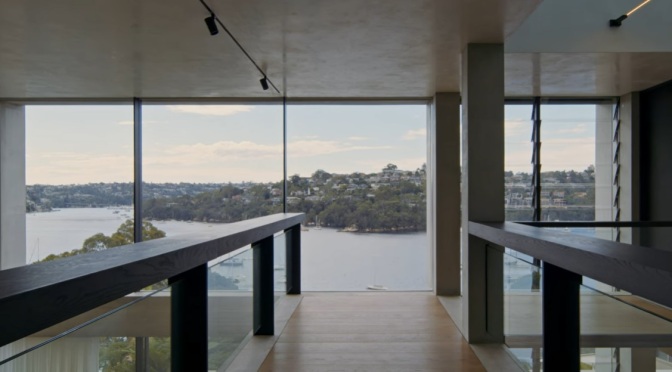
Accessed via an external bridge that looks down over a courtyard, the top floor of the residence features a central staircase with a lounge room to one side and a dining and kitchen area to the other – both spaces open to an expansive balcony with breathtaking north-eastern views. The level below the entry houses the bedrooms, which dial around the central staircase – two of which face towards the views with an outlook that engages the tops of the tree ferns.

The lowest living area of the house links directly to the garden, enabling a beautiful intimacy with the landscape to enter into the modern house. In this sense, the garden and surrounding views are central to the home’s design. Structurally, the central staircase provides a sense of circulation and symmetry. From this vertical atrium, there are sweeping horizontal and vertical views through to the garden and down to the water beyond.

Behind the living room is a tranquil courtyard that offers shelter from the wind, as well as a pool that leads to another garden continuing down to the harbour. Down there the cube-shaped house can be seen from a different perspective – glimpsed through a curtilage of an enchanted garden of tree ferns, palms and curved sandstone walls.

#ModernHouse #Architecture #Sydney

Travel: 7 Great ‘City Walks’

Zadar: A Loop Through History

An ancient cylindrical building of pale stone is surrounded by other ancient buildings, among them a very old, slender, five-story stone building with a tall, steep roof. A wall of stones extends halfway across this scene. Above, the blue sky is cloudless.

A nearly two-mile walk circumnavigating Zadar’s Old Town is a journey across a timeline that spans nearly every stage of Croatian history. And it’s a long history, dating back to the 9th century B.C., when the Liburnians first settled this peninsular spit of land on Croatia’s spectacular Dalmatian coast.

Dozens of people sit on the shallow, wide, pale stone steps that start at a plaza and go right into the lapping sea. In the background are trees and a vista of red-roofed, pale stone buildings of several stories.

Start your stroll on the northwest corner of the peninsula at the Morske Orgulje, or Sea Organ: a set of 35 pipes spread under a 230-foot section of the city’s seaside promenade, known as the Riva. Awarded the 2006 European Prize for Urban Public Space, the Morske Orgulje plays beautifully discordant melodies as the Adriatic laps the stone and pushes air through the pipes beneath — converting the walkway into an invisible, ethereal orchestra.

Marrakesh: A Spider Web of Passageways

A group of women in long, colorful, traditional Moroccan robes and head coverings, congregate in a plaza with a surface of geometrically arranged pale brown tiles. There are covered market stalls in the background, more people and various buildings.

The wail of snake charmers’ horns will lead you to your departure point: Jemaa El Fna. This carnivalesque, open-air market in the medina — the ancient neighborhood where Marrakesh was born — brims with juice stands, restaurants and souvenir shops, to say nothing of musicians and performers.

The double doors of two busy storefronts in an old orange-brown stucco building have been thrown open to shoppers. One displays posters of barely clothed, muscular men. The other is packed with shelves stacked with containers of colorful candy; bags of yellow, pink, black and white soccer balls in a big plastic bag; stacks of plastic bottles of water; and various snacks tended to by a young man wearing a circular cap, tan jeans and a yellow-and-white-striped T-shirt.

Before you embark on this meandering 2.2-mile walk, you should have water and sunscreen (summer temperatures can pass 100 degrees Fahrenheit in this Moroccan city); outfits that cover most of your skin (doubly useful in Islamic societies, which discourage revealing clothes); and a willingness to lose your bearings. Nearly twice the size of Central Park, the medina enfolds a vast spider web of passageways that seem designed to disorient outsiders.

Seoul: Following the Fortress Wall

People walk along two adjacent paths, divided by a long patch of lush grass in the daytime. Bordering the path on the right is a low fortress wall. Over the wall, houses can be seen in the distance below.

To walk along the Seoul City Wall is to walk in the footsteps of scholars of bygone centuries, trace scars of war and take in the modern behemoth of a city built around it all. Its history stretches back to 1396, to when present-day Seoul first became the capital of what was then a kingdom called Joseon.

Inwangsan, a mountain in central Seoul, offers sweeping downtown views.

Then, the wall encircled an area that’s but a small fraction of today’s sprawling city, incorporating the slopes of the four mountains that afforded natural fortification. Like Seoul itself, the wall has been destroyed and rebuilt several times — and after restorations in recent decades, it’s become a popular urban walk.

READ MORE

Renovations: A Tour Of A Modern Home In Sydney

The Local Project (June 13, 2023) – Inspired by the familiar warmth of a family home, Luigi Rosselli Architects has renovated an ageing house in a thoughtful and fluid way.

Video timeline: 00:00 – Introduction to the Family House 00:31 – An Eclectic Layered Home 01:13 – The Location and A Walkthrough of the Home 02:07 – The Brief 02:51 – A Focus on the Fire Place 03:07 – Glowy, Warm and Textural 03:25 – A Beautifully Crafted Kitchen 03:50 – The Feature Staircase 05:40 – Positive Outcomes 06:09 – Proud Moments 06:22 – Favourite Aspects of the Home

Structural interventions and refreshed interiors keep valuable portions of the home whilst welcoming in contemporary layers to fit a modern context. Upon entering the house, one is greeted by an old hallway and a beautiful, robust spiral staircase designed by S&A Stairs, which binds the home together.

The stairs demonstrate fine craftsmanship and attention to detail, featuring a continuous handrail with a smooth elliptical curve and a unique curved bend. At the top of the stairs is a lightwell that bathes the long hallway in light. Down the hallway are five bedrooms, three bathrooms and a sunken lounge that extends into the kitchen and dining beyond – all of which are bordered by a lush tropical garden.

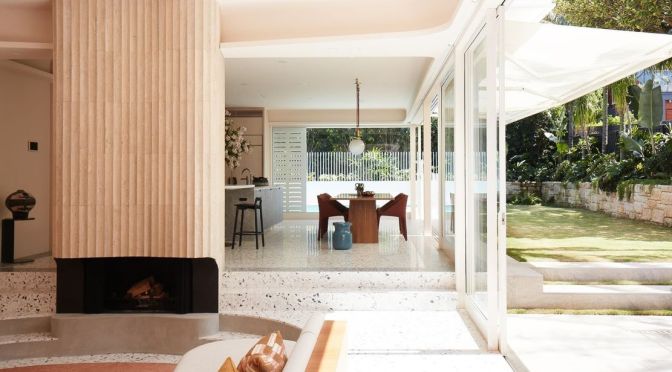
The renovation is defined by a tangible fluidity, with one of the main reworkings being the relocation of the garage, which was previously located in the centre of the house. Instead, the garage has moved below the existing house to make room for the sunken lounge, creating a well-connected home with more usable space. The fireplace lies at the centre of this new area, adding to the warm and welcoming nature of the open living area, and features a fluted travertine around the edges which not only reveals the curves of its unique form but also brings texture into the lounge room.

Architecture: Double Bay House III, Sydney, Australia

The Local Project (May 21, 2023) – Double Bay House III is a pragmatic and peaceful house tailored to suit family living. In transforming the traditional family home into an inspired modern form, the residence simultaneously embraces both connectivity and separation within.

Video timeline: 00:00 – Introduction to the Peaceful House 00:37 – The View and the Location 01:20 – A Brief for a Young Family 01:56 – Focusing on the Curves 02:22 – The Site and its Surrounds 02:56 – A Minimalistic Programme 03:11 – Playing with the Natural Light 04:05 – A Crossover of the Architecture and Interior Design 04:29 – The Feature Fireplace 06:05 – A Walkthrough of the Home 07:58 – Favourite Aspects of the Home

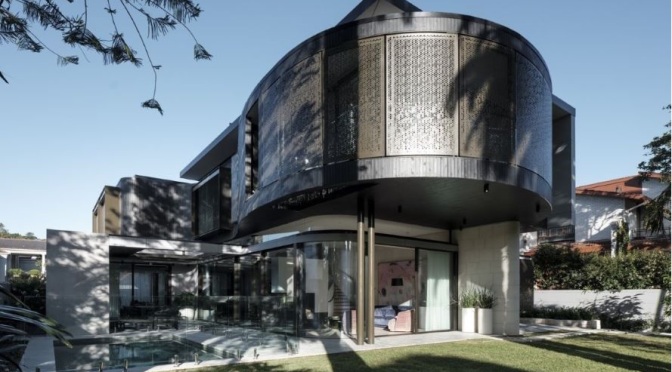
TKD Architects creates a deeply considered, highly functional and sophisticated dwelling. Located in Sydney’s eastern suburbs, Double Bay House III benefits from its purposeful site located at the southeast corner of the block. Designing the home in this way celebrates its front garden and privately welcomes an abundance of natural light. Sitting across from a park and being surrounded by trees, the new form’s intention was to respect the surrounding landscape and make the most of the natural elements on site, creating a functional, peaceful home for a young family.

The home’s materiality is defined by a sense of harmony and calm, enriched by smooth lines and an ever-present play of light. The external curvature of the peaceful house extends to the rounded stone that dominates the interior, relaying a sense of peace. Natural light is welcomed through form, cut-outs, skylights and a positioning of glass elements to ensure the right amount of light enters the home at the right time. On the western side of the peaceful house, there are screens that open and close and the perforations of those elements are graded.

Art & Architecture: Tour Of Almora House, Sydney

The Local Project – (April 21, 2023) – Imbued with a sense of calm and tranquillity, Tonkin Zulaikha Greer Architects creates a dream home that encourages contemplation. A neutral approach to materiality is complemented by an extensive art collection and sculptural furnishings, inspiring stillness and a sense of wonder for what lies beneath the structure’s outward façade.

Video timeline: 00:00 – Introduction to the Art Lovers Dream Home 00:29 – The Location of Almora House 00:44 – The Clients and The Brief 01:15 – The Organisation of the Home 01:55 – A Walkthrough of the Home 02:59 – An Enduring, Timeless and Maintenance Free Home 03:37 – Where The Spatial Richness is Derived From 04:11 – The Most Enjoyable Project for the Architect 04:46 – Favourite Parts of the Home

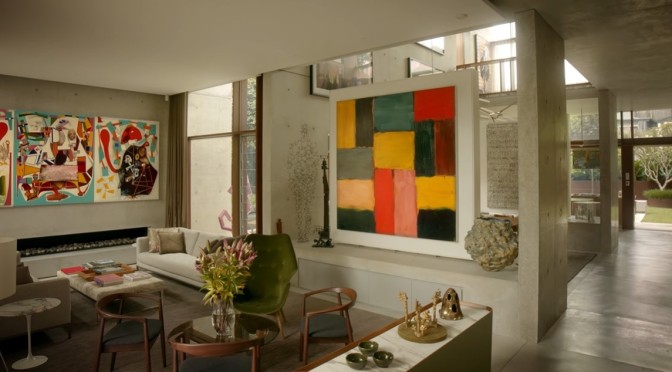
Located in the coastal refuge of Balmoral Beach in Sydney’s Mosman, Almora House is a collection of unique spaces. The clients have resided in the house for over twenty years and have come forward with the brief to design an enduring, timeless, maintenance-free dream home that would accommodate their extensive art collection. Almora House presents a distinctive shape that encourages a soft contemplation.

The form of the house itself is organised around a spine that runs almost north-south — the structure stretching its way along this spine, with a series of rooms that push out into the garden, creating small courtyards. Various features throughout the home also encourage contemplation, particularly the bookshelf. Housed in the upstairs library, the bookshelf’s rear side is made of slightly frosted glass, becoming an alluring abstract composition seen from the dining room. The spine design of the dream home creates an effortless sense of flow in its layout. Inside the front door, there is a guest bathroom and bedroom that open into a courtyard.

As you walk south along the spine, the first of the living rooms, a dining room with double-height ceilings and a kitchen unfurl to the left. Beyond the kitchen is an informal room with four glass walls that open into the garden. Upstairs are the master bedroom and powder room, a study and a gallery. Thoughtful choices surrounding materiality also create a dream home that embodies a poignant sense of calm and introspection. Glass is used to welcome the serenity of the surrounding greenery into the home.

A concrete frame is used as a neutral material that showcases the art within the home and inspires calm. Almora House reveals itself to incite tranquillity, stillness and retrieve from the constant movement of daily life. Tonkin Zulaikha Greer Architects perfectly balances an appreciation of practicality, art and craftsmanship to create a dream home that acts as a container of curiosities and a hub for the calm moments integral to being present in our fast-paced, modern world.

Cabin Tours: Marra Marra Shack In Sydney, Australia

The Local Project – (March 21, 2023) – Only reachable by boat, Marra Marra Shack by Leopold Banchini Architects is a hidden eco-friendly timber cabin that embraces a quiet lifestyle removed from the bustle of city living.

Video timeline: 00:00 – Introduction to the Eco-Friendly Timber Cabin 00:46 – The Site and its Location 01:06 – The Brief: Simplicity and Discovery 01:30 – Working with a Remote Construction Site 01:59 – Hand Built and Off-Grid 02:32 – A Walkthrough of the Cabin 03:06 – The Feature Window 03:57 – A Timber Structure 04:29 – Custom Made Furniture 05:00 – The Materials 05:36 – Hidden in Plain Sight

As Leopold Banchini Architects’s first Australian project, the hidden eco-friendly timber cabin required only two bedrooms, easy living spaces and a connection to landscape. Using the occasion to discover the Australian landscape, the Swiss architect has used the unique crafts only available in this country. The entire building has been completed by two carpenters and using materials that required no heavy machinery.

Additionally, each chosen material responds directly to the complexity of weather, tides and floods experienced in the unique riverside location. Sitting on a slope, the hidden eco-friendly timber cabin welcomes guests with an awe-inspiring reveal upon arrival at the renovated jetty. After walking up the stairs the house tour begins at the entrance to the main living spaces, which includes the living room, dining area and kitchen. Located to the rear of the shack are two smaller bedrooms with bathrooms, both of which have been designed to offer solitude where the owners can enjoy their own space.

Finished with a large window that overlooks the river, the living room gives the impression that the home sits upon the water instead of above. By using counterweights, the opened window turns the living space into an inside and outside deck, allowing a deeper connection to the wider surrounds. The interior of the hidden eco-friendly timber cabin has been imbued with locally sourced timbers, including iron bark that is used for the pillars that hold the home together. Other elements within the home, including the stairs and flooring, are made from turpentine wood from the old jetty, while spotted gum forms the structural beams along the roof of the cabin.

Additionally, the furniture of the home has been designed specifically for Marra Marra Shack by using leftover wood from the construction. Other elements in the home, including the fireplace, sink and all steel elements, have been custom made to resolve the few needs of the owners while staying in the house. Being in the middle of an Australian national park, the architect had to respond to certain elemental outcomes including floods, fire and tide heights. Built up on a slope to respond to the conditions, the exterior of the home has also been covered in fibre cement and plaster board to address fire safety in the warmer months.

While the exterior of the hidden eco-friendly timber cabin appears to be made of other materials, it is evident when entering the home that the interior is entirely made of timber. Elevated and surrounded by trees, Marra Marra Shack does not transform the landscape but becomes one with it.

Architecture Tour: Family Heritage House In Sydney

The Local Project (March 10, 2023) – Perched over Sydney harbour, the architects and designers of Family Heritage, Luigi Rosselli Architects and Alwill Interiors, inject a renewed modern character into the residence.

Video timeline: 00:00 – Introduction to the Elegant Family Home 00:40 – The Award-Winning Architects 01:00 – Behind the Name ‘Family Heritage’ 01:30 – The Clients Brief 02:03 – A Walkthrough of the Family Home 04:59 – The Award-Winning Interior Designers 05:17 – Fresh and Modern Interiors 05:50 – The Materials Used Throughout 06:20 – Favourite Aspects 07:00 – Difficult Aspects 08:07 – Working with Heritage Listed Homes

Originally built at the turn of the century, the renovated home rejects the idea of historical structures being restricted, dark or difficult for modern families. Defeating these misconceptions, the architects and designers have used soft curves, calming colours and material palettes, and welcome a wealth of natural light inside. From the front veranda, guests enter into the front atrium, which has been turned from a dark entrance into light-filled foyer.

Featuring a newly opened staircase, the interior architecture of the atrium tells a story of gentle curves to soften the arrival, before passing into the arched hallway. As the hallway leads to the family room and study, the choice has been made to keep it dark with hues of blue, navy and greys for concentration, study, reading and reflection. Leading from this is the arrival to the main living space, a light-drenched space with wide doors that open to the garden to expand the living space outdoors for entertainment and family use.

Additionally, on the opposite end of the main living space is the fireplace, which has been designed uncentered to allow for the addition of artwork. Moving upwards, the curved staircase leads to a viewing room in which the skyline of Sydney can be viewed. The first-floor landing then also holds the original doors of the home, which the architects and designers have reused for the linen cupboards. The house tour next leads to the private living spaces, including the children’s rooms, guest room and main bedroom.

The main bedroom offers a vastness that is similar to that of a hotel room, with a precise arrangement and thoughtful detailing. Additionally, the room is fitted with a large window looking over the backyard and dancing shutters that open and shut in synchrony. Showing the character of each child, the architects and designers have allowed the children’s bedrooms to share the front veranda to provide them with additional connections to the front gardens. Evident through their long-standing work relationship, the collaboration between the architects and designers makes it seem as if the home has been designed by one set of hands.

Using a calm, white base, the home builds character with tobacco, pink and blue tones through each living space. Accommodating for a busy family, the architects and designers carefully asses the function of spaces and imbue rooms with durable materials to handle daily wear and tear. Evoking different emotions throughout the home, the interior material choices have purposely been selected by the architects and designers to showcase the home’s unique character and charm.

Architecture Tour: Emily House In Sydney, Australia

Working together, Aldini and Isaac Group have turned an abandoned warehouse into a modern dream home. Sitting on a small plot of land, the warehouse was in dire need of a contemporary lift – therefore the employment of organic shapes, elements and materials became the key focus for both interior designer and builder.

Video timeline: 00:00 – Introduction to the Modern Dream Home 00:25 – The Location of Emily House 00:38 – A Walkthrough of the Modern Dream Home 01:10 – Maximising the Previous Small Space 01:29 – The Builder 01:51 – Relationships and Working as a Team 02:14 – Utilising Natural Elements and Organic Shapes 03:10 – Elements of Softness and Curves 03:34 – Harnessing the Natural Light 04:02 – Favourite Parts of the Modern Dream Home 04:29 – Proud Moments

With a brief that only required the cathedral ceilings to be kept, the interior architecture was imbued with soft curves, natural shapes and materials, and a flood of natural light. In the end, the client’s home was turned into a modern dream home that would become a hub for connection, light and simple opulence.

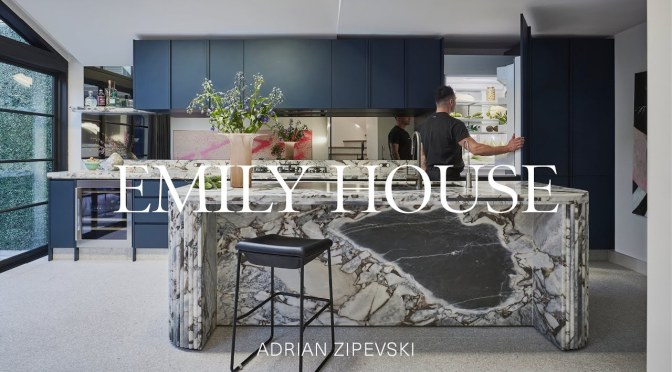
Located in the inner west of Sydney, Emily House strikes an unassuming appearance with dark tones, leafy greens and a timber batten façade that hints at what is inside the modern dream home. Following the house tour inside, the front of the home contains the master bedroom and ensuite before offering a glimpse of the opulent kitchen – which is designed to be the hub for connection.

While using marble, granite and terrazzo throughout the modern dream home to add an opulence, the elements of curved bamboo, which is seen in the bathrooms and on the kitchen island bench, is used to soften the hardness of these materials. In the downstairs spaces, large steel windows, bi-fold doors and skylights have been installed to help bring more natural light inside while also adding to the sense of space inside.

Following the kitchen’s marble bench top and dark palette cabinetry, the dining and living room reference the same colours through the furnishings and marble that has been employed on the shelving and fireplace. To combat the hard lines of the steel and marble, the softening of elements has been encouraged throughout the interior design, which is seen in the soft curving of the Venetian plaster wall above the fireplace.

After the doors are opened, the courtyard helps to expand upon the liveable space and, with its terrazzo floor, curved seating arrangement and green wall the space, the downstairs living areas extend upon the client’s wish of creating a hub for connection. Upstairs, the inclusion of two more bedrooms and a bathroom further employs the use of stone, light and a natural colour palette.

Infused with natural light, the bedrooms offer guests an opulent stay that is reminiscent of five star hotels. Working together, the interior designer and builder established the modern dream home to become a space where the client could entertain. Additionally, the house is filled with a sense of softness – to which the client can find reprieve in the moments when it is needed.

Home & Kitchen Design: Queens Park, Sydney

Designing a modern house for a young family, Pohio Adams Architect has introduced space, light and robust materials to provide the clients with a home that would last for years.

Video timeline: 00:00 – Introduction to The Modern House 00:29 – The Architects and The Location 00:49 – A 1980s House Renovation 01:10 – The Brief 01:29 – A Walkthrough The House 02:22 – Reinstating The Original Details 02:33 – A Simple Material Palette 03:09 – Creating a Functional Home 03:21 – The Full Suite of Fisher & Paykel Appliances 03:48 – The Design of The Appliances 04:25 – The Park Setting and Views 05:08 – Working in Heritage Areas with Heritage Houses 05:40 – The Transformation of The House

Beginning the house tour from the Centennial Park entrance, the architect has reinvigorated the two formal living rooms with coffered ceilings and, where needed, has replicated the missing cornices throughout the interior architecture. Alongside this, the master bedroom has been imbued with privacy and given a luxuriously proportioned ensuite. Throughout Queens Park House, the architect has continued to infuse a fundamental connection to the gardens while also introducing a wealth of light. Responding to the client’s desire to connect to the surroundings, Pohio Adams Architects has opened the rear of the house with a series of French doors. Established to create a visual connection, the French doors enhance the modernisation of the interior while also connecting to the backyard and pool. By positioning the key living areas at the rear – the kitchen, dining and living spaces – the architect has introduced open plan living for the family’s dream home. Additionally, when designing a modern house, the architect has implemented an extra powder room and scullery laundry that sits just off the kitchen. Throughout designing a modern house, the architect has chosen black timber floors to showcase a continuity from the old parts of the home into the new. Simple oak joinery has also been employed through the main living spaces to provide a robustness and comfort to the living areas, while aged brass is used for detailing and hardware. Emphasising the home’s modern renovations, handmade Moroccan tiles have been placed in the bathrooms and kitchen. Offering comfort and warmth, the interior design connects to the exterior through material and architectural choices made by the architects when designing a modern house. To complement the interior when designing a modern house, Pohio Adams Architects has used a full suite of Fisher & Paykel appliances – including an integrated French door fridge and a kitchen island, which includes a cool drawer and full stack dishwasher, a gas cooktop, ovens and extractor hood. Following a long-standing working relationship with Fisher & Paykel, the architect has employed the brand’s appliances throughout the home to directly respond to the client’s desire to enhance the way they live for years to come.

Home Design: Pavilion House In Avalon, Australia

The Local Project – An interior designer’s own holiday home, Pavilion House reflects a studious approach to the relationship between architecture, landscaping and the internal environment. Crafted by Nina Maya Interiors and Maya Sternberg Architects, the home captures an escapist experience using an array of sculptural forms.

Video timeline: 00:00 – Introduction to the Interior Designer’s Family Holiday Home 00:35 – Introduction to Nina Maya Interiors 00:55 – The Location of the Home 01:11 – A Brief Based Around That Holiday Feeling 01:47 – Pavillion Style Architecture 02:06 – A Walkthrough of the Home 02:23 – Evoking a Ubiquitous Feeling 02:43 – The Connection Between Indoor and Outdoor 03:15 – The Landscape Architecture 04:05 – A Light-filled Home 04:27 – The Hand Carved Coffee Table 05:14 – Organic, Round Soft Forms 05:34 – Nina’s Favourite Features

Situated in Avalon, a coastal suburb of Sydney, Pavilion House stands as an interior designer’s own holiday home, settled in close proximity to the beach. As the beach house sits far back on a 1000 square-metre block, a house tour of the residence begins with a sense of land, space and privacy reminiscent of a luxury hotel. Architecturally, the building champions a pavilion style with an orderly spatial layout and front façade comprised of glass.

Entering Pavilion House, occupants find the kitchen and dining room, followed by the living quarters and, further back, all bedrooms and bathrooms. As an interior designer’s own holiday home, the residence effortlessly proposes a luxury living experience influenced by hotel designs from around the world. A seamless connection between indoor and outdoor space is maintained using doors which stack to their sides – opening the home to the external environment – and a sophisticated treatment of landscape.

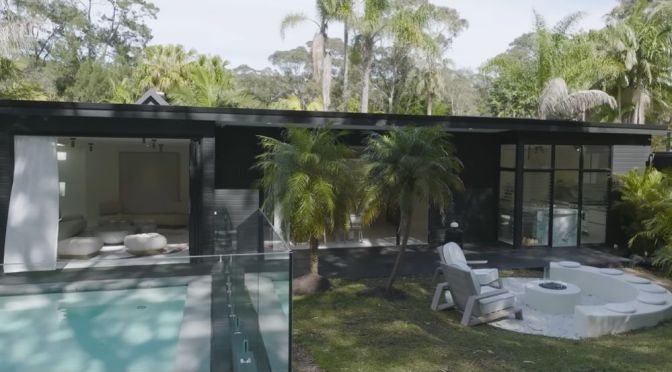
Balancing aesthetics and functionality, Pavilion House is a prime example of an interior designer’s own holiday home. Having excavated a large portion of the front of the property, Nina Maya Interiors builds a refined outdoor dining area surrounded by palm trees, white pebbles and a custom marble table. In addition, the landscape features a firepit area and outdoor spa space, complete with a bar, vanity, free-standing bathtub and rain shower. The lighting of Pavilion House also nods towards its status as an interior designer’s own holiday home. In the lounge, a continuous skylight runs seven metres across the length of the room, inviting natural light to play across the plaster wall.

Raw finishes combine with a restrained colour palette to enhance the calming quality of the sunlight and sculptural furniture within the interior design. Exuding a sense of relaxation, Pavilion House is an uplifting iteration of an interior designer’s own holiday home. Nina Maya Interiors forges a strong connection between both the internal and external aspects of the home, establishing a coherent place of retreat.