Tag Archives: South America

Views: Ecuador – Wildlife, Rainforests & Waterfalls

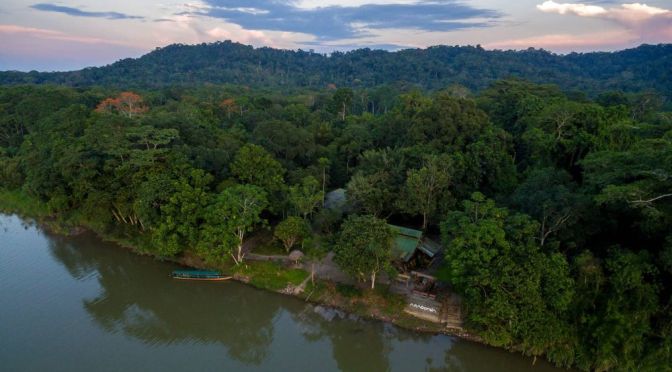
Ecuador is a country straddling the equator on South America’s west coast. Its diverse landscape encompasses Amazon jungle, Andean highlands and the wildlife-rich Galápagos Islands. In the Andean foothills at an elevation of 2,850m, Quito, the capital, is known for its largely intact Spanish colonial center, with decorated 16th- and 17th-century palaces and religious sites, like the ornate Compañía de Jesús Church.

Video timeline: 00:16 – Mindo Valley 00:42 – Pailon del Diablo Waterfall 01:39 – Quilotoa Vulcano Lake 01:59 – Crowned woodnymph bird 02:19 – White-necked jacobin bird 03:07 – Time-lapse of the sky above Quito 03:44 – Cotopaxi National Park 04:57 – Golden tanager bird 05:17 – Andes Mountains 05:38 – Cayambe Volcano 06:23 – Amazon Rainforest
Travel Views: Salta & Jujuy Provinces, Argentina (4K)

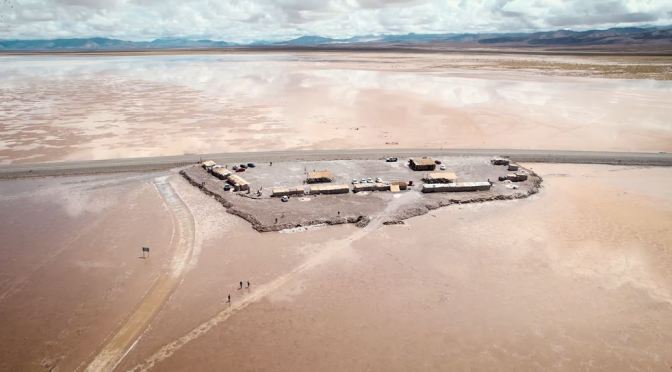
Salta, a province in northwest Argentina, encompasses parts of the Andes Mountains, Yungas forests and semiarid Gran Chaco lowlands. The capital, also called Salta, has colonial architecture including the neoclassical Cathedral of Salta. It’s the departure point for the Tren a las Nubes, a high-altitude railway. Small-town Cafayate is a gateway to wineries and the dramatic rock formations of the Calchaquí Valleys.

Jujuy, a province in Argentina’s remote northwest, is defined by the dramatic rock formations and hills of the Quebrada de Humahuaca. This valley and its indigenous Quechuan villages lie north of the provincial capital and regional gateway, San Salvador de Jujuy. In the valley’s south, the iconic, multicolored Cerro de los Siete Colores’ rocky slopes tower over the Spanish colonial village of Purmamarca.

Aerial City Views: Paraty In Southeastern Brazil (4K)

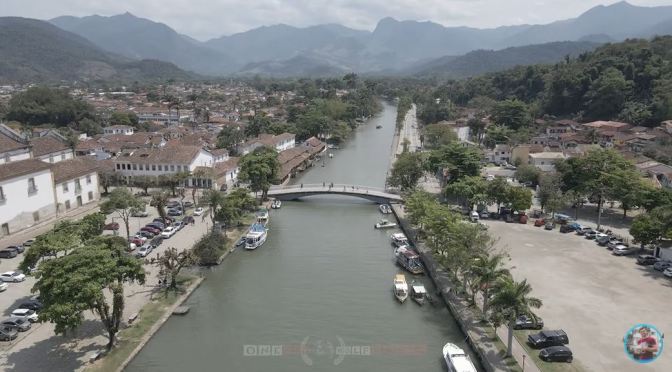
Paraty is a small town backed by mountains on Brazil’s Costa Verde, between Rio de Janeiro and São Paulo. Its Portuguese colonial center has cobbled streets and 17th- and 18th-century buildings dating to its time as a port, during the Brazilian Gold Rush. Among its architectural landmarks is the waterfront Capela de Santa Rita, a whitewashed church built in 1722.

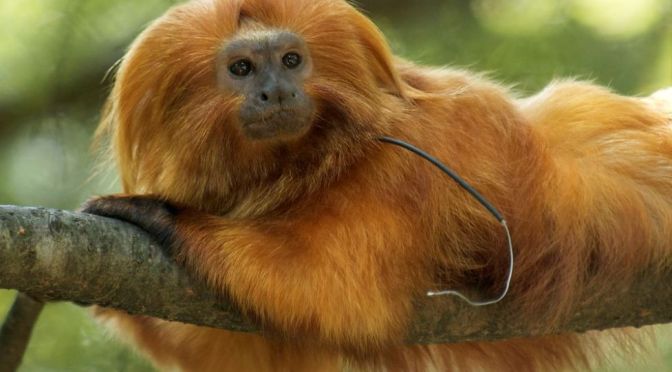
Views: Protecting Brazil’s Golden Lion Tamarin

Concerned by a recent drop in population numbers of the threatened golden lion tamarin, conservationists in Rio de Janeiro state have built a bridge across a busy highway to help the monkeys circulate over a wider forested area.

The golden lion tamarin, also known as the golden marmoset, is a small New World monkey of the family Callitrichidae. Native to the Atlantic coastal forests of Brazil, the golden lion tamarin is an endangered species.

Walks: Lighthouse Beach, Espirito Santo, Brazil (4K)

The Lighthouse Beach is located in the state of Espirito Santo and is located in the town of Conceicao da Barra . It’s a beach, like Bugia’s , which suffers serious damage from erosion caused by the advance of the sea. In it lies a lighthouse making French dating back to the 1910s .

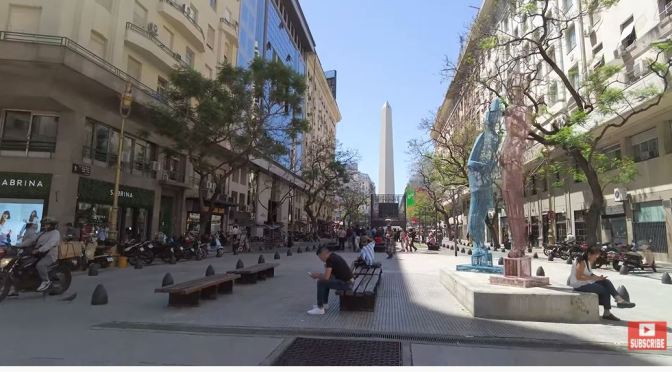
Walks: Plaza Lavalle In Buenos Aires, Argentina

Just northwest of the Obelisco in Buenos Aires is Plaza Lavalle, three blocks of parks (popular with office workers on their lunch break) surrounded by some important buildings. The most worthwhile sights here are the Teatro Colón and the Teatro Nacional Cervantes, but there’s also the neoclassical Escuela Presidente Roca, an educational facility that’s often mistaken for Teatro Colón, and across from it, the French-style Palacio de Justicia (1904) housing the Supreme Court.

Cinematic Travels: The Culture & Colors Of Peru

Traveling through Perú, a magical experience, full of culture, flavors and colors. A place where nature is the main actor.

More scenes & photos on my Instagram: instagram.com/cualki

Peru is a country in South America that’s home to a section of Amazon rainforest and Machu Picchu, an ancient Incan city high in the Andes mountains. The region around Machu Picchu, including the Sacred Valley, Inca Trail and colonial city of Cusco, is rich in archaeological sites. On Peru’s arid Pacific coast is Lima, the capital, with a preserved colonial center and important collections of pre-Columbian art. 

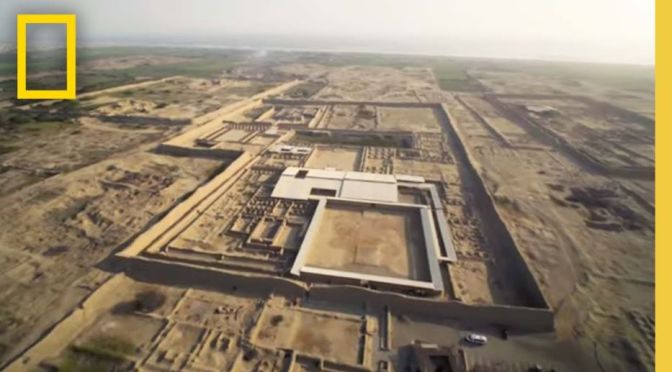
Archaeology: The Lost City Of Chan Chan In Peru

Dr. Albert Lin is investigating the true origin of the ancient story of the great flood. In his search for answers he comes to the lost city of Chan Chan where the Chimú people have recorded a violent shift in the ocean currents.

Chan Chan was the largest city of the pre-Columbian era in South America.[1] It is now an archaeological site in La Libertad Region 5 kilometres (3.1 mi) west of Trujillo, Peru.[2]

Chan Chan is located in the mouth of the Moche Valley[3] and was the capital of the historical empire of the Chimor from 900 to 1470,[4] when they were defeated and incorporated into the Inca Empire.[5] Chimor, a conquest state,[3] developed from the Chimú culture which established itself along the Peruvian coast around 900 AD.[6]

Chan Chan is in a particularly arid section of the coastal desert of northern Peru.[7] Due to the lack of rain in this area, the major source of nonsalted water for Chan Chan is in the form of rivers carrying surface runoff from the Andes.[4] This runoff allows for control of land and water through irrigation systems.

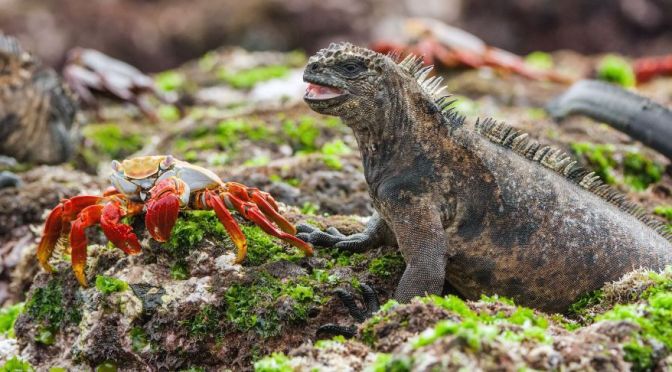
Views: The Galápagos Islands, Ecuador (Nat Geo)

The Galápagos Islands are a chain of islands, or archipelago, in the eastern Pacific Ocean. They are part of the country of Ecuador, in South America. The Galápagos lie about 966 kilometers (600 miles) off of the Ecuadorian coast

There are thirteen major islands and a handful of smaller islands that make up the Galápagos archipelago. The largest of the islands is called Isabela. It is approximately 129 kilometers (80 miles) long. Repeated volcanic eruptions helped to form the rugged mountain landscape of the Galápagos Islands. 

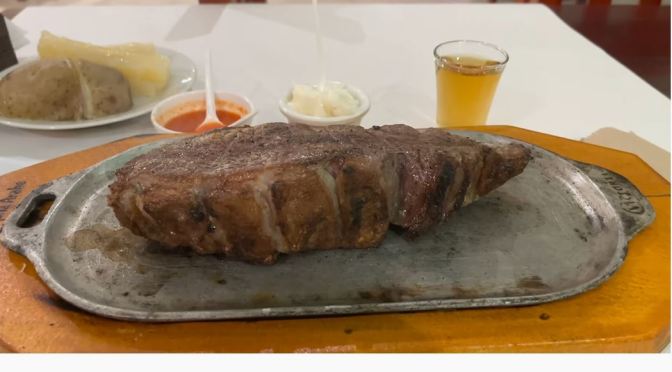
Views: ‘Solomillo’ Steak In Barranquilla, Columbia

Barranquilla, the capital of Colombia’s Atlántico Department, is a bustling seaport flanked by the Magdalena River. The city is known for its enormous Carnival, which brings together flamboyantly costumed performers, elaborate floats and cumbia music. In the chic neighborhood of El Prado, the Museo Romántico showcases artifacts from past festivals and exhibits on famous Colombians, like writer Gabriel García Márquez.