


Tag Archives: Smithsonian Channel Videos
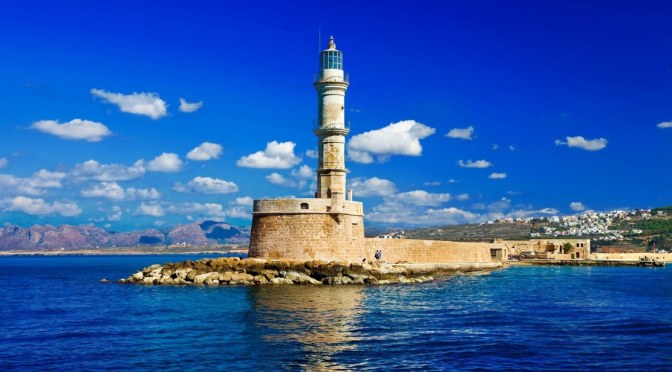
Tours: The Lighthouse Of Chania, Island Of Crete

The original Venetian lighthouse was built around the late 16th century to protect the harbour. A chain could be connected from the base of the lighthouse to the fortress of Firkas in oder to close the harbour.
During the Turkish occupation the lighthouse fell into disrepair and was eventually rebuilt between 1824 and 1832 in the form of a minaret. The modern lighthouse is often referred to as ‘ Egyptian’ because it was built during a time where Crete was occupied by Egyptian troops who were supporting the weakening Ottoman Empire against the rebelious Cretans.
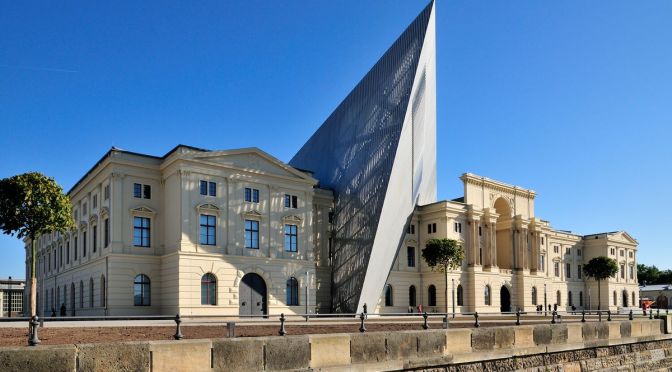
Architectural Views: The Bundeswehr Museum Of Military History, Dresden

The Military History Museum in Dresden, Saxony is one of very few museums in Germany that has German war equipment from both World Wars. Some of the most famous large items in the museum include a V2 flying bomb and Germany’s first submarine. The museum aims to explain how the military, armies and war influenced politics and society, and vice versa.

Florida Design: Building The Salvador Dali Museum
The challenges of redesigning the Dali museum in Florida were two-fold: deliver an iconic design befitting of its subject, and defy conventional building methods to make it strong enough to withstand a hurricane. The result: a landmark structure, as enduring as the work of the great artist himself.
The original Dalí Museum opened in St. Petersburg in 1982, after community leaders rallied to bring the Morses’ superlative collection of Dalí works to the area. The Dalí’s stunning new building opened on January 11, 2011. Designed by architect Yann Weymouth of HOK, it combines the rational with the fantastical: a simple rectangle with 18-inch thick hurricane-proof walls out of which erupts a large free-form geodesic glass bubble known as the “enigma”.
The Enigma, which is made up of 1,062 triangular pieces of glass, stands 75 feet at its tallest point, a twenty-first century homage to the dome that adorns Dalí’s museum in Spain. Inside, the Museum houses another unique architectural feature – a helical staircase – recalling Dalí’s obsession with spirals and the double helical shape of the DNA molecule.

Views: Turtle Hatchlings Great Barrier Reef Beach

Island Views: The ‘Lemur Gangs’ Of Madagascar

Aerial Travel: Seneca Rocks In West Virginia
Seneca Rocks is famous for its distinctive looks, emerging from the ground like giant teeth. It’s also a challenging, dangerous climb – over the past 40 years, at least 15 climbers have lost their lives here.
Seneca Rocks is one of the best-known landmarks in West Virginia. These rocks have long been noted as a scenic attraction and are popular with rock climbers. The rocks are a magnificent formation rising nearly 900 feet above the North Fork River.
Watch Full Episodes Here: https://www.smithsonianchannel.com/
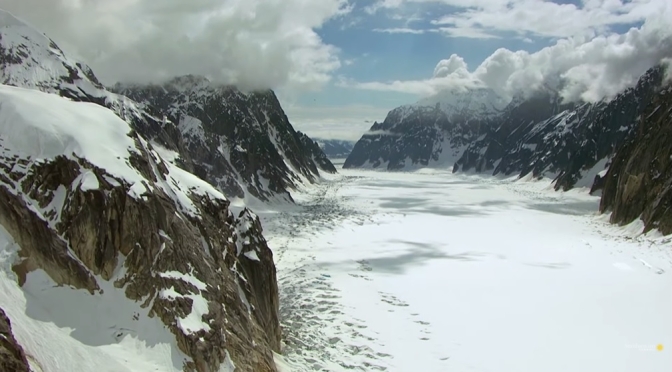
Alaska Views: Ruth Glacier Great Gorge, Denali Park
Ruth Glacier’s Great Gorge is quite simply one of the continent’s most awe-inspiring sights. At 2000 feet and over 10 miles long, it’s one of the deepest canyons in the world.
Ruth Glacier is a glacier in Denali National Park and Preserve in the U.S. state of Alaska. Its upper reaches are approximately 3 vertical miles below the summit of Denali. The glacier’s “Great Gorge” is one mile wide, and drops almost 2,000 feet over 10 miles, with crevasses along the surface.

 Boomers Daily