Tag Archives: Science

Science: Geology’s Billion Year Gap, End Of Leaded Gas & Lush Ancient Arabia

A new theory to explain missing geological time, the end of leaded petrol, and the ancient humans of Arabia.

In this episode:

00:29 Unpicking the Great Unconformity

For more than 150 years, geologists have been aware of ‘missing’ layers of rock from the Earth’s geological record. Up to one billion years appear to have been erased in what’s known as the Great Unconformity. Many theories to explain this have been proposed, and now a new one suggests that the Great Unconformity may have in fact been a series of smaller events.

BBC Future: The strange race to track down a missing billion years

05:23 The era of leaded petrol is over

In July, Algeria became the final country to ban the sale of leaded petrol, meaning that the fuel is unavailable to buy legally anywhere on Earth. However despite this milestone, the toxic effects of lead petrol pollution will linger for many years to come.

Chemistry World: Leaded petrol is finally phased out worldwide

08:26 The ancient humans who lived in a wetter Arabia

While much of modern day Arabia is covered by deserts, new research suggests that hundreds of thousands of years ago conditions were much wetter for periods on the peninsula. These lusher periods may have made the area a key migratory crossroads for ancient humans.

Research Article: Groucutt et al.

News and Views: Traces of a series of human dispersals through Arabia

Analysis: Covid-19 Vaccine Efficacy Explained (Video)

Recent studies have shown that the effectiveness of Covid-19 vaccines is decreasing, though experts say the shots still work well. WSJ explains what the numbers mean and why they don’t tell the full story. Photo illustration: Jacob Reynolds/WSJ

Reviews: Commercial Fusion Energy At MIT

On Sept. 5, 2021, for the first time, a large high-temperature superconducting electromagnet was ramped up to a field strength of 20 tesla, the most powerful magnetic field of its kind ever created on Earth. That successful demonstration helps resolve the greatest uncertainty in the quest to build the world’s first fusion power plant that can produce more power than it consumes, according to the project’s leaders at MIT and startup company Commonwealth Fusion Systems.

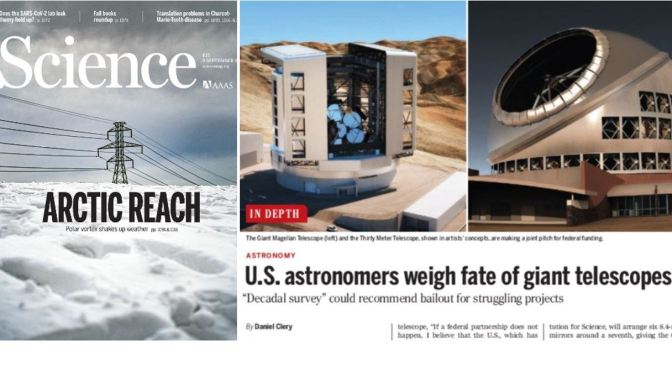
Front Covers: Science Magazine – September 3

Science: Dead Trees Giving Off CO2, Massive Stars, Melting Ice & Biodiversity

How insects help release carbon stored in forests, and the upcoming biodiversity summit COP 15.

In this episode:

00:44 Fungi, insects, dead trees and the carbon cycle

Across the world forests play a huge role in the carbon cycle, removing huge amounts of carbon dioxide from the atmosphere. But when those trees die, some of that carbon goes back into the air. A new project studies how fast dead wood breaks down in different conditions, and the important role played by insects.

Research Article: Seibold et al.

09:37 Research Highlights

Massive stars make bigger planets, and melting ice moves continents.

Research Highlight: Why gassy planets are bigger around more-massive stars

Research Highlight: So much ice is melting that Earth’s crust is moving

12:04 The UN’s Convention on Biological Diversity

After several delays, the fifteenth Conference of the Parties (COP 15) to the United Nations Convention on Biological Diversity, is now slated to take place next year. Even communicating the issues surrounding biodiversity loss has been a challenge, and reaching the targets due to be set at the upcoming meeting will be an even bigger one.

Editorial: The scientific panel on biodiversity needs a bigger role

19:32 Briefing Chat

We discuss some highlights from the Nature Briefing. This time, cannibal cane toads and a pterosaur fossil rescued from smugglers.

Nature News: Australia’s cane toads evolved as cannibals with frightening speed

Research Highlight: A plundered pterosaur reveals the extinct flyer’s extreme headgear

National Geographic: Stunning fossil seized in police raid reveals prehistoric flying reptile’s secrets

Diabetes: Understanding Insulin And Islets (Video)

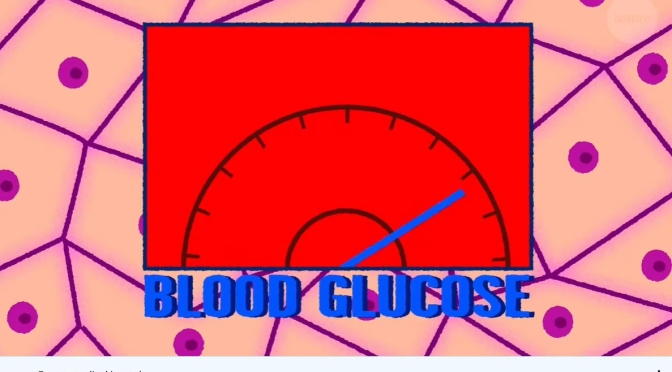
Type 1 and type 2 diabetes are characterized by increased blood glucose levels. They affect almost half a billion people around the globe, and this number is projected to rise as we reach the middle of the century. In most individuals, blood glucose levels are kept within a healthy range by a hormone called insulin, which is secreted by the pancreas, but this fine-tuned regulation can go wrong in type 1 and type 2 diabetes. In this animation, we lay out our current understanding of these diseases and explore active areas of research that aim to restore the body’s blood glucose control.

Read more in https://www.nature.com/articles/d4285…