Tag Archives: Science Magazine

Science: Wildfire Smoke Threatens Ozone Layer, Tick Bite mRNA Vaccines

Could wildfires be depleting the ozone all over again? Staff Writer Paul Voosen talks with host Sarah Crespi about the evidence from the Polarstern research ship for wildfire smoke lofting itself high into the stratosphere, and how it can affect the ozone layer once it gets there.

Next, we talk ticks—the ones that bite, take blood, and can leave you with a nasty infection. Andaleeb Sajid, a staff scientist at the National Cancer Institute, joins Sarah to talk about her Science Translational Medicine paper describing an mRNA vaccine intended to reduce the length of tick bites to before the pests can transmit diseases to a host.

Science: The James Webb Space Telescope Launches, Genes For Long Life Spans

The James Webb Space Telescope was first conceived in the late 1980s. Now, more than 30 years later, it’s finally set to launch in December. 

After such a long a road, anticipation over what the telescope will contribute to astronomy is intense. Daniel Clery, a staff writer for Science, joins host Sarah Crespi to talk about what took so long and what we can expect after launch.

You might have heard that Greenland sharks may live up to 400 years. But did you know that some Pacific rockfish can live to be more than 100? That’s true, even though other rockfish species only live about 10 years. Why such a range in life span? Greg Owens, assistant professor of biology at the University of Victoria, discusses his work looking for genes linked with longer life spans.

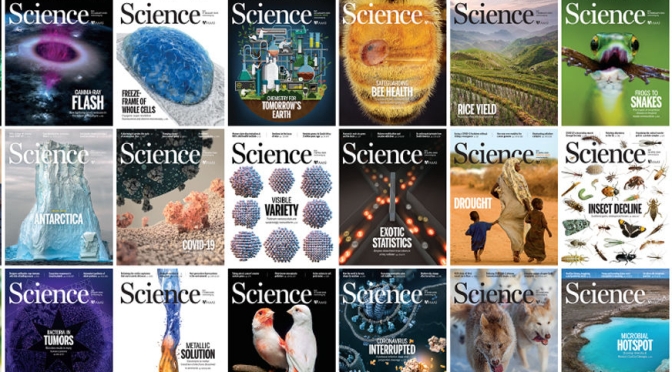
Front Covers: Science Magazine – November 12

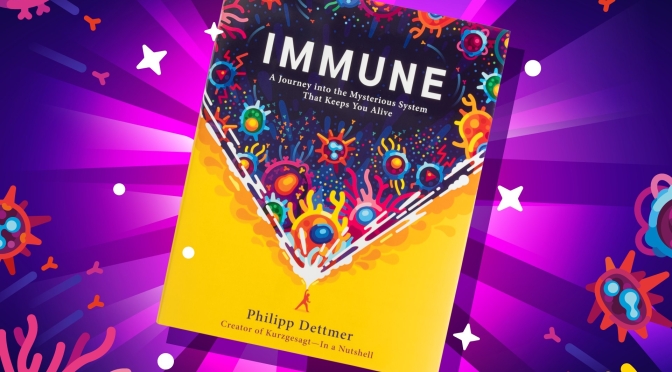
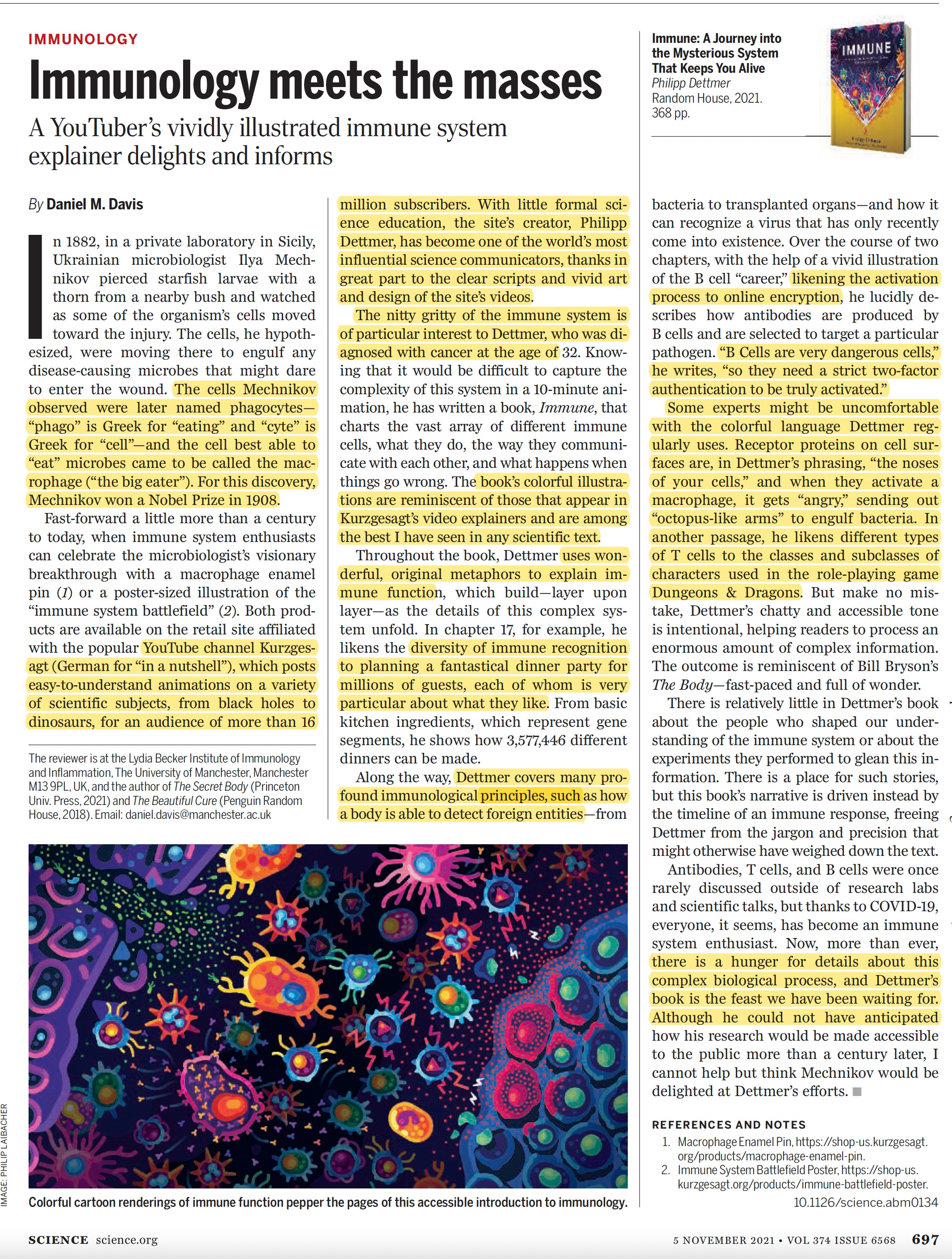
Book Reviews: “IMMUNE” Is An Illustrated Look At Our Body’s Immune System

Image

Cover Preview: Science Magazine – November 5

Science Magazine: “Why We Sleep” – October 29

Science: Ripple Effects Of Mass Incarceration, Dog-Sniff Evidence Reliability

This week we are covering the Science special issue on mass incarceration. Can a dog find a body? Sometimes. Can a dog indicate a body was in a spot a few months ago, even though it’s not there now? 

There’s not much scientific evidence to back up such claims. But in the United States, people are being sent to prison based on this type of evidence. Host Sarah Crespi talks with Peter Andrey Smith, a reporter and researcher based in Maine, about the science—or lack thereof—behind dog-sniff evidence.

With 2 million people in jail or prison in the United States, it has become incredibly common to have a close relative behind bars. Sarah talks with Hedwig Lee, a sociologist at Washington University in St. Louis, about the consequences of mass incarceration for families of the incarcerated, from economic to social.

Science: Satellite Swarms Block Astronomers Gaze

For millennia, bright lights sprinkled across our celestial sphere have guided great explorers, passed on storied traditions, and lent insight into the nature of our universe. Now, they have competition: thousands of satellites circling the globe in low orbit. Read the story: https://www.science.org/content/artic…