Tag Archives: Restorations

Home Restorations: Tour Of Iririki House In Sydney

The Local Project (August 4, 2023) – Tasked with tackling the restoration of a house, Madeline Blanchfield Architects sought to turn Iririki House – which was originally built in 1906 – into a spacious home for a family of seven. With a focus on retaining and restoring the house to its former glory, the team created big open living spaces designed for the family to connect.

Video timeline: 00:00 – History Of The Original Home 00:29 – Introduction To The Project 01:12 – The Restoration Process 01:50 – A Walk Through Of The House 02:44 – Drawing On Red Bricks 03:05 – Features Of The Kitchen and Dining Room 04:00 – Distinctions Between Flooring 04:23 – Final Reflections On The House

With close proximity to the eastern beaches and Sydney city, Iririki House is a restoration of a house that begins from the newly restored front fence and garden to the additions at the rear. Moved to the side of the home, the front door placement allows the family and guests to walk through the restored garden and pass the existing heritage house before entering into the new additions.

Focused on establishing a delineation between old and new, Madeline Blanchfield Architects integrates subtle architecture and design techniques as well as modern furniture. Through the process of restoration, Madeline Blanchfield Architects made sure that all design choices stay respectful to the home’s original character but also reflect a contemporary occupation.

Furthermore, with terrazzo used for flooring on the main level, the house offers an ease of movement from inside to out, and the timber employed throughout differs to that of the original flooring to highlight the difference between spaces.
Design: A Tour Of Moore House In Los Angeles

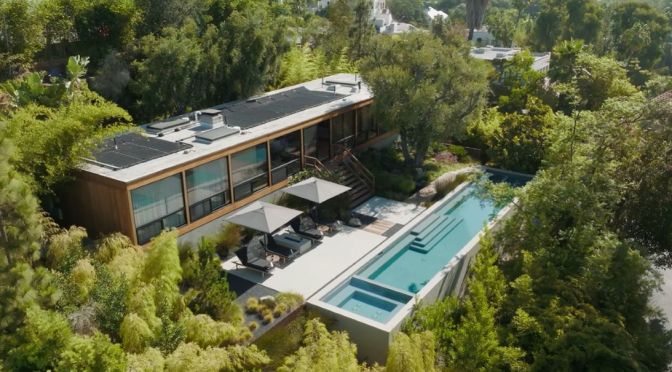
The Local Project (June 16, 2023) – Though Moore House was originally designed by Craig Ellwood in 1965, the newly restored house by Woods + Dangaran is a respectful design that enhances its rich history for both the owners and the wider Los Angeles architectural community.

Video timeline: 00:00 – Introduction to the Magical Restored House 00:30 – The Clients Simple Goals 00:43 – The History of Mid-Century Tropical Modernism 01:05 – The Restoration Process 01:46 – Designing Inline with Craig Ellwood’s Style 02:34 – Playing on High Contrast and Linking Spaces 03:32 – Background Architecture 03:53 – The Advantage of Hillside Properties 04:22 – Interesting Features of the Home 04:44 – Respecting the History 05:00 – Preservation and Timeless Design

However, once owned by a local band that left it in disrepair, the home needed a complete renovation of both exterior and interior design. Tasked with this challenge, Woods + Dangaran has infused contemporary design methods that restore the midcentury home’s character in a modern light. As the architect and interior designer, Woods + Dangaran were able to save the home through a thoughtful and delicate renovation.

From the street, the finished design of the restored house appears above the carport and unfolds in a rectangular form, where the majority of the original structural and interior elements have been kept. Throughout the restored house, two of the main kept character elements are seen in the two bookends of the original home. The first bookend holds the new fireplace, which is maintained in both its original proportion and location and modernised with a patinaed brass that wraps around it.

Inside British Art: ‘The Red Boy’ By Thomas Lawrence

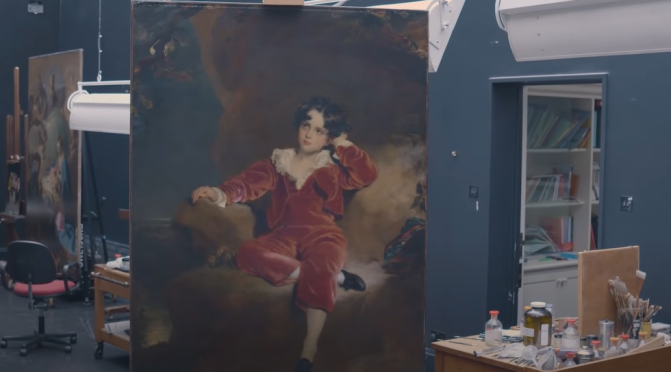
Restorer Paul Ackroyd gets ‘The Red Boy’ ready to be displayed in the Gallery.

The Red Boy, or Master Lambton, are popular names for a portrait made in 1825 by Sir Thomas Lawrence. It is officially entitled with the name of its subject, Charles William Lambton, who was the elder son of John Lambton.

Paul Ackroyd, restorer, is cleaning ‘The Red Boy’, an iconic painting by Sir Thomas Lawrence. It was so popular it was the first-ever painting to feature on a British postage stamp.

Views: Colosseum In Rome Opens Up Substructure

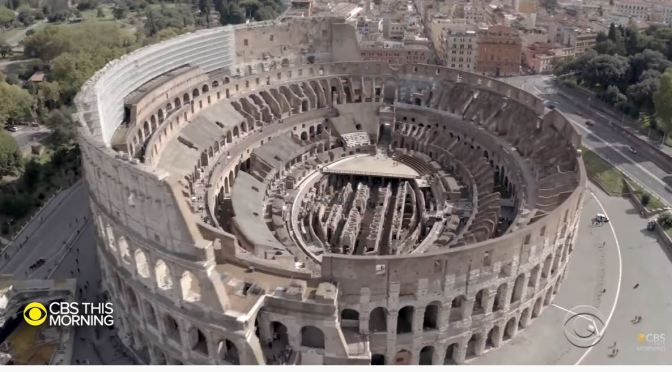
Visitors will be able to walk in the footsteps of Roman Gladiators in the same areas where they prepared to fight to the death. The Colosseum is opening up its deepest depths to the public. Chris Livesay reports.

The Colosseum is an oval amphitheatre in the centre of the city of Rome, Italy, just east of the Roman Forum. It is the largest ancient amphitheatre ever built, and is still the largest standing amphitheatre in the world today, despite its age. 

Travel & Architecture: 14th Century Florence Baptistery Restoration

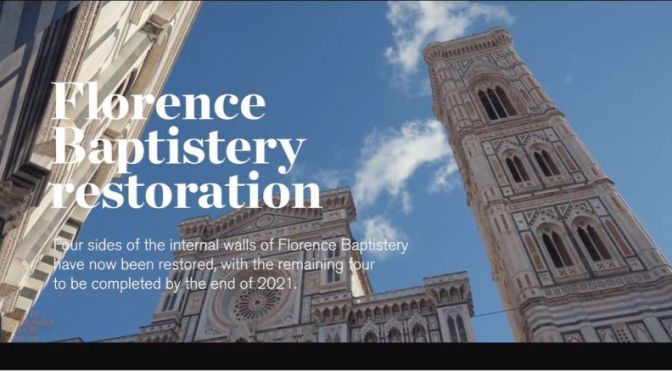
Four sides of the internal walls of Florence Baptistery have been restored, with the remaining four to go by the end of 2021. “Here come all those who wish to see admirable things” is the English translation of the words set in the marble inlay of the floor of Florence’s baptistery, as visitors enter through the Gates of Paradise.

These worthy items include the fourteenth-century mosaics depicting prophets, bishops and cherubs, which are enjoying renewed vigour after the restoration of four of the eight sides of Florence’s oldest monument. The internal walls of the baptistery began to be restored towards the end of 2017 following a restoration campaign on the external walls and roof.

Many discoveries emerged from the diagnostics, the first of their kind to be conducted on the monument, including the original technique used in the parietal mosaics; the presence of a pigmented wax on the green Prato marble, used to cover the white limestone that had formed due to water coming in through the roof, now removed to reveal the stone’s natural hue; and traces of gold leaf on one of the capitals of the matroneum, which could form evidence that the capitals were all originally covered in gold leaf.

In the first couple of decades of the fourteenth century, having completed the colossal feat of the mosaics inside the baptistery’s dome, the decision was made to extend the technique to the parietal sides, something that wasn’t part of the original plans.

It was a solution that allowed the mosaics to be superimposed over the marble covering and solve the issue of the monument’s static nature. Made-to-measure hollow terracotta tiles were used, cut and fixed to the marble on the baptistery’s walls with central iron linchpins driven back and welded in a straight line.

“A hurried sinopia was then conducted on the tiles and later the mosaic with a direct method and over days, which can still be identified and interpreted today,” explained Beatrice Agostini, planner and head of the restoration campaign of Opera di Santa Maria del Fiore. “Even the mixture used to apply the mosaic tiles is absolutely unique. Ordinary mortar wasn’t used. Instead it was more of a glue, and it’s the decline of this compound that has caused the most problems in this restoration.”