Tag Archives: Racism

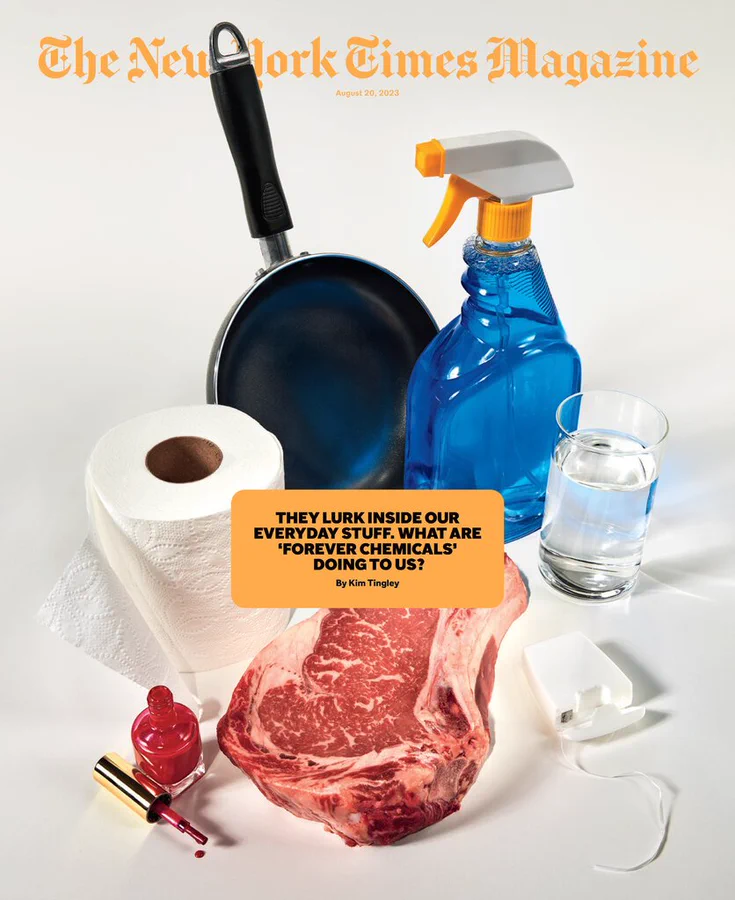
Views: The New York Times Magazine – August 20, 2023

Image

THE NEW YORK TIMES MAGAZINE (August 20, 2023) – In this week’s cover story, what are “forever chemicals” and what are they doing to us? Plus, inside the racism scandal that rocked an affluent town’s high school and checking in with the dancehall star Sean Paul.

‘Forever Chemicals’ Are Everywhere. What Are They Doing to Us?

PFAS lurk in so much of what we eat, drink and use. Scientists are only beginning to understand how they’re impacting our health — and what to do about them.

By Kim Tingley

The Faroe Islands, an incongruous speckling of green in the North Atlantic, are about as far away as you can hope to get on Earth from a toxic-waste dump, time zones distant from the nearest population centers (Norway to the east, Iceland to the west). Pál Weihe was born in the Faroes and has lived there for most of his life. He is a public-health authority for the nation, population around 53,000; chairman of the Faroese Medical Association and chief physician of the Department of Occupational Medicine and Public Health in the Faroese hospital system. He is also vice chairman of the Faroe Islands Art Society; a widower; a grandfather. A crumpled funeral program and half-empty juice boxes share space in the back seat of his Land Cruiser.

The ‘World’s Happiest Man’ Shares His Three Rules for Life

By David Marchese 

Matthieu Ricard is an ordained Buddhist monk and an internationally best-selling author of books about altruism, animal rights, happiness and wisdom. His humanitarian efforts led to his homeland’s awarding him the French National Order of Merit. (Ricard’s primary residence is a Nepalese monastery.) He was the Dalai Lama’s French interpreter and holds a Ph.D in cellular genetics. In the early 2000s, researchers at the University of Wisconsin found that Ricard’s brain produced gamma waves — which have been linked to learning, attention and memory — at such pronounced levels that the media named him “the world’s happiest man.”
Research Preview: Nature Magazine – Oct 20, 2022

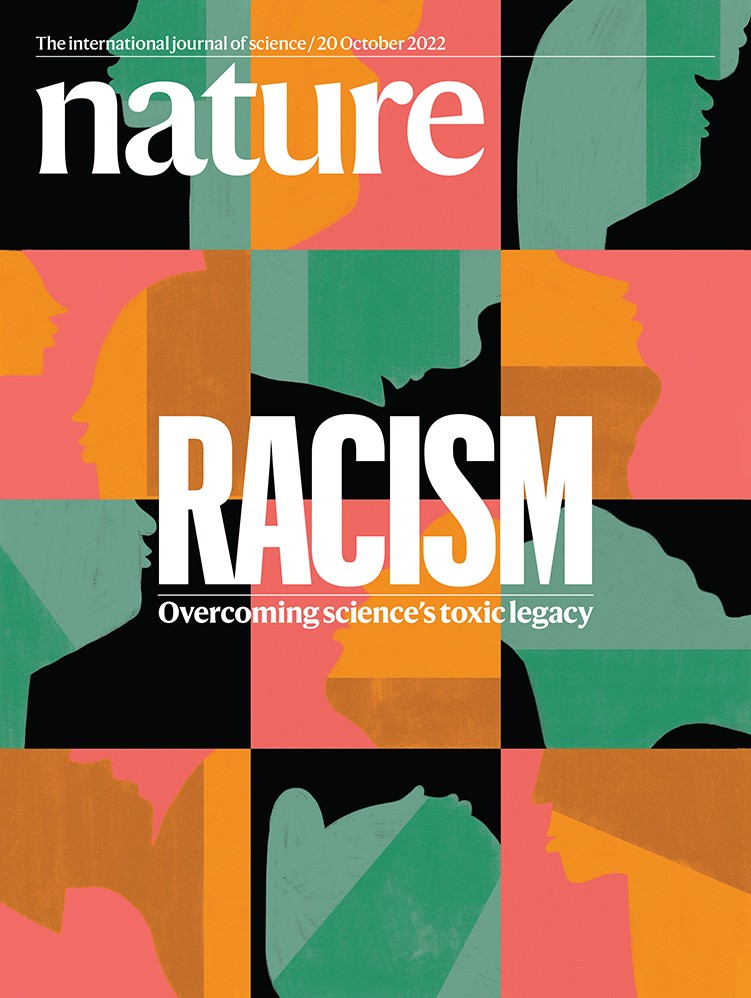
The cover of Nature's racism in science 20th October 2022 issue
Illustration by Diana Ejaita

Nature special issue – 20 October 2022:

RACISM – Overcoming science’s toxic legacy

Science is “a shared experience, subject both to the best of what creativity and imagination have to offer and to humankind’s worst excesses”. So wrote the guest editors of this special issue of Nature, Melissa Nobles, Chad Womack, Ambroise Wonkam and Elizabeth Wathuti, in a June 2022 editorial announcing their involvement.

Science: Sleeping Without A Brain, Insect Invasions, Racist Search Algorithms

Simple animals like jellyfish and hydra, even roundworms, sleep. Without brains. Why do they sleep? How can we tell a jellyfish is sleeping? 

Staff Writer Liz Pennisi joins host Sarah Crespi to talk about what can be learned about sleep from these simple sleepers. The feature is part of a special issue on sleep this week in Science.

Next is a look at centuries of alien invasions—or rather, invasive insects moving from place to place as humans trade across continents. Sarah talks with Matthew MacLachlan, a research economist at the U.S. Department of Agriculture’s Economic Research Service, about his Science Advances paper on why insect invasions don’t always increase when trade does.

Finally, a book on racism and the search algorithms. Books host Angela Saini for our series of interviews on race and science talks with Safiya Umoja Noble, a professor in the African American Studies and Information Studies departments at the University of California, Los Angeles, about her book: Algorithms of Oppression: How Search Engines Reinforce Racism.

Science: Metabolic Health Markers & Obesity, Type 1 Diabetes, “Bone Rooms”

First this week, Staff Writer Jennifer Couzin-Frankel joins host Sarah Crespi to discuss the paradox of metabolically healthy obesity. They chat about the latest research into the relationships between markers of metabolic health—such as glucose or cholesterol levels in the blood—and obesity. They aren’t as tied as you might think.

Next, Colin Dayan, professor of clinical diabetes and metabolism at Cardiff University and senior clinical researcher at the Wellcome Centre for Human Genetics at the University of Oxford, joins Sarah to discuss his contribution to a special issue on type 1 diabetes. In his review, Colin and colleagues lay out research into how type 1 diabetes can be detected early, delayed, and maybe even one day prevented. Finally, in the first of a six-patrt series of book interviews on race and science, guest host Angela Saini talks with author and professor of history at the University of Massachusetts, Amherst, Samuel Redman, about his book Bone Rooms: From Scientific Racism to Human Prehistory in Museums. The two discuss the legacy of human bone collecting and racism in museums today. 

Global News: American Racism, Iran And Low-Earth Orbit Battles

The Economist Editor's PicksA selection of three essential articles read aloud from the latest issue of The Economist. This week, how not to tackle American racism, (10:28) a better way to contain Iran’s nuclear programme, (14:38) and the battle for low-earth orbit.