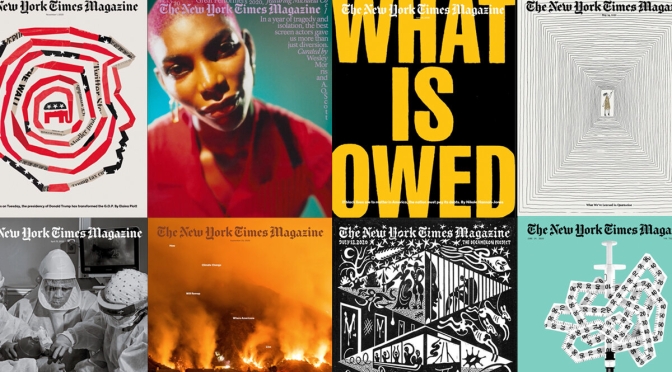
THE NEW YORK TIMES MAGAZINE:The 1.4.26 Issue features the untold story of how Jeffrey Epstein got rich; the Rhinelander v. Rhinelander trial, one of the most scandalous trials of the Jazz Age; Supreme Court lawyer Thomas Goldstein’s double life as a high-stakes gambler; and more.
For 40 years, Christian Zionism was a powerful force in American politics. A new generation on the right is taking cues from elsewhere. By Jonathan Mahler
The Trump administration had been working for months to oust Nicolás Maduro, who has led Venezuela since 2013.
In an interview with The Times, President Trump said “a lot of good planning and lot of great, great troops” were responsible for the mission’s success.
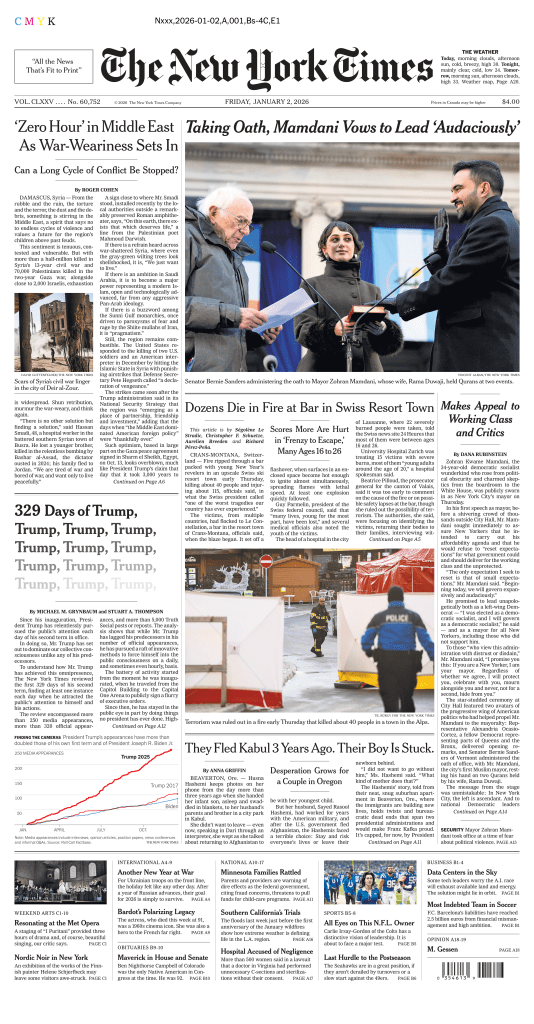
Mayor Zohran Mamdani said New York City would intervene in the Pinnacle Group’s bankruptcy case. Tenants have long complained about the company’s properties.
A Burning Ceiling, a Pulse of Heat and ‘I Felt Like I Was on Fire’
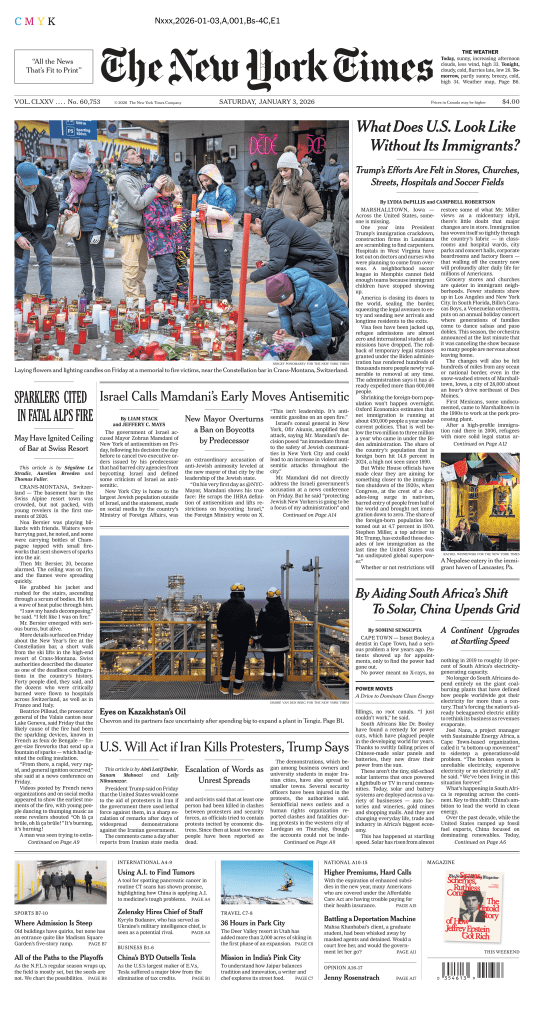
Right before the blaze that killed 40 people at a Swiss bar, fireworks attached to Champagne bottles sent up sparks that appeared to have ignited insulation.
Swiss Authorities Say Sparklers Probably Caused New Year’s Fire
An official said the sparklers were attached to bottles of champagne held too close to the ceiling. Forty people died and more than 100 were injured. Many of the victims were teenagers.
President Trump’s remarks that he was ready to come to the protesters’ “rescue” were a sharp escalation as demonstrations over economic hardship turned deadly.
With Obamacare’s Higher Premiums Come Difficult Decisions
As enhanced subsidies expire, many Americans covered under the Affordable Care Act are having trouble paying for insurance.
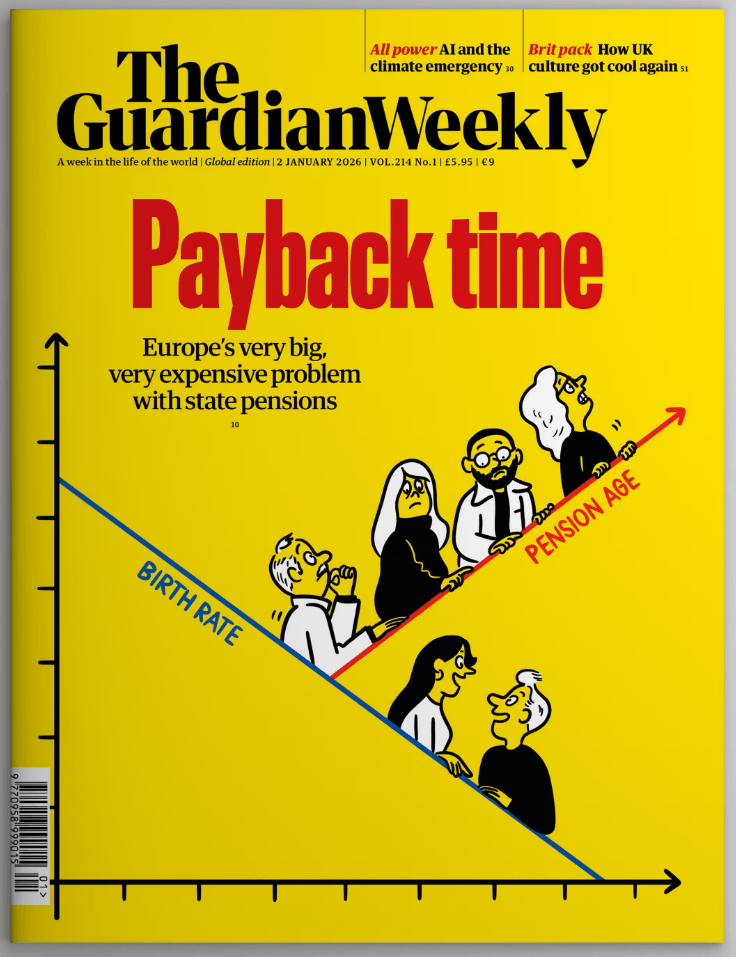
As populations age, the number of younger people entering the workforce is shrinking – and that’s a big problem for “pay as you go” state pension schemes where employees fund the pensions of an expanding cohort of retired people.
Confusingly, a new poll of six European nations reveals how most voters can see this problem and realise their state pensions will soon become unaffordable. But at the same time, they also believe state pensions are too low, and are unwilling to support reforms to them.
Where do governments under increasing pressure from populists go from here? For our first big story of 2026, the Guardian’s Europe correspondent, Jon Henley, reports on a ticking timebomb for the continent’s social contract.
Spotlight | The prospects for peace in Ukraine in 2026 As Russia inches forward on the battlefield and – despite Donald Trump’s optimism – peace talks remain deadlocked, Kyiv’s best hopes of progress may be on the economic and political fronts, writes Dan Sabbagh
Science | How great a threat is AI to the climate? The datacentres behind artificial intelligence are polluting the natural world – and some experts fear the exponential rise in demand could derail the shift to a clean economy. Ajit Niranjan reports
Feature | Returning to the West Bank after two decades The former Guardian correspondent Ewen MacAskill used to report frequently from the Palestinian Territory. Twenty years after his last visit, he went back – and was shocked by how much worse it is today
Opinion | Need cheering up after a terrible year? I have just the story for you A single act of kindness reminded columnist Martin Kettle that, despite so much evidence to the contrary, the better angels of our nature are not necessarily doomed
Culture | The Brit boom Whether it’s Charli xcx or chicken shops, UK culture is having a moment. Can it be future-proofed from the diluting forces of globalisation? Rachel Aroesti investigates
President Trump, his family and some of their closest associates have engaged in a sprawling campaign of deals, stretching across industries and the globe.
As President Trump sought a peace deal and President Vladimir Putin sought victory, factions in the White House and the Pentagon bled the Ukrainian war effort.
The number represents a more precise, potentially much larger, figure than earlier estimates. The department is seeking to enlist about 400 lawyers to help.
A.I. Held Up Wall Street in 2025. Will That Continue?
The boom in artificial intelligence was the biggest driver of gains in the stock market. That could pose a risk in 2026.
Thousands of documents and interviews with Assad-era officials reveal how the regime worked to conceal evidence of its atrocities during the civil war.
Yonaguni, a tiny Japanese island near Taiwan, is getting soldiers, radar and missiles. As Beijing’s dispute with Tokyo escalates, some residents are worried.
Prime Minister Benjamin Netanyahu of Israel has choices to make on issues including Gaza, conscription and a judicial overhaul, with elections looming.
Though discussions produced little tangible progress, President Volodymyr Zelensky of Ukraine at least avoided the type of setbacks that have blighted earlier meetings.




 Boomers Daily