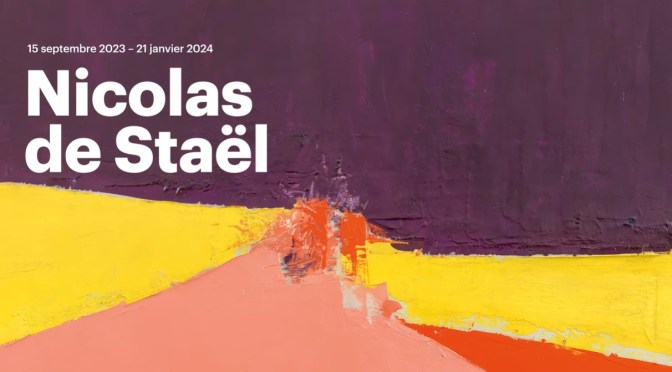
ART VISION TV / C&B Films (January 13, 2024) – The Musée d’Art Moderne in Paris is devoting a major retrospective to Nicolas de Staël (1914-1955), a French painter of Russian origin known for his use of a thick impasto and his highly abstract landscape painting. He was a key figure on the post-war French art scene.
Twenty years after the one organised by the Centre Pompidou in 2003, this exhibition offers a fresh look at the artist’s work, drawing on more recent thematic exhibitions that have highlighted certain little-known aspects of his career (Antibes in 2014, Le Havre in 2014, Aix-en-Provence in 2018).
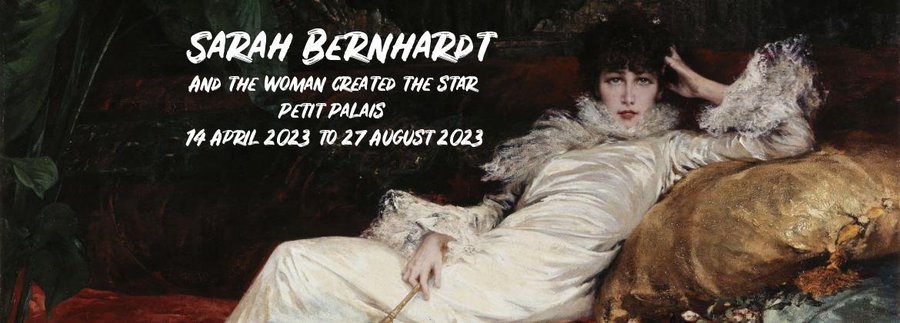
Sarah Bernhardt, (1844-1923), was an emblematic figure who spanned the 19th and 20th centuries. The “Divine Sarah”, who was an artist as well as an actress, takes center stage at the Petit Palais in an exceptional exhibition to mark the centenary of her death.
The museum holds important collections of works linked to the actress, including the spectacular portrait of her that was painted in 1876 by her friend Georges Clairin and donated by her son Maurice.
With over four hundred works, the exhibition traces the life and theatrical career of this “sacred monster”, as Jean Cocteau dubbed her. A legendary performer of the greatest roles from Racine, Shakespeare, Edmond Rostand and Alexandre Dumas fils, among others, Sarah Bernhardt went from triumph to triumph in theaters all over the world.
The exhibition evokes her greatest roles through the costumes she wore on stage, photographs, paintings, posters and other memorabilia. Her “golden voice” and her tall, slender figure – unusual in those days – held the public in thrall, as well as the artistic and literary world, who simply venerated her. She was the friend of painters such as Gustave Doré, Georges Clairin, Louise Abbéma, and Alphonse Mucha, but also of writers like Victor Hugo, Victorien Sardou and Sacha Guitry, as well as musicians and composers like Reynaldo Hahn. She was an artist herself, and an entire section of the exhibition focuses on this lesser-known aspect of her life.
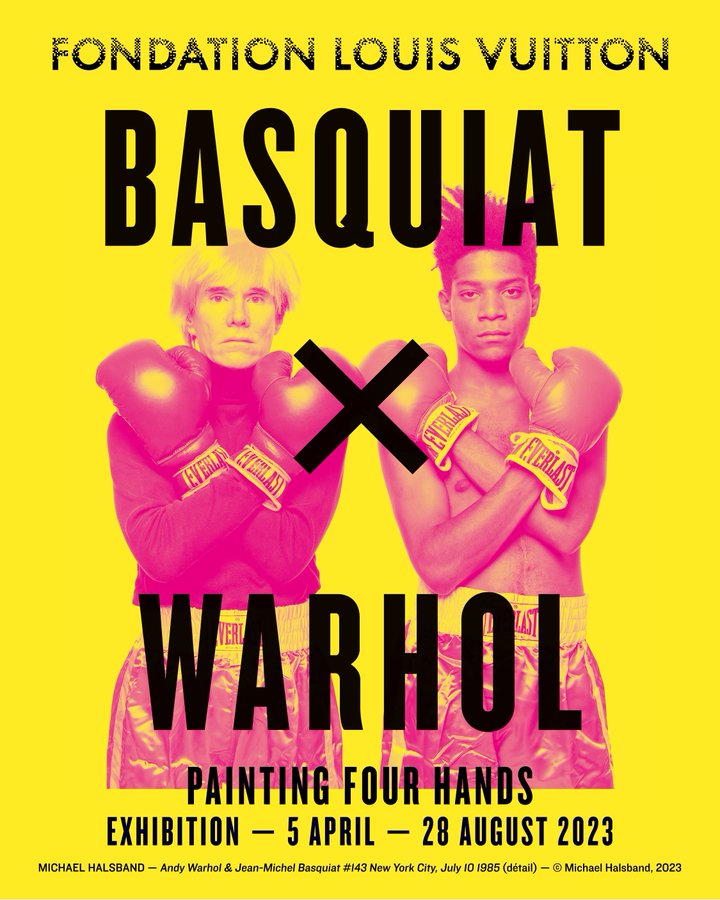
In 2018, the Fondation featured the “Jean-Michel Basquiat” exhibition. It continues its exploration of the work of the artist, revealing, this time, his collaboration with Andy Warhol.
Jean-Michel Basquiat et Andy Warhol, Untitled (collaboration no.23) / Quality, 1984-1985
Between 1984 and 1985, Jean-Michel Basquiat (1960-1988) and Andy Warhol (1928-1987) created around 160 paintings together in tandem, “à quatre mains”, including some of the largest works produced during their respective careers. Keith Haring (1958-1990), who witnessed their friendship and collaboration production, would go on to speak of a “conversation occurring through painting, instead of words,” and of two minds merging to create a “third distinctive and unique mind.”
“Basquiat × Warhol. Painting four hands” is the most important exhibition ever dedicated to this extraordinary body of work and brings together more than three hundred works and documents including eighty canvases jointly signed by the two artists. Also featured are individual works by each as well as a set of works by other major artists (Michael Halsband, Keith Haring, Jenny Holzer, Kenny Scharf……) in order to evoke the energy of the New York downtown art scene of the 1980s.
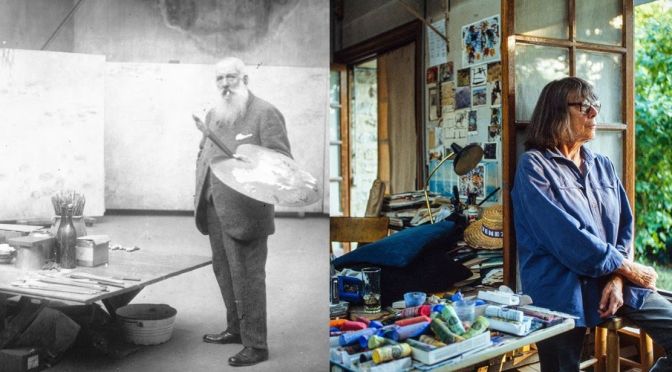
The exhibitions “Monet – Mitchell” create an unprecendented “dialogue” between the works of two exceptional artists, Claude Monet (1840-1926) and Joan Mitchell (1925-1992).
“The dialogue Claude Monet – Joan Mitchell” will be introduce by the “Joan Mitchell Retrospective”, enabling the public in France and Europe to discover her work.
The “Monet – Mitchell” exhibitions present each artist’s unique response to a shared landscape, which they illustrate in a particularly immersive and sensual manner. In his last paintings, the Water Lilies, Monet aimed to recreate in his studio the motifs he observed at length on the surface of his water lily pond in Giverny. Joan Mitchell, on the other hand, would explore a memory or a sense of the emotions she felt while in a particular place that was dear to her, perceptions that remained vivid beyond space and time. She would create these abstract compositions at La Tour, her studio in Vétheuil, a small French village.
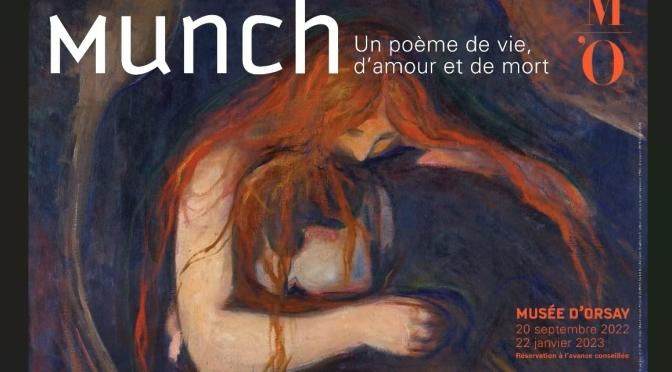
In collaboration with the Munch Museum in Oslo, the Musée d’Orsay is devoting an exhibition to the famous Norwegian painter Edvard Munch (1863-1944), whose work, in all its breadth – sixty years of creation – and complexity, remains partly unknown.
Munch’s work occupies a pivotal place in artistic modernity. It has its roots in the 19th century and would find its place firmly in the next one. Moreover, his entire work is permeated by a singular vision of the world, giving it a powerful symbolist dimension that is not limited to the few masterpieces he created in the 1890s. Moving beyond fin-de-siècle symbolism, Munch transcended this movement beyond its peak to make it the backbone of his work, giving it its great coherence.
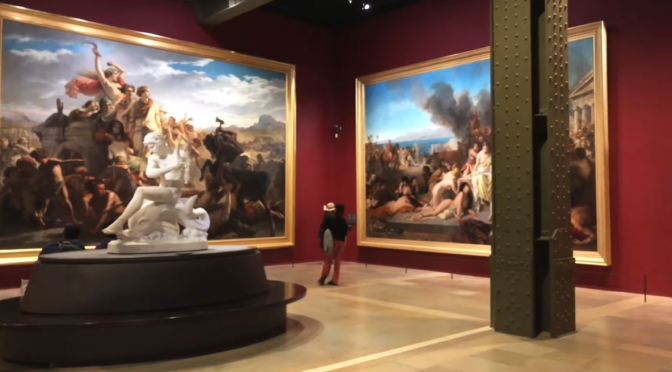
Musée d’Orsay, (French: “Orsay Museum”) national museum of fine and applied arts in Paris that features work mainly from France between 1848 and 1914. Its collection includes painting, sculpture, photography, and decorative arts and boasts such iconic works as Gustave Courbet’s The Artist’s Studio (1854–55), Édouard Manet’s Le Déjeuner sur l’herbe (1863; Luncheon on the Grass), and Pierre-Auguste Renoir’s Dance at Le Moulin de la Galette (1876; Bal du moulin de la Galette).
The Musée d’Orsay is housed in the former Gare d’Orsay, a railway station and hotel that was designed by Victor Laloux and located on the Left Bank of the Seine River opposite the Tuileries Gardens. At the time of its completion in 1900, the building featured an ornate Beaux Arts façade, while its interior boasted metal construction, passenger elevators, and electric rails.
Because of changes in railway technology, however, the station soon became outdated and was largely vacant by the 1970s. Talks to transform the builing into an art museum began early in the decade and were finalized in 1977 through the initiative of Pres. Valéry Giscard d’Estaing. With government funds, the building was restored and remodeled in the early 1980s by ACT architecture group.
The interior was designed by Gaetana Aulenti, who created a complex layout of galleries that occupied three main levels surrounding the atrium beneath the building’s iconic iron-and-glass barrel vault. On the ground floor, formerly the building’s train platforms, extensive stone structures broke up the cavernous space and created a central nave for the sculpture collection and gallery spaces for painting and decorative arts.
PHARAOH OF THE TWO LANDS – The African Story of the Kings of Napata
28 April – 25 July 2022
OVERVIEW
In the 8th century BC, a kingdom grew up around the Nubian capital, Napata. In about 730 BC, the Nubian king Piankhy conquered Egypt and founded the 25th Dynasty of Kushite kings, who ruled for more than fifty years over a kingdom stretching from the Nile Delta to the confluence of the White and Blue Niles. The most famous of those kings is the pharaoh Taharqa.
The exhibition highlights the importance of this vast kingdom, located in what is now northern Sudan. It is organised in connection with the Louvre’s archaeological campaign in Sudan, which focused for ten years on the site of Muweis before moving some 30 kilometres northwards to El-Hassa, not far from the pyramids of Meroe.
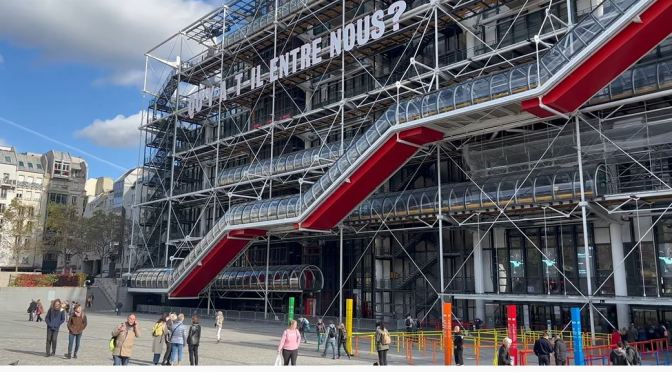
Visiting Paris Museums: The Centre Pompidou & Bourse de Commerce I’m bringing you with me to see two incredible museums in Paris – The Centre Pompidou & Bourse de Commerce. The Centre Pompidou has one of the best contemporary art collections, and the Bourse de Commerce has an exciting group of artists on view right now including (but not limited to) Urs Fischer, Claire Tabouret, Florian Krewer, and more.
The Musée d’Orsay is a museum in Paris, France, on the Left Bank of the Seine. It is housed in the former Gare d’Orsay, a Beaux-Arts railway station built between 1898 and 1900. The museum holds mainly French art dating from 1848 to 1914, including paintings, sculptures, furniture, and photography.
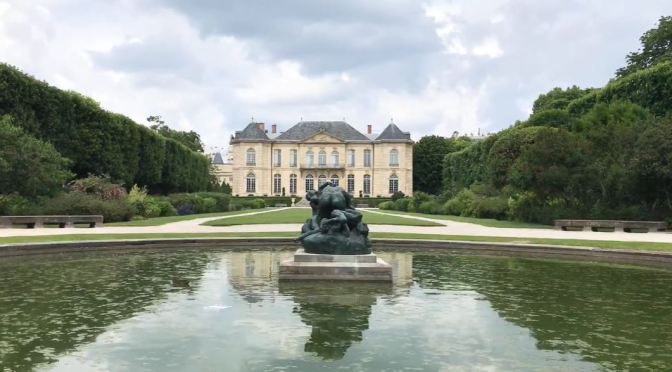
The Musée Rodin in Paris, France, is a museum that was opened in 1919, primarily dedicated to the works of the French sculptor Auguste Rodin. It has two sites: the Hôtel Biron and surrounding grounds in central Paris, as well as just outside Paris at Rodin’s old home, the Villa des Brillants at Meudon, Hauts-de-Seine.
News, Views and Reviews For The Intellectually Curious







 Boomers Daily