
“What we have is a fundamental change in the age structure of society,” says John Rowe, professor of health policy and aging at Columbia University’s Aging Center, referring to the way we’re aging—and also the way we’re creating young people, with birth rates plummeting in most countries. Globally, fertility levels have dropped below the so-called population replacement rate of just over two births per woman.
It is a sea change—and one that raises big questions about how we both individually and collectively navigate what, in a sense, is our new old age. How, for example, should we spend our extra time? Should employment still be confined to a finite number of years, or instead ebb and flow throughout an entire lifetime? And where, in a world of acute housing shortages, will everyone live?
The technical knowledge of Egyptian architects once again exceeds expectations. Was Egypt’s oldest pyramid, the Step Pyramid of Djoser, built using some seriously high-tech kit? And what’s with the huge, unexplained cavity that’s been discovered in the Great Pyramid of Giza?
Living fossils
Meet the creatures for whom time has almost stood still. These animals give us a glimpse into what life was like millions of years ago, and show us just how resilient some groups have been to the calamitous events that have consigned others – such as the dinosaurs – to extinction.
A mysterious UFO
There’s a mysterious object hurtling at one million miles per hour across the Milky Way. It’s moving so fast that it could exit the Milky Way entirely – and scientists are still trying to figure out what it is. Not quite a planet and not quite a star, so what is it?
Proba-3
The Proba-3 mission aims to unravel the mysteries of the Sun’s atmosphere by creating artificial eclipses on demand. But achieving this feat means teaching two spacecraft to perform a complicated dance with an unprecedented level of precision. If the mission is successful, scientists will be able to study the Sun’s corona in unprecedented detail, ushering in a new era for space observation.
Plus
Impostor syndrome: Ever feel like you’re an impostor, who’s bluffing their way through life? You’re not alone. Even the world’s most brilliant minds suffer from the fear of being ‘found out’. But what causes impostor syndrome? And more importantly, how can you overcome it?
Q&A: Boost your general knowledge! This issue: How do I break free of blame culture? How often should I change my toothbrush? How are identical twins created? Did dinosaurs have fleas? Why does my computer screen look so weird when I take a picture of it? What’s the smelliest animal? And more.
Sleep gadgets: A bad night’s sleep can follow you for days, making you tired and grumpy. Our tech experts have rounded up the best gadgets to help perfect your sleep routine and make the most of your shut-eye.
CBS Sunday Morning (February 18, 2024): This isn’t your grandfather’s old age. CBS News chief medical correspondent Dr. Jonathan LaPook talks with experts about the distinctions between normal and abnormal aging as it affects memory issues, a workforce continuing beyond traditional retirement age, and the testing of surgeons who currently work without age limits.
CBS Sunday Morning (June 4, 2023) – When Washington Post editor David Von Drehle moved into a new home, he found his neighbor, Charlie White, was not your typical 102-year-old. Striking up a friendship, Von Drehle discovered the colorful White, who’d already lived a couple of lifetimes, had a lot to teach others about making the most of our time alive.
Correspondent Luke Burbank talks with Von Drehle about a remarkable character, the subject of “The Book of Charlie.”
National Science Foundation (March 13, 2023) – Harnessing the power of AI, researchers calculate our brain’s age leading to earlier detection of Alzheimer’s and other cognitive diseases.
Researchers at USC have developed a new artificial intelligence model that more accurately captures brain age. This study could result in earlier detection of Alzheimer’s and other cognitive diseases and provide important information about how quickly our brains age.
When you’re ready to start reviewing plans, check out the Medicare plan finder tool, which will let you compare Medicare Advantage and Part D prescription drug plans available in your area. You can also get this information by calling Medicare at 800-633-4227.
If you’re looking for a Medigap plan, you can also start at medicare.gov, where you can compare the different types of coverage, as well as find the policies available in your ZIP code.
Another good resource is the State Health Insurance Assistance Program (SHIP), which provides free guidance over the phone. To find your state’s program, go to shiphelp.org or call 877-839-2675.
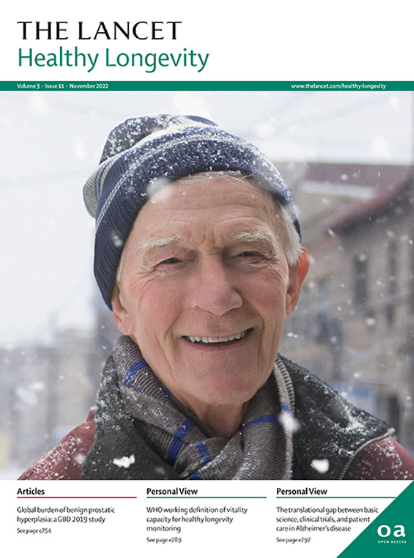
Research & review on #Alzheimers, global burden of benign prostatic hyperplasia, #WHO def of vitality capacity, IPD meta on social connection & #cognition, #oralhealth for older people & more.
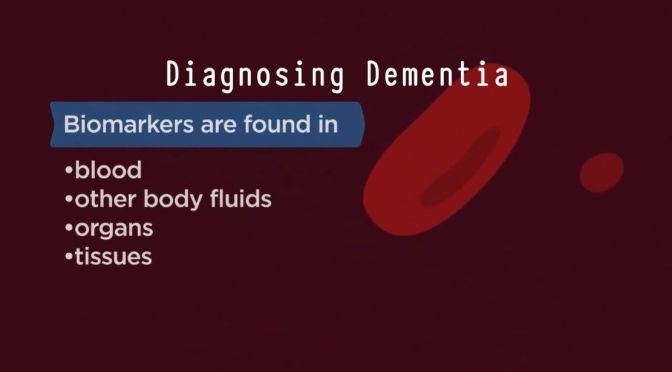
Biomarkers are measurable indicators of what’s happening in your body. They can be found in blood, other body fluids, organs, and tissues, and can be used to track healthy processes, disease progression, or even responses to a medication. Biomarkers are an important part of dementia research.
The quest for a longer life continues – raising the question of whether we can escape death. The team discusses a rare gene variant that may explain why centenarians live so long – and how we might be able to use it to create age-defying drugs.
Spring is rolling around earlier and earlier. The team examines a new study which shows that since the 1980s, the warming climate has brought the season forward by a month – which could have major ecological implications. They also discuss a study which looks at the impact of marine heatwaves on things like coral and fish populations.
Rocks are important 🪨 Geology can play a vital role in the climate fight.
Sustainable geoscience Professor Chris Jackson (@seis_matters) speaks to @rowhoop on the #podcast ahead of his appearance at New Scientist Live in Manchester.