


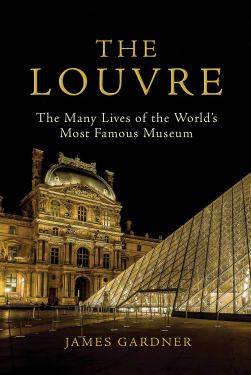
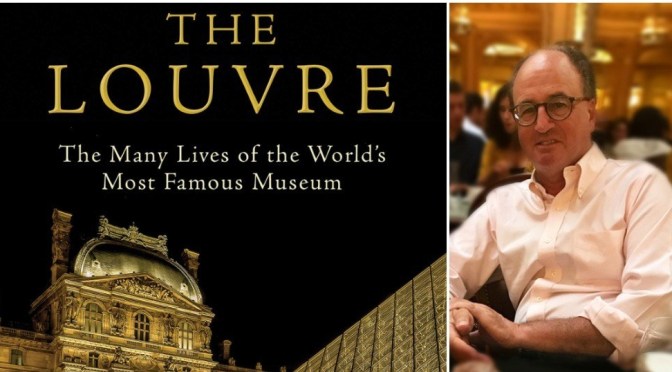
 The fascinating and little-known story of the Louvre, from its inception as a humble fortress to its transformation into the palatial residence of the kings of France and then into the world’s greatest art museum.
Some ten million people from all over the world flock to the Louvre each year to enjoy its incomparable art collection. Yet few of them are aware of the remarkable history of that place and of the buildings themselves―a fascinating story that historian James Gardner elegantly chronicles in the first full-length history of the Louvre in English.
More than 7,000 years ago, men and women camped on a spot called le Louvre for reasons unknown; a clay quarry and a vineyard supported a society there in the first centuries AD. A thousand years later, King Philippe Auguste of France constructed a fortress there in 1191, just outside the walls of a city far smaller than the Paris we know today. Intended to protect the capital against English soldiers stationed in Normandy, the fortress became a royal residence under Charles V two centuries later, and then the monarchy’s principal residence under the great Renaissance king François I in 1546.
It remained so until 1682, when Louis XIV moved his entire court to Versailles. Thereafter the fortunes of the Louvre languished until the tumultuous days of the French Revolution when, during the Reign of Terror in 1793, it first opened its doors to display the nation’s treasures. Ever since―through the Napoleonic era, the Commune, two World Wars, to the present―the Louvre has been a witness to French history, and expanded to become home to a legendary collection, including such masterpieces as the Mona Lisa and Venus de Milo, whose often-complicated and mysterious origins form a spectacular narrative that rivals the building’s grand stature.
James Gardner is an American art critic and literary critic based in New York and Buenos Aires. He is the author of six books, including Buenos Aires: The Biography of a City. His writings have appeared in the New York Times, the Wall Street Journal, the New Republic, and the British Spectator. He was the art critic at the New York Post and wrote architecture criticism for the New York Observer, before serving as the architecture critic at the New York Sun. He is now a contributing editor at The Magazine Antiques.
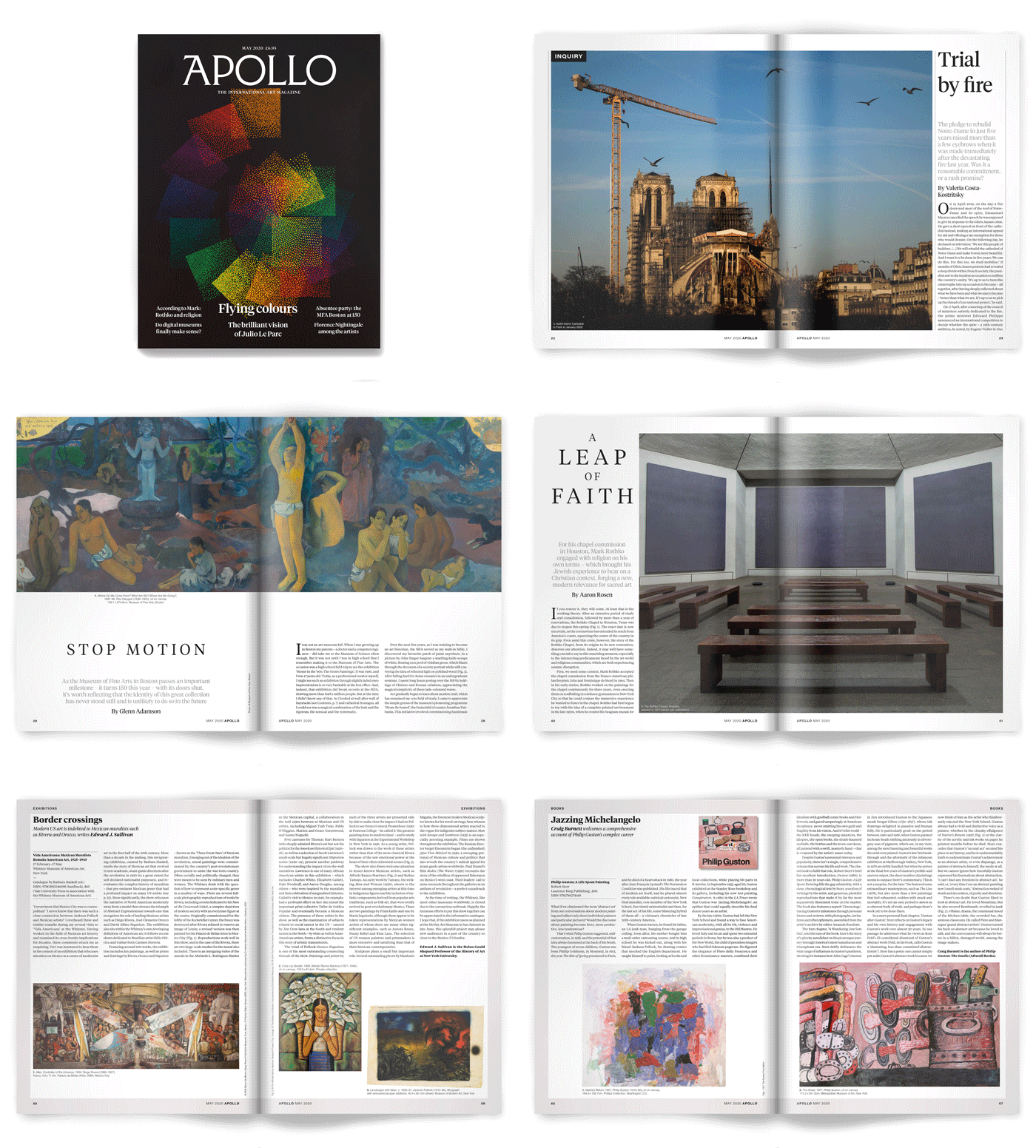
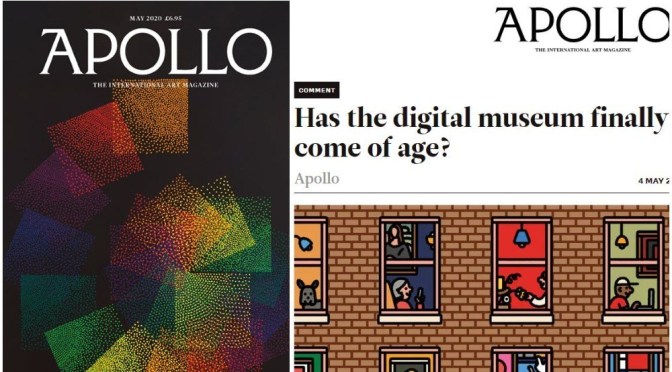
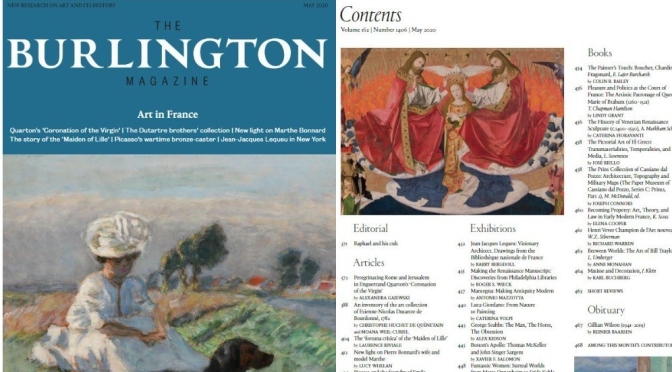
| INSIDE THE ISSUE |
| FEATURES | Julio Le Parc interviewed by Gabrielle Schwarz; Glenn Adamson on the MFA Boston at 150; Aaron Rosen on the Rothko Chapel in Houston; Valeria Costa-Kostritsky on rebuilding Notre-Dame |
| REVIEWS | Morgan Falconer on Donald Judd at MoMA; Edward J. Sullivan on Mexican muralism at the Whitney; Maichol Clemente on Renaissance terracottas in Padua; Susan Owens on ghosts in ancient Rome; Craig Burnett on Philip Guston; Stephen Patience on Blake Gopnik’s biography of Andy Warhol; Thomas Marks on F.T. Marinetti’s Futurist Cookbook |
| MARKET | Gareth Harris on online viewing rooms; and the latest art market columns from Susan Moore and Emma Crichton-Miller |
| PLUS | Thomas Campbell and Adam Koszary debate the role of the digital museum; James Wilkes on trompe-l’oeil and artistic trickery; Kathryn Hughes on the image of Florence Nightingale; Timothy Brittain-Catlin on contemporary architectural follies; Thomas Marks in search of art during lockdown; Robert O’Byrne on an exceptional collection of Chinese art |
There is an unhappy irony in the fact that five hundred years after Raphael died of a fever at the age of only thirty-seven, the global covid-19 pandemic has brought to a premature end so many of the exhibitions that have been staged to mark the anniversary.
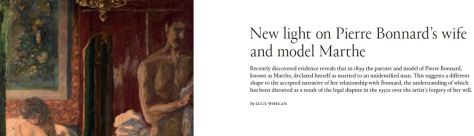
READ DIGITAL ONLINE ISSUE – MAY 2020
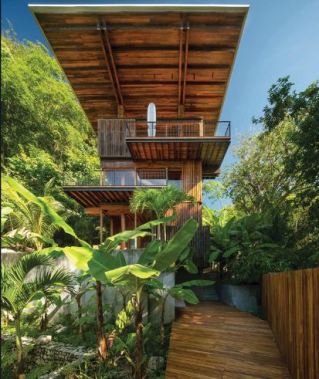 Striking, innovative, and dramatically sited, the twenty-nine projects in Tom Kundig: Working Title reveal the hand of a master of contextually astute, richly detailed architecture. As Kundig’s work has increased in scale and variety, in diverse locations from his native Seattle to Hawaii and Rio de Janeiro, it continues to exhibit his signature sensitivity to material and locale and to feature his fascinating kinetic “gizmos.”
Projects range from inviting homes that integrate nature to large-scale commercial and public buildings: wineries, high-performance mixed-use skyscrapers, a Visitor Center for Tillamook Creamery, the Burke Museum of Natural History and Culture, and the Wagner Education Center of the Center for Wooden Boats, among others. Tom Kundig: Working Title includes lush photography, sketches, and a dialogue between Tom Kundig and Michael Chaiken, curator of the Kundig-designed Bob Dylan Archive at the Helmerich Center for American Research.

 Boomers Daily