Tag Archives: Insects

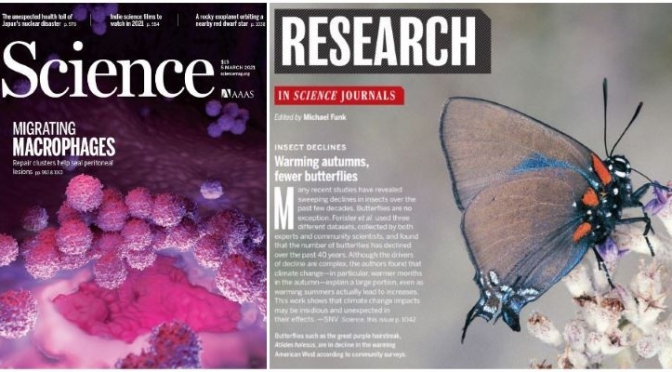
Science: Social Insects As Models For Aging, Space Mission Crew Conflicts

Most research on aging has been done on model organisms with limited life spans, such as flies and worms. Host Meagan Cantwell talks to science writer Yao-Hua Law about how long-living social insects—some of which survive for up to 30 years—can provide new insights into aging.

Also in this episode, host Sarah Crespi talks with Noshir Contractor, the Jane S. & William J. White Professor of Behavioral Sciences at Northwestern University, about his AAAS session on keeping humans in harmony during long space missions and how mock missions on Earth are being applied to plans for a crewed mission to Mars. 

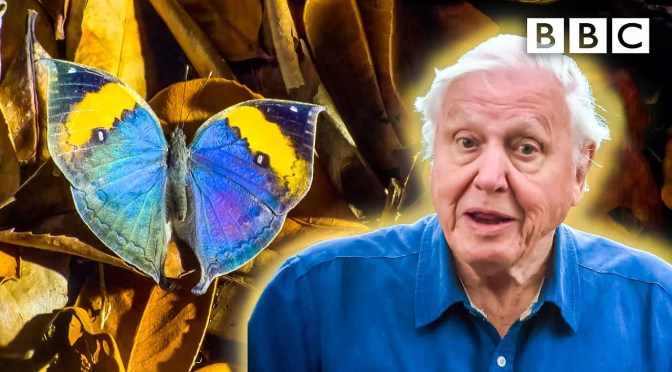
Nature Views: ‘Some Very Clever Insects’ – David Attenborough (BBC Video)

The natural world is full of colours. For us, they are a source of beauty, but for animals they are a tool for survival. David Attenborough reveals the extraordinary ways in which animals use colour: to win a mate, to fight off rivals and to warn enemies. Attenborough’s Life in Colour | Series 1 Episode 2 | BBC

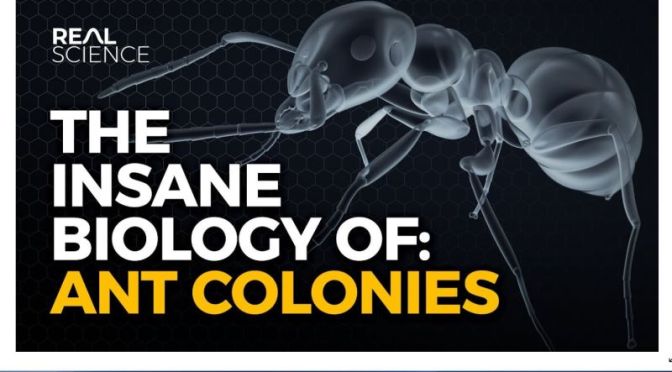
Science: ‘Insane Biology Of Ant Colonies’ (4K Video)

Ants are social insects which form small to large colonies. A typical colony contains an egg-laying queen and many adult workers together with their brood (eggs, larvae and pupae). Workers are by far the most numerous individuals in the nest. They are responsible for nest construction and maintenance, foraging, tending the brood and queen, and nest defence.

While all workers are female, they are sterile and do not lay eggs. Winged queens and males are present in the nest for only a short period. Soon after emerging they leave the nest to mate and establish new nests. Queens are generally similar to the workers, differing primarily in having larger bodies. In some species, fully winged queens are lacking and egg-laying is undertaken either by typical workers or by individuals which are morphologically intermediate between typical queens and workers (these are called ergatoid queens). Males are generally about the same size as the workers or smaller, and have smaller heads with large ocelli, very short scapes and small mandibles. In many cases males look more like wasps than ants.

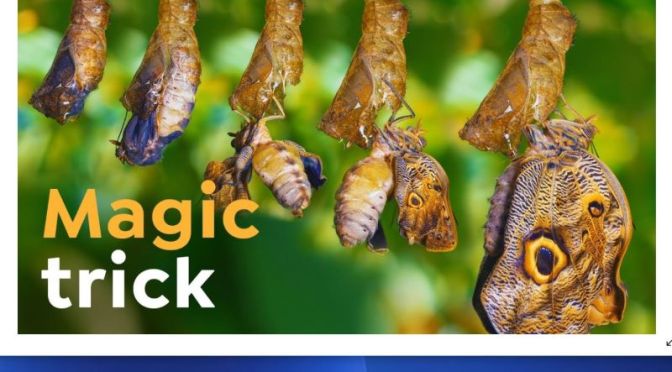
Nature: ‘From Caterpillar To Butterfly – How Metamorphosis Works’

Metamorphosis is one of the most common but fascinating miracles of nature. An astonishing 80% of the insect world undergoes the process, but perhaps none is more iconic than the butterfly. 🦋 From pinhead-sized eggs glued to the top of a leaf, right through to the unveiling of her majestic new wings, we delve into the development of a painted lady butterfly, the world’s most widely travelled insect.

Travel & Nature: ‘Czech Wildlife In 2020’ (Video)

Filmed and Edited by: Lukáš Pich

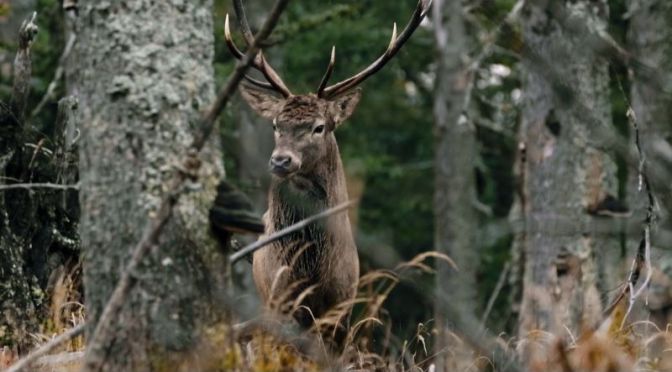
Enjoy my latest showreel from this year’s wildlife filming in the Czech Republic! There are 42 animal species waiting for you in this video.

Sadly, this video is not a true picture of European nature in general. Most of these beautiful wildlife moments are actually very rare to witness here in Central Europe. We keep degrading the landscape with such intensity that mammals, birds, reptiles, amphibians, insect, spiders and fish are slipping through our fingers faster than before. A key to improvement and effective conservation is education. 

Online Collection Video: Cornell To “Digitize” 7 Million Insect Specimens

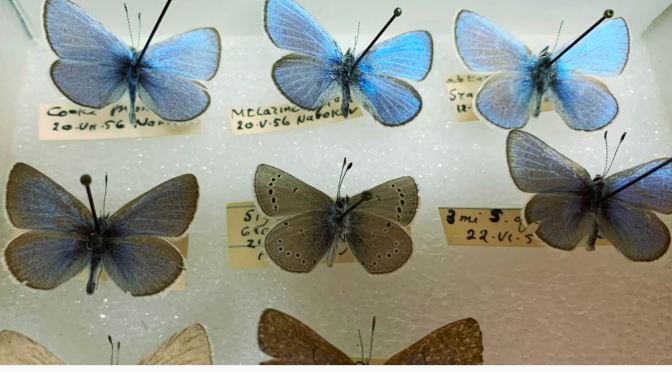
The Cornell University Insect Collection has begun to digitize all seven million of its specimens, including a collection of butterflies from author Vladimir Nabokov. CUIC’s director and curator Corrie Moreau says that she expects that due to the enormity of the project, it may not be finished in her lifetime.

Website

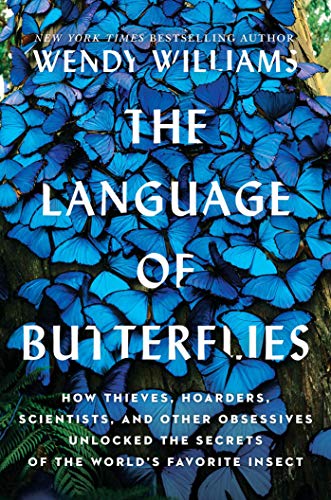
Top New Books: “The Language Of Butterflies” By Wendy Williams (2020)

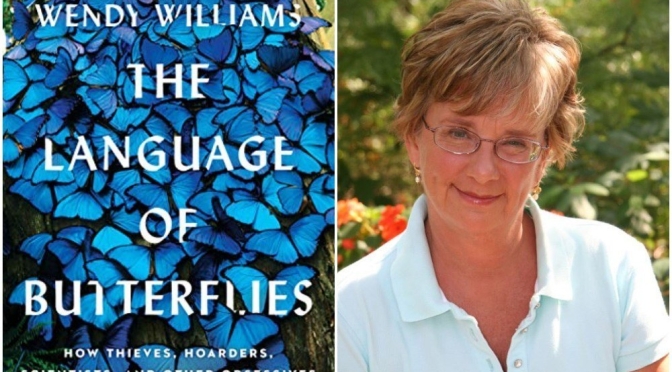
The Language of ButterfliesButterflies are one of the world’s most beloved insects. From butterfly gardens to zoo exhibitions, they are one of the few insects we’ve encouraged to infiltrate our lives. Yet, what has drawn us to these creatures in the first place? And what are their lives really like? In this groundbreaking book, New York Times bestselling author and science journalist Wendy Williams reveals the inner lives of these “flying flowers”—creatures far more intelligent and tougher than we give them credit for.

In this fascinating book from the New York Times bestselling author of The Horse, Wendy Williams explores the lives of one of the world’s most resilient creatures—the butterfly—shedding light on the role that they play in our ecosystem and in our human lives.

Monarch butterflies migrate thousands of miles each year from Canada to Mexico. Other species have learned how to fool ants into taking care of them. Butterflies’ scales are inspiring researchers to create new life-saving medical technology. Williams takes readers to butterfly habitats across the globe and introduces us to not only various species, but to the scientists who have dedicated their lives to studying them.

Coupled with years of research and knowledge gained from experts in the field, this accessible “butterfly biography” explores the ancient partnership between these special creatures and humans, and why they continue to fascinate us today. Touching, eye-opening, and incredibly profound, The Language of Butterflies reveals the critical role they play in our world.

Read more