The quest for a longer life continues – raising the question of whether we can escape death. The team discusses a rare gene variant that may explain why centenarians live so long – and how we might be able to use it to create age-defying drugs.
Spring is rolling around earlier and earlier. The team examines a new study which shows that since the 1980s, the warming climate has brought the season forward by a month – which could have major ecological implications. They also discuss a study which looks at the impact of marine heatwaves on things like coral and fish populations.
Rocks are important 🪨 Geology can play a vital role in the climate fight.
Sustainable geoscience Professor Chris Jackson (@seis_matters) speaks to @rowhoop on the #podcast ahead of his appearance at New Scientist Live in Manchester.
As more of the world’s forests are destroyed, it makes you wonder: what’s going to absorb CO2 in their place?! In an ironic twist of fate, one of Earth’s “deadest” habitats might be our best hope for an ongoing supply of breathable air.
Called peatlands, these wetland environments are named for their tendency to accumulate decayed plant matter. Unlike most other ecosystems, like forests, where branches and leaves typically decompose in a matter of months… in peatlands, that plant material can stay intact for millenia. You see, peatlands mostly exist in high altitude places where temps are low and there’s not much water flow. This results in their having extremely low oxygen and high acidity levels.
These harsh conditions aren’t very hospitable to microbes and fungi, which are instrumental to the whole decomposition process. So without them around, the plant material sort of… just sits. Over time, that it globs together to form peat, a thick, spongy material that can soak up 20x its weight in water. Peat also soaks up loads of carbon. Through a process known as the Calvin cycle, living plants absorb CO2 from the air and convert it into organic molecules that they can then use as energy to grow.
Through decomposition, the carbon that’s “fixed” in a plant’s structure gets released but since peat doesn’t decompose, that carbon can stay put! It’s estimated that peatlands contain 550 gigatonnes of organic carbon, which is twice as much organic carbon as all the world’s forests combined. That’s absolutely wild, considering that forests cover about 30% of the world’s land area… and peatlands only account for 3%! Like most of the world’s habitats, peatlands aren’t immune to the threats of human development and exploitation.
Peat is also are a very in-demand resource. Its incredible water holding capacity makes it a favorite amongst horticulturists; If you’ve ever picked up a bag of soil amendment, chances are it’s full of the stuff. Since peat is also a fossil fuel with a long burn, it’s used in some parts of the world. Peatlands are also often drained to accommodate other land use activities, like agriculture.
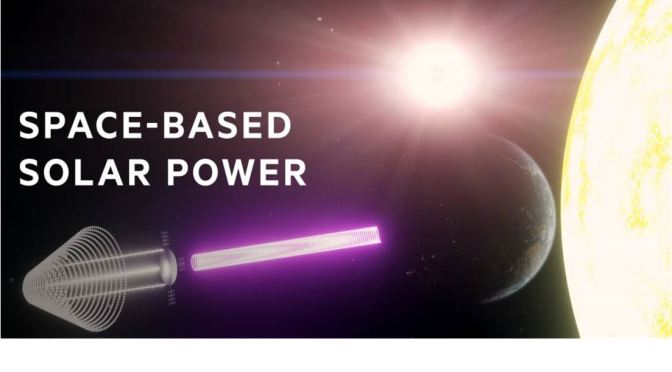
Space launch costs are dropping rapidly. Solar panels are cheaper than ever. Could space-based solar power soon be price-competitive with nuclear? Promoted as a zero-carbon solution, classified military space planes have also been conducting experiments into wireless power transmission. The FT’s Peggy Hollinger looks at whether space-based solar power can move beyond science fiction.
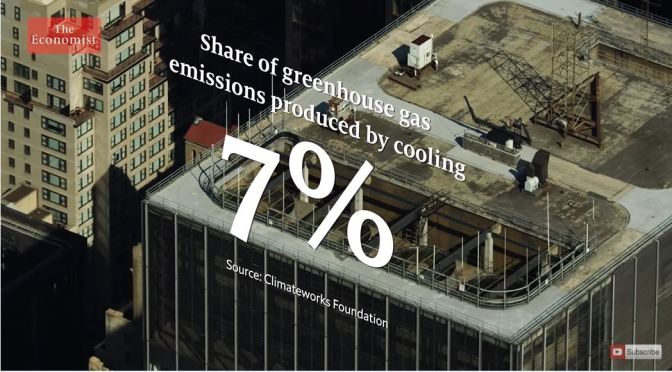
The warmer it gets, the more people use air conditioning—but the more people use air conditioning, the warmer it gets. Is there any way out of this trap?
Video timeline: 00:00: What’s the cooling conundrum? 01:05: The pros and cons of AC 03:28: How to reinvent air conditioning 05:02: Can buildings be redesigned to keep cool? 07:30: Scalable, affordable cooling solutions 10:24: Policy interventions for cooling
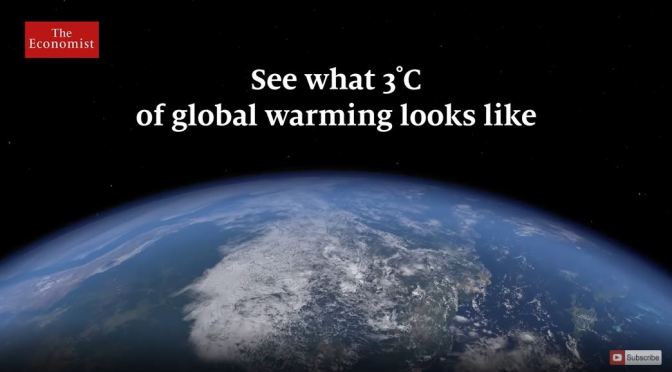
If global temperatures rise three degrees Celsius above pre-industrial levels, the results would be catastrophic. It’s an entirely plausible scenario, and this film shows you what it would look like.
Video timeline: 00:00 – What will a 3°C world look like? 00:57 – Climate change is already having devastating effects 02:58 – How climate modelling works 04:06 – Nowhere is safe from global warming 05:20 – The impact of prolonged droughts 08:24 – Rising sea levels, storm surges and flooding 10:27 – Extreme heat and wet-bulb temperatures 12:51 – Increased migration and conflict 14:26 – Adaptation and mitigation are crucial
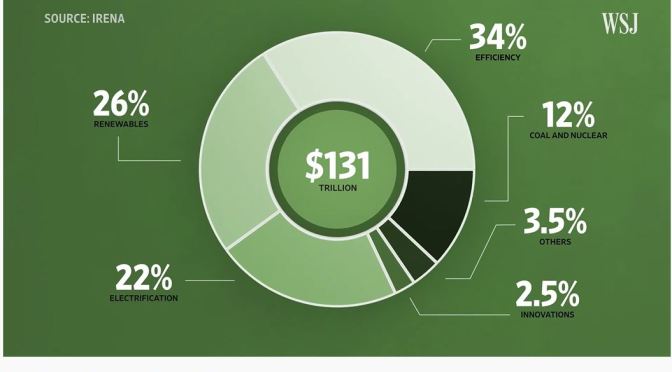
Money is a sticking point in climate-change negotiations around the world. As economists warn that limiting global warming to 1.5 degrees Celsius will cost many more trillions than anticipated, WSJ looks at how the funds could be spent, and who would pay. Illustration: Preston Jessee/WSJ
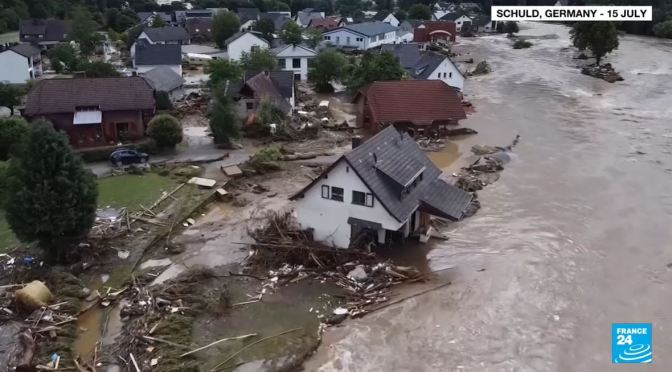
Climate change has made extreme rainfall events of the kind that sent lethal torrents of waterhurtling through parts of Germany and Belgium last month at least 20% more likely to happen in the region, according to an international study published Tuesday (August 24).
The UN’s Intergovernmental Panel on Climate Change released its latest report on climate change this morning. It shows that warming is happening more quickly than we realized, and calls the connection between human activity and global warming “unequivocal.” It’s the strongest stance by global scientists on climate we’ve seen yet.
Plus, the pandemic has changed our relationship with trash.
And, Ina Fried’s big takeaways from covering the Olympic games.
Guests: Axios’ Andrew Freedman, Hope King, and Ina Fried.
It seems ever more certain that global temperatures will sail past limits set in the Paris Agreement. We examine what a world warmed by 3°C would—or will—look like.
Our correspondent speaks with Sudan’s three most powerful men; will they act in concert or in conflict on the way to democracy? And why Liverpool has been booted from UNESCO’s world-heritage list
News, Views and Reviews For The Intellectually Curious






 Boomers Daily