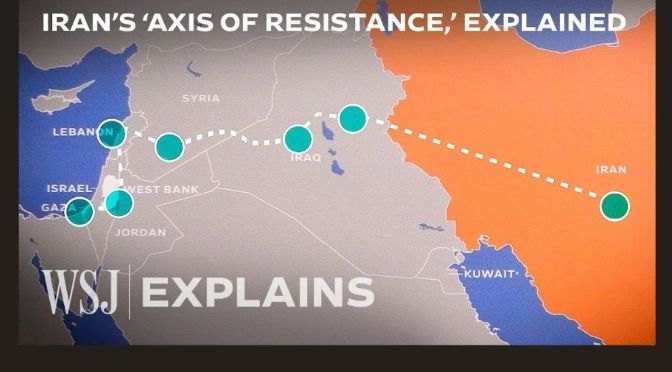
The Wall Street Journal (January 5, 2024) – Iran-backed groups connect to form a land bridge across the Middle East and form an alliance that Tehran calls the ‘Axis of Resistance.’ This land bridge can be used to transport equipment and personnel, but also allows for positions in Iraq and Syria to attack U.S. interests or threaten Israel closer to its borders.
Video timeline: 0:00 ‘Axis of Resistance’ 0:37 Iran’s allies 1:44 Iran’s history 3:22 U.S. in the Middle East 4:14 Attacks since Oct. 7
WSJ explains what to know about the alliance that includes Hamas in Gaza, Hezbollah in Lebanon and the Houthis in Yemen.
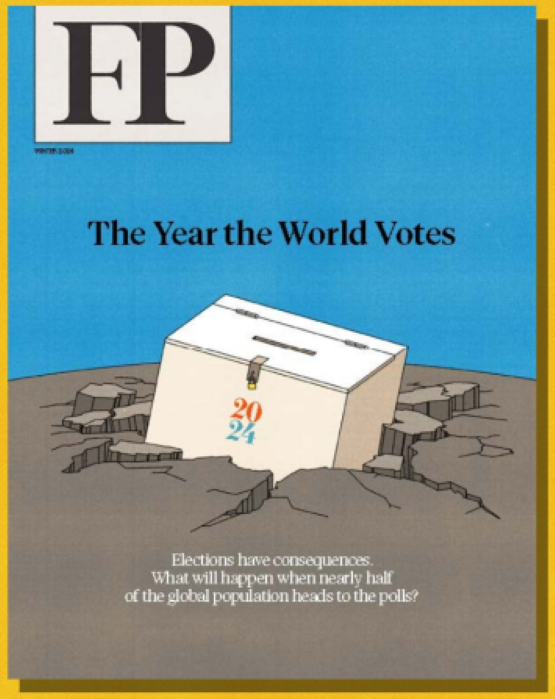
Foreign Policy Magazine – December 28, 2023: The new issue features ‘The Year The World Votes’ – Elections have consequences. What will happen when nearly half of the global population heads to the polls?
The world’s most dismal science could make Eurasia safe for illiberalism and predation—or protect it from those forces.
By Hal Brands, a professor of global affairs at the Johns Hopkins School of Advanced International Studies.
Alexander Dugin is a bit of a madman. The Russian intellectual made headlines in the West in 2022, when his daughter was killed, apparently by Ukrainian operatives, in a Moscow car bombing likely meant for Dugin himself. Dugin would have been targeted because of his unapologetic, yearslong advocacy for a genocidal war of conquest in Ukraine. “Kill! Kill! Kill!” he screeched after Russian President Vladimir Putin’s first invasion of that country in 2014, adding: “This is my opinion as a professor.” Even at his daughter’s funeral, Dugin stayed on message. Among her first words as an infant, he claimed, were “our empire.”
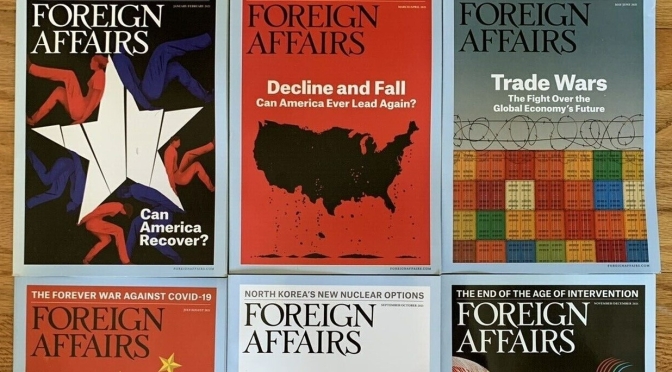
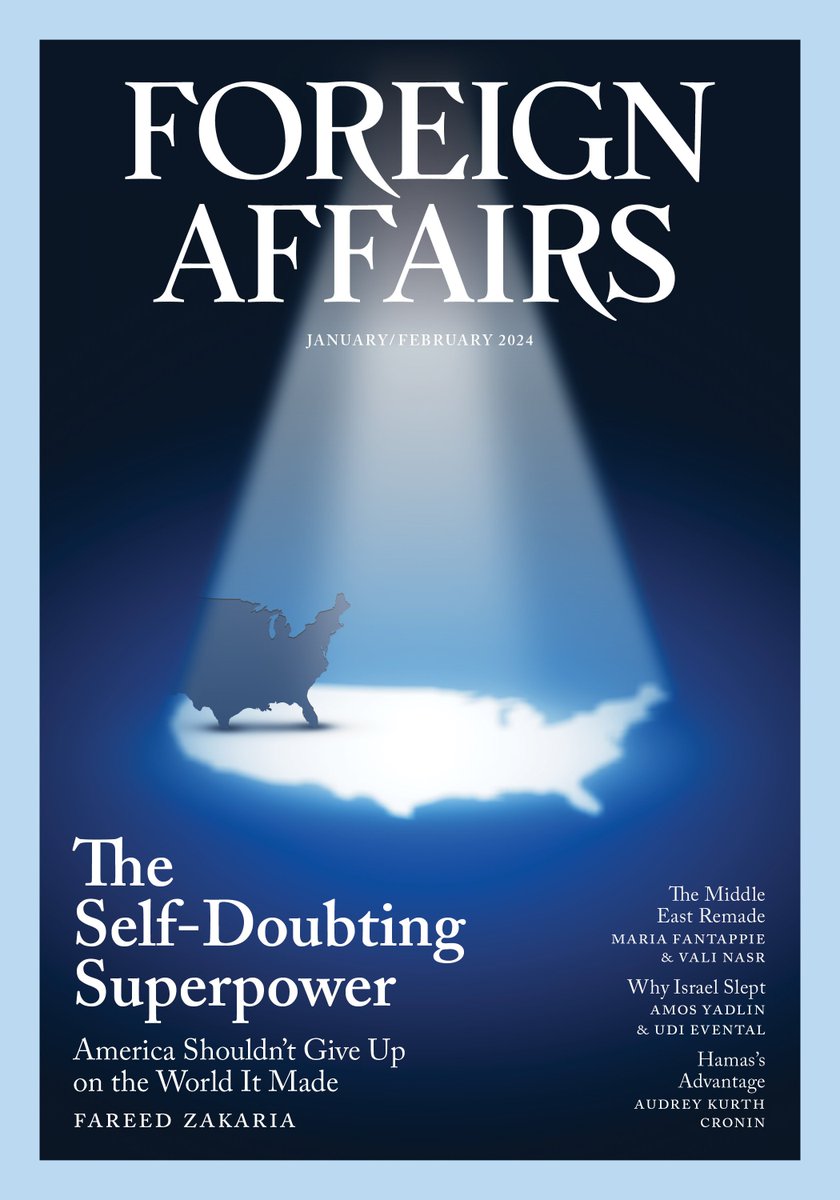
Foreign Affairs (December 13, 2023): The new January/February 2024 issue features ‘The Self-Doubting Superpower’ – America shouldn’t give up on the World It Made; The Middle East Remade; Why Israel Slept; Hamas’s Advantage, and more….
Most Americans think their country is in decline. In 2018, when the Pew Research Center asked Americans how they felt their country would perform in 2050, 54 percent of respondents agreed that the U.S. economy would be weaker. An even larger number, 60 percent, agreed that the United States would be less important in the world. This should not be surprising; the political atmosphere has been pervaded for some time by a sense that the country is headed in the wrong direction. According to a long-running Gallup poll, the share of Americans who are “satisfied” with the way things are going has not crossed 50 percent in 20 years. It currently stands at 20 percent.
In a barbaric surprise attack launched by Hamas on October 7, more Jews were slaughtered than on any day since the Holocaust. Thousands of elite Hamas militants from the Gaza Strip infiltrated small communities and cities in southern Israel, where they proceeded to commit sadistic, repulsive crimes against humanity, filming their vile deeds and boasting about them to friends and family back home.
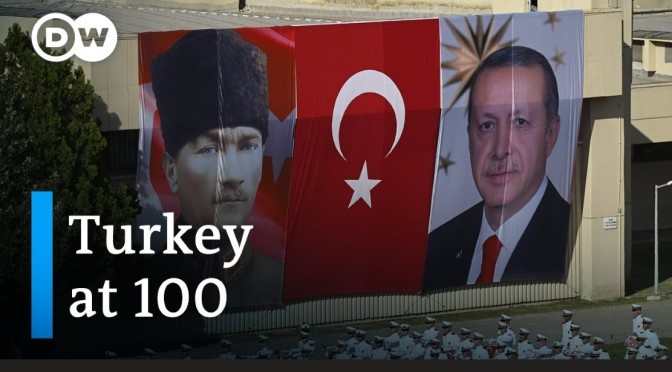
DW News (October 29, 2023) – Turkey is celebrating its 100th birthday. Events are taking place across the country to mark the anniversary of its founding.
In the capital Ankara, Pesident Recep Tayyip Erdogan laid a wreath at the mausoleum dedicated to Mustafa Kemal Ataturk, the country’s founder, who created a modern, secular republic from the ruins of the Ottoman Empire in 1923.
The centennial is also a personal milestone for Erdogan, who has been in power for more than 20 years. But challenges loom large as Turkey looks to the future. More from our correspondent Julia Hahn in Istanbul.
Nothing in world politics is inevitable. The underlying elements of national power, such as demography, geography, and natural resources, matter, but history shows that these are not enough to determine which countries will shape the future. It is the strategic decisions countries make that matter most—how they organize themselves internally, what they invest in, whom they choose to align with and who wants to align with them, which wars they fight, which they deter, and which they avoid.
The United States now confronts graver threats to its security than it has in decades, perhaps ever. Never before has it faced four allied antagonists at the same time—Russia, China, North Korea, and Iran—whose collective nuclear arsenal could within a few years be nearly double the size of its own. Not since the Korean War has the United States had to contend with powerful military rivals in both Europe and Asia. And no one alive can remember a time when an adversary had as much economic, scientific, technological, and military power as China does today.
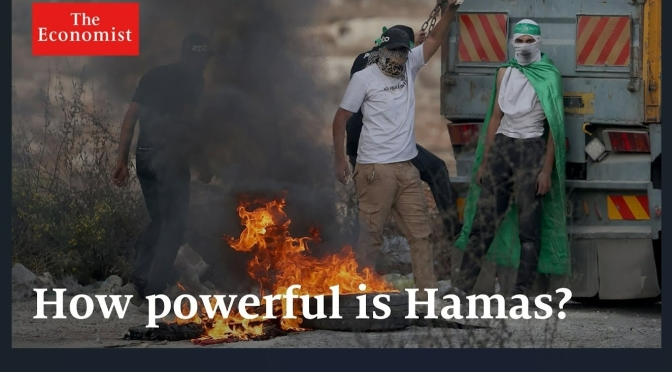
The Economist (October 13, 2023) – On October 7th Hamas fighters launched a surprise attack on Israel and slaughtered more than 1,300 people, mostly civilians. What is Hamas and how powerful is it?
Video timeline: 00:00 – What is Hamas? 00:55 – Hamas’s control of Gaza 01:18 – Growth of Hamas military capacity 01:32 – The latest attack on Israel
“Xi’s sense of personal destiny entails significant risk of war…”
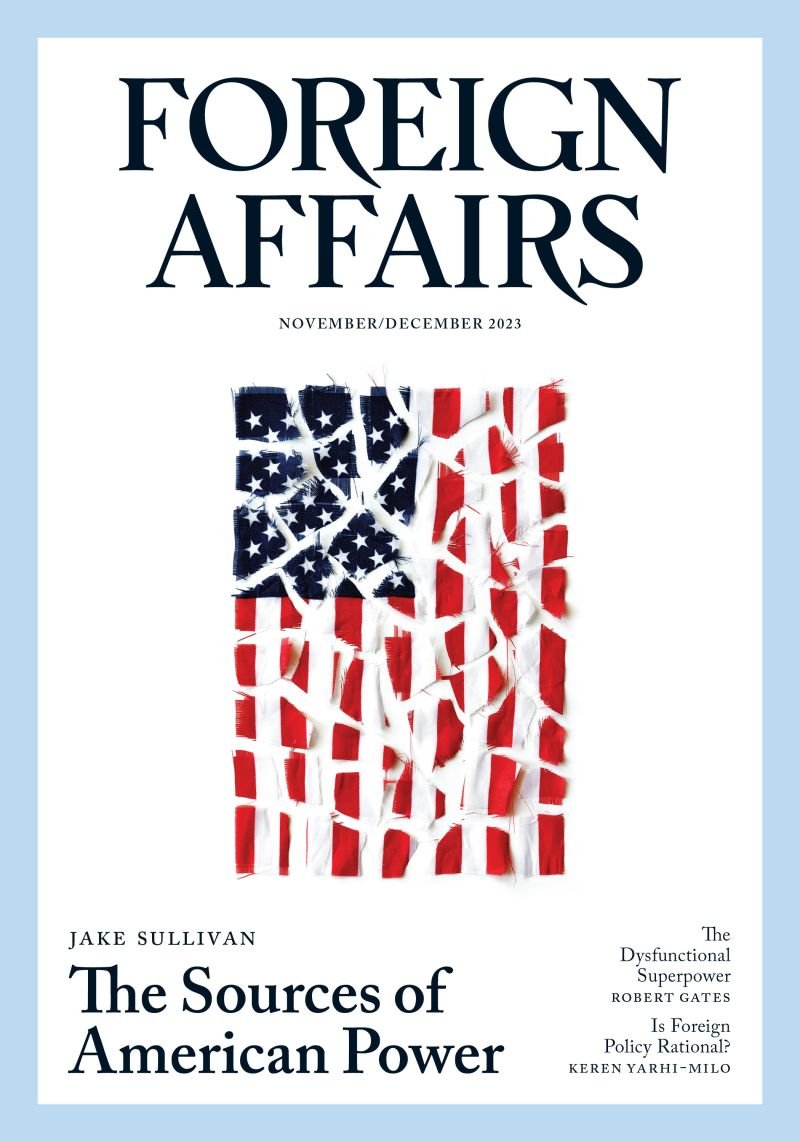
Foreign Affairs (September 29, 2023):The United States now confronts graver threats to its security than it has in decades, perhaps ever. Never before has it faced four allied antagonists at the same time—Russia, China, North Korea, and Iran—whose collective nuclear arsenal could within a few years be nearly double the size of its own. Not since the Korean War has the United States had to contend with powerful military rivals in both Europe and Asia. And no one alive can remember a time when an adversary had as much economic, scientific, technological, and military power as China does today.
The problem, however, is that at the very moment that events demand a strong and coherent response from the United States, the country cannot provide one. Its fractured political leadership—Republican and Democratic, in the White House and in Congress—has failed to convince enough Americans that developments in China and Russia matter. Political leaders have failed to explain how the threats posed by these countries are interconnected. They have failed to articulate a long-term strategy to ensure that the United States, and democratic values more broadly, will prevail.
The Economist (September 11, 2023) – As the counter-offensive continues, Ukrainian forces are running out of time to make substantial gains. Diplomatic attempts to isolate Russia have failed and progress on the front lines is slowing. From the capital Kyiv, the president tells The Economist’s editor-in-chief how the country is bracing for a long war.
Foreign Policy Magazine – Fall 2023: The new issue features The G-7 Becomes a Power Player – Russia’s war and China’s rise are turning a talking shop into a fledgling alliance of democracies; Vivek Ramaswamy’s Foreign Policies Raise Eyebrows in Washington – The GOP’s rising star offers up a grab bag of ideas cribbed from Eminem to Richard Nixon and more…
Russia’s war and China’s rise are turning a talking shop into a fledgling alliance of democracies.
By G. John Ikenberry, a professor of politics and international affairs at Princeton University.
Time and again over the last century, the United States and the other liberal democracies in Europe, East Asia, and elsewhere have found themselves on the same side in grand struggles over the terms of the world order. This political grouping has been given various names: the West, the free world, the trilateral world, the community of democracies. In one sense, it is a geopolitical formation, uniting North America, Europe, and Japan, among others. It is an artifact of the Cold War and U.S. hegemony, anchored in NATO and Washington’s East Asian alliances.
End American dependence on Taiwan’s semiconductor factories. Declare economic independence from China. Give India an AUKUS-like submarine deal. And stage a dramatic visit to Moscow to broker a deal to end Russia’s full-scale invasion of Ukraine.
CNBC International (August 30, 2023) – China has invested heavily in Europe, particularly in the wake of the global financial crisis of 2008 when the region was strapped for cash. This means that Chinese firms are now shareholders in many key European infrastructure projects.
These include ports, wind and solar farms, telecommunications, airports – the list goes on. But there are growing fears that Beijing could use its strategic investments to further its own political ambitions. A recent dispute between the Baltic nation of Lithuania and Beijing shed light on potential reactions from China.
It’s led European governments to step up their scrutiny of Chinese investments and attempt to figure out how to redesign their relationship with Beijing. Dr Yu Jie from Chatham House told CNBC that we’re going to see more frictions regarding Chinese investment in Europe looking ahead.
News, Views and Reviews For The Intellectually Curious






 The Economist
 The Economist (September 11, 2023) – As the counter-offensive continues, Ukrainian forces are running out of time to make substantial gains. Diplomatic attempts to isolate Russia have failed and progress on the front lines is slowing. From the capital Kyiv,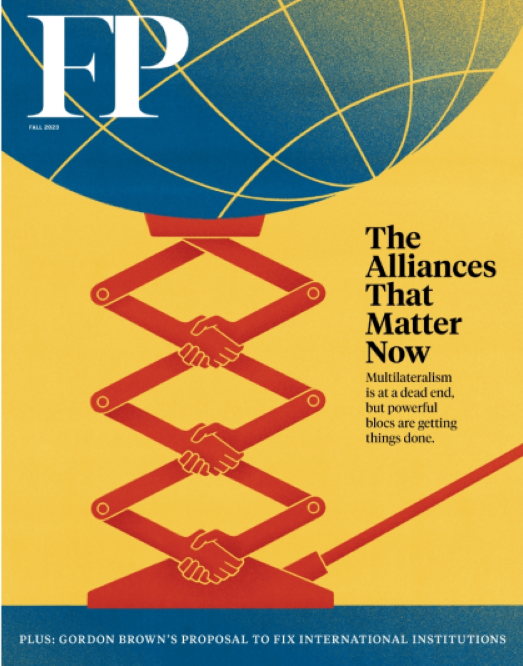


 CNBC International
 Boomers Daily