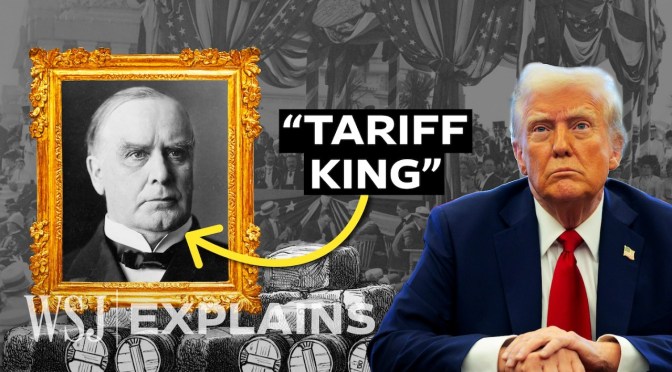
In his second inaugural address, the president reprised dark themes from his first and laid out an expansive policy agenda.
For Trump, a Vindication for the Man and His Movement
Donald John Trump took the oath of office again during a ceremony in the Capitol, promising a new “golden age of America” four years after he was evicted by voters.
President Biden used his executive clemency power to protect people targeted by Donald J. Trump, including five members of his family as well as Liz Cheney, Anthony S. Fauci and Mark A. Milley.
A Determined Trump Vows Not to Be Thwarted at Home or Abroad
Wiser about the use of power, the newly sworn-in president suggests that this time he will not take no for an answer, whether in enacting an ambitious domestic agenda or in his expansionist worldview.
World Economic Forum (January 11, 2025): This week’s top stories of the week include:
0:15 What do the jobs of the future look like? – The world of work is changing fast. While 92 million jobs may disappear over the next 5 years, nearly 170 million new ones will emerge, driven by new technology and the energy transition. What are these new jobs and which sectors will see the greatest changes? Find out in the 2025 Future of Jobs Report.
1:40 Here’s how factories are changing – Chindarat Ninnama tells us the story of how data and digital tools transformed her factory job into a career brimming with new opportunities. A shortage of workforce talent is a major barrier to the digital transformation of manufacturing. Western Digital is part of the World Economic Forum’s Frontline Talent of the Future initiative, which has built a playbook of solutions to address this
5:28 Global cooperation has flatlined – The world is facing a perfect storm of challenges, with global security at a crisis point and competition escalating. The climate crisis has intensified, with 2024 recorded as the hottest year ever. Economic growth remains sluggish, with the IMF projecting global growth of just 3.2% in 2025—and only 1.8% in developed economies.
7:47 These are the most essential skills for work – The jobs of tomorrow will require a new set of skills. The latest Future of Jobs report surveyed company executives on the most in-demand skills of the workplace – both today and in 2030. Find out what the ‘hirers’ of the future are looking for.
“You and [Franklin] Roosevelt begin from two different starting points. But is there not a relation in ideas, a kinship of ideas, be-tween Moscow and Washington? In Washington I was struck by the same thing I see going on here; they are building offices, they are creating a number of state regula-tion bodies, they are organising a long-needed Civil Service.
Neoliberalism often presents itself as a victory for individual autonomy. In an interview, Grace Blakeley explains the hollowness of this claim — and why the Left needs to offer its own, better vision of human freedom.
Despite antitrust regulators’ efforts to rein it in, UnitedHealth Group has been growing to control ever more of the health care sector. The corporation’s expanding power has meant worse care, higher prices, and a mounting human toll.
Foreign Policy Magazine(December 8, 2023): The Best of Books 2024 on international politics, economics, and history that were featured in the magazine this year, selected by Foreign Affairs’ editors and book reviewers.
In a revelatory book, Farrell and Newman describe how the United States has turned its control over information networks into a hidden tool of economic domination—and warn of the risks of Washington’s weaponization of data power for ordinary people, as well as for the global financial system.read the review
In a major reconsideration of Cold War history, Radchenko examines the Soviet Union’s competing ambitions for revolution, security, and legitimacy—and how Soviet leadership, blinded by its own hubris and aggression, set the stage for the downfall of the USSR. read the review
Kahan argues that what unifies liberals across the centuries, including those involved in building and defending liberal democracy today, are their efforts to build societies free from the fear of arbitrary power. He sculpts a masterful and beautifully written history of liberalism’s long intellectual journey. read the review
In this sobering study, Levitsky and Ziblatt demonstrate how the United States’ enduring constitutional order—one forged in a pre-democratic age—increasingly thwarts the will of an expanding multicultural majority in favor of a shrinking rural white minority.read the review
Focused on the sophisticated and networked world of autocracy, dictatorship, and tyranny, Applebaum argues that what separates hardcore autocratic states, such as China and Russia, from softer illiberal and authoritarian regimes, such as those in Hungary, India, and Turkey, is the ruthlessness and reach of their dictatorial power and their deep hostility to the Western-led democratic world.read the review
THE HEDGEHOG REVIEW (FALL 2024): This issue’s theme is “In Need of Repair,” and it includes contributions from James Davison Hunter, Nicholas Carr, Martha Bayles, Olivier Zunz, Elias Crim, Aaron Horvath, Paul Scherz, Firmin DeBrabander, and John J. Lennon, as well as other reviews and essays from such contributors as Eugene McCarraher, Alan Jacobs, Paul Nedelisky, Rita Koganzon, Matthew Milliner, and Richard Hughes Gibson.
In Need of Repair
At the bottom of each of our system dysfunctions is a distinctive cultural disorder emerging from the many pressures of our rapidly modernizing world.
No bloc of countries has, for the past 75 years, been as umbilically tied to the United States as Europe. First, its western half and, since the end of the Cold War, much of its eastern half have prospered under the world’s most extensive bonds in trade, finance, and investment. Europe could also depend on the U.S. military’s iron commitment—enshrined in the 75-year-old NATO alliance—to come to its defense. Together with a few other nations, the United States and Europe defined many of the institutions that comprise what we call the Western-led order. The U.S.-European alliance has arguably been the bedrock of the global system as we know it today.
Without Washington’s embrace, the continent could revert to an anarchic and illiberal past. By HAL BRANDS
Which is the real Europe? The mostly peaceful, democratic, and united continent of the past few decades? Or the fragmented, volatile, and conflict-ridden Europe that existed for centuries before that? If Donald Trump wins the U.S. presidential election in November, we may soon find out.
‘Editor’s Picks’ Podcast (March 25, 2024): A selection of three essential articles read aloud from the latest issue of The Economist. This week, as the death toll climbs in Israel’s war on Gaza, we argue that the country looks deeply vulnerable. Plus, we consider Britain as an unexpected beacon of immigration. And finally, as Elon Musk’s Starship reaches space, we examine SpaceX’s approach to rocket development.
CNBC (January 8, 2024) – CNBC Marathon explores the economics of waste management and how the United States is solving its trash problem. In 2019, the North American waste management market reached $208 billion.
Chapters: 00:00 Introduction 00:48 How Trash Makes Money In The U.S. (Published July 2021) 15:59 How Amazon, American Airlines And Subaru Burn Waste To Make Energy (Published May 2022) 32:24 How To Clean Up The World’s Most Polluted Rivers (Published August 2022) 46:16 Where Do EV Batteries Go When They Die? (Published March 2023)
Thanks to advancements in modern chemistry and support from municipal governments, landfills have seen astonishing financial success in recent years. Burning waste to make energy is a $10 billion industry in the U.S., and the fastest growing part of the business is waste from big companies like Amazon, Subaru, Quest Diagnostics and American Airlines.
They’re part of a growing corporate movement toward “zero landfill” as pressure mounts to reach sustainability requirements. It’s estimated that every year, millions of tons of plastic enter the ocean through rivers, and as global waste generation increases, the problem is poised to worsen.
But a host of companies from Baltimore, Maryland to Bengaluru, India are working on the issue, developing novel methods to capture trash from rivers before it reaches the ocean. Dozens of electric vehicles are scheduled to debut in the next few years and over 300 million electric vehicles are expected to be on the world’s roads by 2030.
The lifetime for an EV battery is estimated to be 12 to 15 years in moderate climates, but that doesn’t mean the batteries end up in landfills when they die.
News, Views and Reviews For The Intellectually Curious