
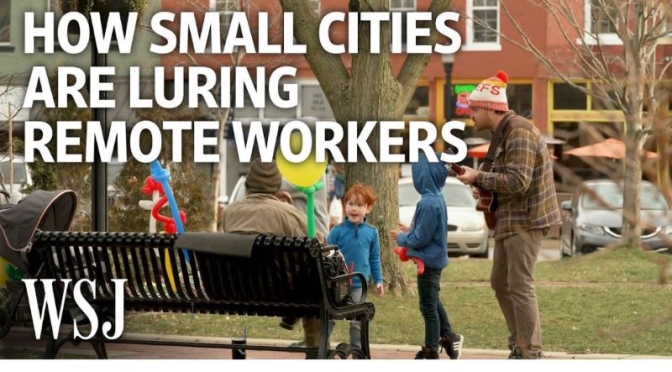
As the pandemic changes how — and where — professionals work, some smaller cities and regions are offering hefty relocation incentives to attract remote workers to help jumpstart their local economies. WSJ met one family who accepted an offer to make a new home in the Ozarks. Photo: Craig Kauffman for the Wall Street Journal
Tag Archives: Economics
Analysis: What Makes ‘Costco’ So Successful
Costco is one of the biggest and most successful retailers in the country. In this video, WSJ’s Sarah Nassauer dissects the wholesaler’s unique approach to doing business. Photo: Qian Weizhong/ZUMA Press

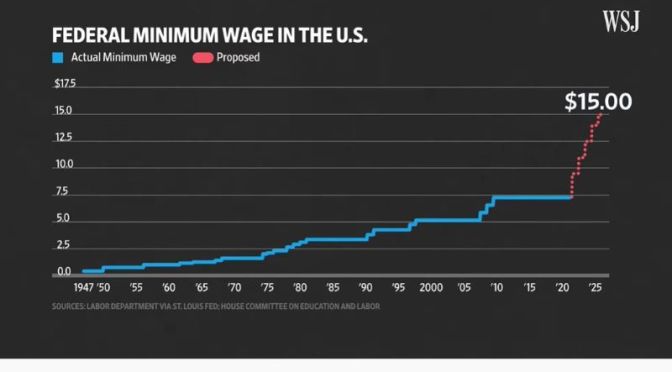
The Economy: How A $15 Minimum Wage Effects It
Biden has identified raising the minimum wage as a key goal of his administration, but economists and lawmakers disagree on the potential impact. WSJ asked two economists and a minimum-wage worker what the costs and benefits of a $15 minimum wage might be. Photo: Bill Clark/Congressional Quarterly/Zuma Press

Luxury Brands: ‘Why Some Watches Are So Expensive’
Expensive materials, delicate craftsmanship, and an economic principle that turns the usual equation of supply and demand on its head. WSJ explains why some watchmakers can charge hundreds of thousands of dollars for a single timepiece. Illustration: Alex Kuzoian/WSJ
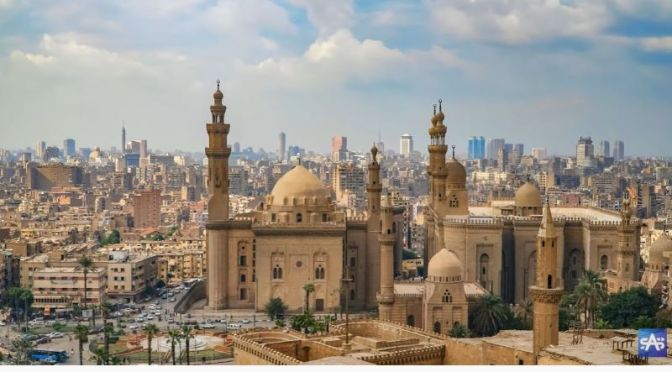
Africa: ‘An Economic History Of Egypt’ (Video)
The Egyptian Economy was the only one in the Middle East North Africa region to avoid a recession in 2020. Being a good reflection of the economic rollercoaster Egypt routinely finds itself on. One driven by inflation rates of up to 30% a year, a halving of its currency and a painful IMF bailout in 2016. But how did Egypt’s Economy find itself in this situation? What impacts did Five Year Plans, spending nearly 20% of GDP on the military and widespread nationalisation have on its economy? Why is Egypt the world’s largest importer of wheat? And perhaps most importantly, what has its post 2011 revolution delivered?
Egypt, a country linking northeast Africa with the Middle East, dates to the time of the pharaohs. Millennia-old monuments sit along the fertile Nile River Valley, including Giza’s colossal Pyramids and Great Sphinx as well as Luxor’s hieroglyph-lined Karnak Temple and Valley of the Kings tombs. The capital, Cairo, is home to Ottoman landmarks like Muhammad Ali Mosque and the Egyptian Museum, a trove of antiquities.
World Economy: ‘China’s New Silk Road’ (Video)
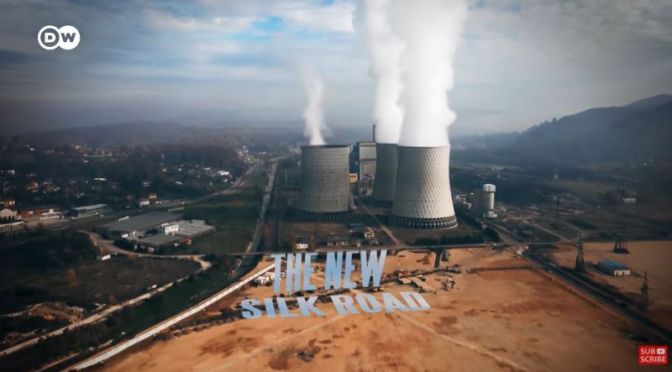
The “New Silk Road” is an enormous Chinese international development project. It’s a trade network that involves Asia, Africa, and Europe — and more than 70 countries are already involved. It may turn the old world order upside down. China is investing in bridges, port facilities, railroads, and roads around the world. Beijing is spending several hundred billion euros on what it calls the “Silk Road Economic Belt.” Eastern European and the Balkan countries in particular are interested in Chinese loans and investments, as they look beyond the EU for sources of capital. In turn, the region is attractive to China because of its strategic position as a gateway to the West. A new coal-fired power plant is being built in Tuzla, Bosnia, with the help from China. But not everyone is in favor of the project. While the new plant will emit fewer emissions which will have a positive effect on air-quality, some question the country’s decision to commit to using coal for decades to come.
Europe: An Economic History Of Iceland (Video)
Iceland’s Economy had a banking debt ten times larger than its GDP. Iceland was that one Economy which went left when everybody else went right. Whilst most thought the banks were too big to fail, Iceland thought they were too big to save. It let its largest banks go bankrupt and threw dozens of bankers in jail. And yet despite its unusual approach, its Economy recovered. Going on to enjoy a decade of unbroken economic growth and high standard of living. But why did an island just outside the arctic circle have a financial crisis? What strategies did it deploy to rack up such monumental debts? How did it recover? And does its future rely on impressive tourist growth and crypto currencies?

Analysis: ‘Why Big Tech Companies Are Leaving California’ (CNBC Video)
As Oracle, Palantir and Hewlett-Packard Enterprise move their headquarters out of California and Elon Musk moves to Texas, California is considering raising taxes on the wealthy to unprecedented levels. Experts say California needs to find more ways to reverse the trend.

Europe: ‘An Economic History Of Spain’ (Video)
The Spanish economy is one of extremes. At one point a focus of the eurozone crisis, at another the largest contributor of growth, and more recently, suffering the greatest economic hit of any Advanced Economy in 2020. Spain’s economic problems are often confused. In the years leading up to the Great Recession it posted consistent budget surpluses. However, a huge real estate bubble was lying in wait. The question… is why? Why did Spain go from a seemingly safe level of debt to one larger than it’s economy? How was the housing bubble encouraged? And since then, has Spain’s economy ever truly recovered? Or in what ways?

Asia: An Economic History Of Thailand (Video)
The Thai economy is the second largest in southeast asia. Being right in the centre of one of the most vibrant economic clusters on the planet. Famous for its sun, sea and sand, Thailand is so much than just a tourist hot spot. Thailand’s Economy went on an incredible growth run during the second half of the 20th century. However, economic growth has slowed since the 2000’s, leading some to suggest Thailand’s economy is stuck in a middle income trap. What are the factors behind this in Thailand’s case? How did rice pledging impact the economy? And why Thailand pinning its’ economic hopes on the Eastern Economic Corridor?
 Boomers Daily