
Tag Archives: Dinosaurs

Ideas: Scientific American Magazine – September 2024

Image

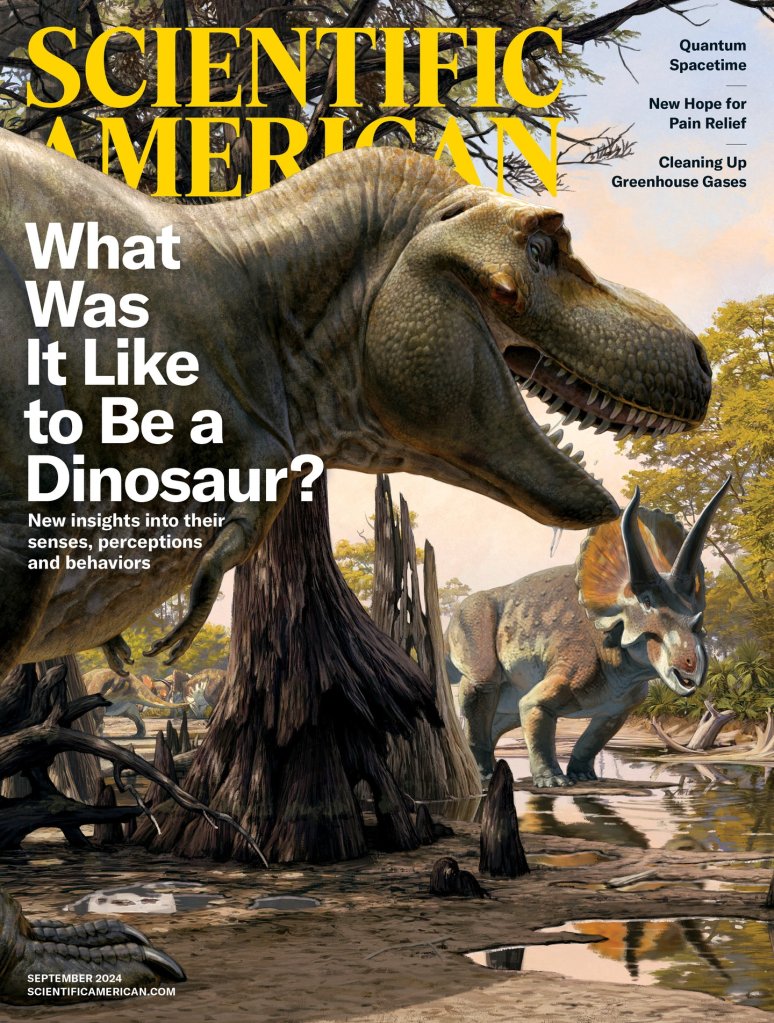
Scientific American (August 21, 2024)The September 2024 issue featuresWhat Was It Like To Be A Dinosaur? – New insights into their senses, perceptions and behaviors…

What Was It Like to Be a Dinosaur?
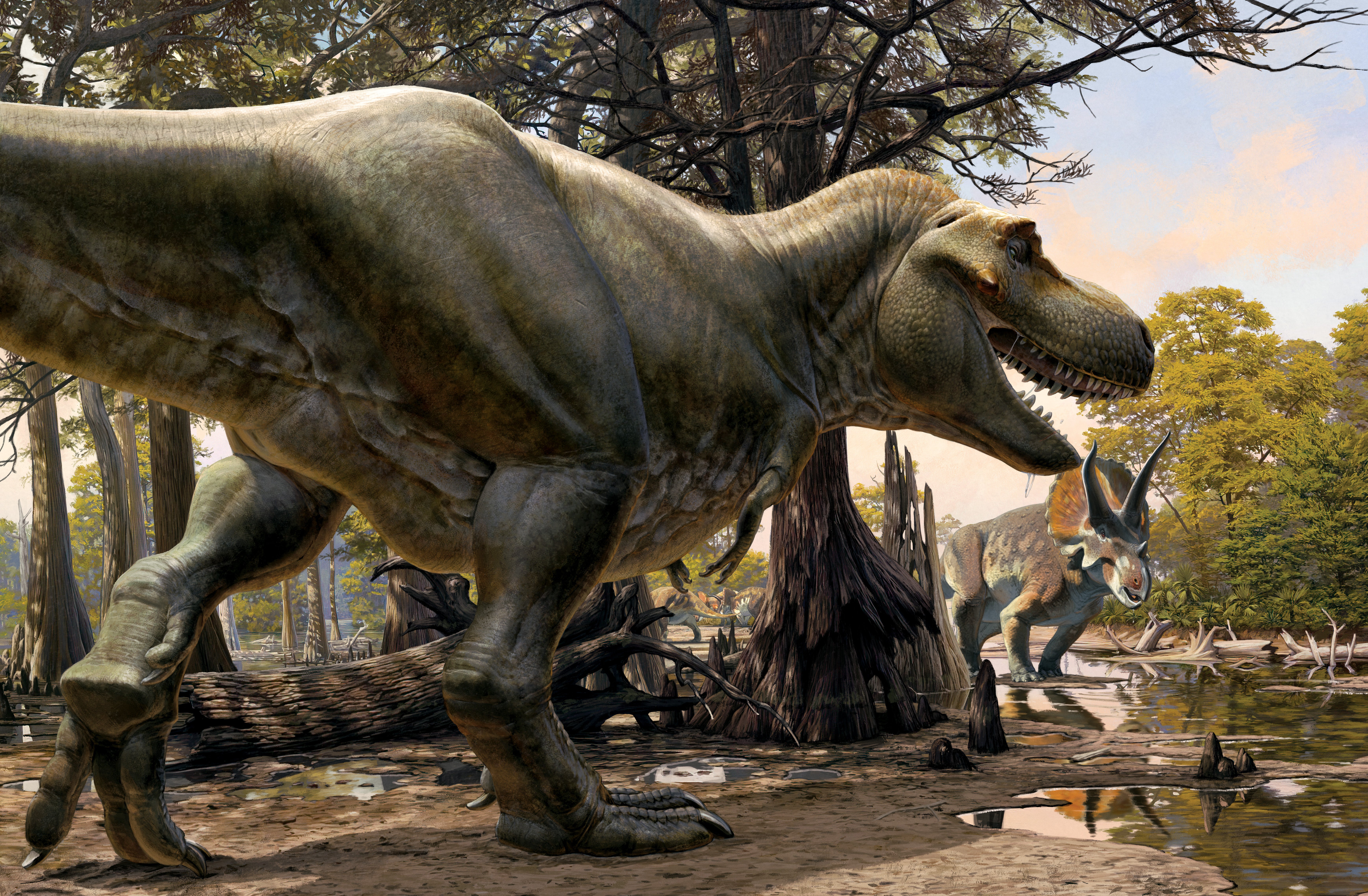
Illustration depicting a t-rex

New fossils and analytical tools provide unprecedented insights into dinosaur sensory perception by Amy M. Balanoff, Daniel T. Ksepka

Alone Tyrannosaurus rexsniffs the humid Cretaceous air, scenting a herd of Triceratops grazing beyond the tree line. As the predator scans the floodplain, its vision suddenly snaps into focus. A single Triceratops has broken off from the herd and wandered within striking distance. Standing motionless, the T. rex formulates a plan of attack, anticipating the precise angle at which it must intersect its target before the Triceratops can regain the safety of the herd. The afternoon silence is shattered as the predator crashes though the low branches at the edge of the forest in hot pursuit.

T. rex has hunted Triceratops in so many books, games and movies that the encounter has become a cliché. But did a scene like this one ever unfold in real life? Would T. rex identify its prey by vision or by smell? Would the Triceratops be warned by a loudly cracking branch or remain oblivious because it was unable to locate the source of the sound? Could T. rex plan its attack like a cat, or would it lash out indiscriminately like a shark?

What If We Never Find Dark Matter?

The inside of a plant facility with gray and yellow equipment

Dark matter has turned out to be more elusive than physicists had hoped by Tracy R. Slatyer, Tim M. P. Tait

Can Pulling Carbon from Thin Air Slow Climate Change?

Alec Luhn

The End of the Lab Rat?

Rachel Nuwer

New Painkiller Could Bring Relief to Millions—Without Addiction Risk

Marla Broadfoot

Can Space and Time Exist as Two Shapes at Once? Mind-Bending Experiments Aim to Find Out

Nick Huggett, Carlo Rovelli
National Geographic Magazine – September 2024

September 2024 Issue

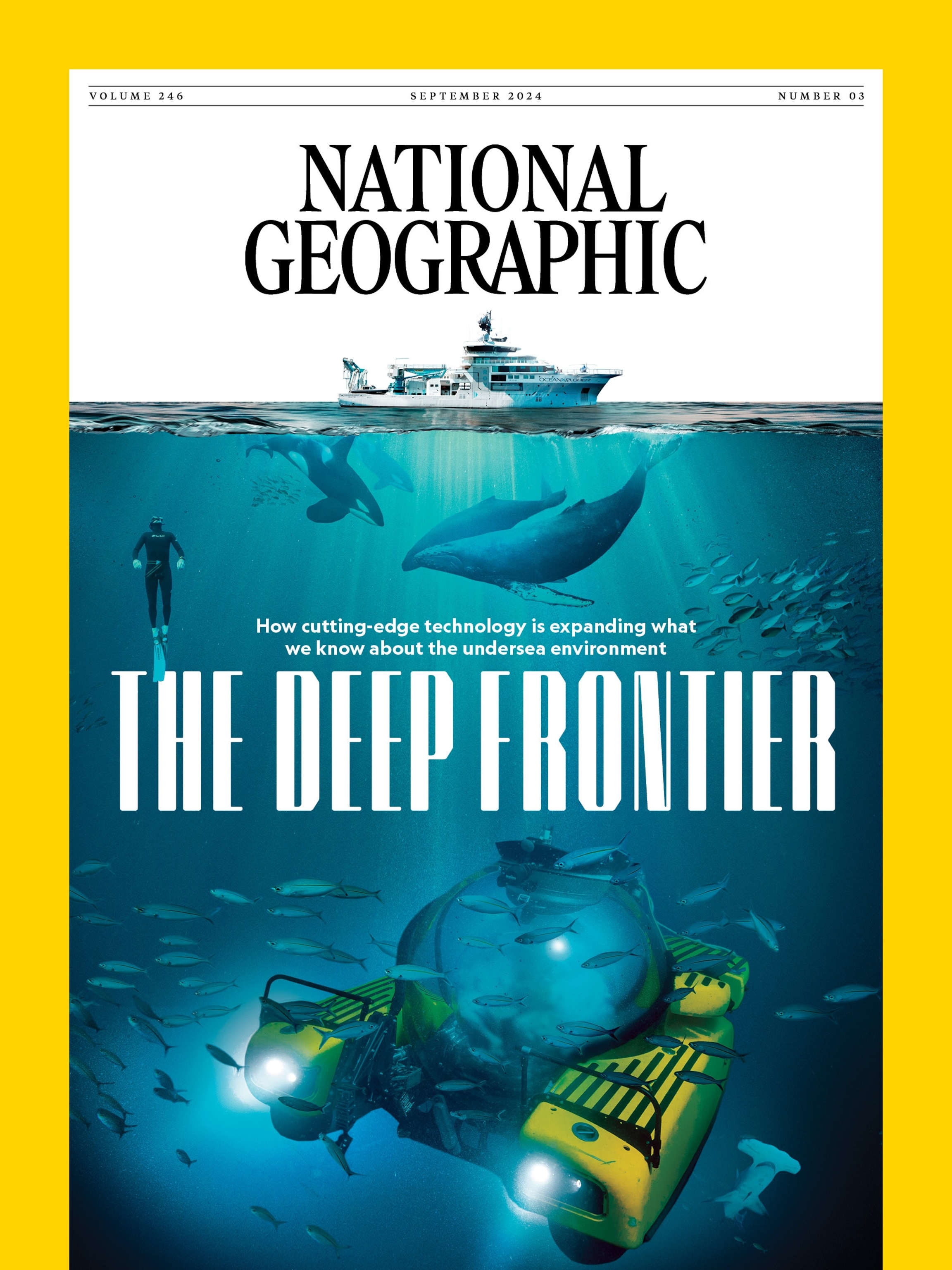
National Geographic Magazine (August 14, 2024) The new issue features ‘The Deep Frontier’ – How cutting-edge technology is expanding what we know about the undersea environment…

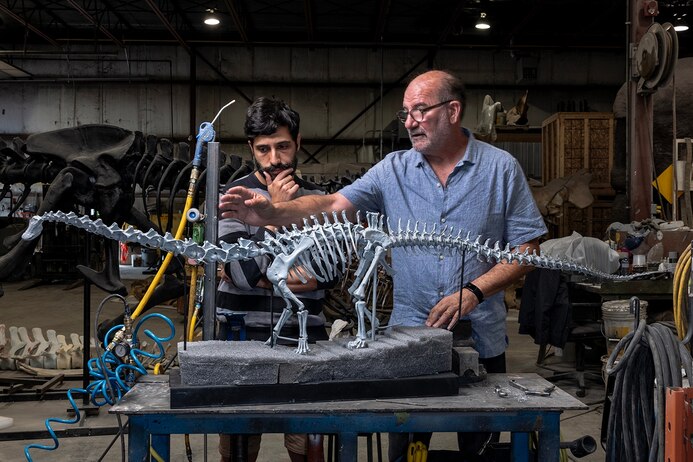
How to bring a 75-foot-long dinosaur back to life

A team of scientists and artists transformed a jumble of bones entombed in tons of rock into a towering dinosaur that will leave visitors to L.A.’s Natural History Museum wonderstruck.

What life is like when your brain can’t recognize faces

The common neurological disorder affects roughly 2 percent of the population. Author Sadie Dingfelder shares her perspective navigating the world with it.

Scientific American Magazine – June 2024

Readers Respond to the February 2024 Issue | Scientific American

Scientific American (May 15, 2024)The June 2024 issue features:

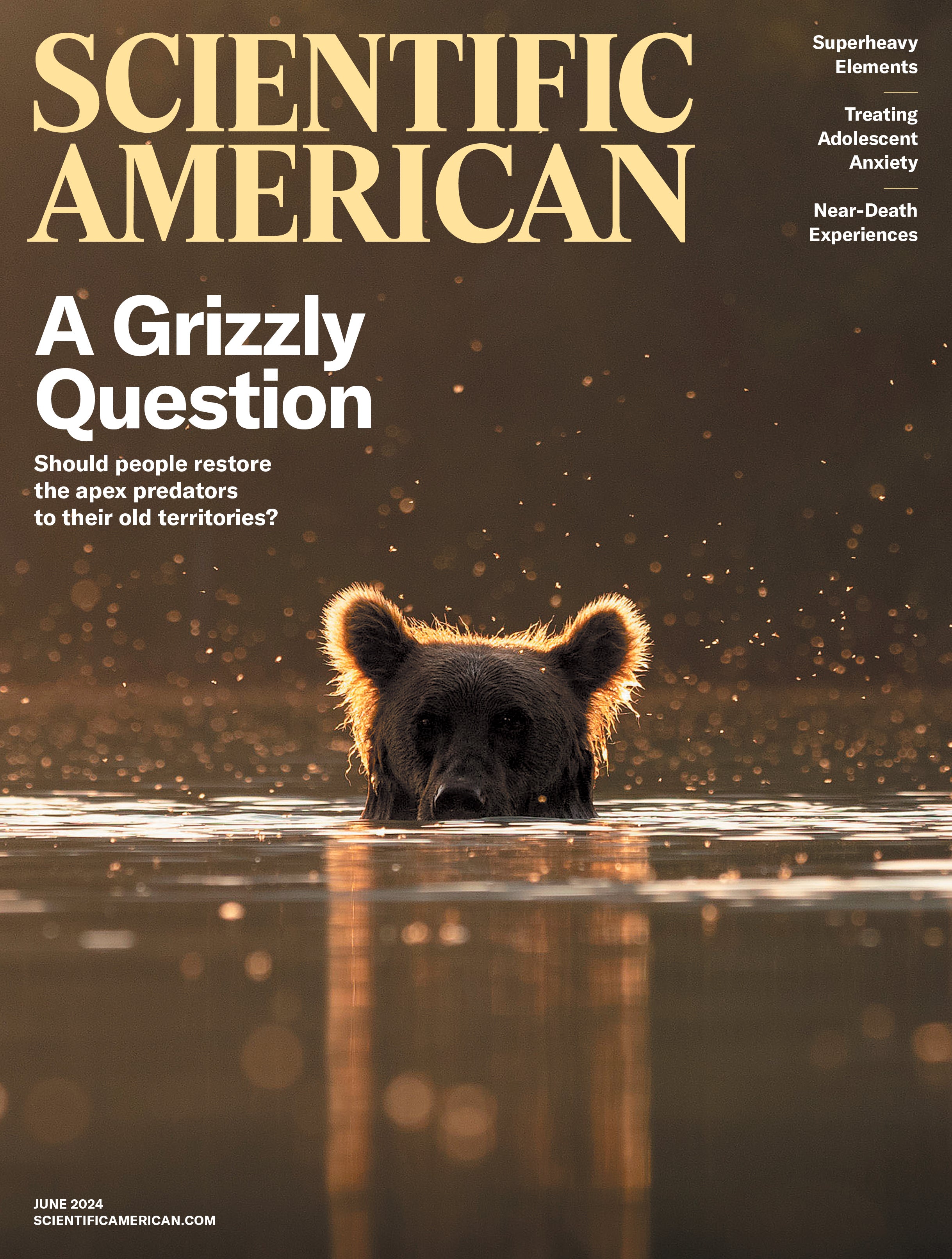
Grizzly Bears Will Finally Return to Washington State. Humans Aren’t Sure How to Greet Them

BENJAMIN CASSIDY

Lifting the Veil on Near-Death Experiences

RACHEL NUWER

Scientific American Magazine – May 2024

Scientific American Volume 330, Issue 5 | Scientific American

Scientific American (April 17, 2024): The May 2024 issue features:

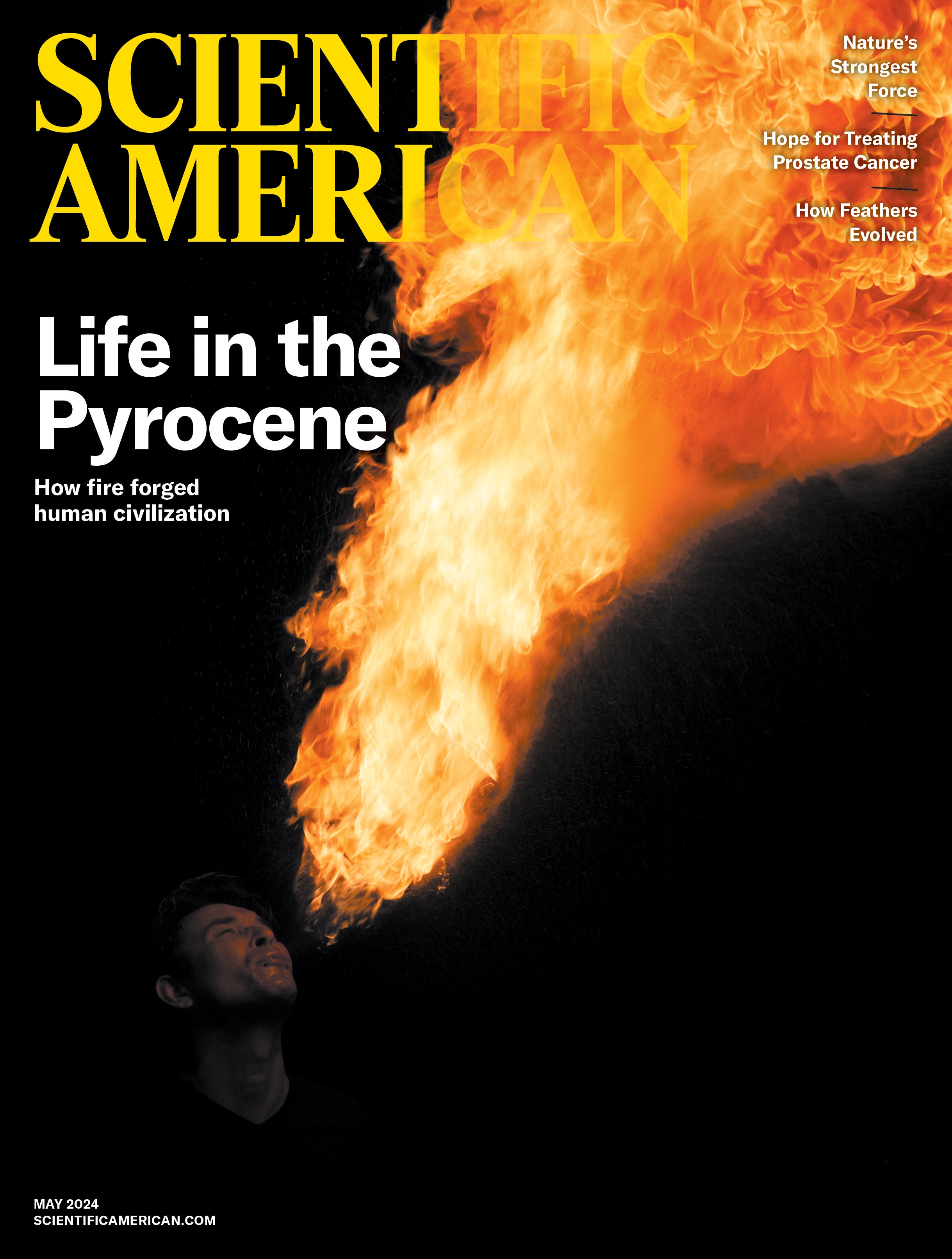
Fire Forged Humanity. Now It Threatens Everything

Ancient prophecies of worlds destroyed by fire are becoming realities. How will we respond?

The Secret to the Strongest Force in the Universe

New discoveries demystify the bizarre force that binds atomic nuclei together

Research Preview: Nature Magazine – Feb 29, 2024

 and Bo Xia

Volume 626 Issue 8001

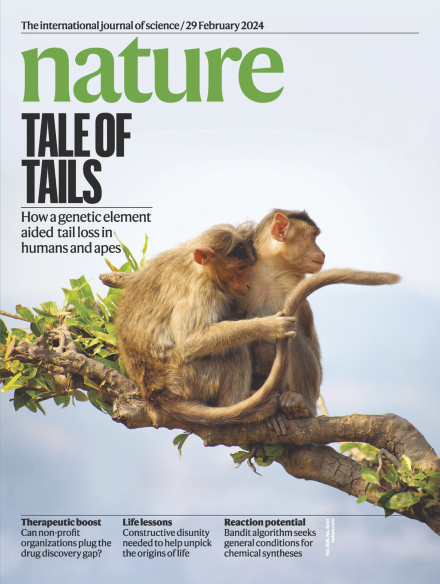
Nature Magazine – February 28, 2024: The latest issue cover features ‘Tale of the Tails’ – How a genetic element aided tail loss in humans and apes; RNA-editing therapies for genetic diseases have in the past few months gained approval for clinical trials, raising hopes for safer treatments…
Move over, CRISPR: RNA-editing therapies pick up steam

Two RNA-editing therapies for genetic diseases have in the past few months gained approval for clinical trials, raising hopes for safer treatments.

200 years of naming dinosaurs: scientists call for overhaul of antiquated system

Some palaeontologists want more rigorous guidelines for naming species, along with action to address problematic historical practices.

MEGA-CRISPR tool gives a power boost to cancer-fighting cells

A system that edits RNA rather than DNA can give new life to exhausted CAR T cells.

Scientific American – February 2024 Preview

Image

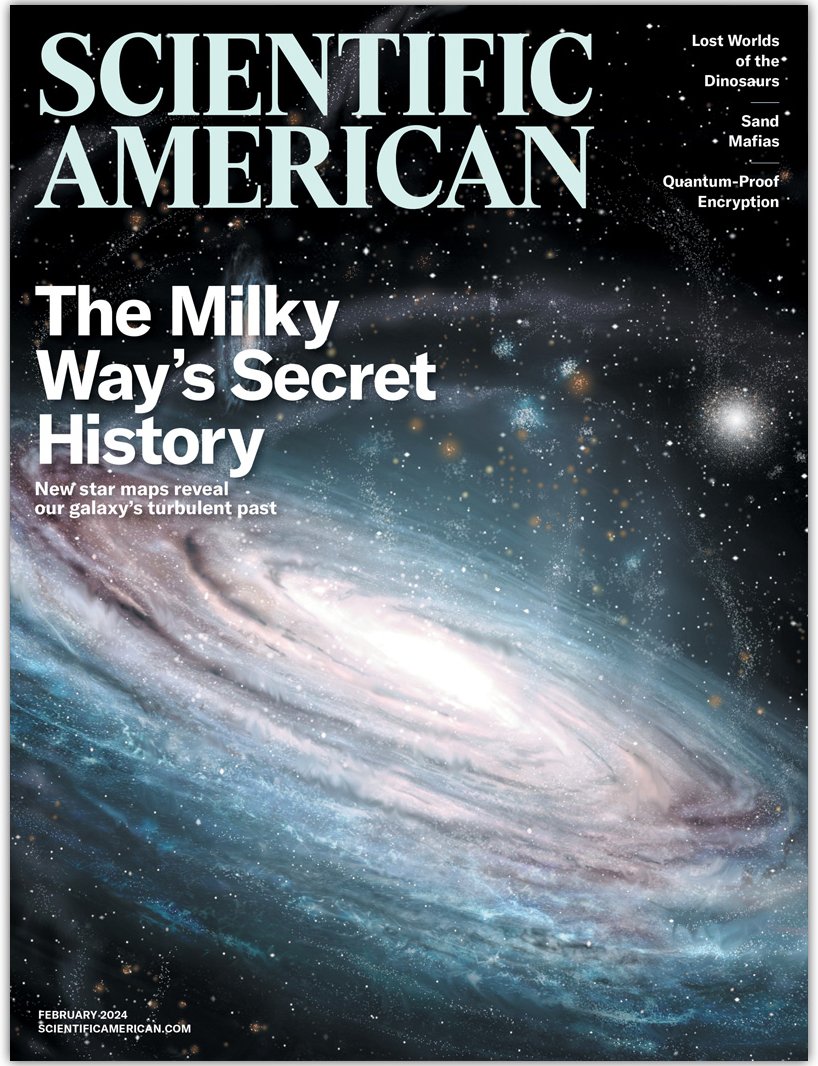
Scientific American (January 16, 2024): The February 2024 issue features ‘The Milky Way’s Secret History’ – New star maps reveal our galaxy’s turbulent past; Why Aren’t We Made of Antimatter? – To understand why the universe is made of matter and not antimatter, physicists are looking for a tiny signal in the electron…

The New Story of the Milky Way’s Surprisingly Turbulent Past

The latest star maps are rewriting the story of our Milky Way, revealing a much more tumultuous history than astronomers suspected

Why Aren’t We Made of Antimatter?

To understand why the universe is made of matter and not antimatter, physicists are looking for a tiny signal in the electron

Tiny Fossils Reveal Dinosaurs’ Lost Worlds

Special assemblages of minuscule fossils bring dinosaur ecosystems to life

The New York Review Of Books – December 21, 2023

Image

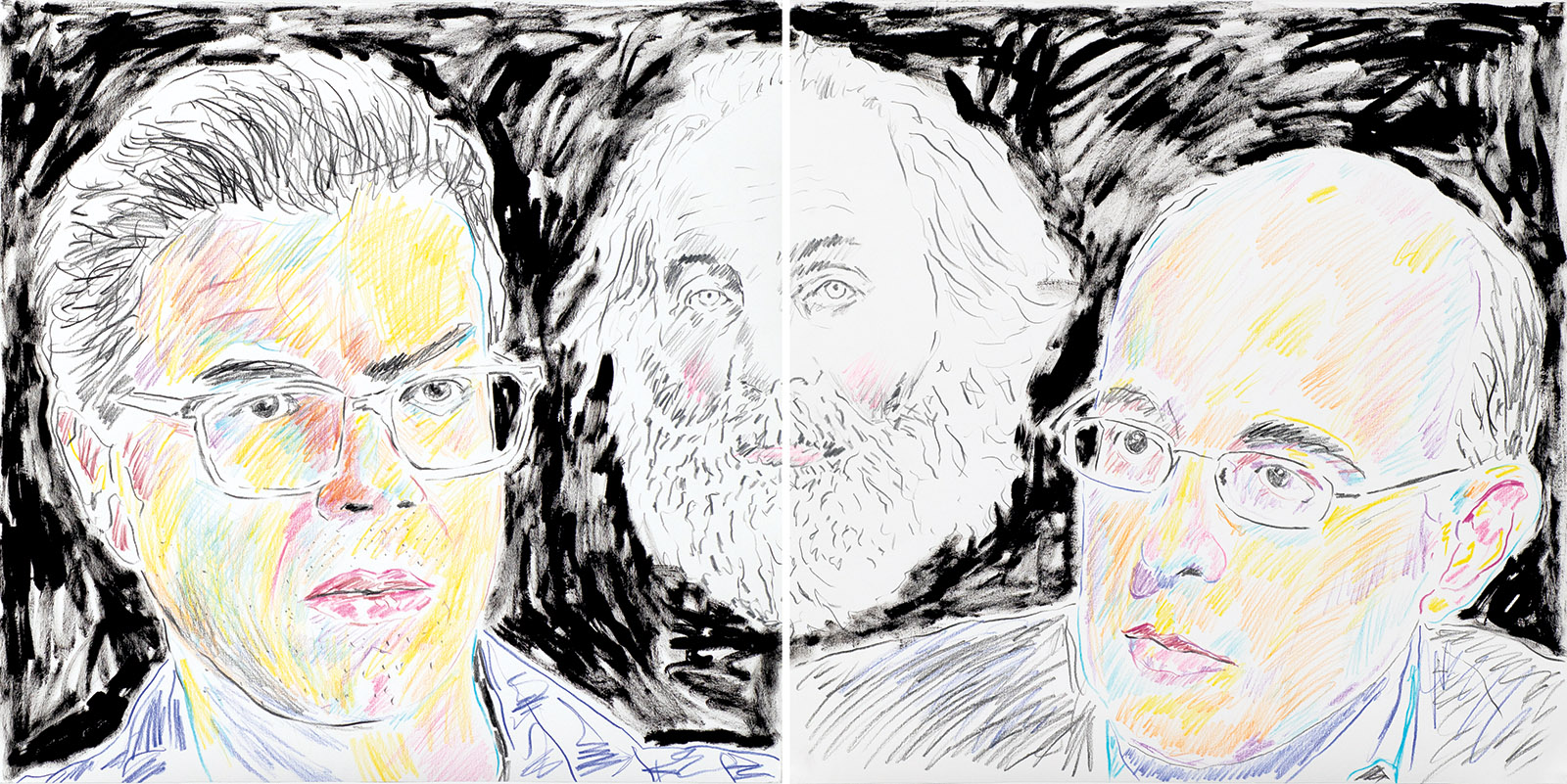
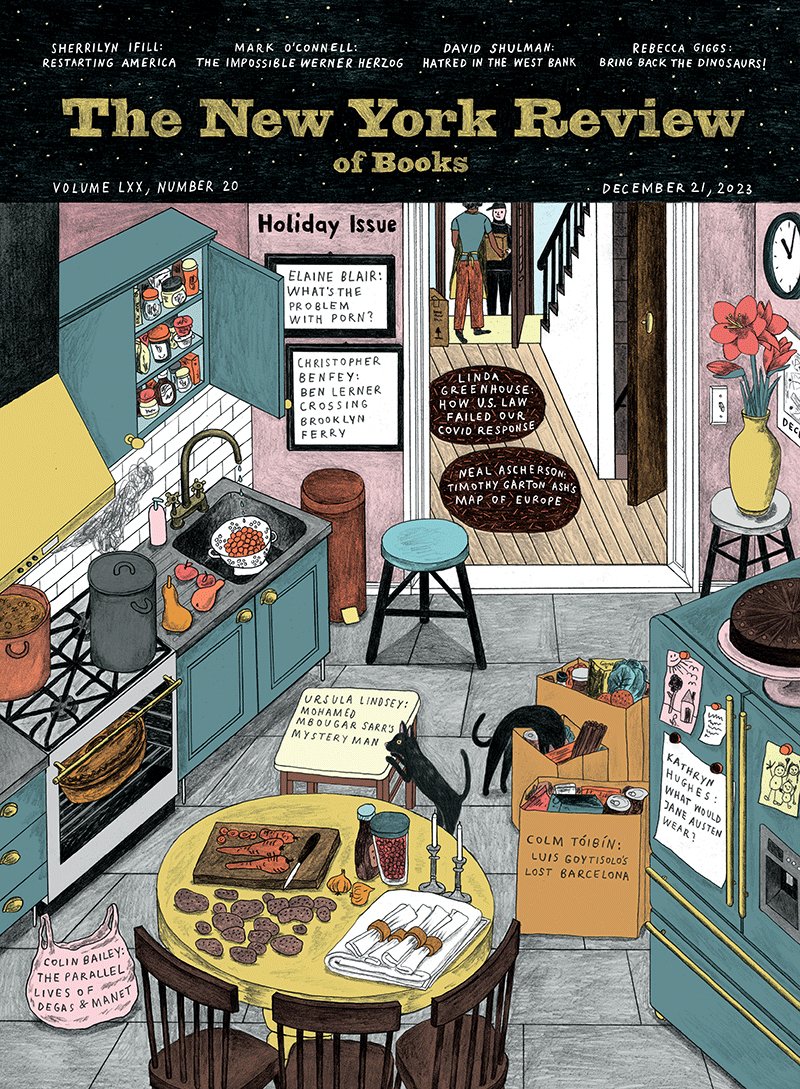
The New York Review of Books (December 21, 2023 Issue)The latest issue features the Holiday Issue—with Susan Tallman on William Kentridge, David Shulman on violence in the West Bank, Neal Ascherson on Timothy Garton Ash’s Europe, Elaine Blair on what we talk about when we talk about porn, Rebecca Giggs on the return of dinosaurs, Kathryn Hughes on Jane Austen’s fashion, Mark O’Connell on Werner Herzog, Linda Greenhouse on Covid in the courts, Gabriel Winslow-Yost on Bill Watterson’s first book since Calvin and Hobbes, John Banville on liberalism after Hobbes, poems by Lindsay Turner and Greg Delanty, and much more.

A Leaf or Two from Whitman

Ben Lerner, Walt Whitman, and Tom Piazza
Ben Lerner, Walt Whitman, and Tom Piazza; illustrations by John Brooks

The promises and failures of the American twentieth century suffuse Ben Lerner’s new book of poems and Tom Piazza’s new novel.

Christopher Benfey

The Lights by Ben Lerner

The Auburn Conference by Tom Piazza

Imagine a festive dinner near Topeka during the fall of 1879 to celebrate the twenty-fifth anniversary of the founding of the Kansas Territory, with Walt Whitman as a featured speaker. Partially paralyzed by a stroke and described as “reckless and vulgar” by The New York TimesLeaves of Grass was soon to be banned for indecency by the Boston district attorney—Whitman, who had just turned sixty, may well have wondered why he, instead of some respectable graybeard like Emerson, was invited. Was it because he had defended John Brown, the hero of free-soil Kansas? Or was it hoped that a visit might inspire something like his 1871 “Song of the Exposition,” in which Whitman admonished the Muse:

Migrate from Greece and Ionia,
Cross out please those immensely overpaid accounts,
That matter of Troy and Achilles’ wrath…
For know a better, fresher, busier sphere, a wide, untried domain awaits, demands you.

The Lost World

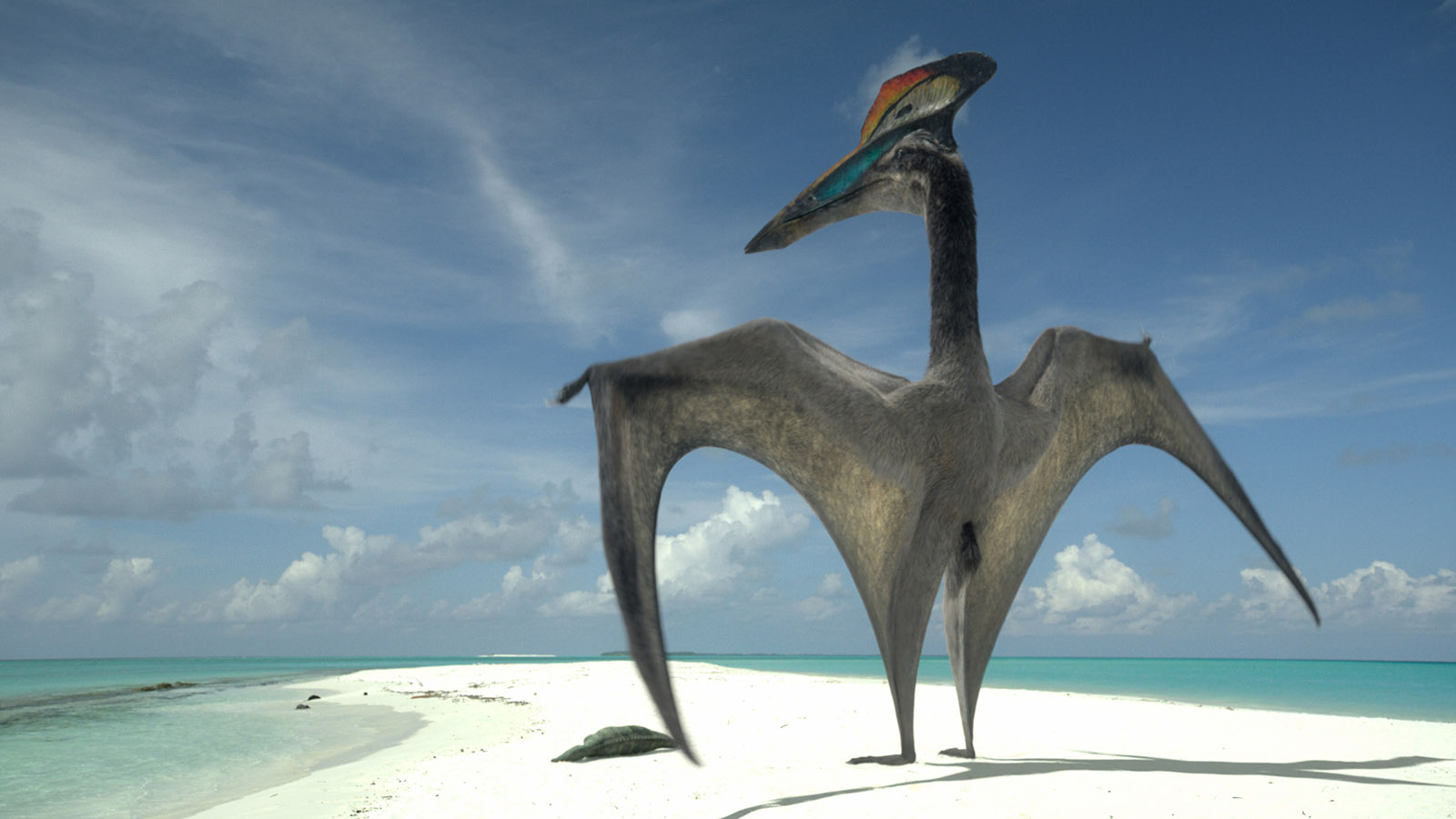
Hatzegopteryx, a giant pterosaur that lived around 66 million years ago on a subtropical island in what is now Romania
Hatzegopteryx, a giant pterosaur that lived around 66 million years ago on a subtropical island in what is now Romania; from Prehistoric Planet

Nature documentary has of late become a haunted genre. Not so Prehistoric Planet, which revels in portraying that which is already dead and gone, no longer our responsibility.

Rebecca Giggs

Prehistoric Planet a BBC Studios series streaming on Apple TV+

Otherlands: A Journey Through Earth’s Extinct Worlds by Thomas Halliday

One early myth about the dinosaurs was that they would return. In 1830 Charles Lyell—earth scientist, Scot—gazed into the far future and posited as much in his Principles of Geology, arguing that since the planet’s climate was cyclical (or so he believed), vanished creatures could yet be revived, along with their habitats, when the right conditions came back around: “The huge iguanodon might reappear in the woods, and the ichthyosaur in the sea, while the pterodactyl might flit again through umbrageous groves of tree-ferns.” As to whether people would get to witness the spectacle of this resurrected bestiary—well, if Lyell was never drawn to that question, it was because the answer was not up for debate. His was an age in which the prospect of Earth bereft of human occupancy was too abominable, too sacrilegious, to contemplate.

Previews: The New Yorker Magazine – Nov 13, 2023

Two people under a red umbrella walking in the rain near the Brooklyn Bridge.

The New Yorker – November 13, 2023 issue: The new issues cover features Kadir Nelson’s “Dumbo” – The artist discusses the seasonal energy of the city, and his sources of inspiration.

Ridley Scott’s “Napoleon” Complex

Ridley Scott photographed by Christopher Anderson.

Does the director of “Alien,” “Blade Runner,” and “Gladiator” see himself in the hero of his epic new film?

By Michael Schulman

On the morning of the Battle of Waterloo, Napoleon Bonaparte was full of catastrophic confidence. His seventy-three thousand troops were camped on a ridge near a tavern called La Belle Alliance. His nemesis, the Duke of Wellington, occupied a slope across the fields, with a mere sixty-seven thousand troops. Over breakfast, Napoleon predicted, “If my orders are well executed, we will sleep in Brussels this evening.” When his chief of staff offered a word of caution, Napoleon snapped, “Wellington is a bad general and the English are bad troops. The whole affair will not be more serious than swallowing one’s breakfast.”

How Can Determinists Believe in Free Will?

By Nikhil Krishnan

Some people think that we can’t be held responsible for what we do, given that our actions are the inevitable consequence of the laws of nature. They’re only half right.

Eclipsed in his Era, Bayard Rustin Gets to Shine in Ours

The civil-rights mastermind was sidelined by his own movement. Now he’s back in the spotlight. What can we learn from his strategies of resistance?

By Adam Gopnik

Reinventing the Dinosaur

Life on Our Planet,” a new Netflix nature documentary, renews our fascination with our most feared and loved precursors.

By Rivka Galchen

Science Review: Scientific American – September 2023

Image

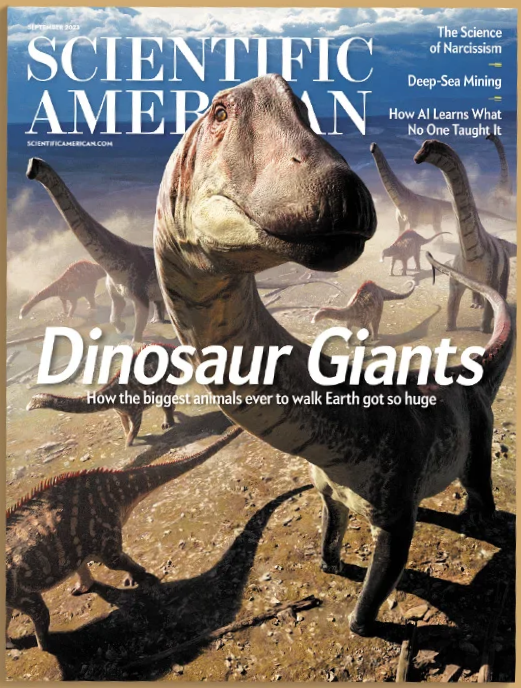
Scientific American – September 2023: The issue features ‘Dinosaur Giants – How the biggest animals ever to walk Earth got so huge; The Science of Narcissism; Deep-Sea Mining; How AI learns What No One Taught It, and more…

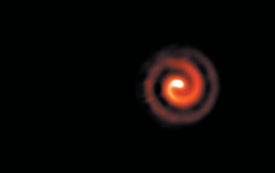
Rare ‘Pinwheel’ Stars Are a Beautiful Astronomical Puzzle

Rare 'Pinwheel' Stars Are a Beautiful Astronomical Puzzle

The doomed class of stars named Wolf-Rayets produce mysterious pinwheel shapes

By Peter Tuthill

Deep-Sea Mining Could Begin Soon, Regulated or Not

Deep-Sea Mining Could Begin Soon, Regulated or Not

Mining the seafloor could boost global production of clean energy technology—and destroy the ocean in the process

By Olive Heffernan

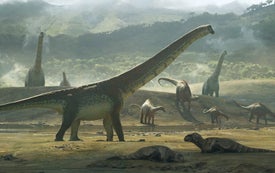
How Sauropod Dinosaurs Became the Biggest Land Animals Again and Again

How Sauropod Dinosaurs Became the Biggest Land Animals Again and Again

New research hints at how sauropod dinosaurs got to be so gargantuan

By Michael D. D’Emic

Museum Views: The Isle Of Wight – Dinosaur Island

Natural History Museum (August 8, 2023) – The Isle of Wight is a traditional British holiday resort. It’s well-known for its beautiful sandy beaches, dramatic cliffs, stunning countryside and many tourist attractions.

Video timeline: 0:00 A brief history of the Isle of Wight 1:13 Theo Vickers tells us about the geology of the island 1:35 Jack Wonfor talks about the diversity of fossil remains and how it is the best place in Europe for dinosaur discovery 2:02 Dr Susannah Maidment explains as to why the island is so good for dinosaur finds 2:35 Over 20 dinosaur species so far have been discovered on the Isle of Wight 2:52 Prof Paul Barrett tells us about the early palaeontologists, including William Fox and Sir Richard Owen 3:15 The Isle of Wight early dinosaur discoveries helped form much of what we know about dinosaurs today. 3:50 Original dinosaur discoveries are still relevant today. 4:15 New dinosaurs still being found today. 4:33 The dinosaurs found on the Isle of Wight. Iguanodon, Polacanthus, Omithopods, Sauropods, Neovenator and Eotyrannus. 5:26 How could you make your own discovery? 5:34 Techniques for finding dinosaur remains. 6:06 Dinosaur Island, the Isle of Wight’s excellent museum of geology, where there are many dinosaurs and fossils. 6:52 Why the Isle of Wight is a lovely place to visit. 7:08 how it is so easy to find a fossil on the beach.

But did you know that it is also the best place in Europe to find dinosaurs and the fossils of numerous other prehistoric animals, from ammonites to alligators?

Join our palaeontologists Dr Susannah Maidment and Professor Paul Barrett, as well as local experts, to discover what makes the Isle of Wight so special to them.