Country Life 24 August goes on a Scottish pilgrimage and celebrates the bicentenary of The Queen’s Body Guard for Scotland, The Royal Company of Archers.
Masterpiece
Jack Watkins falls under the spell of The Lady of Shalott
Romance realised
In the first of two articles, Clive Aslet tours Ardfin on the Isle of Jura, a Victorian sporting lodge reimagined for the 21st century
When the saints go marching in
Retracing the Highland route of St Columba to Iona, Joe Gibbs and his fellow pilgrims conquer hill and glen, until sickness hits
Bring me my bow
Royal Archer Jamie Blackett dons his green coat on the bicentenary of The Queen’s Body Guard for Scotland
Wind is the defining element of the thousands of islands that encircle the British Isles. Wet and salted, it sculpts every branch and bush, burns palm fronds (yes, our islands do have palm trees — albeit bedraggled), shifts shorelines and leaves surfaces rimed and rusted, skin tanned. Incessantly, it buffets the seabirds and whines at windows; often, it sends the ferry back to port, marooning islanders on their anvil of rock and sand.
Ours are not the great city islands of Venice and Stockholm or the blue-lagooned atolls of the tropics, but kelp-fringed outposts of tough survival for generations of farmers and fishermen and places of insular retreat. They encapsulate extremes — of weather, architecture, landscape and emotion — preserve faith and tradition, offer refuge or redemption, feed dreams and intensify dramas.
Life on the islands of Britain: ‘Mesmerising in its beauty and deeply cruel in equal measure’ https://ift.tt/P5iFot9
After nearly 60 years as a hotel, this former home of the poet Alfred, Lord Tennyson has been triumphantly restored as a house museum. John Goodall reports; photography by Paul Highnam.
On January 21, 1884, the poet laureate Alfred Tennyson was elevated to the peerage as Baron of Aldworth, Surrey, and of Freshwater on the Isle of Wight. As the editor of The Complete Peerage (1896) primly commented when recording this exceptional accolade, ‘the assumption of two places in different counties (more especially when the estate possessed is inconsiderable), cannot be commended’. Tennyson, however, would not have cared. Indeed, he had refused the offer of baronetcy four times and was only finally persuaded to accept it by his friend, the then Prime Minister, William Gladstone.
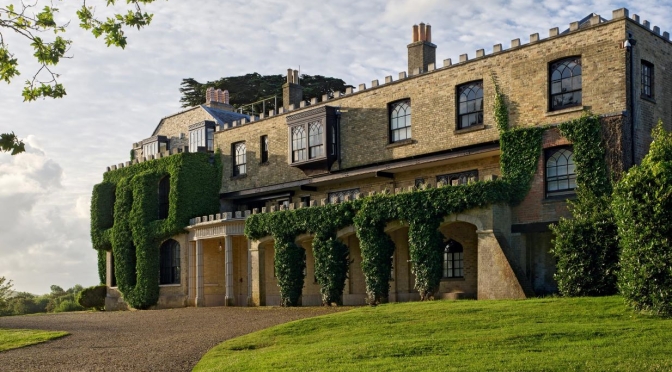
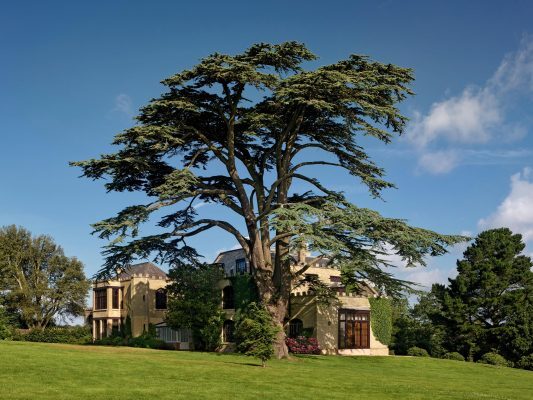
Tennyson chose this unusual title because — unconventionally for the period — he had houses in both places that he considered to be homes. Aldworth, which he generally occupied in the summer months, was a retreat from his house at Freshwater. This latter building, known as Farringford, was sold by the family in the 1940s and thereafter became a hotel. Returned back into private ownership in 2007, it has now undergone a renaissance at the hands of a Tennyson scholar, who has turned it into both a home and a house museum to the poet.
In the years immediately following his marriage in 1850, Tennyson and his wife, Emily, actively searched for a place to live. They heard from friends about a family house at Freshwater, on the north-western extreme of the Isle of Wight. Following a slightly depressing first viewing by Tennyson — then aged 44 — the couple came back together. An account of their visit in November 1853 is given in Emily’s journal. Travelling by train to Brockenhurst — where the railway line then ended — they caught an omnibus to Lymington and crossed on a still evening from the mainland in a rowing boat.
Emily was delighted by the house, which enjoyed an expansive prospect along almost the whole Hampshire coastline, and ‘looking from the drawing-room window, thought “I must have that view”, and so I said to him when alone. So accordingly we agreed… to take the place furnished for a time on trial with the option of purchasing’.
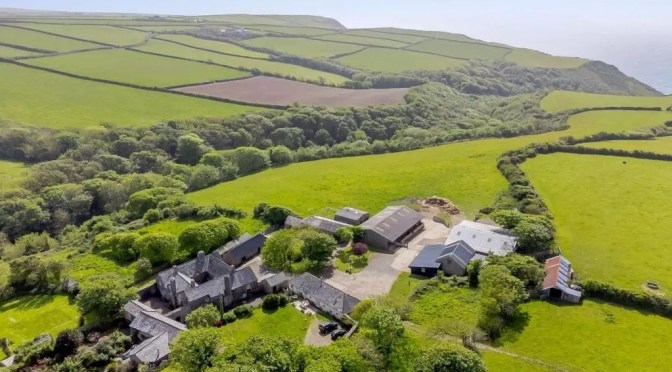
Described in its listing as ‘an unusually complete survival of a double courtyard house’ and by the historian Charles Henderson in his Parochial History of East Cornwall as ‘one of the most interesting and picturesque old houses in Cornwall’, the substantial stone farmhouse was remodelled as a manor house for the Atkin family on a double courtyard plan between 1656 and 1662.
The bright and cheerful main house offers more than 4,000sq ft of comfortable living space, including three reception rooms, a traditional farmhouse kitchen and six double bedrooms, with a further sitting room, dining room, kitchen, bedroom and bathroom in the attached cottage.
The complex includes two further cottages, one having five bedrooms, the other one bedroom. It comes with extensive barns and outbuildings, with footpaths leading across the fields to the South West Coast Path and the unspoilt beaches and dramatic rock formations around Morwenstow.
Thomas Hardy’s depictions of a fictional Wessex and his own dear Dorset are more accurate than they may at first appear, says Susan Owens.
We feel a frisson when a real place plays a key part in a novel. The Cobb at Lyme Regis will always be associated with silly Louisa Musgrove and her tumble in Jane Austen’s Persuasion and Knole in Kent with Virginia Woolf’s hero-heroine Orlando. Thomas Hardy, however, took the use of known locations to another level. He may have invented the characters in his novels, but he made them walk along actual roads, look across valleys at real views and live in recognisable villages and towns — sometimes, even in identifiable buildings.
For all its operatic symbolism, Tess of the d’Urbervilles (1891) is a novel in which practical footwear matters. Among its heart-breaking moments is when Tess’s walking boots are discovered stuffed in a hedge where she had hidden them, mistaken for a tramp’s pair and taken away, forcing her to walk many miles back home along a rough road in pretty, but thin-soled, patent-leather ones.
A map depicting Hardy’s Wessex by Emery Walker, drawn for Tess of the d’Urbervilles. Credit: BBC / Album
Those who live in the country come to know land by ear as much as by eye. Hardy’s characters are expert in this — even in the dark and when drunk, as in Desperate Remedies (1871): ‘Sometimes a soaking hiss proclaimed that they were passing by a pasture, then a patter would show that the rain fell on some large-leafed root crop, then a paddling plash announced the naked arable.’
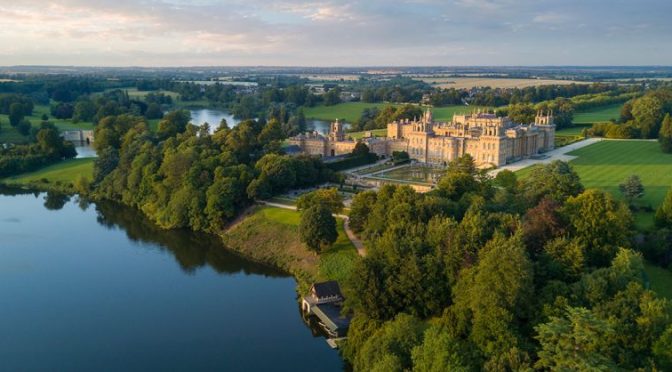
Blenheim Palace, Oxfordshire — the seat of the Duke of Marlborough — is one of the outstanding palaces of Baroque Europe, and was planned as both a residence and national monument.
Towards the end of the day on August 13, 1704, John Churchill, Duke of Marlborough, exhausted by an intense day of fighting near Blindheim, a village on the Danube, famously scrawled a note to his wife on the back of a tavern bill: ‘I have not time to say more but to beg you will give my duty to the Queen and let her know her army has had a glorious victory.’ The battle of Blenheim — as the name has been anglicised — was, in fact, a confrontation between a Franco-Bavarian army and the forces of a grand alliance of European powers, including the Dutch republic, Austria and Britain, over control of Spain and its empire. It was the first major defeat inflicted on a French army in the field for 50 years and was crowned by the capture of Louis XIV’s commander-in-chief, Marshal Talleyrand, who waited in the Duke’s coach as he scribbled his hasty message.
Although the plans of the building changed considerably over time, something close to the final design was published in the first part of Colen Campbell’s Vitruvius Britannicus (1715). As described by Campbell, ‘the manner is grand, the parts noble, and the air majestick of this palace, adapted to the martial genius of the patron…’ This latter quality was celebrated both in the ornament of the building with military trophies and its original title, ‘Blenheim Castle’.
Both Vanbrugh and Hawksmoor were well versed in medieval castle architecture and their knowledge of it shines through the spectacular outline of this building, its great angle towers and the rugged articulation of the masonry. Yet this is really a Classical castle suitable for a general of Britain in its newly assumed character as an Imperial power and second Rome. Borrowing Hawksmoor’s description of Castle Howard, as ‘the seat of one of the chief nobles of Britain, it is both a castle and palace conjoined’.
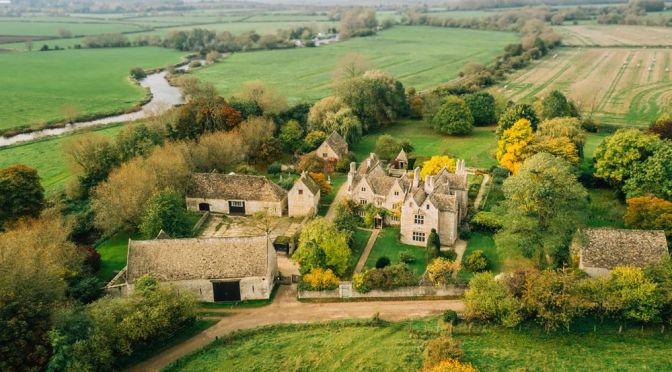
The architecture of Kelmscott Manor is woven into William Morris’s 1890 novel, News from Nowhere, in which a journey exploring utopian ideals in a post-industrial world leads, after much wandering, to a ‘many-gabled old house built by the simple country-folk of the long-past times’. There is no ‘extravagant love of ornament’ here, only a feeling that ‘the house itself and its associations was the ornament of the country life amidst which it had been left stranded from old times’. It is a poignant vision that underlines both a respect for the past and an ideal of a new society based on mutual interest and support.
Today, this old stone-built farm house is best known as the Morrises’ country home, from 1871. First leased as a retreat from busy London life, it became a vital point of reference for Morris, as artist, designer and poet; it was his ‘Heaven on Earth’, and a source of profound emotional and artistic inspiration.













 Boomers Daily