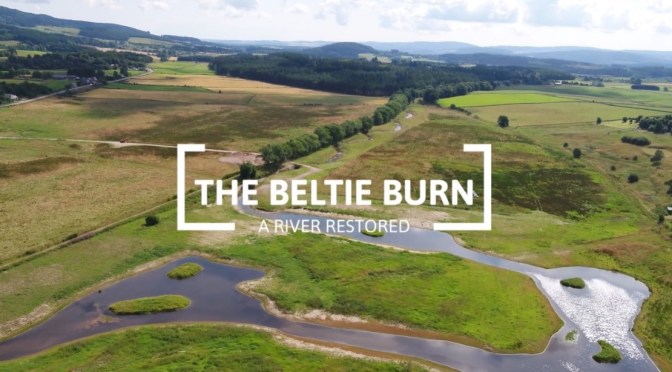
The Easter Beltie Restoration project returned a straightened agricultural stream to a natural meandering course, to improve habitats for nature and boost climate resilience.
The project was the only one of its kind in the north east of Scotland, and has created a new, two-kilometre stretch of meandering river corridor flowing through ten hectares of floodplain, rich in habitats where nature can thrive.
The Beltie Burn is a burn in Aberdeenshire, Scotland, which below Torphins and Glassel is known as the Burn of Canny. It begins in the hill of Benaquhallie, and flows for 25 km south-east through Torphins before joining the River Dee about 4 kilometres west of Banchory.
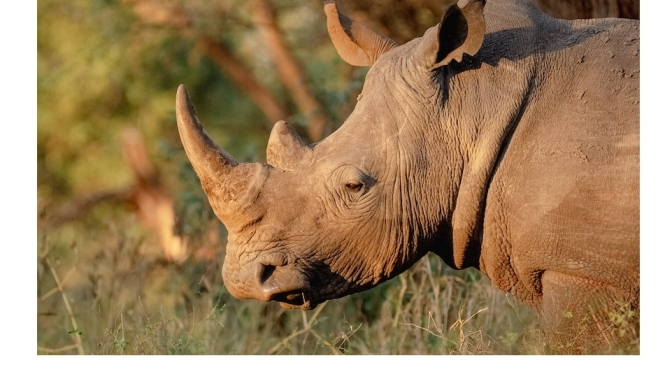
In Zimbabwe, the mighty rhino is making a comeback. In southern Africa, the animal was poached to near extinction in recent decades. We visit a wildlife sanctuary, with an elite anti-poaching team, to see how the animal is being bought back from the brink.
It’s one of the most successful rhino conservation projects in Africa. In south-eastern Zimbabwe, a private wildlife sanctuary is working hard to bring endangered rhinos back from the brink. In decades past, the mighty Black Rhino was poached to near extinction in southern Africa. Its horn, almost worth its weight in gold, makes it a target for organised poaching gangs.
In 1998, the privately-funded Malilangwe Trust had a population of 28 white and 28 black rhinos, imported from South Africa. Today its rhino population numbers in the hundreds. Reporter Michael Davie, an Australian born in Zimbabwe, returns home to witness this extraordinary wildlife success story. He spends time with the sanctuary’s highly trained anti-poaching team, the Malilangwe Scouts, the tip of the spear against the ever present poaching threat.
“Individually you can’t win against poaching and we need every one of us to fight against poachers,” says Patrick, a Sergeant in the Scouts. “You have to be a team, a strong one.” Davie captures all the incredible action of the hectic “rhino ops” where specialists dart the animals from helicopters then move in on 4WDs as they dash across the park. Led by ecologist Sarah Clegg, the rhino ops team collect vital data on the herd.
“They’ve got this reputation of being bad-tempered and dangerous and they are, but I think it’s mostly that they’re just such emotional creatures,” says Sarah, who’s studied the animal for more than two decades. “They’re just insecure, you know? And so they need more love.” Malilangwe increased its rhino population to such an extent that last year, it relocated some of its Black Rhino herd to nearby Gonarezhou National Park — a former killing ground for rhinos.
“It’s what we all aim for in our careers as conservationists,” says Sarah. “It’s a wild park, so being able to put the rhino back into that park is like waking it up again.” This visually stunning story has a powerful message of hope. “Everyone needs to know the rhino is special,” says Patrick.
On this week’s show: Whether biofuels for planes will become a reality, mitigating climate change by working with nature, and the second installment of our book series on the science of food and agriculture.
On this week's #SciencePodcast🎙: Using waste to fuel airplanes, mitigating climate change by working with nature, and the second installment of our book series on the science of food and agriculture.
First this week, Science Staff Writer Robert F. Service talks with producer Meagan Cantwell about sustainable aviation fuel, a story included in Science’s special issue on climate change. Researchers have been able to develop this green gas from materials such as municipal garbage and corn stalks. Will it power air travel in the future?
Also in the special issue this week, Nathalie Seddon, a professor of biodiversity at the University of Oxford, chats with host Sarah Crespi about the value of working with nature to support the biodiversity and resilience of our ecosystems. Seddon emphasizes that nature-based solutions alone cannot stop climate change—technological approaches and behavioral changes will also need to be implemented.
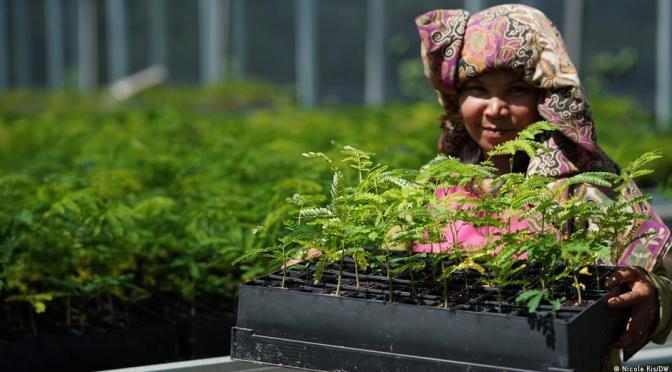
On the island of Borneo, many forests have been cleared to make way for oil palm plantations or mining. That’s having a disastrous effect on nature. So the 100 Million Trees project aims to bring back the forests.
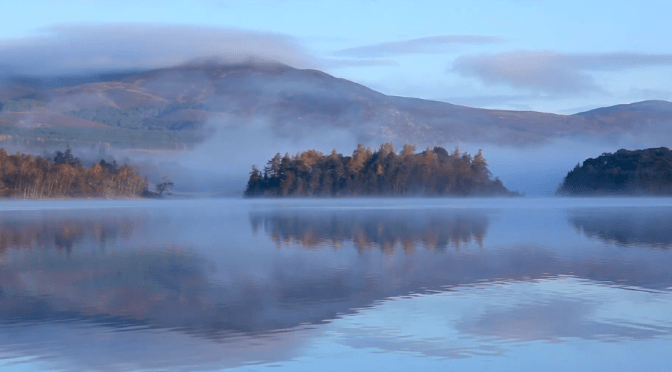
“When it comes to climate change, scale is essential. We need to be scaling up our work and being really bold and ambitious, and that’s exactly what Cairngorms Connect is.” Find out how Scotland’s largest landscape-scale restoration project is fighting back against climate change in our new film for Cairngorms Connect.
Roughly 18,000 people reside within the 4,528 square kilometre national park. The largest communities are Aviemore, Ballater, Braemar, Grantown-on-Spey, Kingussie, Newtonmore, and Tomintoul. Tourism makes up about 80% of the economy.[4] In 2018, 1.9 million tourism visits were recorded. The majority of visitors are domestic, with 25 per cent coming from elsewhere in the UK, and 21 per cent being from other countries.
The world is facing a growing waste problem, with 2bn tonnes produced last year alone. Is it possible to clean up this mess by turning trash into cash? 00:00 – The world has a huge waste problem.
Video timeline: 00:45 – Upcycling to reduce waste 02:46 – Building offices from recycled products 03:46 – The problem with traditional recycling 04:59 – Waste reduction relies on a circular economy 05:38 – Taiwan’s waste management success 08:20 – The problem with incineration 09:55 – Is the future zero waste? 10:43 – Consumption attitudes are changing Read our special report on waste here https://econ.st/3JrlD6y
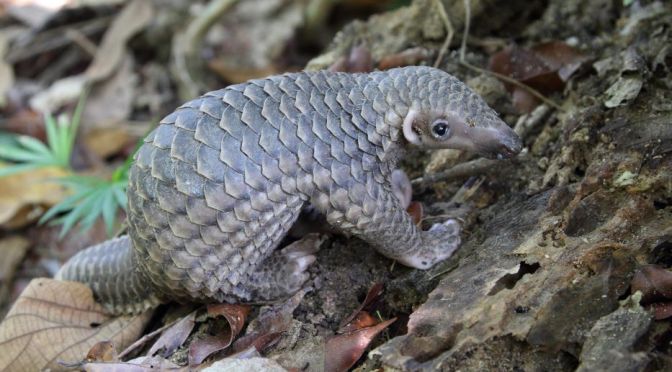
In China, Maria joins forces with Angelababy, one of the country’s biggest megastars. She is taking a bold approach to addressing the demand for pangolin products.
Pangolins, sometimes known as scaly anteaters, are mammals of the order Pholidota. The one extant family, the Manidae, has three genera: Manis, Phataginus, and Smutsia. Manis comprises the four species found in Asia, while Phataginus and Smutsia include two species each, all found in sub-Saharan Africa.
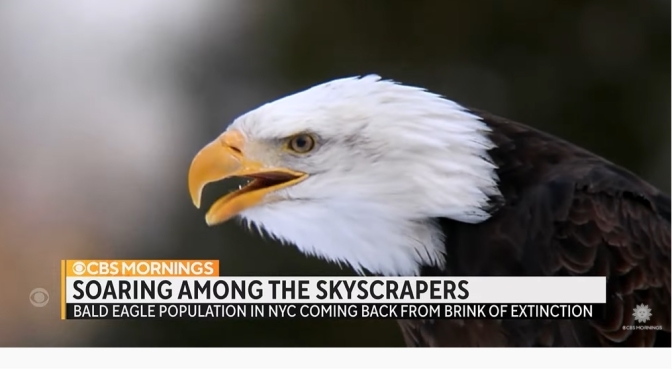
Bald eagles were nearly extinct in New York City due to environmental factors such as pollution and pesticides. Michael George spoke to an urban park ranger sergeant who participated in the two-decade effort to bring the birds back to the city.
The bald eagle is a bird of prey found in North America. A sea eagle, it has two known subspecies and forms a species pair with the white-tailed eagle, which occupies the same niche as the bald eagle in the Palearctic.
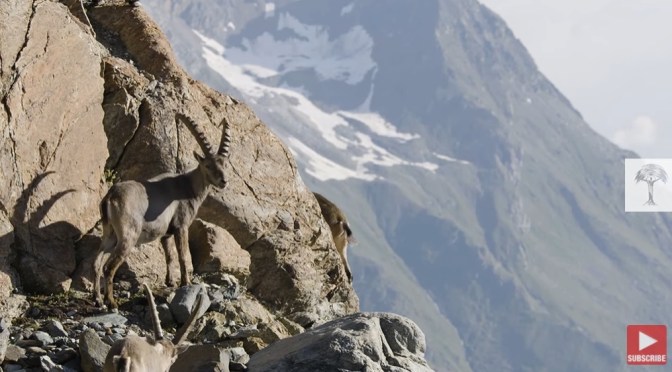
The ibex is the king of the Alps, famed for its curved horns and extreme climbing skills. But for centuries, these mountain goats were hunted by humans – to the very brink of extinction. A royal hunting reserve in Italy saved the Alpine ibex, but is climate change now threatening them all over again? We tell the story of their remarkable comeback and ask what the future might hold.
The Alpine ibex, also known as the steinbock, bouquetin, or simply ibex, is a species of wild goat that lives in the mountains of the European Alps. It is a sexually dimorphic species: males are larger and carry longer, curved horns than females. Its coat colour is typically brownish grey.
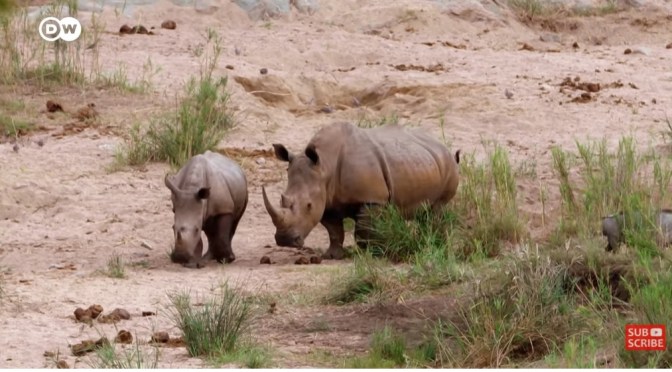
Poachers kill at least one rhino a day in South Africa. Their horns are in huge demand on the black market, and are worth more than gold. Anti-poaching squads are now increasingly better equipped: with night-vision equipment, drones and thermal imaging cameras.
Covering some 20,000 km2, Kruger National Park is one of the largest game reserves in Africa. It’s home to the biggest population of white rhinos in South Africa – and also the highest number of rhinos killed by poachers. One major problem for ranger teams is their small size in comparison to the vast area of territory involved. Another is the widespread poverty in the many villagers bordering the park – and it’s here that you ultimately have to begin if you want to win the battle to save the rhinos.
Vince Barkas has 30 years’ experience working in wildlife conservation, and little confidence in the current system’s effectiveness in protecting rhinos. In 1992 he founded the anti-poaching unit “Protrack”. Its teams operate in the Greater Kruger, which includes private wildlife reserves neighboring the national park.
Over the decades he says he’s seen no change, despite rangers being better armed and equipped, and wants to see new options: “We’ve shot poachers, arrested poachers, beaten up poachers. Everything. But we’ve never sat down and spoken.” Vince Barkas believes in the power of dialog rather than violence. He and his son Dylan made their way to Mozambique – where many of the poachers who kill rhinos in the Kruger National Park hail from.
Their journey takes them to the town of Massingir, where Barkas Snr. first began talking to poachers a number of years ago. The problem, he says, is rooted in the very concept of wildlife conservation: “We’ve made wildlife a rich white man’s thing – where white people hunt and benefit from it, and go to lodges etc. And we’ve kept black people out of it – behind a fence. We’ve got to change that approach.”
News, Views and Reviews For The Intellectually Curious



 Boomers Daily