World Economic Forum (October 14, 2023) – This week’s top stories of the week include:
0:15Why engagement in the news is in decline – A massive media survey looked at trust and engagement in the news and found both are in steady decline. Just 48% of people say they are very or extremely interested in the news in 2023 down from 63% in 2017. Trust in the news has fallen 2 percentage points in a year. Now, only 40% say they trust the news most of the time and 36% say they actively avoid the news sometimes or often.
1:53This robot can help people with disabilities dress – The robot was designed by a team at Carnegie Mellon University (CMU). They used a simulation to teach it how to perform its task. The team used an AI-driven approach called ‘reinforcement learning’. The robot was rewarded each time it correctly placed a shirt further along an arm.
3:25Company captures and stores CO2 with limestone – Heirloom takes crushed limestone and heats it in a kiln powered by renewable energy. The reaction generates two products. These are CO2, which can be permanently stored underground or in materials like concrete and a powder, which is hydrated with water to make calcium hydroxide. When the calcium hydroxide is spread onto trays, it absorbs CO2 from the air to become limestone and the whole process can begin again.
5:24How to use ChatGPT more safely – ChatGPT is an AI tool that gives detailed, natural language answers to prompts based on a database of 300 billion words drawn from books and articles. The AI learns from its interactions with you, so here are 5 ways to ensure you’re using it safely.
_____________________________________________
The World Economic Forum is the International Organization for Public-Private Cooperation. The Forum engages the foremost political, business, cultural and other leaders of society to shape global, regional and industry agendas. We believe that progress happens by bringing together people from all walks of life who have the drive and the influence to make positive change.
World Economic Forum (May 13, 2023) – This week’s top stories of the week include:
0:15This volcanic bacteria eats CO2 – Scientists say they turn CO2 into biomass ‘astonishingly quickly’ and one day could help remove CO2 from the atmosphere. The microbes were discovered off the coast of the Italian island of Vulcano where the ocean is rich in CO2. They bubble up from volcanic vents on the seafloor. The microbes were discovered by scientists from the Two Frontiers Project who found that the bugs sink in water which could help to sequester the CO2 they absorb.
1:35This Japanese soccer league is over 80s only – It kicked off in April with 3 teams going head-to-head boasting an average age of 83.5. Among the players is ex-national team forward Mutsuhiko Nomura. His career has spanned 70 years and 18 World Cups. Now, aged 83, he patrols the midfield for Red Star. But the league’s veteran is Shingo Shiozawa. The former racing car designer plays in net for the White Bears at the tender age of 93.
3:19Why we need economic growth – Economic growth may not be the only measure of success but in many countries, it saves lives. But economic growth need no longer happen at the expense of the planet.
6:38Women need investment, not just empowerment – Non-profit Grameen Foundation is helping millions of people lift themselves out of poverty by teaching women how to manage money, access loans and manage their businesses. Most importantly, Bai says, women need to have the knowledge to ask the right questions.
_____________________________________________
The World Economic Forum is the International Organization for Public-Private Cooperation. The Forum engages the foremost political, business, cultural and other leaders of society to shape global, regional and industry agendas. We believe that progress happens by bringing together people from all walks of life who have the drive and the influence to make positive change.
Will the cities of the future be climate neutral? Might they also be able to actively filter carbon dioxide out of the air? Futurologist Vincente Guallarte thinks so. In fact, he says, our cities will soon be able to absorb CO2, just like trees do.
To accomplish this, Guallarte wants to bring sustainable industries and agriculture to our urban centers, with greenhouses atop every building. But in order for Guallarte’s proposal to work, he says, cities will have learn to submit to the laws and principles of nature. Urban planners also have big plans for our energy supply. In the future, countries like Germany could become energy producers.
In Esslingen am Neckar, residents are working on producing green hydrogen in homes, to be used as fuel for trucks. It’s a project that‘s breaking new ground, says investor Manfred Norbert. Our future cities will be all about redefining a new normal. Architects and urban planners are expecting to see entirely new approaches to communal living, as well as new urban concepts for autonomous supply chains. The repurposing of old buildings, and the generation of food as well as energy, are other important topics.
The architect Arno Brandhuber thinks the current building stock available, and the possibilities it offers, have been underestimated. His spectacular business headquarters are located in an old silo in Berlin’s Lichtenberg district. His most provocative project, something he calls his “Anti-villa,” is a repurposed East German factory for cotton knitwear. It‘s a prime example of sustainable design.
As more of the world’s forests are destroyed, it makes you wonder: what’s going to absorb CO2 in their place?! In an ironic twist of fate, one of Earth’s “deadest” habitats might be our best hope for an ongoing supply of breathable air.
Called peatlands, these wetland environments are named for their tendency to accumulate decayed plant matter. Unlike most other ecosystems, like forests, where branches and leaves typically decompose in a matter of months… in peatlands, that plant material can stay intact for millenia. You see, peatlands mostly exist in high altitude places where temps are low and there’s not much water flow. This results in their having extremely low oxygen and high acidity levels.
These harsh conditions aren’t very hospitable to microbes and fungi, which are instrumental to the whole decomposition process. So without them around, the plant material sort of… just sits. Over time, that it globs together to form peat, a thick, spongy material that can soak up 20x its weight in water. Peat also soaks up loads of carbon. Through a process known as the Calvin cycle, living plants absorb CO2 from the air and convert it into organic molecules that they can then use as energy to grow.
Through decomposition, the carbon that’s “fixed” in a plant’s structure gets released but since peat doesn’t decompose, that carbon can stay put! It’s estimated that peatlands contain 550 gigatonnes of organic carbon, which is twice as much organic carbon as all the world’s forests combined. That’s absolutely wild, considering that forests cover about 30% of the world’s land area… and peatlands only account for 3%! Like most of the world’s habitats, peatlands aren’t immune to the threats of human development and exploitation.
Peat is also are a very in-demand resource. Its incredible water holding capacity makes it a favorite amongst horticulturists; If you’ve ever picked up a bag of soil amendment, chances are it’s full of the stuff. Since peat is also a fossil fuel with a long burn, it’s used in some parts of the world. Peatlands are also often drained to accommodate other land use activities, like agriculture.
How insects help release carbon stored in forests, and the upcoming biodiversity summit COP 15.
In this episode:
00:44 Fungi, insects, dead trees and the carbon cycle
Across the world forests play a huge role in the carbon cycle, removing huge amounts of carbon dioxide from the atmosphere. But when those trees die, some of that carbon goes back into the air. A new project studies how fast dead wood breaks down in different conditions, and the important role played by insects.
After several delays, the fifteenth Conference of the Parties (COP 15) to the United Nations Convention on Biological Diversity, is now slated to take place next year. Even communicating the issues surrounding biodiversity loss has been a challenge, and reaching the targets due to be set at the upcoming meeting will be an even bigger one.
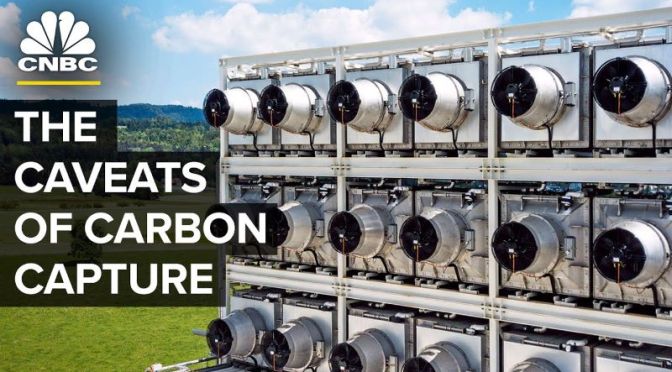
The system could be one answer to slashing Earth’s carbon emissions. A Swiss startup has created a giant vacuum cleaner to capture carbon dioxide from the air, helping companies offset their emissions. WSJ visits the facility to see how it traps the gas for sale to clients like Coca-Cola, which uses it in fizzy drinks. Composite: Clément Bürge.
Elon Musk, Microsoft and oil giants like BP, Occidental and Exxon Mobil are investing in carbon capture technologies. Carbon Engineering and Climeworks are two start-ups that have built machines to suck CO2 straight out of the atmosphere in a process known as direct air capture. But the technology faces a number of challenges, one of which is that there’s currently no market for the captured CO2. As a result, some companies are selling their captured CO2 to oil companies, which use it to produce even more oil.
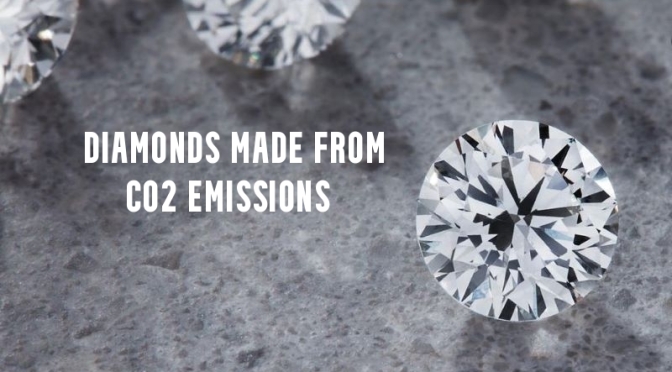
A UK company named Skydiamond hopes to revolutionize the traditional diamond mining industry by using carbon capture technology to do just that. The company calls it a ‘zero-impact diamond’ because the process pulls carbon dioxide right out of the air.
Although, a diamond traps only a modest amount of carbon — one carat contains just 200 milligrams. Pure carbon can take many forms — it all depends on how the atoms are arranged. Graphite is arranged into multiple layers, graphene in a single layer, and if it’s rolled-up, it forms carbon nanotubes. But when each carbon forms 4 strong bonds in a tetrahedral structure, it becomes a diamond.
Most natural diamonds were formed over a billion years ago, more than 120 kilometers beneath the Earth’s surface. This is where intense temperature and pressure cause carbon atoms to strongly bond together and arrange into crystal structures. Volcanic eruptions bring these crystals embedded in magma to the surface. When the magma cools, it hardens in long vertical shafts called kimberlite pipes. And these pipes are what’s sought after in the mining industry.












 Boomers Daily