Tag Archives: Climate Change

Environment: ‘Guardians Of The Glaciers’ In France

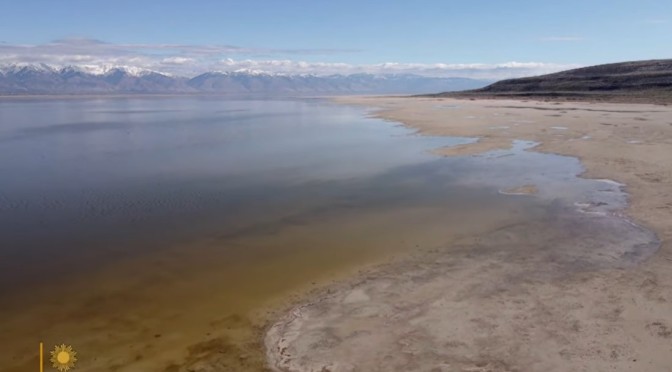
FRANCE 24 English (February 7, 2023) – Glaciers are increasingly threatened by climate change. The French Alps are home to more than 4,000 of these fascinating natural monuments, of which 80 to 90 percent are set to disappear by 2100 due to global warming.

Among the most emblematic glaciers is the Mer de Glace, or Sea of Ice, which retreats a little more each year, under the watchful eye of tourists. Meanwhile, the Bossons glacier reveals aircraft debris that was thought to be lost forever. FRANCE 24 went to meet some of the guardians of the glaciers.

Climate Change: Threats Of Ocean Acidification

The Economist (February 2, 2023) – As carbon emissions change the chemistry of the seas, ocean acidification threatens marine life and human livelihoods. How worried should you be about climate change’s so-called “evil twin”?

Video timeline: 00:00 The other carbon problem 00:50 How does the ocean’s deepest point reveal its past? 02:55 Why are baby oysters dying? 04:08 Is the ocean acidic? 05:21 What is causing ocean acidification? 06:01 Why are corals dissolving? / Will deep sea ecosystems survive? 08:35 A threat to human livelihoods 10:42 What are the ‘potato chips of the sea’? 12:04 What is the solution?

Books: The New York Times Book Review – Jan 22, 2023

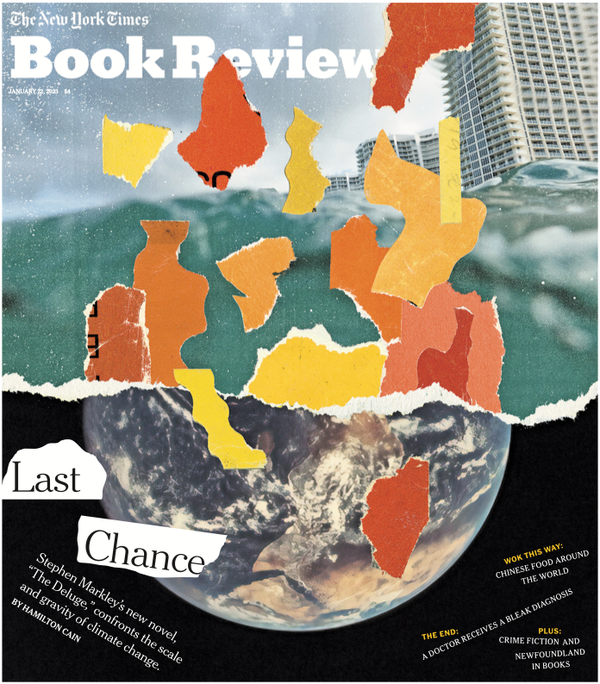
Illustration by Anthony Gerace

The New York Times Book Review – January 22, 2023:

A New Novel Confronts the Scale and Gravity of Climate Change

As catastrophe approaches, Stephen Markley’s “The Deluge” considers its many facets.

A Documentarian Travels the World Asking: ‘Have You Eaten Yet?’

From the Arctic to the Amazon, Cheuk Kwan traces a diaspora through Chinese restaurants owned and operated by immigrant families.

Read Your Way Through Newfoundland

Michael Crummey, an award-winning author whose poetry and prose explore the region and its capital, St. John’s, shares book recommendations, local vocabulary and where to find a good pint.

Views: Saving The Maldives From Rising Sea Levels

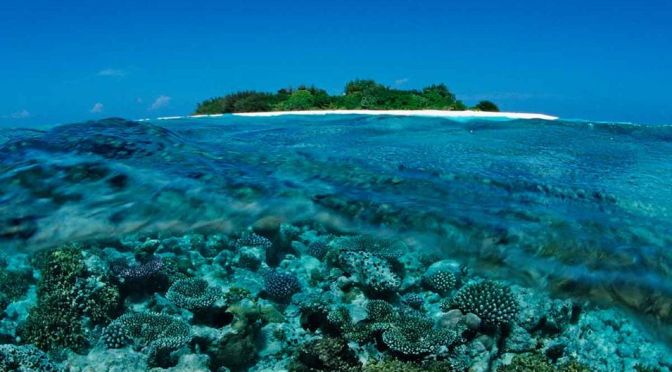
BBC Earth (January 10, 2023) – The Maldives could be underwater by 2100. Maldivians are working together to look to the very thing that defines them – the ocean – to save its future, and their island homes. Narrated by wildlife filmmaker Laura Pennafort.

Alaska Views: ‘Salmon Reflection’ (BBC Earth)

BBC Earth – A unique relationship is changing in Alaska. In her film ‘Salmon Reflection’ Norwegian and Unangax̂ filmmaker Anna Hoover explores the effects of a changing world on the communities of Bristol Bay, one of the last surviving wild salmon ecosystems.

Science: How Advanced Computer Models Project Future Climate Scenarios

Princeton University (December 13, 2022) – Earth’s atmosphere, oceans, and land surfaces interact and combine in powerful, yet often unseen, ways as part of a complex planetary system that determines the climate.

Over many decades, researchers at Princeton University have played a leading role in the development of advanced computational models that simulate interactions among these elements to inform an understanding of future climate scenarios under varying conditions.

In this video, climate scientists Gabe Vecchi and Laure Resplandy discuss how computational models are used to project future climate scenarios and inform mitigation strategies.

READ MORE

Previews: The Guardian Weekly – December 2, 2022

Warning signs: inside the 2 December Guardian Weekly | China | The Guardian

Warning signs: inside the 2 December Guardian Weekly | China | The Guardian

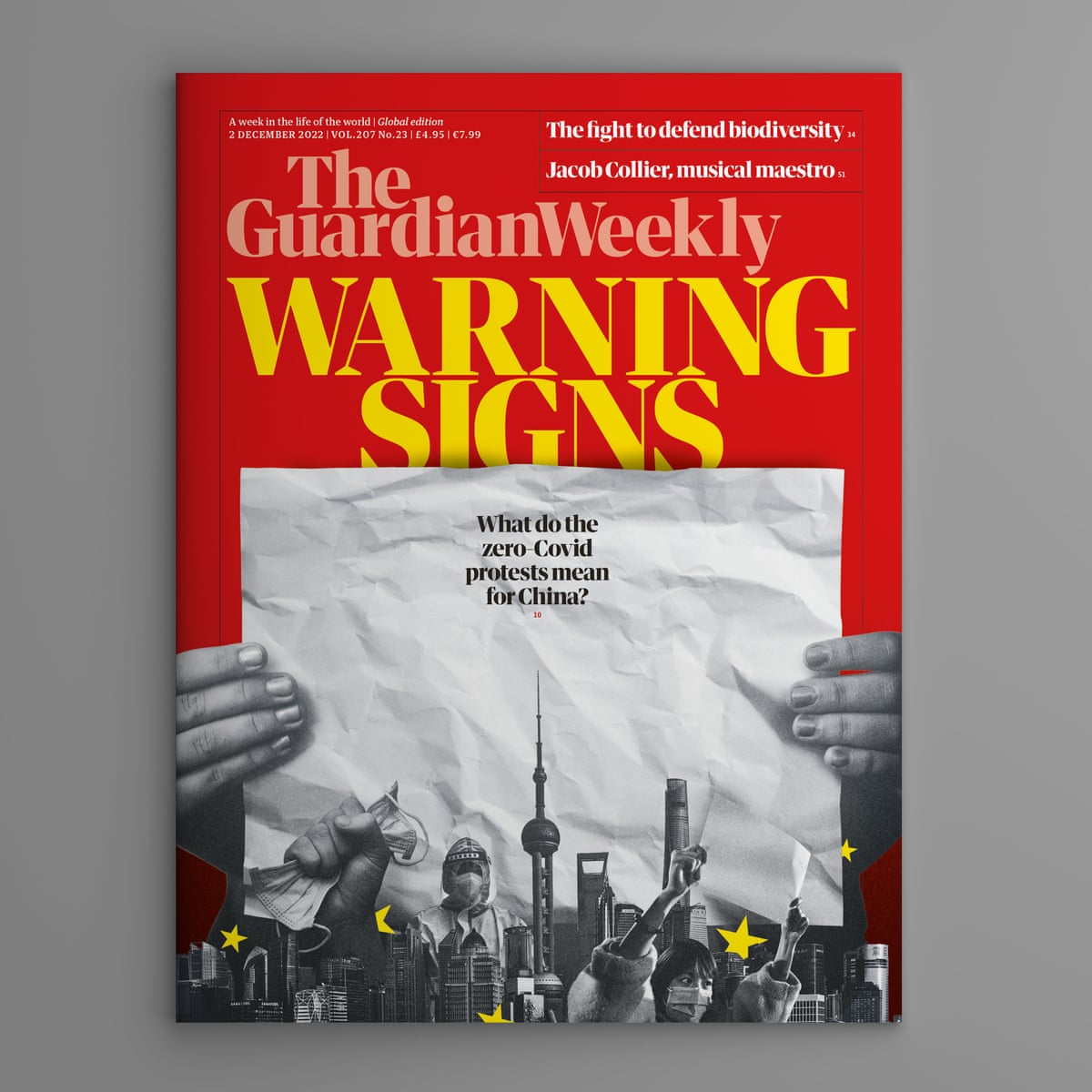
Discontent over China’s zero-Covid suppression policy came to a head last weekend in a series of unprecedented protests across the country. The civil disobedience – remarkable just for the fact it was happening at all in a state where such behaviour is rarely tolerated – seemed to have been smothered by police by the start of the week. Even so it revealed to the world signs of a hitherto unseen fracture in China’s totalitarian political system.

From one Cop to another: hot on the heels of the recent climate conference comes this month’s global summit on biodiversity, which is being held in Montreal. To set the scene, biodiversity reporter Phoebe Weston explains how the damage done to the natural world is a tale of decline spanning thousands of years. Can delegates at Cop15 seize their chance to change the narrative?

With five Grammy awards off the back of four albums spanning everything from folk to jazz and pop, the British multi-instrumentalist Jacob Collier is a global phenomenon. But despite being feted by music royalty including Stormzy, Chris Martin and Herbie Hancock, the 28-year-old has kept a relatively low profile. Global music critic Ammar Kalia takes a trip into Collier’s colourful, polyharmonic world of quarter-tones and non-standardised pitch.

Previews: The Guardian Weekly, November 25, 2022

Cop27's climate anticlimax: inside the 25 November Guardian Weekly | Cop27  | The Guardian

Cop27’s climate anticlimax: inside the 25 November Guardian Weekly | Cop27 | The Guardian

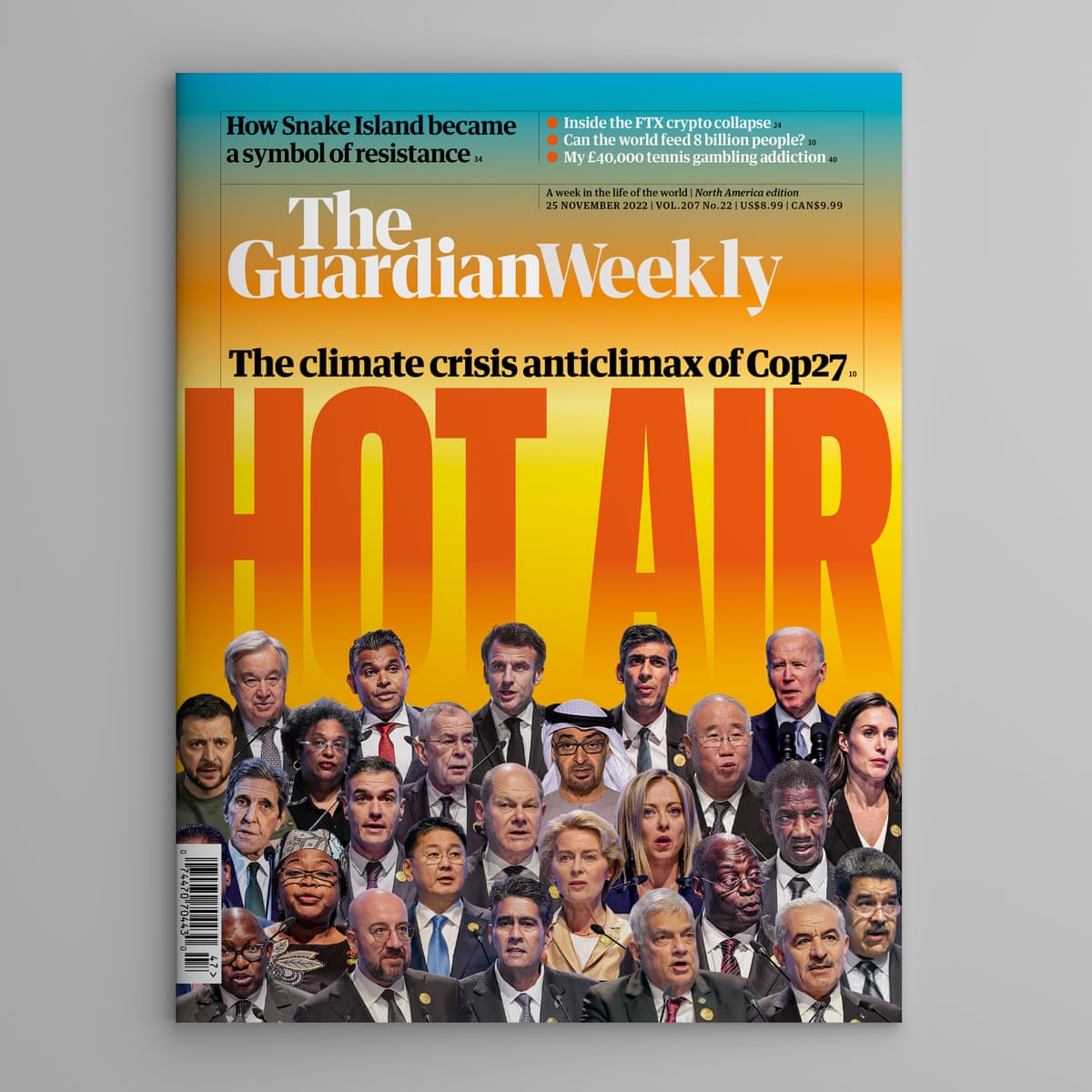
Cop27 ended in a now-traditional blur of last-minute horse-trading, resulting in the welcome agreement of a finance deal for developing countries affected by global heating. But progress on eliminating fossil fuel usage – the key to slowing climate change – again seemed beyond the international community.

As winter descends on Ukraine, we focus on some of the war’s ripples around Europe. Jennifer Rankin reports from Antwerp, where the continued trade in Russian diamonds shines a light on loopholes in EU sanctions on Moscow. And Emma Graham-Harrison is in eastern Poland, where people’s proximity to the war is helping people to put aside past differences.

Then, in features, Luke Harding speaks to the Ukrainian defenders of Snake Island – who famously sent an expletive-laden rebuttal to a Russian warship at the start of the conflict – and finds out what happened next.

Analysis: The Future Of Energy Policies In Europe

DW Documentary – Energy is life – these days, Europeans are experiencing that first-hand. For far too long, Europe has depended on coal, oil and gas imports from around the world. Not only have these fuels been driving the climate catastrophe, but they also serve as a dangerous bargaining chip for geopolitical interests.

Energy is essential — and it is a major problem. The war in Ukraine has shown just how dependent Europe is on fossil fuels. This has weakened Europe and given export countries – frequently governed by authoritarian rule – a geopolitical means of leverage. Now, war on the European continent has eclipsed concerns over the climate Crisis. The increased consumption of harmful fuels is creating economic and political problems.

Yet, against the odds, decarbonizing Europe remains a widespread priority, and alternative solutions are already available. In France, Denmark and Ukraine, civil initiatives are taking energy supplies into their own hands and investing in the joint production of their own solar energy. In some cases, privately produced solar energy has proven much cheaper than what national solar energy providers offer.

These initiatives show that decentralizing energy production could be the key to transforming our energy supply. Poland still depends heavily on coal, but is offering re-training programs for employees in the mining business to help them transition to green jobs. An estimated one million such green jobs are expected to be created in Europe by 2030. Green hydrogen, currently still in the development stages, could be a sustainable and profitable alternative for industries in the future.

Across the continent, workable alternatives are emerging. The current quick succession of political crises has now joined the ongoing climate crisis to show just how important it is to act now.

Analysis: The World Ahead 2023 – The Economist

Image

Ten trends to watch in the coming year

A letter from Tom Standage, editor of “The World Ahead 2023”

1. All eyes on Ukraine. Energy prices, inflation, interest rates, economic growth, food shortages—all depend on how the conflict plays out in the coming months. Rapid progress by Ukraine could threaten Vladimir Putin, but a grinding stalemate seems the most likely outcome. Russia will try to string out the conflict in the hope that energy shortages, and political shifts in America, will undermine Western support for Ukraine.

2. Recessions loom. Major economies will go into recession as central banks raise interest rates to stifle inflation, an after-effect of the pandemic since inflamed by high energy prices. America’s recession should be relatively mild; Europe’s will be more brutal. The pain will be global as the strong dollar hurts poor countries already hit by soaring food prices.

3. Climate silver lining. As countries rush to secure their energy supplies, they are turning back to dirty fossil fuels. But in the medium term the war will accelerate the switch to renewables as a safer alternative to hydrocarbons supplied by autocrats. As well as wind and solar, nuclear and hydrogen will benefit too.

4. Peak China? Some time in April China’s population will be overtaken by India’s, at around 1.43bn. With China’s population in decline, and its economy facing headwinds, expect much discussion of whether China has peaked. Slower growth means its economy may never overtake America’s in size.

5. Divided America. Although Republicans did worse than expected in the midterm elections, social and cultural divides on abortion, guns and other hot-button issues continue to widen after a string of contentious Supreme Court rulings. Donald Trump’s formal entry into the 2024 presidential race will pour fuel on the fire.

6. Flashpoints to watch. The intense focus on the war in Ukraine heightens the risk of conflict elsewhere. With Russia distracted, conflicts are breaking out in its backyard. China may decide that there will never be a better time to make a move on Taiwan. India-China tensions could flare in the Himalayas. And might Turkey try to nab a Greek island in the Aegean?

7. Shifting alliances. Amid geopolitical shifts, alliances are responding. nato, revitalised by the war in Ukraine, will welcome two new members. Will Saudi Arabia join the Abraham accords, an emerging bloc? Other groupings of growing importance include the Quad and aukus (two American-led clubs intended to deal with China’s rise) and i2u2—not a rock band, but a sustainability forum linking India, Israel, the United Arab Emirates and the United States.

8. Revenge tourism. Take that, covid! As travellers engage in post-lockdown “revenge” tourism, traveller spending will almost regain its 2019 level of $1.4trn, but only because inflation has pushed up prices. The actual number of international tourist trips, at 1.6bn, will still be below the pre-pandemic level of 1.8bn in 2019. Business travel will remain weak as firms cut costs.

9. Metaverse reality check. Will the idea of working and playing in virtual worlds catch on beyond video games? 2023 will provide some answers as Apple launches its first headset and Meta decides whether to change its strategy as its share price languishes. Meanwhile, a less complicated and more immediately useful shift may be the rise of “passkeys” to replace passwords.

10. New year, new jargon. Never heard of a passkey? Fear not! Turn to our special section, “Understand This”, which rounds up the vital vocabulary that will be useful to know in 2023. nimbys are out and yimbys are in; cryptocurrencies are uncool and post-quantum cryptography is hot; but can you define a frozen conflict, or synfuel? We’ve got you covered.