
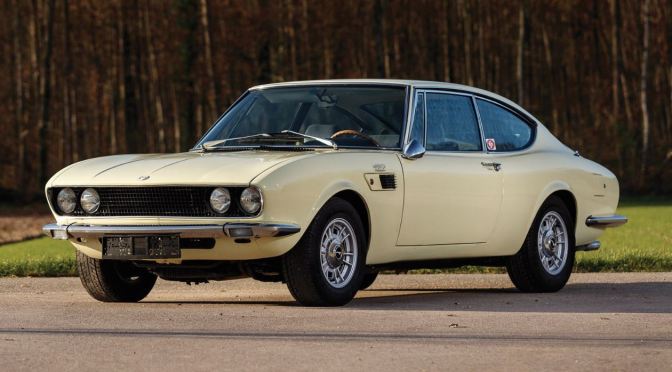
From Wikipedia:
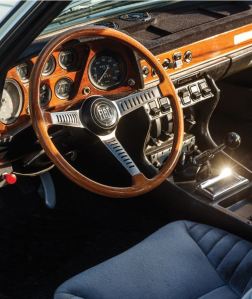 The Fiat Dino (Type 135) was a front-engine, rear-wheel-drive sports car produced by Fiat from 1966 to 1973. The Dino name refers to the Ferrari Dino V6 engine, produced by Fiat and installed on the cars to achieve the production numbers sufficient for Ferrari to homologate the engine for Formula 2 racing.
Fiat Dino 2400, 1969–1973
1970 Fiat Dino 2400 Spider – In 1969, both Ferrari and Fiat introduced new 2.4-litre Dino models. The Fiat Dino 2400 premiered in October 1969 at the Turin Motor show; besides the larger engine, another notable improvements was independent rear suspension.[8] The V6 now put out 180 PS (132 kW; 178 hp), and used a cast iron instead of the previous light alloy engine block; the same engine was installed on the Dino 246 GT, Ferrari’s evolution of the 206. Whereas the original Dino was equipped with a rigid axle suspended by leaf springs and 4 shock absorbers, 2.4-litre cars used a coil-sprung independent rear suspension with 2 shock absorbers derived from the Fiat 130. Rather than engine power and absolute speed, the most important consequence of the larger displacement was a marked increase in torque, available at lower engine speeds; the Dino 2400 had much better pickup, and it was found more usable, even in city traffic.
To see more photos: https://www.classicdriver.com/en/car/fiat/dino/1970/725166

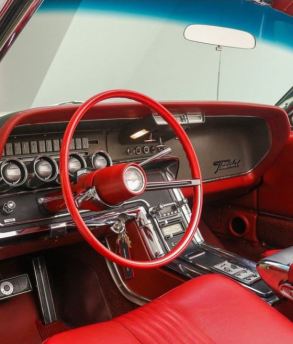 The revised model was initially offered as a hardtop, convertible, Sports Roadster with dealer-installed tonneau cover and wire wheels, and Landau with vinyl roof, simulated landau irons, and wood grain interior appointments. Total 1964 sales were excellent: 92,465, up nearly fifty per cent from the previous year, but with only 50 Sports Roadster kits were sold from the factory. The 1964 Thunderbird was the only car of this generation to have the word ‘Thunderbird’ spelled out on the front hood instead of a chrome Thunderbird emblem. The only transmission available was the Cruise-O-Matic MX 3 speed automatic.
 The fourth generation of the
 The ASA 1000 GT originated in a late 1950s experimental project by Ferrari engineers to create a less expensive, compact alternative to existing Ferrari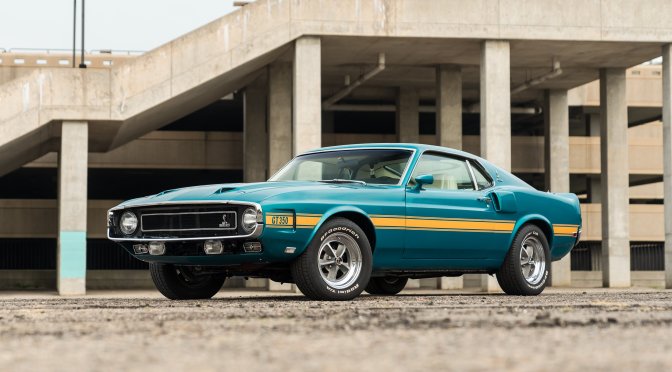
 As the Mustang line grew in size and comfort features, so too did the Shelby branded vehicles on which they are based. Never one to settle for standard, Carroll Shelby decided to take the already aggressive and bold styling of the 1969 Mustang even further. New front fenders, which included functioning brake ducts, were added which terminated in a big, full-width grill and bright chrome bumper set forward of this. Some other interesting design elements were included as well such as NACA ducts on the hood, rather than the traditional raised hood scoops.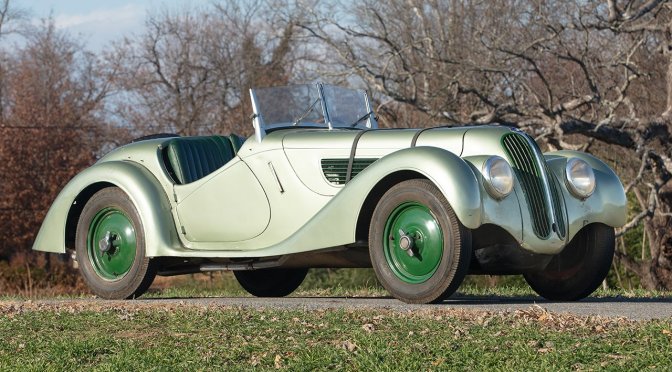
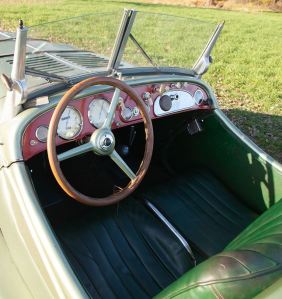 BMW’s 328 is recognized as one of history’s most important sports cars, and examples are proudly displayed in leading museums such as the Revs Institute and the Simeone Foundation Automotive Museum. The model emerged victorious in its debut race at the Nürburgring in 1936, won its class at the 1938 Mille Miglia and the 1939 Le Mans, and won the Mille Miglia outright in 1940. With over 200 victories, 328s were competitive until well into the 1950s.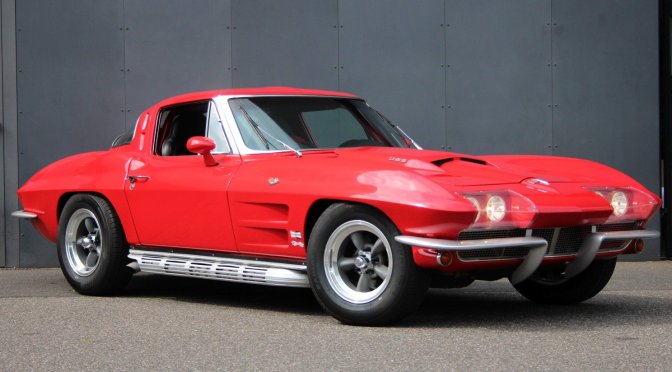
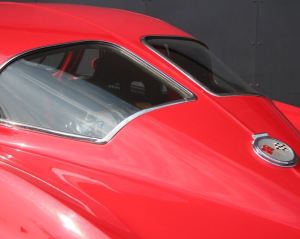 The 1963 Sting Ray production car’s lineage can be traced to two separate GM projects: the Q-Corvette, and perhaps more directly, Mitchell’s racing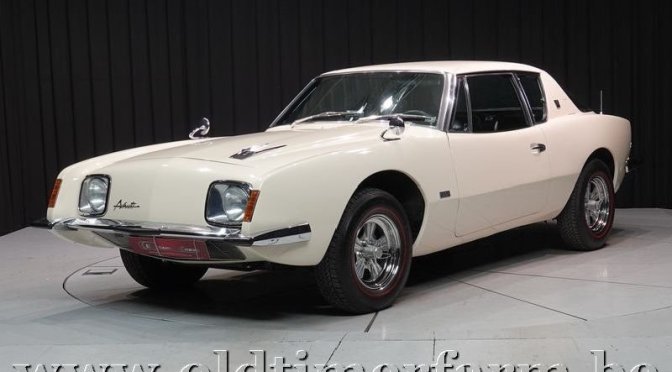
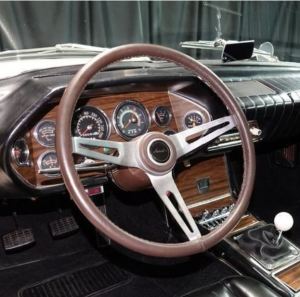 Described as “one of the more significant milestones of the postwar industry”, the car offered combined safety and high-speed performance. Subsequent to Studebaker’s discontinuation of the model, a series of five owner arrangements continued manufacture and marketing of the Avanti model.
 The Avanti was developed at the direction of Studebaker president, Sherwood Agbert. “The car’s design theme is the result of sketches Egbert “doodled” on a jet-plane flight west from Chicago 37 days after becoming president of Studebaker in February 1961.” Designed by Raymond Loewy’s team, the Avanti featured a radical fiberglass body mounted on a modified studebaker Lark Daytona 109-inch convertible chassis and powered by a modified 289 Hawk engine. APaxton supercharger was offered as an option.

 Along with the
 The Type E Series III had the privilege of launching the new Jaguar V12 engine in 1971. This superb 5.3L engine with two overhead cams, derived from a prototype for the 24 Hours of Le Mans, was powered by four carburettors. and developed 272CV DIN upon its release, it will give up to 700CV in competition versions.
 Boomers Daily