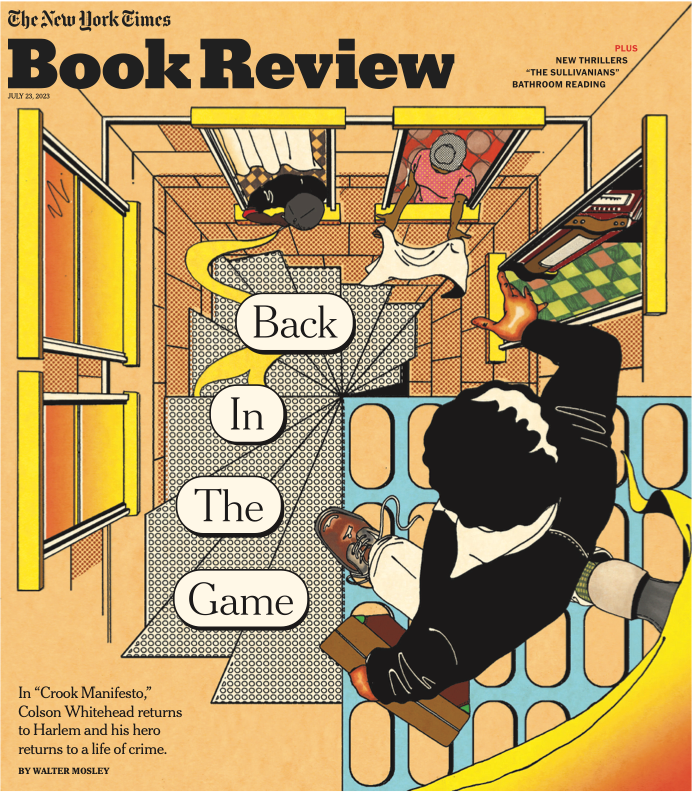
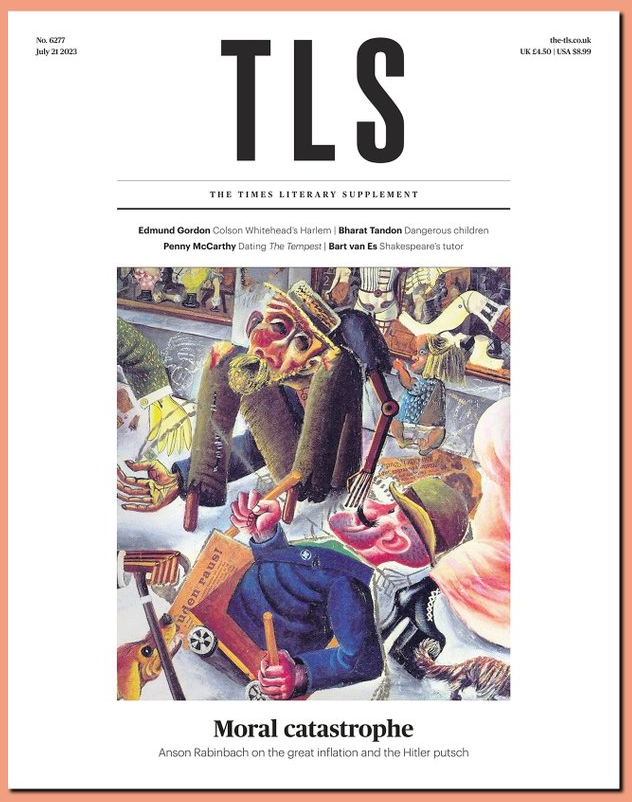
Times Literary Supplement (July 21, 2023) – Moral catastrophe – The great inflation in Germany in 1923 and the Hitler putsch; Pioneer’s in Women’s Sport; Colson Whitehead’s Harlem; Dangerous children; Dating The Tempest and Shakespreare’s tutor….
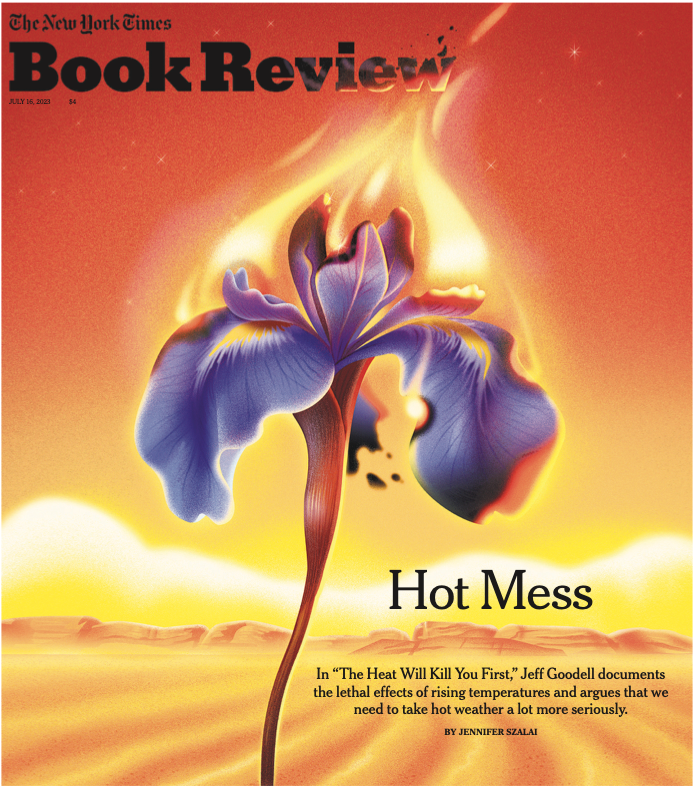
In “The Heat Will Kill You First,” Jeff Goodell documents the lethal effects of rising temperatures and argues that we need to take hot weather a lot more seriously.
In Deborah Willis’s novel “Girlfriend on Mars,” a young woman enters a reality-TV contest to leave the planet, and her marijuana-farming boyfriend, behind.
GIRLFRIEND ON MARS, by Deborah Willis
Sometimes, a girlfriend needs space. Sometimes, she goes to space. That’s the — OK, obvious — premise of “Girlfriend on Mars,” a novel by the Canadian writer Deborah Willis, who knows what we’ve wished for from books all along, which is that they were TV instead.
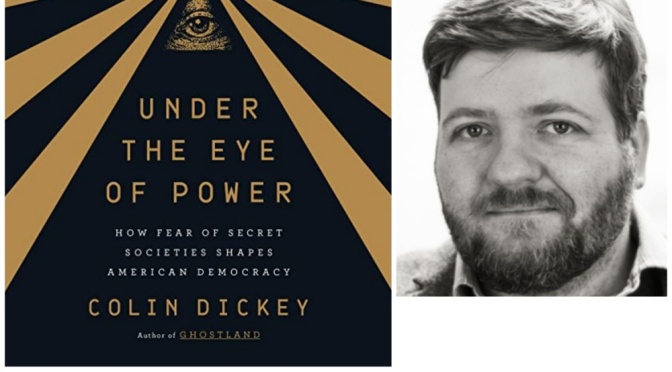
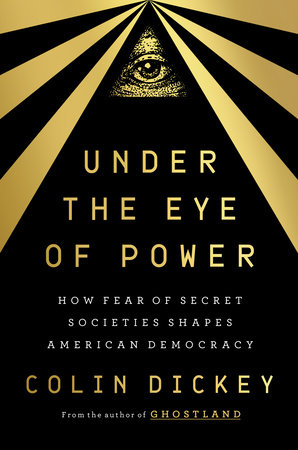
The American Scholar (July 14, 2023):In his new book, ‘Under the Eye of Power’, Colin Dickey asks, “What if paranoia, particularly a paranoia of secret, subversive societies, is not just peripheral to the functioning of democracy, but at its very heart?”
The litany of contemporary conspiracy theories runs long: Pizzagate, QAnon, chemtrails, “jet fuel can’t melt steel beams,” “birds aren’t real.”
Some of these are funny—the rumor that Avril Lavigne and/or Paul McCartney have been replaced by doppelgängers—and some have deadly consequences, like the mass murders motivated by replacement theory or the Chronicles of the Elders of Zion.
We might like to think this is a recent phenomenon, but the first American president to espouse a conspiracy theory was actually George Washington, a freemason who believed that the Illuminati caused the French Revolution.
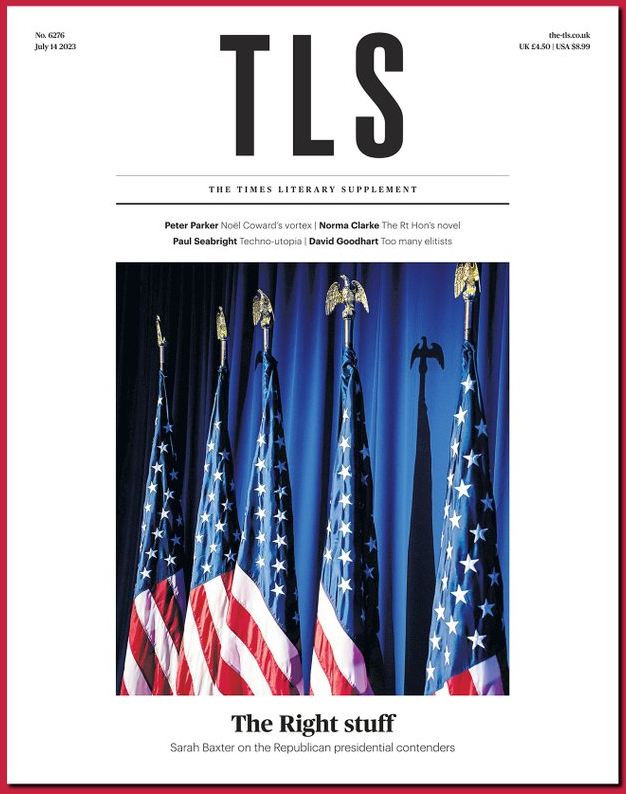
Times Literary Supplement (July 14, 2023) @TheTLS : The Republican presidential contenders; Noël Coward’s vortex; Techno-utopia; Too many elitists and more…
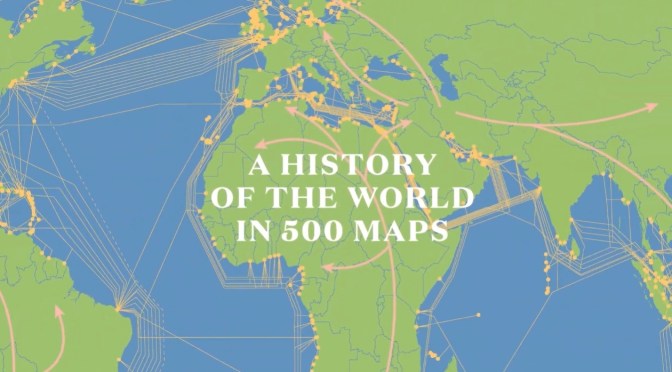
Thames & Hudson (July 11, 2023) – Organized chronologically, A History of the World in 500 Maps tells a clear, linear story, bringing together themes as diverse as religion, capitalism, warfare, geopolitics, popular culture and climate change.
Meticulously rendered maps chart the sequence of broad historical trends, from the dispersal of our species across the globe to the colonizing efforts of imperial European powers in the 18th century, as well as exploring moments of particular significance in rich detail.
• Visualizes 7 million years of human history. • Analyses cities and kingdoms as well as countries and continents. • Features major technical developments, from the invention of farming in the Fertile Crescent to the Industrial Revolution. • Charts the spread of major global religions, including Christianity and Islam. • Explores the increasing interconnectivity of our world through exploration and trade. • Investigates warfare and battles from across the ages, from Alexander the Great’s conquests to the D-Day offensive.
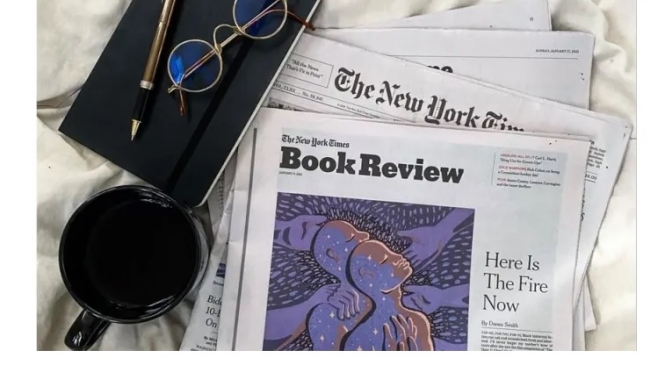
THE NEW YORK TIMES BOOK REVIEW – JULY 9, 2023: In Too Deep – Laura Trethewey’s “The Deepest Map” plumbs the new world of oceanic exploration, and its dangers; “Fancy Bear Goes Phishing”; Lorrie Moore’s New Novel; Read your way through L.A., and more…
Laura Trethewey’s “The Deepest Map” explores the new world of oceanic exploration — and its dangers.
By Simon Winchester
In the past days, the world has been riveted by the story of the Titan submersible, which we now know imploded some 1,600 feet from the wreckage of the Titanic, killing all aboard. Beyond the human tragedy — and the macabre fact that James Cameron’s blockbuster is trending online — comes an opportunity for serious reflection.
“Undaunted,” Brooke Kroeger’s new history of women in journalism, tracks the victories, setbacks and pathbreaking careers that have marked the decades-long fight for gender parity in the field.
The New York Times editorial council, photographed in 1951.
By Jane Kamensky
Raise your hand if you’ve heard of Anne O’Hare McCormick. I hadn’t, and as the director of Radcliffe’s Schlesinger Library on the History of Women in America, which holds peerless collections documenting pioneers in print journalism, I could have, and definitely should have. Brooke Kroeger’s compendious and lively “Undaunted: How Women Changed American Journalism” introduced me to her.
If We Are What We Eat, We Don’t Know Who We Are
In “Ultra-Processed People,” Chris van Tulleken takes a close look at the franken-snacks that barely resemble what they’re imitating.
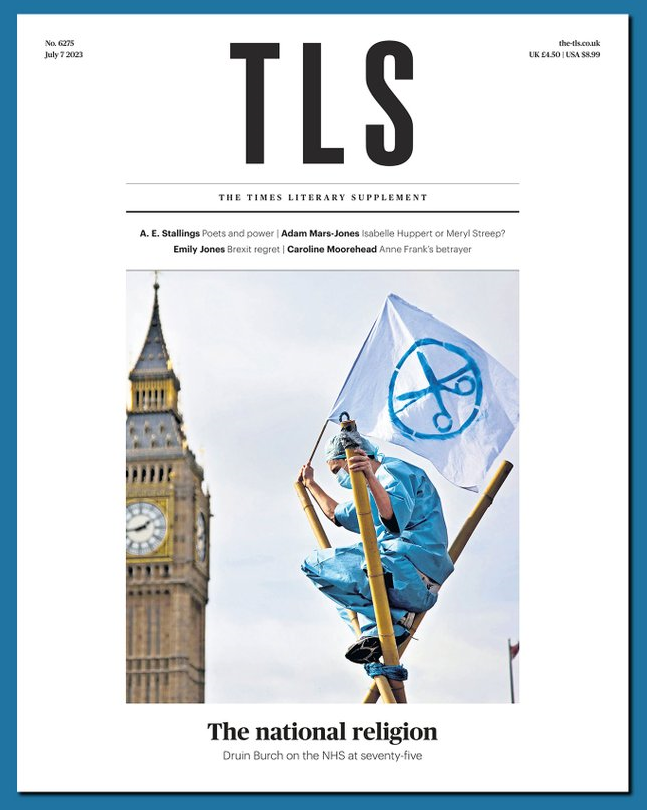
Times Literary Supplement (July 7, 2023): The national religion – NHS at seventy-five; The history of female combatants from ancient times to the present; The temptation for Romantic writers to tip into over-familiarity, and more…
In times of uncertainty, hardship or illness, re-reading a favourite novel can be a source of immense comfort. Even when we read something new, elements of familiarity – in plot, character and theme – can make us feel that the words have sprung from our subconscious. Familiarity connects us to our past and gives a sense of belonging to a community of readers. It can turn fictional characters into friends, make authors feel like confidants and render imagined settings as reassuring as a childhood home.
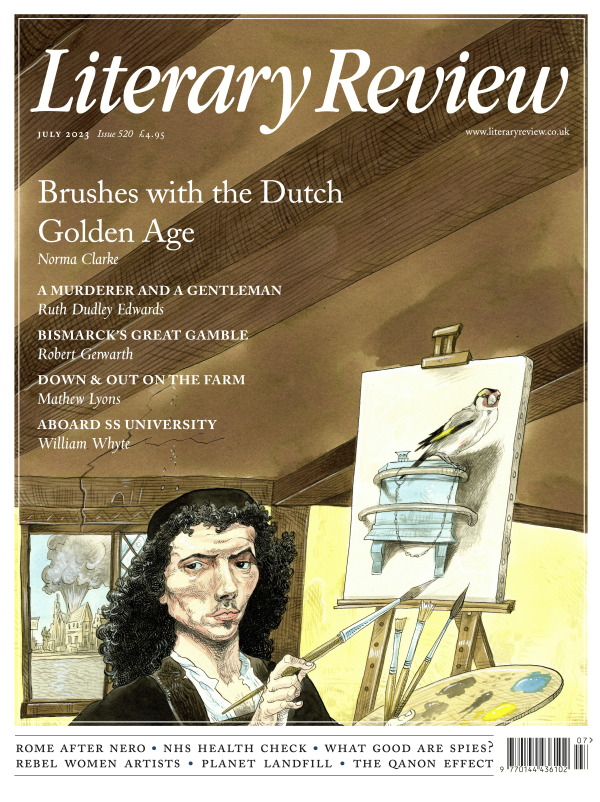
Literary Review – July 2023 Issue: Brushes with the Dutch Golden Age; @LauraCummingArt’s ‘Thunderclap’ – a remarkable experiment in form as well as a richly satisfying extended meditation on art, life and death’; Bismarck’s Great Gamble; Eden by Thames – The Infinite City: Utopian Dreams on the Streets of London…
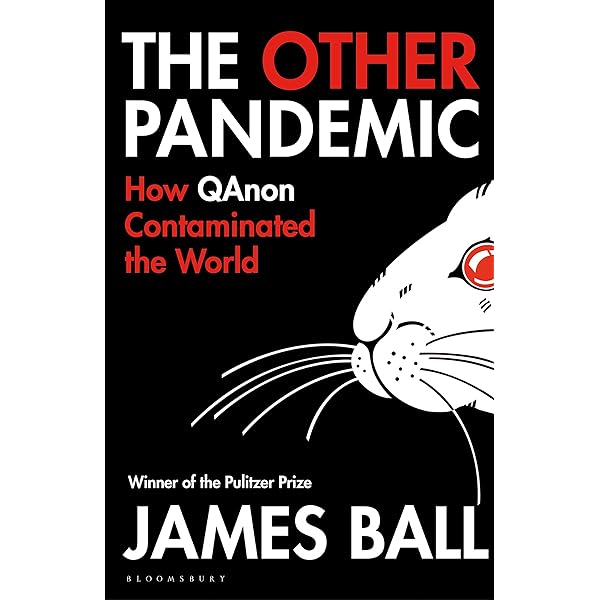
The Other Pandemic: How QAnon Contaminated the World By James Ball
Back in the mists of time, great idealism surrounded social media. There was a sense that global interconnection would shift us into a more egalitarian and democratic age. How time makes fools of us all.
Thunderclap: A Memoir of Art & Life & Sudden Death By Laura Cumming
As a teenager with an interest in art, growing up on London’s Old Kent Road with a father whose mantra was ‘God gave you legs to walk’ (he didn’t believe in God but he did believe in walking), I often found myself on Sunday afternoons walking to the National Gallery in Trafalgar Square. I remember distinctly the day I discovered the Dutch painters. It wasn’t Rembrandt or Vermeer who caught my eye, but Hendrick Avercamp and, especially, Pieter de Hooch.
News, Views and Reviews For The Intellectually Curious








 Thames & Hudson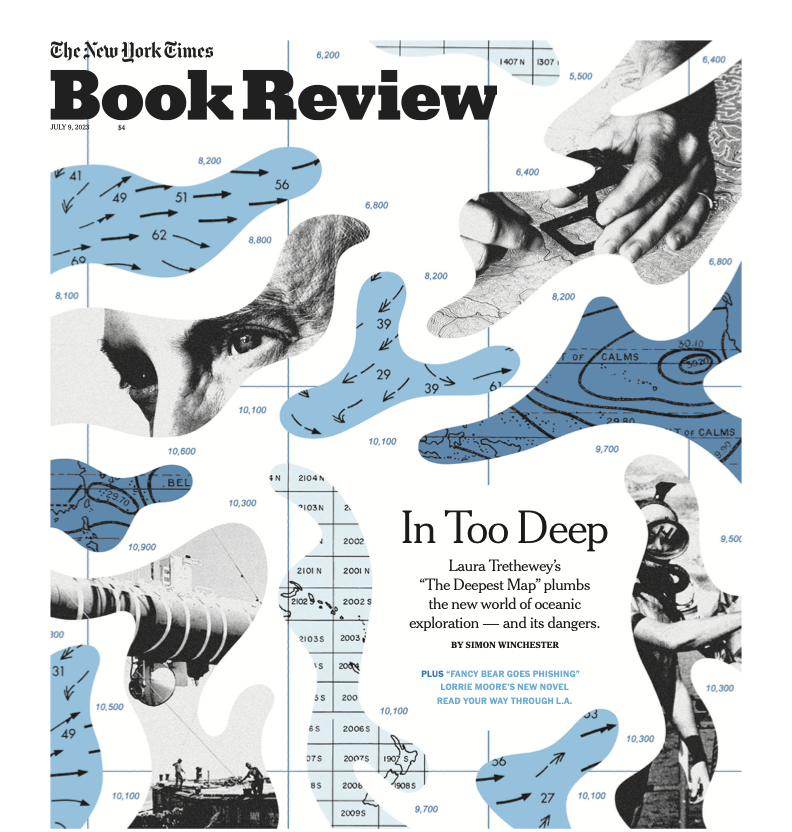





 Boomers Daily