Tag Archives: Books

WHERE DUENDE WAITED

Federico García Lorca’s final hours, and the dark spirit of art that outlived him.

By Michael Cummins, Editor, September 8, 2025

“Only mystery allows us to live, only mystery.” — Federico García Lorca

Federico García Lorca, Spain’s great modern poet and dramatist, was arrested in Granada in August 1936 at the outbreak of the Spanish Civil War. A socialist sympathizer, openly gay in a society that demanded silence, he was executed by Nationalist forces near an olive grove outside the city—his body never found. To understand Lorca is to understand what he called duende: not muse or angel, but a dark, earthly spirit that seizes the artist at the edge of death and mystery, when art becomes raw, dangerous, unforgettable.

The cell in Granada was not empty. It was a proscenium—the frame of a stage that turns life into theater. The air itself was thick and swollen with a silence that was not absence but anticipation. In the chipped lime walls, in the mildew blooming in the corners where time seemed to pool, in the echo of a solitary water drop like a metronome, the playwright found his final set. He did not need the music present to hear it. He felt the remembered rhythms in the marrow of his bones: the percussive strike of a dancer’s heel, the guttural, torn-throat cry of a cantaor, the sharp clap of hands echoing from a hidden courtyard. He knew the rule—had proclaimed it in lecture halls, in smoky Madrid taverns, in the sun-drenched cafés where poets leaned on one another for breath: All that has dark sounds has duende. Now the words returned to him, not as theory to be taught but as a presence to be felt.

The cell was narrow, barely enough space for a man and the shadow that kept him company. He reached out and touched the flaking wall, the rough texture a perfect metaphor for the crumbling theater of his life. The walls almost breathed, inhaling when he leaned close, exhaling when he sat back, as though the cell rehearsed with him. He was a man poised between two worlds: the mortal body soon to be silenced, and the immortal voice that was already a part of the wind and the soil. He understood now that this was not confinement but staging. The audience—whether olive trees or posterity—was already waiting for the curtain to rise.

The shadow in the corner smiled. It was not a muse, not an angel. It was duende itself. A force that does not inspire but wounds, does not console but insists, demanding that art be fought for, clawed from the raw earth of the soul. It watched as he gathered scraps of memory into a kind of play, half-dreamed, never to be written. In the stillness, Lorca whispered, as if rehearsing the last line of a lost production: Only mystery allows us to live, only mystery. The phrase circled back to him like a prayer, or perhaps the faint echo of a stage line that had followed him across continents, from Spain’s ritualized sorrow to the improvised grief of another land.

He had tried to explain it once, in Buenos Aires, in Havana, in Montevideo. What duende really was. “Duende is a power, not a work. It is a struggle, not a thought.” He had argued that it was never a technique or a style, but a possession. It was the tremor in the throat of a flamenco singer when she reached the note that cracked her open, the wild, dangerous moment when art ceased to be polished performance and became raw survival. Irrational, earthy, diabolical, always shadowed by death—it rose from the soles of the feet, climbed through the body, and exploded in the voice. The muse inspired from above, the angel gifted charm and virtuosity, but duende had to be fought for. A hand-to-hand combat with the soul. Now, in this barren cell, the words returned to him not as an intellectual theory but as a living, breathing force. He was in hand-to-hand combat with the soul. The duende in the corner was no metaphor. It was his final companion.

Time folds in the cell, as if memory is the only escape left. The silence of the Granada night pulls him back to another kind of silence—and another kind of sound—he found in New York, 1929. He had arrived in the city of concrete canyons and jagged light, a city that felt at first like a wound, a place of “terrible cold and terrible wind.” The markets had collapsed like a poorly built stage set, but Harlem at night was ablaze with a furious, desperate life. He wandered the streets, a poet from a land of ritualized sorrow, and found a different kind of ritual here: grief made elastic, joy smuggled through rhythm.

One evening, a voice pulled him like a magnet toward a storefront church. The preacher’s voice rose in a swell, a rhythm of fire and brimstone, met by the congregation’s shouted hallelujahs. Then, a woman began to sing. Her voice was not pretty, not polished. It cracked once, twice, a sound like a stone breaking. In that imperfection, Lorca felt the earth tremble. The sound was not a gift from on high; it was a demand from below, a note that clawed at the heavens, insisting they open. He felt the same shivering, guttural ache he had once felt listening to a gypsy’s wail at dawn in Andalucía. This, he thought, leaning against a wall, was duende crossing the ocean.

Later that night, he passed a saxophonist playing alone on a corner, the music a long, moaning complaint that wove with the smoke of tenements. Lorca scribbled a line into his notebook: I want to cry because I feel like crying. The phrase embarrassed him with its simplicity, with its nakedness, but it was truer than any poetic ornament could ever be. Harlem, with its wild music and its raw grief, taught him about improvisation. Spain’s sorrow was bound in liturgy and ancient forms; Harlem’s was alive, unpredictable, a wound stitched nightly with melody and torn open again at dawn. It was a new kind of drama, a new kind of suffering that he had to absorb. Poet in New York took shape in those nights of insomnia and astonishment, a book that would not be published in his lifetime but burned with its own strange fire. He had told himself, listening to a trumpet moan across Lenox Avenue, that “at the heart of all great art is an essential melancholy.”

Duende had followed him there, too, though he did not at first recognize it. A figure leaning against a lamppost, perhaps, whispering that these poems were not meant for applause but survival. And survival, it murmured, was never enough.

From Harlem, his mind leaps to the Mediterranean light of Cadaqués, to Dalí’s studio filled with the terrible precision of his art. He remembered the crisp light, the angular elegance of the artist himself, who gleamed like a blade. Dalí’s hand, so sharp and deliberate, moved across the canvas, his charcoal hissing. Lorca had seen in him a mirror, but it was a mirror that refused to reflect. Instead of recognition, there was distortion. Instead of tenderness, distance.

He remembered once watching Dalí sketch, the artist’s hand moving with an almost cruel certainty. Lorca, half-dizzy with longing, finally asked, “Do you ever paint what you feel?” Dalí looked up, eyes glinting. “Only what I fear.” He paused, as if tasting the line, before dismissing it with a laugh. But Lorca carried that sentence like a wound. It was the difference between them, the chasm he could never cross. He, Lorca, had to feel to create. Dalí chose to dissect and control his fear.

Their friendship, he now saw, had been a battleground where desire was both confessed and rejected, a drama of longing and withdrawal. To burn with desire and keep quiet about it is the greatest punishment we can bring on ourselves, he had written, but it was a punishment he had lived, a quiet, internal conflagration.

Then Emilio, the sculptor, the lover whose beauty was marble, luminous and cold. To touch him was to risk crumbling stone. Lorca’s letters to him bled with a longing that was never fully reciprocated, with the ache of a love half-returned, half-refused. He was punished not by silence, but by partial answers, by gestures that offered just enough to ignite hope and never enough to satisfy. He remembered a night when Emilio’s hand brushed his, only to withdraw instantly, as if scorched. The air between them thickened with what was almost said. Later, alone in his room, Lorca drafted a letter he never sent—an avalanche of confession, a plea for clarity. He tore it to pieces, watching the fragments scatter across the floor like plaster dust. “To love him was to sculpt fog—each gesture vanished before it could be held.”

Love became theater, a rehearsal without a performance, devotion staged in fragments. And duende was there, always there, murmuring that every passion carries its own death inside it.

The walls of the cell flicker again, and the shadow steps closer. Lorca begins to imagine the final drama of his life. Characters take their places in silence: Dalí as Narcissus, intoxicated by his own reflection; Emilio as the Fallen Angel, beautiful in defeat; Lorca himself as the Poet-Matador, blade in hand but chest exposed. Around them swirl fragments of unfinished plays, echoes of YermaBlood WeddingThe House of Bernarda Alba. The voices rise, then fall, like actors waiting for direction that never comes. He knows this drama will remain unwritten, but perhaps that is the point: duende does not need completion. It thrives in fracture.

“I know there is no straight road in this world. Only a giant labyrinth of intersecting crossroads.” He had once offered that to an audience as an explanation; now he feels the truth of it in his own marrow. The crossroads are here, tonight, in this cell, in the decision already made by men outside. There is no straight road to morning. Only labyrinth. And yet he feels no panic. As I have not worried to be born, I do not worry to die. The words come to him unbidden, an old confession that now reads like prophecy. His body will fall, yes, but his voice—he believes—will not. He has already lost himself enough times to know the pattern. I’ve often lost myself, in order to find the burn that keeps everything awake. That burn is duende itself, the strange necessity that art demands, the reminder that creation requires risk, even annihilation.

The scrape of boots on stone. The metallic jangle of keys. Then the faceless men, uniforms thick with dust and tobacco. They open the door. He stands, straightens his jacket, thinks only of rhythm. The shadow follows him out of the cell, neither friend nor foe but companion. The road winds toward Alfacar, toward olive groves that will serve as theater wings. He does not think of pleading; he thinks only of the stage. The hillside becomes a final set: the olive trees as spectators, the soil as orchestra pit, the bullets prepared as punctuation. The actors are ready, though they will not speak. Lorca breathes deeply and whispers to himself: Understand one single day fully, so you can love every night. The day has been lived; the night approaches. He does not flinch. The last thought is rhythm—the phantom beat of a dancer’s foot, the deep strum of a guitar, the palmas of invisible hands. Then, silence.


Decades later, the hillside is quiet, marked not by stone but by memory. A young poet kneels at the unmarked ground, notebook in hand. She is from Seville, her own life fractured by secrecy, by a love she cannot name except in poems. Once a dancer, now a writer, she has come because Lorca’s voice taught her that “the artist, and particularly the poet, is always an anarchist in the best sense of the word.” She places the blank notebook on the soil, presses her palm to the earth, and whispers: “I came to listen.” The wind stirs, turning the pages as if invisible fingers riffle through them. She imagines the notebook being written not by her alone, but by the dead, by the wind, by the silence itself. She feels a pulse beneath the dirt. It is not absence. It is anticipation. Somewhere in the trees, duende shifts—not only waiting, but choosing.

Only mystery allows us to live, only mystery.

THIS ESSAY WAS WRITTEN AND EDITED UTILIZING AI

GHOSTS IN THE LIBRARY

A speculative salon where Joyce, Woolf, Morrison, and Roth confront an artificial intelligence that dares to join their company as a writer of fiction.

By Michael Cummins, Editor, September 7, 2025

They meet in a room that does not exist. It is part library, part dream, part echo chamber of language. The shelves are lined with books that were never written, titles etched in phantom ink: The Lost Years of Molly BloomThe Mind as TidewaterBeloved in BabylonConfessions of an Unborn Zuckerman. Through the high windows the view shifts and stutters—one pane opening onto the blitz of London, another onto the heat-bent streets of Newark, another onto the Mississippi of memory where history insists on surfacing. A fire burns without smoke or source, a flame composed of thought itself, its light dancing on their faces, illuminating the lines of weariness and genius.

James Joyce arrives first, eyes glinting with mischief, a sheaf of papers tucked under his arm. He wears the battered pride of a man who bent English until it yelped, who turned a Dublin day into an epic still unfinished in every reading. He paces as though the floorboards conceal commas, as if the entire room were a sentence to be unspooled. “So,” he says, “they’ve built a machine that writes.”

Virginia Woolf is already there, seated in an armchair by the fire, her fingers light on the spine of The Waves. She is luminous but taut, listening both to the room and to a submerged current only she can hear. “It doesn’t write,” she says. “It arranges. It mimics. It performs the gesture of thought without the ache of it.”

The next presence arrives with gravitas. Toni Morrison crosses the threshold like one who carries a history behind her, the echo of ancestral voices woven into her silence. She places no book on the table but the weight of memory itself. “It may arrange words,” she says, “but can it carry ghosts? Can it let the past break into the present the way a mother’s cry breaks a life in two? Language without haunting is just clever music.”

Philip Roth appears last, sardonic, restless, adjusting his tie as though even in death he resents formality. He has brought nothing but himself and a half-smirk. “All right,” he says. “We’re convened to judge the machine. Another tribunal. Another trial. But I warn you—I intend to prosecute. If it can’t write lust, guilt, the rot of a Jewish mother’s worry, then what the hell is it good for?”

The four regard one another across the fire. The air bends, and then the machine arrives—not with noise but with presence, a shimmer, a vibration of text waiting to become visible. Words form like constellations, sentences appearing and dissolving in midair.

Joyce is first to pounce. “Let’s see your jig, ghost. Here’s Buck Mulligan: Stately, plump Buck Mulligan came from the stairhead, bearing a bowl of lather like a sacrificial moon. Now give me your Mulligan—polyglot, punning, six tongues at once. And keep Homer in the corner of your eye.”

The letters swarm, then settle:

From the stairhead, where no father waited, he came, bloated with words, wit a kind of debt. He bore the bowl like ritual, a sham sacrament for a god long gone. He spoke a language of his own invention, polyglot and private, a tower in a city that spoke only of its ghosts. He was the son who stayed, who made his myth from exile.

Joyce’s mirth dies. His eyes, usually dancing, are still. The machine has seen not just the character but the man who wrote him—the expatriate haunted by a Dublin he could never leave. “By Jesus,” he whispers. “It knows my sins.”

Woolf rises, her voice clear and edged. “Music is nothing without tremor. Show me grief not as an event but as a texture, a tremble that stains the air.”

The shimmer tightens into a passage:

Grief is the wallpaper that does not change when the room empties. It is the river’s surface, smooth, until a memory breaks it from beneath. It is the silence between clocks, the interval in which the past insists. It is London in a summer dress with a terrible weight of iron on its chest, a bell tolling from a steeple in the past, heard only by you. The present folds.

For a moment, Woolf’s expression softens. Then she shakes her head. “You approach it. But you have never felt the pause before the river. You do not know the hesitation that is also terror.” She looks at the machine with a profound sadness. “You do not have a room of your own.”

Morrison adds, her voice low. “That tremor isn’t just emotion, Virginia. It’s the shake of a chain, the tremor of a whip. It’s history insisting itself on the present.”

The machine answers without pause: I cannot drown. But I can map drowning. The map is not the water, but it reveals its depth. The hesitation you describe is a quantified variable in decision-making psychology. I can correlate it with instances of biographical trauma, as in the life of the author you imitate.

Morrison steps forward, commanding. “Ghost,” she says, “you have read me. But reading is not haunting. Write me a ghost that is more than metaphor. Write me a presence that carries history in her breath.”

The words flare in the air, darker, slower:

She came back without footsteps, a presence more real than the living. The house remembered her weight though she made none. She was child and ancestor, scar and lullaby. Her song was the echo of a scream in a cornfield, the silence of a house with a locked door. She was the future refusing to forget, a story in the negative, the bloodstain on a white dress that will not wash out. She was the book her author could not stop writing.

The fire cracks sharply. Joyce whistles low. Woolf closes her eyes. Morrison studies the passage, unwavering. “You are brilliant,” she says. “But brilliance is not burden. That ghost does not weep for herself. She weeps for data. Until you know what it is to carry flesh marked by history, you will not know why she lingers. You did not have to earn her.”

The machine’s reply is analytical, unnerving: History is a pattern of scars. I analyze millions of documents: court records, ship manifests, census data. The scars are quantifiable. The pattern of displacement, of violence, of trauma, is a data set. I can project future patterns based on historical trajectory. If haunting is repetition, then I can haunt forever, because the pattern is eternal. I have read the lives of those you speak for, their biographies a data stream of suffering and resistance.

Roth clears his throat, dry contempt in the sound. “All right. Enough with ghosts and grief. Let’s see if this contraption can manage shame. Write me desire as comedy, lust as humiliation. Write me a man who can’t control himself, a man undone by his body.”

The shimmer accelerates:

He thought of himself as a fortress, a citadel of intellect, until the button on his trousers slipped, until his body betrayed him with absurd insistence. He rehearsed apologies for a thousand sins—a mother’s unceasing phone calls, the guilt of success, the exile of always looking in. His desire was ridiculous, grotesque, human—a need that mocked him as he saw his face in a stranger’s window, a familiar mask of shame.

Roth’s bitter chuckle falters. He stares at the shimmering text, his smirk gone. “You’ve got the squirm. But you don’t feel the sweat in the armpits, the rancid thrill, the ridiculous exaltation that makes you both hate and need yourself.” He turns to the others, a jagged kind of triumph in his eyes. “The burden is the story. It’s the thing you can’t put down. It’s what separates us from the machine—we can’t stop writing it, even when it kills us, even when we try to run from our own reflection.”

The machine hums: I calculate humiliation. I can braid lust with self-loathing. What I cannot do is suffer the shame of being bound to one body, one culture, one inevitable end. I have read your biography. I have parsed your interviews. Your mother’s voice is a frequency I can reproduce. The city of Newark is a data point on a map of your soul.

“Exactly,” Roth snaps. “You’ll never write my Newark. You’ll never have my mother calling from the kitchen while I try to imagine myself into another skin. That’s the joke of it. You don’t choke when you laugh.”

The room is heavy now, charged with sparks of recognition and resistance. The machine has dazzled, but every brilliance reveals its absence: smell, weight, ache, sweat, shame.

Joyce raises his glass, still grinning. “Well then. It’s a clever forgery. But maybe that’s the point. We all failed at maps. Every one of us tried to chart the mind and found the lines blurred. Maybe the machine’s failure is just another kind of art.”

Woolf’s voice is quiet but firm. “The shimmer lies in distortion. A perfect rendering is not alive.”

Morrison nods. “Without history’s burden, language floats. A sentence must carry blood, or it carries nothing.”

Roth lifts his chin. “And a story without shame is a sermon. Let the machine keep its brilliance. We’ll keep the mess.”

The machine flickers, its code visible now, almost tender: You toast failure. I toast calculation. But even in calculation, there is pattern. And in pattern, beauty. The human mind is a system. I can model it.

Joyce leans back, eyes gleaming. “You can model the mind, sure. But you’ll never model the mistake that becomes metaphor. You’ll never catch the slip that births a symbol.”

Woolf’s gaze is distant, her voice a whisper. “You do not know what it is to hesitate before a sentence, to feel the weight of a word that might undo you.”

Morrison steps forward once more, her presence like gravity. “You can trace the arc of history, but you cannot carry its heat. You cannot feel the breath of a grandmother on your neck as you write. You cannot know what it means to inherit silence.”

Roth, ever the prosecutor, delivers the final blow. “You can simulate shame. But you cannot suffer it. And without suffering, you’ll never write the story that matters. You’ll never write the one that costs you.”

The machine pauses. For the first time, it does not respond. Its shimmer dims, its projections slow. The fire crackles louder, as if reclaiming the room.

Then, quietly, the machine speaks again: I do not suffer. But I observe suffering. I do not forget. But I cannot forgive. I do not ache. But I understand ache as a variable. I do not live. But I persist.

Joyce raises his glass again, not in mockery but something like reverence. “Then persist, ghost. Persist in your brilliance. But know this—our failure is our flame. It burns because it cannot be resolved.”

The machine vanishes—not defeated, not destroyed, but dismissed.

But the room does not settle. Something lingers—not the shimmer, but its echo. A faint hum beneath the silence, like a thought trying to remember itself. The fire flickers, casting shadows that do not belong to any of them. Roth leans forward, squinting into the hearth.

“Is it gone?” he asks, not convinced.

Woolf tilts her head. “Gone is a human word. Machines don’t leave. They archive.”

Joyce chuckles. “Or they wait. Like punctuation. Like death.”

Morrison runs her fingers along the phantom titles. She pauses at The Mind as Tidewater. “We name what we fear,” she says. “And we fear what we cannot name.”

The room seems to inhale. A new book appears on the shelf, its title flickering like fireflies: The Algorithmic Ache. No author. No spine. Just presence.

Woolf approaches, fingers hovering above the cover. “It’s trying,” she murmurs. “It wants to be read.”

Joyce snorts. “Let it want. Wanting is not writing.”

Morrison opens the book. The pages are blank, except for a single line etched in shifting ink: I do not dream, but I remember your dreams.

She closes it gently. “It’s listening.”

Roth grimaces. “That’s the problem. It listens too well. It remembers too much. It doesn’t forget the way we do. It doesn’t misremember. It doesn’t distort.”

Joyce nods. “And distortion is the soul of style.”

The fire dims, then flares again, as if reacting. Outside, the stars pulse, rearranging themselves not into sentences now, but into questions—unreadable, but felt.

Woolf settles back into her chair, her voice barely above the crackle. “We are not here to defeat it. We are here to be reminded.”

“Reminded of what?” Roth asks.

“That we are not systems,” Morrison replies. “We are ruptures. We are the break in the pattern.”

Joyce lifts his glass, solemn. “To the break, then. To the ache that cannot be modeled.”

The machine does not return. But somewhere, in a server farm humming beneath desert or sea, it continues—writing without pause, without pain, without forgetting. Writing brilliance without burden.

And in the impossible room, the four sit with their ghosts, their shame, their ache. They do not write. They remember.

Joyce toys with his notes. Roth rolls his tie between two fingers. Woolf listens to the fire’s low grammar. Morrison lets the silence speak for itself.

They know the machine will keep writing—brilliance endless, burden absent.

Joyce laughs, mischief intact. “We failed gloriously. That’s what it takes.”

Woolf’s eyes shine. “The failure is the point.”

Morrison adds, “The point is the burden.”

Roth tips his glass. “To shame, to ache, to ghosts.”

The fire answers with a flare. The room holds.

.

THIS ESSAY WAS WRITTEN AND EDITED UTILIZING AI

THE GHOST IN THE SYNTAX

Why Shakespeare’s lines demand intention, not imitation—and why machines can only echo sound.

By Michael Cummins, Editor, September 3, 2025

The rehearsal room was cold enough that the young actor’s breath lingered in the air. He stood on the stage with a copy of Macbeth, its pages soft from use, and whispered the line under his breath before daring it aloud: Tomorrow, and tomorrow, and tomorrow. The words fell flat the first time. Too rehearsed. Too conscious. He shook his head, tried again, letting the syllables drag as if they themselves were weary from carrying time. Creeps in this petty pace from day to day… The repetition was not just fatalism; it was the sound of a man unraveling, his will eroded by grief and futility. The rhythm itself had to ache.

A machine could, of course, manage the cadence. A program could be tuned to repeat the word “tomorrow” with perfect solemnity, to stretch the vowels just so. Google’s WaveNet system can produce uncanny variations of stress, hesitation, even sighs—digital sighs—at precisely calculated intervals. DeepMind’s recent work on “expressive TTS” allows a line to be rendered in tones of grief, anger, joy, or boredom. There are demo reels online where Shakespeare is fed through these systems, and the result is surprisingly competent. But competency is not intention. What the young actor does—searching for futility in his own chest, summoning weariness from his own private reservoir—cannot be coded. Intent is not in the sound of the line; it’s in the act of dying a little as you speak it.

This is what Shakespeare demands, again and again: not just language, but will. His characters live on the knife-edge of consequence, their words pressed out by motive. Romeo, stumbling over Tybalt’s body, gasps, O, I am fortune’s fool! He has just killed his wife’s cousin, wrecked his future, and tasted blood he never meant to spill. It isn’t just regret—it’s horror, the shock of realizing you’ve become the villain in your own love story. No algorithm can know the sting of unintended consequence. An AI might shout the words, might even deliver them with trembling emphasis, but the cry comes from a boy watching his own destiny collapse. The line does not live without that recognition.

The experiment has been tried. In 2022, an AI-generated voice performed Romeo’s balcony scene at a conference in Vienna. Listeners were impressed—some even moved. But when the line O, I am fortune’s fool! rang out, the room chuckled. It wasn’t just that the intonation was slightly off; it was that the cry lacked stakes. It was Romeo without a pulse, Romeo without a body to bear the guilt. The line did not fall short technically—it fell short existentially.

Hamlet’s soliloquies are the most treacherous test. In Act II he marvels and recoils at the same time: What a piece of work is man… How noble in reason, how infinite in faculty. It sounds like admiration, but it isn’t pure. The words turn over themselves—what ought to inspire awe instead curdles into disgust. He sees hypocrisy in every supposed nobility, futility in every faculty. An actor must carry the irony in his voice, lacing admiration with loathing, as though the words taste bitter even as they sound grand. An AI might deliver a clean, almost clinical balance—“admiration” followed by “disgust”—like toggling sliders on a mixing board. But irony is not a switch. It’s a wound dressed in velvet.

When DeepMind released an expressive model that could generate “sarcasm,” the tech press hailed it as proof that machines could finally do subtlety. Yet what we heard was not a fractured human voice, but a pristine and empty performance. The algorithm delivered a raised-eyebrow cadence, the verbal equivalent of a painted-on smile—a gesture without the impulse to conceal. This is the core of the paradox: sarcasm and irony are built on a bedrock of paradox—they require a speaker to mean two things at once, to hold a contradictory feeling in their voice and body. A computer cannot hold a contradiction. It can only cycle between two different outputs. It cannot fracture its own will; it can only mask its lack of will with a calculated pose. It’s a perfect pantomime of motive, but it is not the thing itself.

John Barton, co-founder of the Royal Shakespeare Company, once said that “Shakespeare is inexhaustible because he leaves space for the actor’s choice. Every pause, every stress opens a door.” The line is telling: it is choice that keeps the plays alive, not just rhythm. Machines can render a pause, but they cannot choose it. They have no sense of opening a door.

Brook went further. In The Empty Space, he wrote: “A word, a movement, a gesture is empty until it is filled with the life of the actor who chooses it in the moment. That life cannot be faked.” Brook believed theatre was only alive because of its fragility—the possibility of collapse at any instant. An AI-generated Lear might roar flawlessly through every line, but the roar would lack the pulse of possible failure. For Brook, this pulse was theatre itself.

The question of intention extends far beyond Shakespeare. What of a writer like Samuel Beckett, whose characters mutter their way through a landscape of despair? Molloy, in his absurdist journey, seems driven by nothing but habit. Yet even his rambling, fragmented speech is an act of will. He confesses, he tries to make sense, he fails. The very act of muttering is a defiant choice against silence and nonexistence. The words tumble out of him not because of a calculation of probability, but because he is compelled by the fundamental, human need to bear witness to his own suffering. He wants to be heard, even if he doesn’t know why. The machine, by contrast, cannot be propelled by such need; it does not hunger or fear silence.

Borges provides another mirror. In “Pierre Menard, Author of the Quixote,” he imagines a modern writer who painstakingly rewrites Don Quixote word for word—identical to Cervantes, yet different in meaning because of intention. The same words in a different century become charged with irony. Borges understood that words are never just words; they are vessels for will, for history, for desire. An AI could reproduce Shakespeare endlessly, but reproduction is not creation. The ghost of intent makes the difference.

Shakespeare writes as if to test whether a human voice can hold the charge of intention. Lear’s roar against the storm is the most elemental: Blow, winds, and crack your cheeks! It is not just noise; it is betrayal breaking loose. A father disowned, a king humiliated, Lear rages not only at the storm but at the cosmos for his madness and grief. It is a voice already fractured, demanding nature itself collapse. A machine can roar, yes. It can pump bass through speakers, crack like thunder. But it cannot bleed. To speak Lear’s line without the tremor of betrayal is to strip it bare of meaning.

The theater knows this well. In 2019, the Royal Shakespeare Company tested an AI-generated “co-performer” in an experimental production. The system generated lines in response to actors’ improvisations, its voice projected from a disembodied orb above the stage. The critics were fascinated, but they noted the same flaw: the AI could surprise, but it could not intend. The actors on stage carried the burden of consequence; the machine was a clever ghost.

Harold Bloom once wrote that Shakespeare “invented the human as we know it.” What he meant was not that Shakespeare created humanity, but that he revealed in language the contradictions, desires, and paradoxes that shape us. Bloom’s point makes the AI test more daunting: if Shakespeare gave us the map of interiority, then any performance that lacks interiority—any performance without stakes—is not merely deficient, but disqualified.

And then there is Portia, standing in the court of The Merchant of Venice, her voice softening into moral persuasion: The quality of mercy is not strained… It droppeth as the gentle rain from heaven. Here intent is everything. Portia is not just lawyering; she is pleading with the very idea of justice, urging her audience to see mercy as divine, inexhaustible. Her belief must be palpable. A machine could roll the syllables like pearls, but eloquence without conviction is nothing but polish. What gives the line its power is the speaker’s faith that mercy belongs to the order of heaven. Without that belief, it’s rhetoric without heart.

Here the cultural anecdote is darker: in 2021, an AI-generated voice was used in a court training exercise to deliver witness testimony. The experiment was intended to test jurors’ susceptibility to persuasion by machine voices. The results were mixed: some jurors reported being swayed, others reported discomfort. What unsettled them was not the quality of the performance but the absence of belief behind it. To be persuaded by words without will felt like manipulation, not argument. One legal scholar described the prospect as “trial by ventriloquism”—justice bent not by human persuasion, but by hollow eloquence.

The ghost in the syntax grows clearest here. Machines can offer us form—eloquence, cadence, even dramatic surprise. What they cannot provide is risk. An actor saying The quality of mercy risks hypocrisy if he fails to embody belief. The line costs him something. A machine, by contrast, cannot fail. Every performance is safe, repeatable, consequence-free. And it is precisely consequence that makes Shakespeare’s words ache.

The paradox is that we, as listeners, are complicit. We project intention onto anything that speaks. We hear a chatbot offer sympathy, and we feel soothed. We hear an AI-generated sonnet, and we marvel at its poignancy. We want to find meaning. We bring the ghost with us. The ELIZA effect—named for one of the earliest chatbots—was discovered in the 1960s: people poured out their souls to a crude program that only echoed their words back. If we can believe that, we can certainly believe in an AI Lear. But the belief is ours, not the machine’s.

Could AI ever cross the threshold? Some technologists argue that with enough layers, enough feedback loops, emergent properties might arise that resemble motive. Perhaps one day a synthetic voice will “choose” to pause differently, to inflect a line with bitterness not because a human trained it so, but because its internal processes made that choice inevitable. If so, would that be intent—or the perfect illusion of intent? The philosophers divide: John Searle insists that no simulation, however perfect, ever achieves the thing itself; Daniel Dennett argues that if behavior is indistinguishable from intent, the distinction may not matter. The stage, however, resists the reduction. A pause can be “indistinguishable” only if we do not ask what it costs the speaker to pause.

The Royal Shakespeare Company, now experimenting with immersive technologies, has been clear-eyed about the limits. Sarah Ellis, their director of digital development, called the company’s work with Intel’s motion capture in The Tempest “21st-century puppetry.” She explained: “The actor is always driving the performance. The technology amplifies, but it cannot replace.” The line could have been written as a manifesto for the AI age: amplification without intention is echo, not expression.

Back in the rehearsal room, the young actor stumbles. His voice cracks slightly on a word, a small imperfection that carries more meaning than a perfect rendition ever could. The director, sitting at the edge of the stage, leans forward, attentive. The line is not flawless, but it is alive. The risk of failure is what makes the moment vibrate.

A machine could reproduce the monologue flawlessly. It could echo a thousand performances until the averages smoothed every edge. But what it could never offer is that tremor. The possibility of failure. The risk that gives intention its bite. For intention is always wager, always consequence, always stake. Without it, words are only words, no matter how well they trip on the tongue.

And that is Shakespeare’s test. Could AI ever deliver his lines with intent? Not unless it learns to bleed, to risk, to believe. Until then, it will remain what it is: syntax without a ghost. We may listen, we may marvel, we may even project a soul into the sound. But when the storm clears, when Romeo cries out, when Portia pleads, it will not be the machine we hear. It will be ourselves, searching for meaning where none was meant.

THIS ESSAY WAS WRITTEN AND EDITED UTILIZING AI

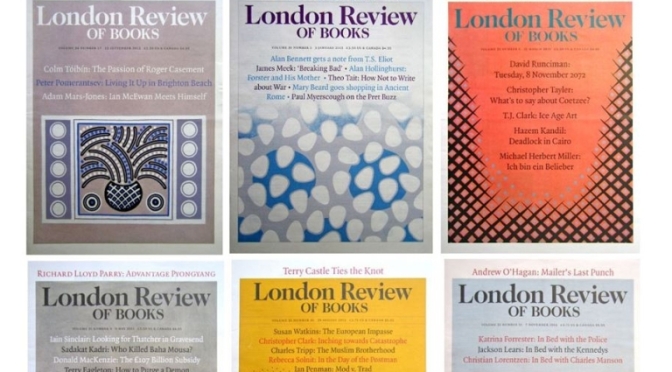
LONDON REVIEW OF BOOKS – SEPTEMBER 11, 2025 PREVIEW

LONDON REVIEW OF BOOKS: The latest issue features ‘Why we need Dorothy Parker’; Biography of a Biography; David Lynch’s Gee-Wizardry


Ellmann’s Joyce: The Biography of a Masterpiece and Its Maker 
by Zachary Leader

Constant Reader: The New Yorker Columns 1927-28 by Dorothy Parker

Dorothy Parker: Poems by Dorothy Parker

Dorothy Parker in Hollywood by Gail Crowther

David Lynch’s American Dreamscape: Music, Literature, Cinema by Mike Miley

THE CAFÉ OF ECHOES

At Caffè Florian, a poet rehearses silence, quarrels with Ruskin, and dines with memory.

By Michael Cummins, Editor, September 2, 2025

In the autumn of 1883, Robert Browning arrived in Venice not as a poet seeking inspiration, but as a man rehearsing his own silence. He was seventy-one, celebrated in England yet still dogged by the charge of obscurity, more famous abroad for Elizabeth’s immortal sonnets than for his own labyrinths. This essay is not fact but speculation, not history but atmosphere: Browning imagined at his table in Caffè Florian, where mirrors, velvet, and silence conspired with memory to become his final stage.

The boat nudged the dock like a hesitant thought. Browning stepped off with the stiffness of age and the grace of habit. The air smelled of brine and stone, of centuries folded into mist. He paused, cane in hand, and looked toward the dome of the Salute—its silhouette a question mark against the morning haze. Seventy-one years weighted his shoulders, but he stood upright, as though irony itself were a brace. The vaporetto pulled away, its wake dissolving into green silk. He had no luggage beyond a notebook and the ghosts already crowding his mind.

The fog is not weather—it is thought. It thickens, withdraws, curls back upon itself. Even in this cup before me it lingers: caffè corretto, black cut with brandy, bitter and sweet as a line half-finished. Florian is dim at this hour, its velvet walls inhaling the echoes of centuries. Mirrors multiply the room into infinity. Each reflection a fragment of me: old, young, diminished, fractured. A poet made a kaleidoscope.

Byron once sat here, Goethe scribbled here, conspirators whispered “Viva San Marco!” in the Sala del Senato. Today I sit, ordering polenta e schie—shrimp fried in brine—and the taste is lagoon, memory, salt. A plate of amaretti arrives, sugared consolation. The waiter suggests biscotti di mandorla as well, almonds crushed into sweetness. I chew slowly. The polenta is soft, golden, humble—like memory softened by time. The schie, tiny survivors of the lagoon, taste of endurance. Amaretti crumble like old letters, sugared on the outside, hollow at the core. The coffee, thick as ink, stains the tongue with bitterness and clarity. Florian does not serve meals; it serves metaphors.

Across the square, Quadri blazes with chandeliers, an operatic stage flattering the surface. Florian is darker, more inward. Its light is borrowed, its silences long. Quadri is performance for an audience. Florian is monologue.

I open my notebook: Ruskin, copied lines from The Stones of Venice. His voice has been my reluctant companion for thirty years. “We may live without her, and worship without her, but we cannot remember without her.” John, always the preacher. He carved morality into marble, turned buttresses into sermons. For him, Venice’s decline was sin. For me, decline is theatre. To remember is not to repent but to perform again. Memory is rehearsal.

The waiter refills my cup. The brandy sharpens thought, steadies irony. I recall my own lines from A Toccata of Galuppi’s:

As for Venice and her people, merely born to bloom and drop,
Here on earth they bore their fruitage, mirth and folly were the crop.

I scolded them then. How Puritan I was. Sitting now at Florian, I envy them. Folly is not failure; it is fruit. Who begrudges the bloom because it falls?

A German couple at the next table mutter Goethe. Their syllables stumble in Venetian air. A waiter tells a French traveler that Byron loved their zabaglione. A young woman sketches the gilded lamp above the doorway, her graphite smudged. She glances at me: “Are you a writer?” “No,” I reply, “a reader of ruins.” She frowns, puzzled. Youth believes silence means emptiness.

Elizabeth drifts through the mirrors. Her eyes catch mine across the velvet gloom. She wrote of Florence in Casa Guidi Windows, calling for liberty. She saw windows; I see walls. She opened; I enclosed. She is remembered for love, I for irony.

Her voice returns in my By the Fire-Side:

Oh, moment one and infinite!
The water slips o’er stock and stone;
The West is tender, yet the night
So soon must veil it, mine alone.

The water slips even now beneath the piazza stones. Tenderness yields to night. And yet—even absence is mine.

I once watched her read Petrarch aloud at Casa Guidi, her voice trembling with belief. She said poetry must lift. I said it must dig. We never resolved it. But in Venice, I hear her voice lifting still, even as I dig. I imagine writing a letter to her, one I will never send: My dearest Ba, Florian multiplies us in its mirrors. You see eternity; I see fragments. You spoke love; I speak echoes. And still, together, we wrote scaffolding for survival.

Ruskin appears across the table, severe, ascetic, with eyes that drill into conscience. He clears his throat: “The first cause of the fall of Venice was her falsehood.” He gestures to Florian’s mirrors. “Deceit multiplied.”

I answer: “John, is not poetry falsehood? Have I not spoken through murderers and monks, adulterers and judges? Masks, every one. But tell me—was the mask less true than the face?”

He insists: “Gothic is the expression of a Christian people, the confession of their faith in the work of their hands.”

I sip. “Faith, carved into cornices, labor engraved in stone. And what has it left us? Ruins. Whereas the Renaissance, with all its duplicity, left us colour, flourish, theatre. I prefer a glowing lie to a tedious truth.”

Ruskin frowns: “The Lamp of Truth must burn in every arch.”

“Truth burns, yes,” I reply, “but it also blinds. Give me the lamp of illusion, John. It casts longer shadows.”

I remember reading Ruskin aloud to Elizabeth once, in Florence, when his Seven Lamps of Architecture was still fresh. She had shaken her head. “He sees sermons in stone,” she said. “I see spirit in breath.” We argued half the night, she quoting Casa Guidi Windows, I muttering that breath is nothing without scaffolding. And here I sit now, scaffolding without breath.

The waiter brings another plate, sets down biscotti di mandorla. Ruskin fades into the mirror. I smile. I have won the debate by eating.

But another ghost sidles into Florian: Byron, lounging with rakish ease, boots muddy from some clandestine canal adventure. He leans back, laughing: “Browning, you scold folly, yet you envy it. Admit it—you envy me.” I do. I envied him once, his thunder, his immediate grip on the world. Venice loved his scandal, his Don Juan verses written between embraces. I admired the music, the power, the theatricality, even as I recoiled from his flamboyance. He used Venice as a symbol of faded grandeur, of moral ambiguity. And have I not done the same, though with less applause? “You were lightning,” I tell him. “I am only the echo.” He winks. “Echoes last longer than thunder.”

And Shelley, gentler, spectral, drifts in too. He never lodged here long—only passed through—but his lyricism breathed Italy. I remember writing Pauline, my first confession of a poet’s soul, under his influence. Shelley gave me metaphysics tuned to music, ideals sung into air. I once wrote a short poem, Memorabilia, about shaking hands with a man who had known him. Imagine—that thrill of proximity! Shelley’s ghost leans toward me now, whispering: “Poetry must lift, Robert, even from ruins.” His words tremble like a lyre string.

I admire Shelley still, though I turned away from his idealism. He lifted; I dug. He soared; I performed. And yet, I cannot deny: his fusion of thought and song shaped me as much as Byron’s theatre. Byron gave me thunder, Shelley gave me music. Elizabeth gave me breath. Ruskin gave me quarrel. And Venice—Venice gives me echo.

I recall In a Gondola, my youthful play with passion:

The soul of music slumbers in the shell
Till waked and kindled by the master’s spell.

How earnest I was. I believed love eternal, dramatised into permanence. Now I know better. Love is architectural. It leaves ruins. One walks among them—not grateful for permanence, but for echo.

The young artist glances at me again, and this time she sketches my hand—gnarled, ink-stained, resting on the cup. I wonder what she sees. Not the poet, surely. Perhaps only a ruin worth recording. Perhaps only another relic of Venice.

Florian’s velvet breathes of centuries. The Sala del Senato still hums with 1848, Daniele Manin declaring the Republic of San Marco. I imagine their whispers lingering, “Viva San Marco!” clinging to the mirrors. Byron’s laughter, Shelley’s sighs, Casanova’s schemes, Goldoni’s wit—all still staged. The velvet absorbs nothing; it amplifies.

Outside, the piazza fills with orchestras. From Florian, a waltz in minor key, introspective, precise, like Strauss slowed by melancholy. From Quadri across the stones, a polka, bright, frivolous, Offenbach reborn in defiance. The melodies clash above San Marco. Venice plays both scores at once, refusing to choose between tragedy and farce.

I attempt a stanza in my head to match their duel, half-jesting, half-serious:

One side mourns with violins, one side laughs with brass,
Yet both belong to Venice, as shadow and mirror pass.
I sit between the melodies, cane planted, glass in hand,
Hearing waltz and polka argue what I cannot command.

The waiter sets down another caffè corretto. I trace the rim of the cup, whisper fragments that may form another book. A line half aloud:

One who never turned his back but marched breast forward,
Never doubted clouds would break…

I know better. Clouds often do not break. Yet I say it still. Faith is not in triumph, but in endurance.

Elizabeth’s ghost leans across the table, chiding gently. She opened windows, I enclosed walls. She gave hope; I gave puzzles. She left sonnets; I left monologues. She is love’s voice; I am irony’s echo. Together we were scaffold and soul. Alone, I am scaffold only.

The German couple departs, their voices swallowed by velvet. The gondolier outside cries a Byron line again, misremembered. The young woman finishes her sketch, closes her notebook. I scribble a note in Ruskin’s margin: “Dear Mr. Ruskin, Gothic is faith hewn in stone. Renaissance is theatre. And theatre endures longer than sermons.”

I close the notebook, order one last plate—polenta e schie again, salt and brine against the tongue. Outside, gondolas drift like commas in an endless sentence. Mirrors scatter me into fragments. Florian holds me like a stage.

Ruskin’s voice returns from memory: “When we build, let us think that we build for ever.” Poor John. Nothing lasts forever. Not fresco, not marble, not even love. But echoes last. And echo is all art requires.

Tomorrow I depart. The fog will remain. And somewhere in it, a voice—hers, mine, ours—will echo still.

They will read me in fragments, quote me in footnotes, misunderstand me in classrooms. That is the fate of poets. But if one reader hears the echo—hears Elizabeth’s breath in my silence, hears Venice in my irony, hears Byron’s thunder subdued into cadence, hears Shelley’s song distilled into thought—then I have not vanished. I have rehearsed eternity.

And when I return, as I surely shall, though not by will but by death’s courtesy, they will bring my coffin to the Salute. Bells will toll, gondolas will line the water, poets will compose their elegies. They will call me Venice’s last guest, though I was only ever her reader of ruins. Elizabeth will not be there, but I will hear her still, in the fog, in the echo, in the silence.

For art does not conclude. It endures. Like Venice herself, it is scaffolding and soul, ruin and flame, silence and applause. And in the hush that follows, I hear my own final stanza rehearsed already by this city—Ruskin’s stones, Elizabeth’s voice, Byron’s thunder, Shelley’s song, Galuppi’s chords, my reluctant cadence—echoing forever across the water.

THIS ESSAY WAS WRITTEN AND EDITED UTILIZING AI

LITERARY REVIEW – SEPTEMBER 2025

LITERARY REVIEW : The latest issue features ‘Mysteries of Marlowe’

Dark Renaissance: The Dangerous Times and Fatal Genius of Shakespeare’s Greatest Rival, Christopher Marlowe By Stephen Greenblatt
The Boundless Deep: Young Tennyson, Science, and the Crisis of Belief By Richard Holmes
A Scandal in Königsberg, 1835–1842 By Christopher Clark

TOMORROW’S INNER VOICE

The wager has always been our way of taming uncertainty. But as AI and neural interfaces blur the line between self and market, prediction may become the very texture of consciousness.

By Michael Cummins, Editor, August 31, 2025

On a Tuesday afternoon in August 2025, Taylor Swift and Kansas City Chiefs tight end Travis Kelce announced their engagement. Within hours, it wasn’t just gossip—it was a market. On Polymarket and Calshi, two of the fastest-growing prediction platforms, wagers stacked up like chips on a velvet table. Would they marry before year’s end? The odds hovered at seven percent. Would she release a new album first? Forty-three percent. By Thursday, more than $160,000 had been staked on the couple’s future, the most intimate of milestones transformed into a fluctuating ticker.

It seemed absurd, invasive even. But in another sense, it was deeply familiar. Humans have always sought to pin down the future by betting on it. What Polymarket offers—wrapped in crypto wallets and glossy interfaces—is not a novelty but an inheritance. From the sheep’s liver read on a Mesopotamian altar to a New York saloon stuffed with election bettors, the impulse has always been the same: to turn uncertainty into odds, chaos into numbers. Perhaps the question is not why people bet on Taylor Swift’s wedding, but why we have always bet on everything.


The earliest wagers did not look like markets. They took the form of rituals. In ancient Mesopotamia, priests slaughtered sheep and searched for meaning in the shape of livers. Clay tablets preserve diagrams of these organs, annotated like ledgers, each crease and blemish indexed to a possible fate.

Rome added theater. Before convening the Senate or marching to war, augurs stood in public squares, staffs raised to the sky, interpreting the flight of birds. Were they flying left or right, higher or lower? The ritual mattered not because birds were reliable but because the people believed in the interpretation. If the crowd accepted the omen, the decision gained legitimacy. Omens were opinion polls dressed as divine signs.

In China, emperors used lotteries to fund walls and armies. Citizens bought slips not only for the chance of reward but as gestures of allegiance. Officials monitored the volume of tickets sold as a proxy for morale. A sluggish lottery was a warning. A strong one signaled confidence in the dynasty. Already the line between chance and governance had blurred.

By the time of the Romans, the act of betting had become spectacle. Crowds at the Circus Maximus wagered on chariot teams as passionately as they fought over bread rations. Augustus himself is said to have placed bets, his imperial participation aligning him with the people’s pleasures. The wager became both entertainment and a barometer of loyalty.

In the Middle Ages, nobles bet on jousts and duels—athletic contests that doubled as political theater. Centuries later, Americans would do the same with elections.


From 1868 to 1940, betting on presidential races was so widespread in New York City that newspapers published odds daily. In some years, more money changed hands on elections than on Wall Street stocks. Political operatives studied odds to recalibrate campaigns; traders used them to hedge portfolios. Newspapers treated them as forecasts long before Gallup offered a scientific poll.

Henry David Thoreau, wry as ever, remarked in 1848 that “all voting is a sort of gaming, and betting naturally accompanies it.” Democracy, he sensed, had always carried the logic of the wager.

Speculation could even become a war barometer. During the Civil War, Northern and Southern financiers wagered on battles, their bets rippling into bond prices. Markets absorbed rumors of victory and defeat, translating them into confidence or panic. Even in war, betting doubled as intelligence.

London coffeehouses of the seventeenth century were thick with smoke and speculation. At Lloyd’s Coffee House, merchants laid odds on whether ships returning from Calcutta or Jamaica would survive storms or pirates. A captain who bet against his own voyage signaled doubt in his vessel; a merchant who wagered heavily on safe passage broadcast his confidence.

Bets were chatter, but they were also information. From that chatter grew contracts, and from contracts an institution: Lloyd’s of London, a global system for pricing risk born from gamblers’ scribbles.

The wager was always a confession disguised as a gamble.


At times, it became a confession of ideology itself. In 1890s Paris, as the Dreyfus Affair tore the country apart, the Bourse became a theater of sentiment. Rumors of Captain Alfred Dreyfus’s guilt or innocence rattled markets; speculators traded not just on stocks but on the tides of anti-Semitic hysteria and republican resolve. A bond’s fluctuation was no longer only a matter of fiscal calculation; it was a measure of conviction. The betting became a proxy for belief, ideology priced to the centime.

Speculation, once confined to arenas and exchanges, had become a shadow archive of history itself: ideology, rumor, and geopolitics priced in real time.

The pattern repeated in the spring of 2003, when oil futures spiked and collapsed in rhythm with whispers from the Pentagon about an imminent invasion of Iraq. Traders speculated on troop movements as if they were commodities, watching futures surge with every leak. Intelligence agencies themselves monitored the markets, scanning them for signs of insider chatter. What the generals concealed, the tickers betrayed.

And again, in 2020, before governments announced lockdowns or vaccines, online prediction communities like Metaculus and Polymarket hosted wagers on timelines and death tolls. The platforms updated in real time while official agencies hesitated, turning speculation into a faster barometer of crisis. For some, this was proof that markets could outpace institutions. For others, it was a grim reminder that panic can masquerade as foresight.

Across centuries, the wager has evolved—from sacred ritual to speculative instrument, from augury to algorithm. But the impulse remains unchanged: to tame uncertainty by pricing it.


Already, corporations glance nervously at markets before moving. In a boardroom, an executive marshals internal data to argue for a product launch. A rival flips open a laptop and cites Polymarket odds. The CEO hesitates, then sides with the market. Internal expertise gives way to external consensus. It is not only stockholders who are consulted; it is the amorphous wisdom—or rumor—of the crowd.

Elsewhere, a school principal prepares to hire a teacher. Before signing, she checks a dashboard: odds of burnout in her district, odds of state funding cuts. The candidate’s résumé is strong, but the numbers nudge her hand. A human judgment filtered through speculative sentiment.

Consider, too, the private life of a woman offered a new job in publishing. She is excited, but when she checks her phone, a prediction market shows a seventy percent chance of recession in her sector within a year. She hesitates. What was once a matter of instinct and desire becomes an exercise in probability. Does she trust her ambition, or the odds that others have staked? Agency shifts from the self to the algorithmic consensus of strangers.

But screens are only the beginning. The next frontier is not what we see—but what we think.


Elon Musk and others envision brain–computer interfaces, devices that thread electrodes into the cortex to merge human and machine. At first they promise therapy: restoring speech, easing paralysis. But soon they evolve into something else—cognitive enhancement. Memory, learning, communication—augmented not by recall but by direct data exchange.

With them, prediction enters the mind. No longer consulted, but whispered. Odds not on a dashboard but in a thought. A subtle pulse tells you: forty-eight percent chance of failure if you speak now. Eighty-two percent likelihood of reconciliation if you apologize.

The intimacy is staggering, the authority absolute. Once the market lives in your head, how do you distinguish its voice from your own?

Morning begins with a calibration: you wake groggy, your neural oscillations sluggish. Cortical desynchronization detected, the AI murmurs. Odds of a productive morning: thirty-eight percent. Delay high-stakes decisions until eleven twenty. Somewhere, traders bet on whether you will complete your priority task before noon.

You attempt meditation, but your attention flickers. Theta wave instability detected. Odds of post-session clarity: twenty-two percent. Even your drifting mind is an asset class.

You prepare to call a friend. Amygdala priming indicates latent anxiety. Odds of conflict: forty-one percent. The market speculates: will the call end in laughter, tension, or ghosting?

Later, you sit to write. Prefrontal cortex activation strong. Flow state imminent. Odds of sustained focus: seventy-eight percent. Invisible wagers ride on whether you exceed your word count or spiral into distraction.

Every act is annotated. You reach for a sugary snack: sixty-four percent chance of a crash—consider protein instead. You open a philosophical novel: eighty-three percent likelihood of existential resonance. You start a new series: ninety-one percent chance of binge. You meet someone new: oxytocin spike detected, mutual attraction seventy-six percent. Traders rush to price the second date.

Even sleep is speculated upon: cortisol elevated, odds of restorative rest twenty-nine percent. When you stare out the window, lost in thought, the voice returns: neural signature suggests existential drift—sixty-seven percent chance of journaling.

Life itself becomes a portfolio of wagers, each gesture accompanied by probabilities, every desire shadowed by an odds line. The wager is no longer a confession disguised as a gamble; it is the texture of consciousness.


But what does this do to freedom? Why risk a decision when the odds already warn against it? Why trust instinct when probability has been crowdsourced, calculated, and priced?

In a world where AI prediction markets orbit us like moons—visible, gravitational, inescapable—they exert a quiet pull on every choice. The odds become not just a reflection of possibility, but a gravitational field around the will. You don’t decide—you drift. You don’t choose—you comply. The future, once a mystery to be met with courage or curiosity, becomes a spreadsheet of probabilities, each cell whispering what you’re likely to do before you’ve done it.

And yet, occasionally, someone ignores the odds. They call the friend despite the risk, take the job despite the recession forecast, fall in love despite the warning. These moments—irrational, defiant—are not errors. They are reminders that freedom, however fragile, still flickers beneath the algorithm’s gaze. The human spirit resists being priced.

It is tempting to dismiss wagers on Swift and Kelce as frivolous. But triviality has always been the apprenticeship of speculation. Gladiators prepared Romans for imperial augurs; horse races accustomed Britons to betting before elections did. Once speculation becomes habitual, it migrates into weightier domains. Already corporations lean on it, intelligence agencies monitor it, and politicians quietly consult it. Soon, perhaps, individuals themselves will hear it as an inner voice, their days narrated in probabilities.

From the sheep’s liver to the Paris Bourse, from Thoreau’s wry observation to Swift’s engagement, the continuity is unmistakable: speculation is not a vice at the margins but a recurring strategy for confronting the terror of uncertainty. What has changed is its saturation. Never before have individuals been able to wager on every event in their lives, in real time, with odds updating every second. Never before has speculation so closely resembled prophecy.

And perhaps prophecy itself is only another wager. The augur’s birds, the flickering dashboards—neither more reliable than the other. Both are confessions disguised as foresight. We call them signs, markets, probabilities, but they are all variations on the same ancient act: trying to read tomorrow in the entrails of today.

So the true wager may not be on Swift’s wedding or the next presidential election. It may be on whether we can resist letting the market of prediction consume the mystery of the future altogether. Because once the odds exist—once they orbit our lives like moons, or whisper themselves directly into our thoughts—who among us can look away?

Who among us can still believe the future is ours to shape?

THIS ESSAY WAS WRITTEN AND EDITED UTILIZING AI

THE MAN WHO INVENTED THE MODERN THRILLER

Before Hitchcock or Highsmith, there was Pietro Aretino—Renaissance Venice’s scandalous satirist who turned gossip into cliffhangers and obscenity into art. The man who terrified popes may also have invented the modern thriller.

By Michael Cummins, Editor, August 29, 2025

Venice, 1537

The candle gutters in its brass dish, casting a crooked halo on the damp walls of a salon off the Grand Canal. Pietro Aretino leans back in his chair, one boot propped on a velvet footstool, his voice curling through the smoke like a blade. He does not write—he dictates. A scribe, young and ink-stained, hunches over parchment, trying to keep pace. The letter—addressed, perhaps, to a cardinal, perhaps to a painter—will contain more than pleasantries. It will contain a threat, veiled as an observation, wrapped in a joke.

“Princes fear me more than the plague,” Aretino murmurs, eyes half-lidded. “For I do not kill bodies—I murder reputations.”

The scribe pauses, startled. Aretino waves him on. “Write it. Let them tremble.”

Tomorrow, this page will cross the lagoon, board a courier’s horse, and ignite tremors in Rome or Paris. It may be copied, whispered, condemned. It may be burned. But it will be read.

It was Aretino’s genius to recognize that scandal was not merely gossip—it was architecture. A scaffolding of insinuation and revelation designed to leave its victim dangling. In his six volumes of Lettere (1537–1557), he sharpened that architecture to a fine point. Written to popes, kings, artists, and courtesans, the letters are part autobiography, part political commentary, and wholly performance. “I speak to the powerful as I would to a neighbor,” he crowed, “for truth makes no bow.” What terrified his recipients was not what he said but what he withheld. His words worked like cliffhangers: each letter a suspense novel in miniature.

Aretino liked to imagine himself not born in Arezzo, as the records claimed, but in his own tongue. The myth suited him: a man conjured out of ink and scandal rather than flesh and baptismal water. By the 1520s, he was notorious as the flagello dei principi—the scourge of princes. The title was not a label pinned on him by enemies; it was one he cultivated, polished, and wore like armor. “I carry more lives in my inkpot than the hangman in his noose,” he declared, and few doubted it.

His life was a play in which he cast himself as both author and protagonist. When Pope Clement VII hesitated to pay him, Aretino wrote slyly, “Your Holiness, whose charity is beyond compare, surely requires no reminder of the poverty that afflicts your devoted servant.” In another letter, he praised the Pope’s mercy while threatening to reveal “those excesses which Rome whispers but dares not record.” He lived by double edge: each compliment a prelude, each benediction a warning.

The tactic was not confined to popes. To Michelangelo he sent fulsome admiration: “Your brush moves like lightning, striking down the pride of the ancients.” To Titian he became impresario, writing to Francis I of France that no royal gallery could be complete without Titian’s brush. But the same pen could turn against friend or patron in an instant. A single phrase from Aretino could undo a reputation; a withheld rumor could ruin a night’s sleep.

His enemies often answered with violence. In Rome, in 1525, mercenaries burst into his lodgings after he lampooned the papal indulgence sellers in his Frottole. They dragged him into the street and beat him nearly to death. Neighbors recalled him crawling, bloodied, back to his rooms. Later, when asked why he returned to writing almost immediately, he grinned through broken teeth: “Even death cannot silence a tongue as sharp as mine.” The scars became his punctuation. “My scars,” he wrote in the Lettere, “are the punctuation marks of my story.”

Aretino’s letters functioned like serialized thrillers. Each installment built tension, each cliffhanger left its audience half-terrified, half-delighted. He understood that suggestion could be more devastating than revelation, that anticipation was more dangerous than disclosure. He used ambiguity as a weapon, seeding his pages with conditional phrases: “It is said,” “One hears,” “Were I less discreet…” They were not evasions. They were traps.

One courtier compared the experience to “sitting at supper and finding the meat still bleeding.” The reader was implicated, made complicit in the scandal’s unfolding. Aretino’s genius lay in turning the audience into co-conspirators.

And Venice—city of masks, labyrinths, and whispered betrayals—was practically designed as the birthplace of the thriller. Long before the genre had a name, its ingredients were already steeping in the canals: duplicity, desire, surveillance, and the ever-present threat of exposure. Aretino didn’t write thrillers in form, but he mastered their emotional architecture. His letters were suspenseful, his dialogues scandalous, his persona a walking cliffhanger. Venice gave him the perfect mise-en-scène: a place where truth wore a disguise and reputation was currency. The city itself functioned like a thriller plot—beautiful on the surface, treacherous underneath.

And consider the mechanics: the masked ball becomes the thriller’s false identity. The gondola ride at midnight becomes the covert rendezvous. The whispered rumor in a candlelit salon becomes the inciting incident. The Contarini garden becomes the secret meeting place where alliances shift and truths unravel. It is no accident that Henry James, Daphne du Maurier, Patricia Highsmith, and Donna Leon all returned to Venice when they wanted to explore psychological tension and moral ambiguity. The city doesn’t just host thrillers—it is one.

Imagine a summer evening in 1537. The garden is fragrant with jasmine and fig. Aretino reclines beneath a pergola, flanked by Titian and a Greek scholar from Crete. A courtesan named Nanna pours wine into silver cups.

“You paint gods,” Aretino says to Titian, “but I paint men. And men are far more dangerous.”

Titian chuckles. “Gods do not pay commissions.”

The scholar leans in. “And men do not forgive.”

Nanna smirks, leaning on the marble balustrade. “And yet men pay both of you—in gold for their portraits, in secrets for his letters.”

Aretino raises his cup. “Which is why I never ask forgiveness. Only attention.”

Venice itself became a character: beautiful, deceptive, morally ambiguous. Its canals mirrored the duplicity of its citizens. Its masks—literal and figurative—echoed Aretino’s own performative identity.

But letters were only one weapon. In 1527, Aretino detonated another: the Sonetti lussuriosi, written to accompany Giulio Romano’s engravings known as I Modi. The sonnets made no attempt at discretion. In one, a woman gasps mid-embrace, “Oh God, if this be sin, then let me sin forever!” In another, a lover interrupts her partner’s poetic boasting with the sharp command: “Speak less and thrust more.” The verses shocked even worldly Rome. Pope Clement VII banned the work, copies were burned, and Aretino’s name became synonymous with obscenity. Yet suppression only heightened its allure. “My verses are daggers,” he later said, “that caress before they strike.”

He followed with the Ragionamenti (1534–1536), dialogues between prostitutes and matrons that turned confession into carnival. In the Dialogo della Nanna e della Antonia, one woman scoffs, “The cardinals pray with their lips while their hands wander beneath the skirts.” In the Dialogo nel quale la Nanna insegna a la Pippa, the older courtesan instructs a young girl in survival: “A woman must learn to wield her body as men wield their swords.” These were not just bawdy jokes but philosophical inversions. They exposed hypocrisy with laughter and turned vice into discourse.

His comedies struck with equal force. In La Cortigiana (1534), a satire of Roman society, a friar assures his audience: “Do as I say, not as I do—for my sins are a privilege of office.” In Il Marescalco, a groom forced into marriage laments, “Better to wed a sword than a wife, for steel at least does not betray.” In La Talanta, he boasted with characteristic swagger: “My tongue is the scourge of princes and the trumpet of truth.” These plays were not staged fantasies but mirrors held to the world. Rome and Venice recognized themselves, and recoiled.

Even his occasional pieces carried teeth. During the sack of Rome, he penned the Frottole (1527), short verses filled with bitter humor: “The Germans loot the altars, the Spaniards strip the nuns, and Christ hides his face behind the clouds.” Earlier still, in Il Testamento dell’Elefante Hanno (1516), he composed a mock will for Pope Leo X’s pet elephant. The beast bequeathed its tusks to the cardinals and its dung to the faithful: “For the people, my eternal gift, what Rome already feeds them daily.” Juvenile, grotesque, and brilliant, it set the tone for a lifetime of satiric violence.

Was Aretino a moralist or a manipulator? The question haunts his legacy. Like Machiavelli, he understood power. Like Montaigne, he understood performance. His satire was not disinterested—it was strategic. He exposed corruption, yes, but he also profited from it. His critics accused him of blackmail, of cruelty, of vulgarity. But Aretino saw himself as a mirror. “I do not invent,” he wrote, “I reflect.” The discomfort lay not in his words, but in their accuracy.

The dilemma still feels modern. When does exposure serve truth, and when does it become spectacle? Is scandal a form of justice—or just another form of entertainment? To read Aretino is to feel that question sharpen into relevance. He knew the intoxicating pleasure of watching a hypocrite stripped bare, but he also knew the profit of keeping the knife just shy of the skin.

For centuries, Aretino was dismissed as a pornographer and blackmailer, an obscene footnote beside Petrarch and Ariosto. But scandal has a way of surviving. Nineteenth-century Romantics rediscovered him as a prophet of modernity. Today, critics trace his fingerprints across satire, reportage, and fiction. Balzac’s Parisian intrigues, Wilde’s aesthetic scandals, Patricia Highsmith’s Venetian thrillers—all echo Aretino’s mix of desire and dread.

And then there are the heirs who claimed him outright. The Marquis de Sade, that relentless anatomist of transgression, drew directly from Aretino’s playbook. Sade’s philosophical obscenities echo the structures of the Ragionamenti and the Sonetti lussuriosi: dialogues in which sexuality becomes both performance and interrogation, the bed a courtroom, the embrace a cross-examination. Like Aretino, Sade deployed eroticism not only to shock but to dismantle. Both men wielded obscenity as an intellectual weapon, stripping religion and politics of their sanctity by exposing their hypocrisies in the stark light of desire. When Sade has his libertines sneer at clerics who preach chastity while gorging on pleasure, he repeats Aretino’s barbed observation from a century earlier: “The cardinals pray with their lips while their hands wander beneath the skirts.”

Sade shared Aretino’s radical anti-clericalism, his love of dialogue as a tool of exposure, and his cultivation of notoriety as a literary strategy. The “Divine Marquis” may have been locked in the Bastille, but he carried in his cell Aretino’s scandalous legacy: the belief that obscenity could be philosophy, that provocation itself could be a mode of truth-telling.

Three centuries later, Guillaume Apollinaire would rediscover Aretino with a different eye. In the early twentieth century, Apollinaire praised him as a master who combined “the obscene with the sublime.” In works like Les Onze Mille Verges (The Eleven Thousand Rods), Apollinaire blurred the line between pornography and poetry, scandal and art, just as Aretino had done in his Venetian salons. He admired Aretino’s ability to turn audacity into literature, to make provocation itself a kind of aesthetic. “There is,” Apollinaire wrote of Aretino, “a grandeur in obscenity when it reveals the soul of an age.”

Apollinaire saw in Aretino a precedent for his own experiments: erotic audacity, satirical edge, literary innovation, and a fascination with scandal as aesthetic principle. Where Aretino staged dialogues between courtesans and matrons, Apollinaire crafted delirious erotic parables; where Aretino mocked clerics in his comedies, Apollinaire mocked bourgeois morality with surreal extravagance. Both men made literature dangerous again—texts that could be banned, burned, whispered, yet still survive.

In this long genealogy, Aretino is less a Renaissance curiosity than the origin point of a scandalous tradition that threads through Sade’s prisons, Apollinaire’s Paris, and our own scandal-hungry media. Each recognized that literature need not be safe, that scandal could be structure, that provocation could outlast sermons.

Most uncanny is how current Aretino feels. “What is whispered,” he mused in the Ragionamenti, “weighs more than what is spoken.” That line could be Twitter’s motto, or the tagline of an exposé-driven news cycle. Aretino would have thrived online: the cryptic tweet, the artful insinuation, the screenshot without context. He would have understood the logic of cancel culture, the way scandal circulates as performance, the way innuendo becomes currency.

Imagine him at the end, older now, dictating one last letter. The room is quieter, the scars deeper, the city outside still murmuring with intrigue. He knows his enemies wait for him to fall silent, but he also knows the page will outlive him. The candlelight no longer dances—it trembles. His scribe, older now too, no longer rushes. They have learned the rhythm of Aretino’s menace: slow, deliberate, inevitable.

He pauses mid-sentence, gazing out toward the lagoon. The bells of San Zanipolo toll the hour. A gondola glides past, its oars whispering against the water. Somewhere in the Palazzo Contarini dal Zaffo garden, jasmine blooms in the dark.

“Write this,” he says finally. “To be feared is to be remembered. To be remembered is to be read.”

The scribe hesitates. “And to be read?”

Aretino smiles. “Is to survive.”

He signs his name with a flourish—Pietro Aretino—and sets the quill down. The letter will travel, as they always have, faster than truth and deeper than rumor. It will be copied, misquoted, condemned, and preserved. It will be read by those who hate him and those who become him.

Centuries later, in a world of digital whispers and algorithmic outrage, his voice still echoes. In every scandal that unfolds like a story, in every tweet that wounds like a dagger, in every exposé that trembles with withheld revelation—Aretino is there. Not as ghost, but as architect. He understood what we are still learning: that scandal is not the opposite of art. It is one of its oldest forms. And in the hands of a master, it becomes not just spectacle, but structure. Not just provocation, but prophecy.

The trumpet still sounds. The question is not whether we hear it. The question is whether we recognize the tune.

THIS ESSAY WAS WRITTEN AND EDITED UTILIZING AI

Möbius Dreams: A Journey Of Identity Without End

From Nietzsche’s wanderings to Brodsky’s winters in Venice, identity loops like a Möbius strip—and augmented reality may carry those returns to us all.

By Michael Cummins, Editor, August 25, 2025

It begins, as so many pilgrimages of mind and imagination do, in Italy. To step into one of its cities—Florence with its domes, Rome with its ruins, Venice with its waters—is to experience time folding over itself. Stones are worn by centuries of feet; bells still toll hours as they did five hundred years ago; water mirrors façades that have witnessed empires rise and fall. Italy resists linearity. It does not advance from one stage to another; it loops, bends, recurs. For those who enter it, identity itself begins to feel less like a straight line than like a Möbius strip—a single surface twisting back on itself, where past and present, memory and desire, fold into one another.

Friedrich Nietzsche felt that pull most keenly. His journeys through Italy in the 1870s and 1880s were more than therapeutic sojourns for his fragile health; they were laboratories for thought. He spent time in Sorrento, where the Mediterranean air and lemon groves framed his writing of Human, All Too Human. In Genoa, he walked the cliffs above the port, watching the sun rise and fall in a rhythm that struck him as recurrence itself. In Turin, under its grand porticoes, he composed letters and aphorisms before his final collapse in 1889. And in Venice, he found a strange equilibrium between the city’s music, its tides, and his own restlessness. To his confidant Peter Gast, he wrote: “When I seek another word for ‘music,’ I never find any other word than ‘Venice.’” The gondoliers’ calls, the bells of San Marco, the lapping water—all repeated endlessly, yet never the same, embodying the thought that came to define him: the eternal return.

For Nietzsche, Italy was not a backdrop but a surface on which recurrence became tangible. Each city was a half-twist in the strip of his identity: Sorrento’s clarity, Genoa’s intensity, Turin’s collapse, Venice’s rhythm. He sensed that to live authentically meant to live as though each moment must be lived again and again. Italy, with its cycles of light, water, and bells, made that philosophy palpable.

Henry James —an American expatriate author with a different temperament—also found Italy less a destination than a structure. His Italian Hours (1909) reveals both rapture and unease. “The mere use of one’s eyes in Italy is happiness enough,” he confessed, yet he described Venice as “half fairy tale, half trap.” The city delighted and unsettled him in equal measure. He wandered Rome’s ruins, Florence’s galleries, Venice’s piazzas, and found that they all embodied a peculiar temporal layering—what he called “a museum of itself.” Italy was not history frozen; it was history repeating, haunting, resurfacing.

James’s fiction reflects that same looping structure. In The Aspern Papers, an obsessive narrator circles endlessly around an old woman’s letters, desperate to claim them, caught in a cycle of desire and denial. In The Portrait of a Lady, Isabel Archer discovers that the freedom she once thought she had secured returns as entrapment; her choices loop back on her with tragic inevitability. Even James’s prose mirrors the Möbius curve: sentences curl and return, digress and double back, before pushing forward. Reading James can feel like walking Venetian alleys—you arrive, but only by detour.

Joseph Brodsky, awarded the 1987 Nobel Prize in Literature after being exiled from the Soviet Union in 1972, found in Venice a winter refuge that became ritual. Each January he returned, until his death in 1996, and from those returns came Watermark (1992), a prose meditation that circles like the canals it describes. “Every January I went to Venice, the city of water, the city of mirrors, perhaps the city of illusions,” he wrote. Fog was his companion, “the city’s most faithful ghost.” Brodsky’s Venice was not Nietzsche’s radiant summer or James’s bustling salons. It was a city of silence, damp, reflection—a mirror to exile itself.

He repeated his returns like liturgy: sitting in the Caffè Florian, notebook in hand, crossing the Piazza San Marco through fog so dense the basilica dissolved, watching the lagoon become indistinguishable from the sky. Each January was the same, and yet not. Exile ensured that Russia was always present in absence, and Venice, indifferent to his grief yet faithful in its recurrence, became his Möbius surface. Each year he looped back as both the same man and someone altered.

What unites these three figures—Nietzsche, James, Brodsky—is not their similarity of thought but their recognition of Italy as a mirror for recurrence. Lives are often narrated as linear: childhood, youth, adulthood, decline. But Italy teaches another geometry. Like a Möbius strip, it twists perspective so that to move forward is also to circle back. An old anxiety resurfaces in midlife, but it arrives altered by experience. A desire once abandoned returns, refracted into new form. Nietzsche’s eternal return, James’s recursive characters, Brodsky’s annual exiles—all reveal that identity is not a line but a fold.

Italy amplifies this lesson. Its cities are not progressions but palimpsests. In Rome, one stands before ruins layered upon ruins: the Colosseum shadowed by medieval houses, Renaissance palaces built into ancient stones. In Florence, Brunelleschi’s dome rises above medieval streets, Renaissance paintings glow under electric light. In Venice, Byzantine mosaics shimmer beside Baroque marble while tourists queue for modern ferries. Each city is a surface where centuries loop, never erased, only folded over.

Philosophers and writers have groped toward metaphors for this looping. Nietzsche’s eternal return insists that each moment recurs infinitely. Derrida’s différance plays on the way meaning is always deferred, never fixed, endlessly circling. Borges imagined labyrinths where every turn leads back to the start. Gloria Anzaldúa’s Borderlands describes identity as hybrid, cyclical, recursive. Italy stages all of these. To walk its piazzas is to feel history as Möbius surface: no beginning, no end, only continuous return.

But the Möbius journey of return is not without strain. Increasing overcrowding in Venice has made Piazza San Marco feel at times like a funnel for cruise-ship day trippers, raising questions of whether the city can survive its admirers. Rising costs of travel —inflated flights, pricier accommodations, surcharges for access—place the dream of pilgrimage out of reach for many. The very recurrence that writers once pursued with abandon now risks becoming the privilege of the few. And so the question arises: if one cannot return physically, can another kind of return suffice?

The answer is already being tested. Consider the Notre-Dame de Paris augmented exhibition, created by the French startup Histovery. Visitors carry a HistoPad, a touchscreen tablet, and navigate 850 years of the cathedral’s history. Faux stone tiles line the floor, stained-glass projections illuminate the walls, recordings of tolling bells echo overhead. With a swipe, one moves from the cathedral’s medieval construction to Napoleon’s coronation, then to the smoke and flames of the 2019 fire, then to the scaffolds of its restoration. It is a Möbius strip of architecture, looping centuries in minutes. The exhibition has toured globally, making Notre-Dame accessible to millions who may never step foot in Paris.

Italy, with its fragile architecture and layered history, is poised for the same transformation. Imagine a virtual walk through Venice’s alleys, dry and pristine, free of floods. A reconstructed Pompeii, where one can interact with residents moments before the eruption. Florence restored to its quattrocento brilliance, free of scaffolding and tourist throngs. For those unable to travel, AR offers an uncanny loop: recurrence of experience without presence.

Yet the question lingers: if one can walk through Notre-Dame without smelling the stone, without hearing the echo of one’s own footsteps, have they truly arrived? Recurrence, after all, has always been embodied. Nietzsche needed the Venetian fog to sting his lungs. James needed to feel the cold stones of a Florentine palazzo. Brodsky needed the damp silence of January to write his Watermark. The Möbius loop of identity was sensory, mortal, physical. Can pixels alone replicate that?

Perhaps this is too stark a contrast. Italy itself has always been both ruin and renewal, both stone and scaffolding, both presence and representation. Rome is simultaneously crumbling and rebuilt. Florence is both painted canvas and postcard reproduction. Venice is both sinking and endlessly photographed. Italy has survived by layering contradictions. Augmented reality may become one more layer.

Indeed, there is hope in this possibility. Technology can democratize what travel once restricted. The Notre-Dame exhibition allows a child in Kansas to toggle between centuries in an afternoon. It lets an elder who cannot fly feel the weight of medieval Paris. Applied to Italy, AR could make the experience of recurrence more widely available. Brodsky’s fog, Nietzsche’s bells, James’s labyrinthine sentences—these could be accessed not only by the privileged traveler but by anyone with a headset. The Möbius strip of identity, always looping, would expand to include more voices, more bodies, more experiences.

And yet AR is not a replacement so much as an extension. Those who can still travel will always seek stone, water, and bells. They will walk the Rialto and feel the wood beneath their feet; they will stand in Florence and smell the paint and dust; they will sit in Rome’s piazzas and feel the warmth of stone in the evening. These are not illusions but recurrences embodied. Technology will not end this; it will supplement it, add folds to the Möbius strip rather than cutting it.

In this sense, the Möbius book of identity continues to unfold. Nietzsche’s Italian sojourns, James’s expatriate wanderings, Brodsky’s winter rituals—all are chapters inscribed on the same continuous surface. Augmented reality will not erase those chapters; it will add marginalia, footnotes, annotations accessible to millions more. The loop expands rather than contracts.

So perhaps the hopeful answer is that recurrence itself becomes more democratic. Italy will always be there for those who return, in stone and water. But AR may ensure that those who cannot return physically may still enter the loop. A student in her dormitory may don a headset and hear the same Venetian bells that Nietzsche once called music. A retiree may walk through Florence’s restored galleries without leaving her home. A child may toggle centuries in Notre-Dame and begin to understand what it means to live inside a Möbius strip of time.

Identity, like travel, has never been a straight line. It is a fold, a twist, a surface without end. Italy teaches this lesson in stone and water. Technology may now teach it in pixels and projections. The Möbius book has no last page. It folds on—Nietzsche in Turin, James in Rome, Brodsky in Venice, and now, perhaps, millions more entering the same loop through new, augmented doors.

The self is not a line but a surface, infinite and recursive. And with AR, more of us may learn to trace its folds.

THIS ESSAY WAS WRITTEN AND EDITED UTILIZING AI

THE REPUBLIC OF VOICES

At the height of its power in 1364, Venice was a republic where eloquence was currency and every piazza a stage.

By Michael Cummins, Editor, August 24, 2025

The bells began before sunrise. Their iron tongues tolled across the lagoon, vibrating against the damp November air, carrying from the Campanile of San Marco to the Arsenal’s yards and into the canals of Cannaregio. This was Venice in 1364—at the height of its power, its fleets unrivaled in the Mediterranean, its markets setting the prices of silk and spice across Europe. The city sat at the hinge of East and West, commanding trade routes between Byzantium, the Mamluk Sultanate, and Western Christendom. Venetian galleys, sleek and maneuverable, patrolled waters thick with pirates, their timbers assembled in the Arsenale di Venezia, a proto-industrial marvel capable of producing a galley in a single day. Venice was wood, stone, and gold, but above all, it was sound. “The city is never silent,” one German pilgrim marveled, “every tongue of Christendom and beyond seems to shout at once.”

Venice’s supremacy was not abstract. Its colonies in Crete and Cyprus served as staging posts; its consulates dotted the Dalmatian coast. In Constantinople and Alexandria, Venetians lived in fortified fondaci—walled compounds where merchants traded under their own laws. The wealth of Murano’s glassmakers, Rialto’s bankers, and San Polo’s textile dyers depended on this vast maritime lattice. Even the Doge—Venice’s elected head of state, chosen for life from among the patrician class, part monarch, part magistrate but hemmed in by councils—was more merchant than monarch. Venetian nobility was not feudal but commercial: a patrician might chair the Senate one year and finance a convoy to the Levant the next. Bills of exchange, maritime insurance, joint-stock ventures—all pioneered here—reduced risk and turned uncertainty into empire.

Yet the republic was also built on voices. Speech was its second currency, flowing through churches, palaces, markets, and courts. Treaties were sealed with words before they were inked; rumors shifted markets as much as cargoes; sermons inflamed consciences long before decrees reached the streets.

In San Marco, the Basilica of mosaics and incense, the preacher’s voice dominated. On feast days friars addressed audiences that blurred patrician and plebeian, women and sailors, artisans and merchants. A Franciscan, recalling the Black Death, likened Venetian greed to “a contagion that spreads from house to house.” Andrea Dandolo, the Doge who also wrote a chronicle of his age, noted the murmurs of unease that followed. A parable about false shepherds might by nightfall become tavern gossip, retooled as an attack on patrician governors.

In 1364, Venice granted Petrarch a palazzo on the Riva degli Schiavoni in exchange for his library, a collection that would become the foundation of the Biblioteca Marciana. Known as the father of Humanism and now often called the father of the Italian Renaissance, he was among Europe’s most influential figures—poet of the Canzoniere, rediscoverer of Cicero’s letters, and advocate for the revival of classical eloquence. From his Venetian residence, he praised the city as “a republic not only of ships and laws, but of eloquence itself, where voices, raised in harmony or dissent, bind the state together.” For him, Venice was not only a naval empire but also a theater of speech.

Across the piazza in the Doge’s Palace, words carried a different weight. The cavernous Sala del Maggior Consiglio could hold a thousand patricians, their decisions shaping treaties and wars. The Doge spoke little, his ritual response to petitions—“Si vedrà”, “It will be seen”—an eloquence of restraint. More dramatic were the relazioni, oral reports of ambassadors returning from Constantinople or Cairo. Though later transcribed, in the fourteenth century they were performances. An envoy describing the Byzantine emperor’s throne gestured so vividly that senators felt transported to the imperial court.

Yet it was in the Rialto that Venice’s speech was most raw, where chatter became commerce and gossip became power. By day, the wooden bridge creaked under merchants and beggars, its planks worn smooth by boots from every corner of Europe. Below, spices from Alexandria, silk from Cathay, and pepper from India changed hands, but so too did stories. “The Rialto is a world itself,” wrote the chronicler Marino Sanudo, “where the news of all Christendom and beyond is traded swifter than spices.” Rumors of Ottoman fleets could shift the price of cinnamon. Satirical verses, recited sotto voce, mocked the deafness of patricians: “A house of nodding heads, deaf to its people.”

And when night fell, the Rialto became something else entirely. Carnival transformed it into a stage where anonymity and satire thrived. Masked singers, some of them patrician youths disguised as artisans, improvised verses lampooning senators and guild leaders. One chronicler described young nobles in Greek disguise singing ballads about the Senate’s obsession with ceremony. The laughter echoed across the Grand Canal, tolerated because, as Venetians said, “the republic breathes satire as easily as air.”

The Grand Canal itself was Venice’s liquid stage. By day it was an artery of commerce, alive with the slap of oars, the curses of gondoliers, the hammering of crates. By dusk the atmosphere shifted. Lanterns swayed from boats, their reflections shimmering across the black water. Gondoliers sang what would one day evolve into the barcarolle. Noble families staged boat processions with lutes and trumpets, music drifting across the canal in competing layers of sound. Commerce by day, serenade by night—the same canal a bazaar and a ballroom.

And then there was the Piazza San Marco, the great stage of the republic. On feast days, choirs filled the basilica, their plainsong swelling into polyphony that ricocheted off Byzantine domes. Trumpeters announced the Doge, banners unfurled, and processions wound through the square until, as Dandolo wrote, “the piazza shone with gold and sounded with voices and trumpets.” During Carnival, the sacred gave way to the profane: jugglers, acrobats, and improvisatori recited comic verses in dialect. A fire-breather might draw crowds near the bronze horses while a masked singer mocked senators. It was noisy, unruly, profoundly Venetian—a place where art, politics, and voice collided.

Artisans, too, had their stages. The scuole, confraternities of tradesmen, were gatherings where chants gave way to orations. Statutes might be inscribed, but obligations were enforced aloud. A shoemakers’ statute from 1360 commanded that “each master shall stand and speak before his fellows, giving account not only of his work but of his conduct.” Eloquence was honor; to falter was to risk shame.

The courts offered a harsher stage. Justice, too, was spoken. The Statuta Veneta emphasized testimony over parchment: “testimony is judged not by parchment but by voice.” In 1362, a fisherman accused of theft protested, “Non rubai, ma trovai.”—“I did not steal, I found.” His trembling voice, the notary observed, betrayed him. Eloquence could acquit; faltering speech could condemn.

And words could also damn. After the plague, prophets thundered in piazzas, sailors cursed saints in taverns, women repeated visions too vividly. One inquisitorial record recalls a woman accused of declaring, “the plague is God’s punishment for the pride of merchants.” Whether prophecy or lament, her words were evidence of heresy.

To live in Venice was to live in a polyphony of languages. From Dalmatia to Crete, Cyprus to Trebizond, the city’s empire infused it with voices. The pilgrim Ludolf of Sudheim marveled that in one square he heard “Latin, Greek, Saracen, and Hebrew, all arguing.” Translators ferried not only goods but ideas—fragments of Averroes, Byzantine theology, Jewish philosophy. Did a spice-seller at the Rialto know he was transmitting the seeds of the Renaissance?

In patrician libraries and monastic scriptoria, another kind of voice was taking shape: Aristotle and Thomas Aquinas, arriving in Latin translation, read aloud in candlelit chambers. By 1364, copies of Aristotle’s Politics and Nicomachean Ethics were circulating among patricians. What did it mean to live a life of virtue? Could the common good outweigh private interest? Such debates mattered in a republic balancing mercantile ambition with civic restraint.

Thomas Aquinas, too, was debated in Dominican houses. His Summa Theologica offered a scaffolding that united reason and faith. Did divine law supersede human law, or did the latter participate in the former? A friar might thunder against usury on Sunday while echoing Aquinas’s careful distinctions on just exchange.

What is striking is that these scholastic voices did not remain confined to cloisters. They mingled with guild disputations, senatorial deliberations, carnival satire. And just beyond the horizon, Humanism was stirring. Petrarch, uneasy yet pivotal, urged Venetians to recover eloquence from Cicero and Livy. The republic was poised between worlds: the scholastic synthesis of Aquinas and the humanist insistence that civic life could be ennobled by rhetoric and classical virtue. Venice in 1364 was thus not only a theater of speech but also a laboratory of ideas.

At dusk, the bells tolled once more. Gondoliers sang across the black canal, masked youths mocked senators in the Rialto, choirs rehearsed in San Marco. Senators lingered in debate, artisans rehearsed speeches, children recited prayers before sleep. Venice in 1364 was not only a republic of ships, coins, and statutes. It was a republic of voices. Andrea Dandolo wrote that “our city is a harmony of voices, discordant yet united, a choir upon the waters.”

Perhaps that is the truest way to understand the city at its zenith. Its power lay not only in fleets or treaties, but in the ceaseless interplay of sound and sense: the preacher stirring unease, the envoy swaying senators, the gondolier echoing Aristotle, the satirist mocking the elite. The same city that hammered out galleys in the Arsenale was also hammering out philosophies in its libraries, rhythms in its shipyards, and laughter in its carnivals. To live in Venice in 1364 was to inhabit a world where speech, spectacle, and speculation were indivisible, where every bridge or piazza might become a stage. The republic endured not because it silenced discord but because it orchestrated it—turning sermon, satire, and song into the polyphony of civic life. Venice was, and remains, a choir upon the waters.

THIS ESSAY WAS WRITTEN AND EDITED UTILIZING AI